
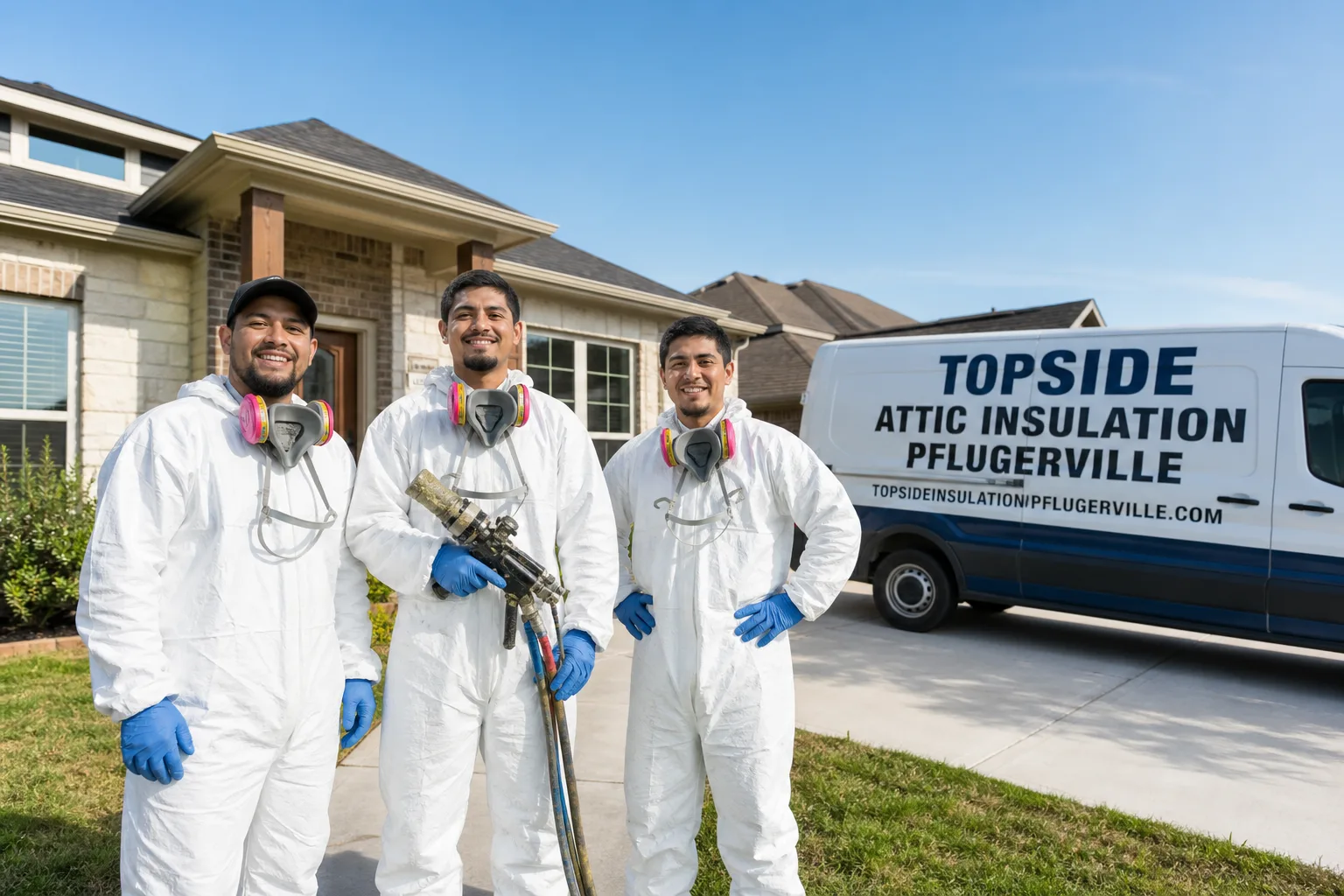
Fast, Reliable Spray Foam Insulation Across Taylor
Spray foam insulation in Taylor typically runs $2.80-$4.20 per board foot for open-cell and $4.50-$7.00 for closed-cell, with most whole-attic jobs landing between $2,400 and $5,800 depending on whether we’re working on a historic downtown balloon-frame or a new subdivision build. Our crews are dispatched from our Austin coordination office and carry temperature-controlled rigs to Taylor daily, which matters here more than most places. Taylor’s split housing market - century-old railroad-era homes near Main Street against brand-new spec construction on the edges - means the same material won’t work the same way twice. Call (737) 259-8352 for a written price before any work starts.
Why Topside Attic Insulation Pflugerville Is Taylor’s Preferred Spray Foam Insulation Company
We’ve sealed and insulated over 9,000 homes since 2016, and Taylor’s been a regular stop since the Samsung fab announcement brought the first wave of new construction. Our Taylor customers leave three-star reviews that mention the same thing as the five-stars: we show the blower-door numbers. That’s the documentation that matters to people who’ve done their homework.
Response time to Taylor neighborhoods averages same-day or next-morning, including the historic core around 4th Street and the new subdivisions off FM 973. Our techs know which downtown streets require alley access, where to stage a rig on a 50-foot lot, and how the Blackland Prairie clay soil shifts rim joist gaps seasonally.
Under Haven Standard, you get a named technician, a text when they’re en route, and a Documented Photo Record before the crew leaves. No voicemail loops - a live person answers calls 24/7. Our 365-Day Done Right Promise applies to every job, backed by a written scope and written warranty delivered before anyone lifts a tool.
Our Spray Foam Insulation Services in Taylor
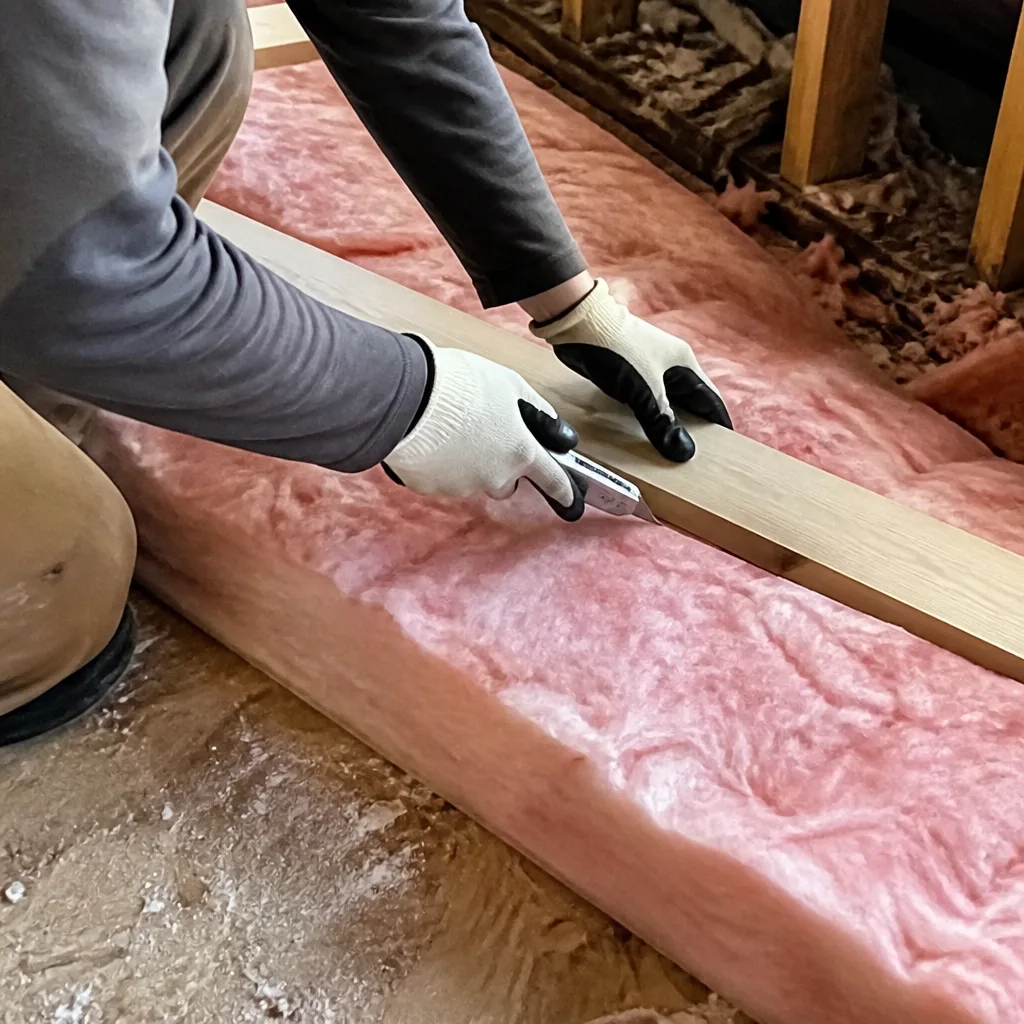
Closed-Cell Spray Foam
Closed-cell is our go-to for Taylor’s older homes and any application where moisture resistance matters. At 2.0 lbs per cubic foot, it adds structural rigidity and hits R-6.5 per inch, which matters in attics that see 150°F July afternoons. In downtown Taylor’s balloon-frame houses, we use a slow-rise, high-yield formulation specifically so the foam sets before it can drain down continuous wall cavities. We’ve seen what happens when standard closed-cell is shot too fast into those unblocked walls - the top half stays empty, the bottom plates get a puddle, and the homeowner discovers the problem when the July electric bill arrives. Our Spray Foam Insulation team staggers injection ports and feeds in controlled lifts.
Open-Cell Spray Foam
Open-cell runs lighter at 0.5 lbs per cubic foot, breathes vapor, and fills at R-3.6 per inch. It’s the right choice for roof decks and attic floors in Taylor’s new construction where the sheathing is dry and the framing is standard stick-built. We source open-cell from Icynene and Demilec - no proprietary lock-in, so we match the product to the assembly, not the other way around. In post-2022 subdivision homes around Taylor, we’ve found spec builders often under-specify Taylor Attic Insulation that barely meets code minimums. Open-cell at proper depth fixes that without the weight penalty of closed-cell on trusses that weren’t engineered for it.
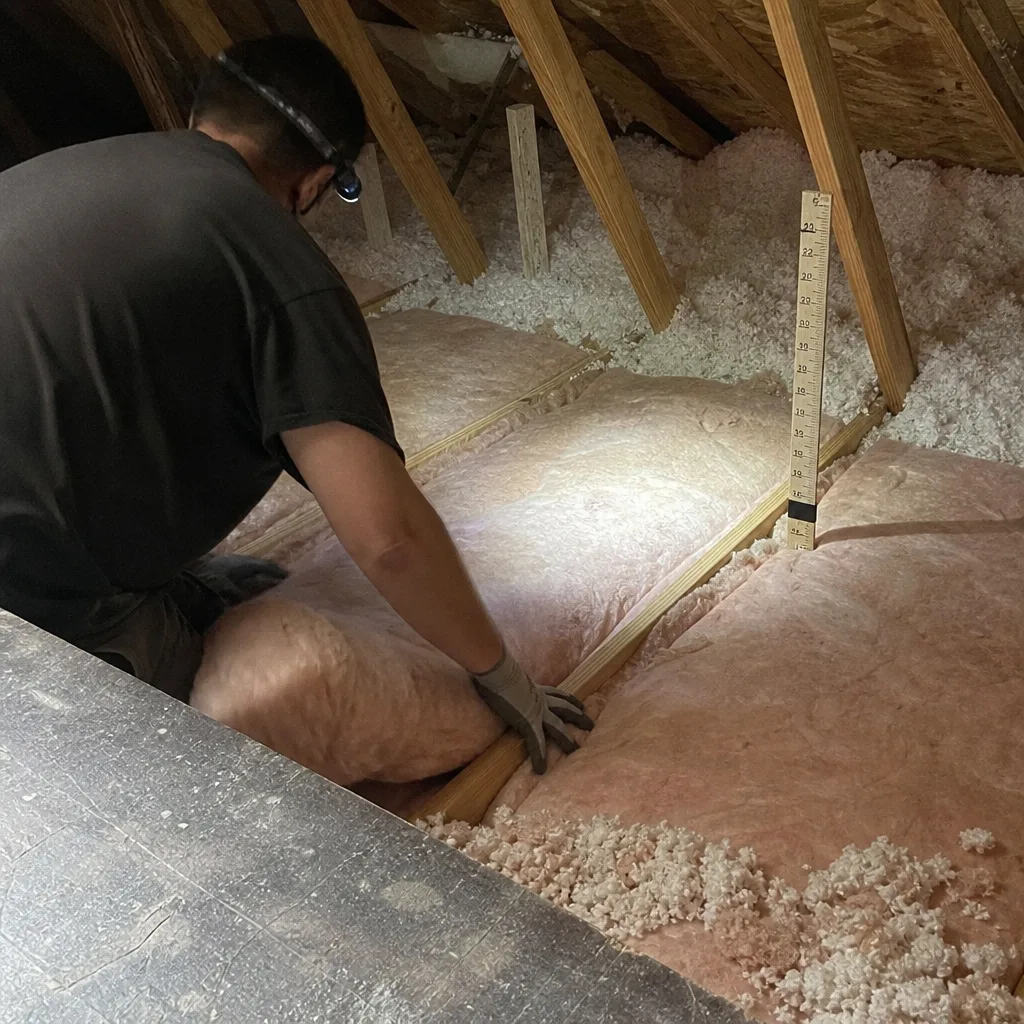
Rim Joist Spray Foam
The rim joist is where your foundation meets your first floor, and on the Blackland Prairie it’s often the leakiest part of the envelope. Taylor’s clay soils shift with moisture, opening gaps that suck conditioned air into the crawl space or basement. We seal rim joists with closed-cell foam - usually 2-3 inches - because it’s the only common insulation that adheres to dirty concrete and still stops bulk water. After Winter Storm Uri in 2021, we saw a spike in Taylor homeowners who’d never noticed their rim joists until the freeze exposed every draft. The fix is straightforward, but only if the surface is prepped and the foam is applied at the right substrate temperature.
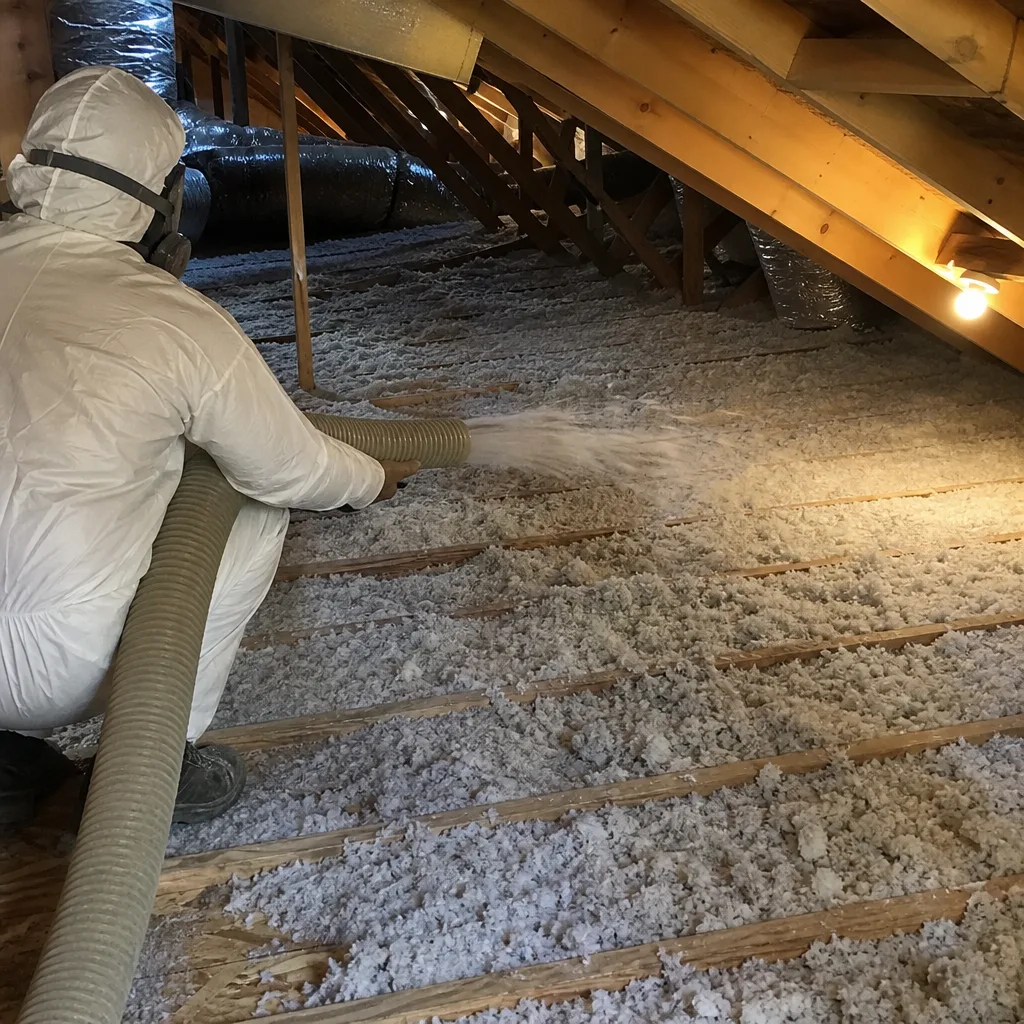
Garage Ceiling Spray Foam
Garage ceilings in Taylor fall into two categories: the detached alley-load structures downtown where a bedroom sits above, and the attached two-car ceilings in new subdivisions. Both need fire-rated separation between garage and living space, which spray foam achieves at proper thickness with an ignition barrier. The downtown challenge is hose length - alley access means we sometimes can’t get the rig within temperature spec range, so we plan staging carefully or use a portable reactor. We’ve learned which blocks near Davis Street and which cul-de-sacs off Mallard Lane allow what approach. The documentation you get includes photos of the finished ceiling and the ignition barrier certification.
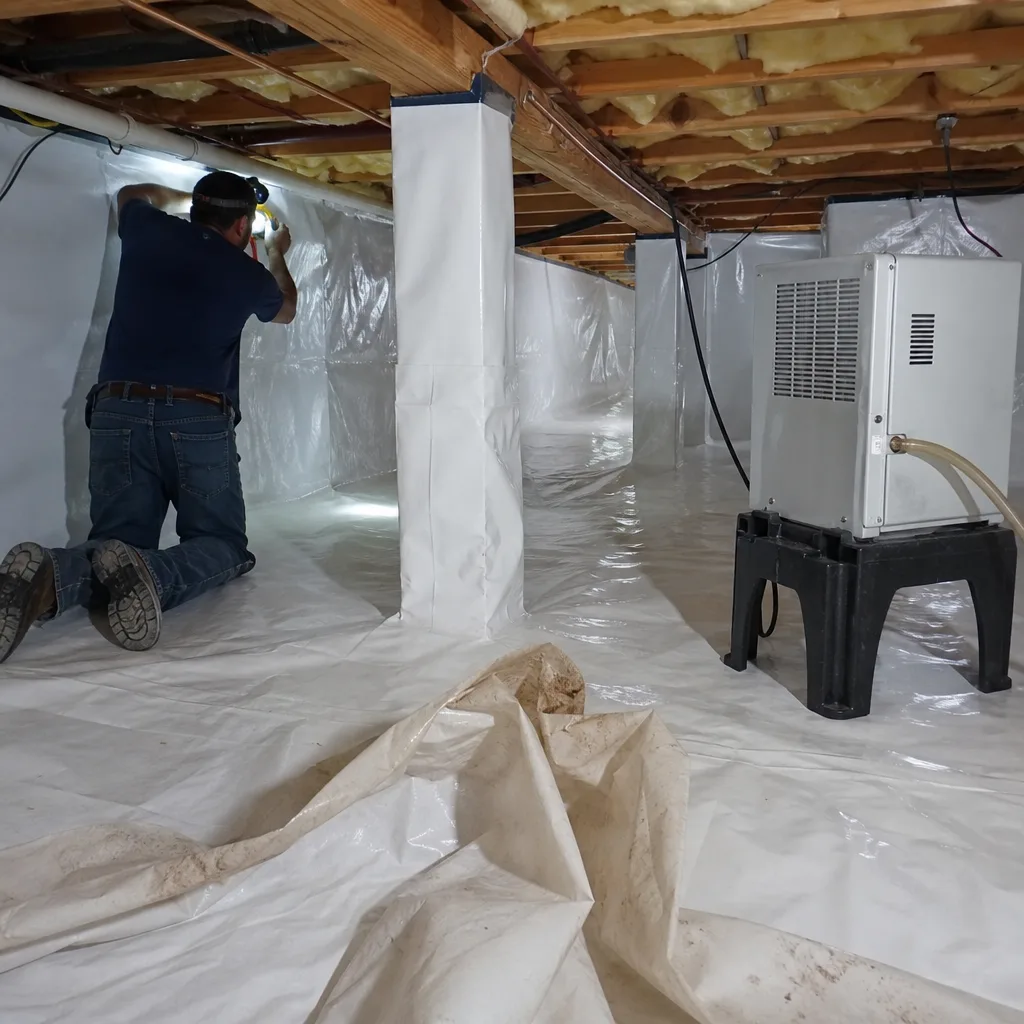
What happens when you call
- 1
A real person answersNo phone trees - you reach a local pro.
- 2
You get an upfront price rangeHonest numbers before anyone is dispatched.
- 3
A background-checked tech heads outLicensed & insured, dispatched right away.
- 4
You approve before work beginsNothing starts until you say go.
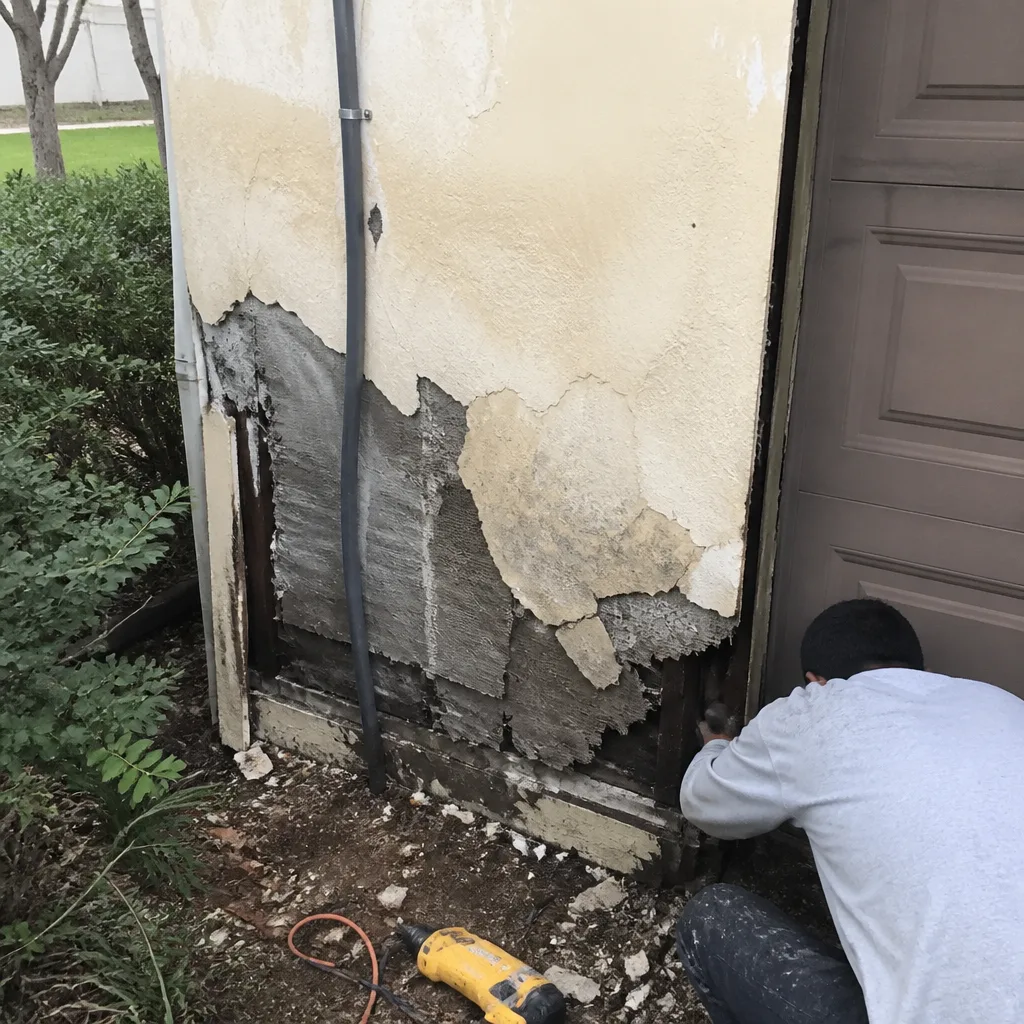 Before
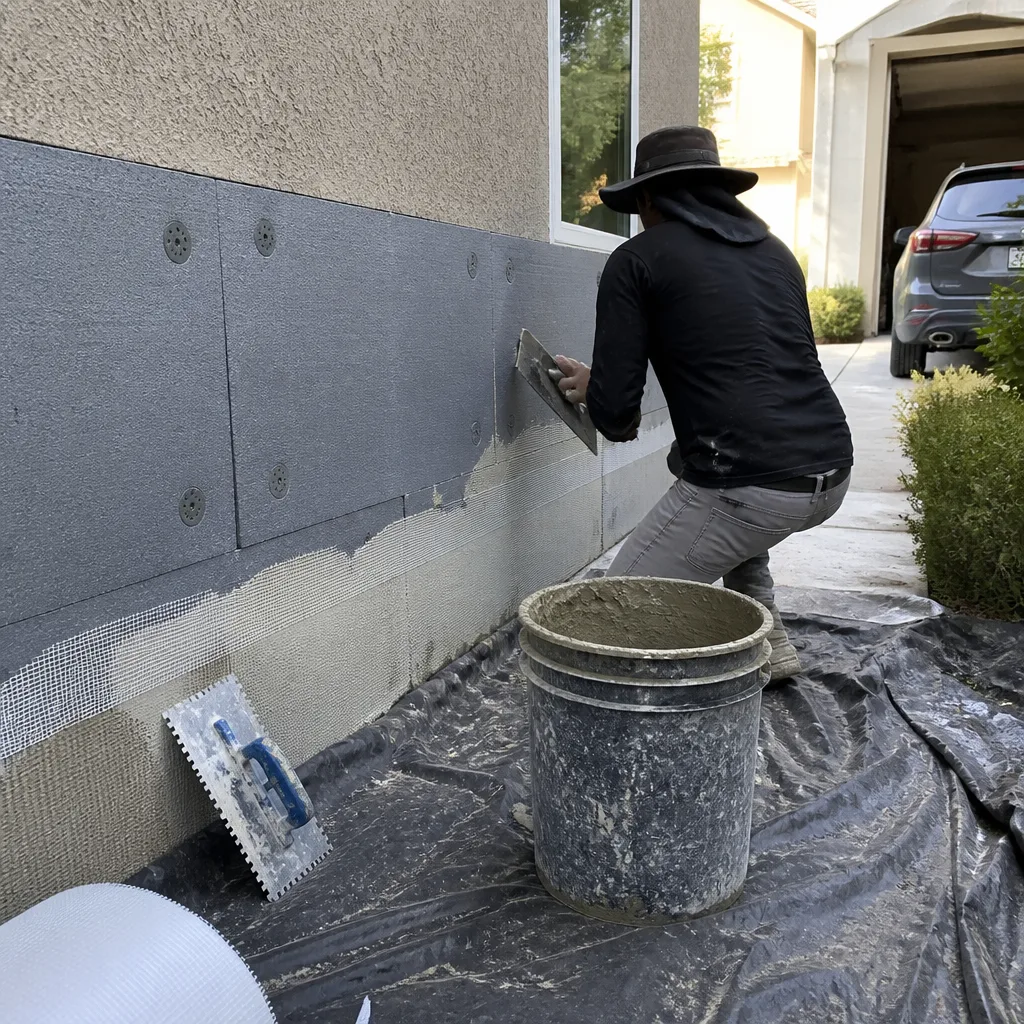 After
AfterTrusted Brands We Service in Taylor
We stock materials from Icynene, Demilec, and CertainTeed - no house brand that locks you into a single supplier. For Taylor jobs, that means we can match open-cell Icynene to a roof deck that needs vapor permeability, switch to Demilec closed-cell for a rim joist against wet concrete, or specify CertainTeed where the architect called out a particular fire rating. Our Austin warehouse carries common densities and formulations, so we’re not waiting on freight when a Taylor customer needs a crew this week. Every bag and drum is lot-tracked, and the product data sheet goes in your job folder with the photo record.
Common Spray Foam Insulation Problems We See in Taylor Homes
- Balloon-frame drain-down in downtown walls. The 1900-1940 houses near downtown Taylor have continuous floor-to-rafter cavities with no fire blocking. Standard spray foam shot from the top migrates down before it cures, leaving empty stud bays above and pooled foam at the sill. We fix this with slow-rise formulation and staged injection - a technique that barely exists in the post-2022 stick-frame homes on the city’s edges.
- Delamination from dusty OSB in new spec homes. Taylor’s post-2022 subdivisions were built fast to house relocated Samsung workers, and rushed timelines mean sheathing that wasn’t cleaned or dried properly. Spray foam applied over high-moisture, dusty OSB releases from the substrate within the first hot season. We moisture-test and mechanically prep every surface before the gun comes out.
- Off-ratio foam from hose-temperature drift on tight lots. Downtown Taylor’s alley-loaded garages and 50-foot lots don’t always let us stage a rig close enough to keep hose lengths within the manufacturer’s temperature window. The result is tacky, off-ratio foam that never hardens properly. We solve this with portable equipment or by planning staging around each block’s access constraints.
- Under-specified attic insulation meeting code minimums but not performance. New Taylor subdivisions often get blown fiberglass at the thinnest layer that passes inspection. It compresses, settles, and leaves the second floor roasting by July. Spray foam at proper depth - open-cell at 5.5 inches for R-20, or closed-cell at 3 inches for R-19 with structural benefit - fixes what the builder skipped.
Pricing for Spray Foam Insulation in Taylor, TX
Here’s what spray foam insulation costs in Taylor’s market as of 2025:
| Application | Material | Typical Range |
|---|---|---|
| Attic floor (1,200 sq ft) | Open-cell, 5.5″ | $2,400-$3,800 |
| Attic floor (1,200 sq ft) | Closed-cell, 3″ | $3,800-$5,800 |
| Rim joist (typical crawl) | Closed-cell, 2-3″ | $1,200-$2,100 |
| Garage ceiling (2-car, attached) | Open-cell + ignition barrier | $1,800-$2,900 |
| Downtown balloon-frame walls | Slow-rise closed-cell, staged | $3,200-$5,400 |
Three things move you within these ranges: access difficulty (tight downtown lots cost more in labor), surface prep needed (removing failed foam or drying wet OSB), and whether we’re working around occupied space. Every job gets a written price before work starts - Haven Standard Clause 1 - and we offer a Free Second Opinion on any written estimate you’ve already received. Call (737) 259-8352; estimates are free, and the price we write is the price you pay.
We Also Serve Cities Near Taylor
Our crews run daily to Hutto, Pflugerville, Round Rock, and Georgetown from the Austin office. If you’re in Williamson County or the northeast Austin metro and need spray foam insulation, the same written-price protocol and documented photo record apply. Spray Foam Insulation in Taylor remains our focus here, but we don’t stop at city limits.
Serving Taylor, TX - Our Local Coverage Area
We’re based in the Taylor area and know this community well. Use the map below to see our service coverage - if you’re nearby, we can almost certainly help.
FAQs - Spray Foam Insulation in Taylor
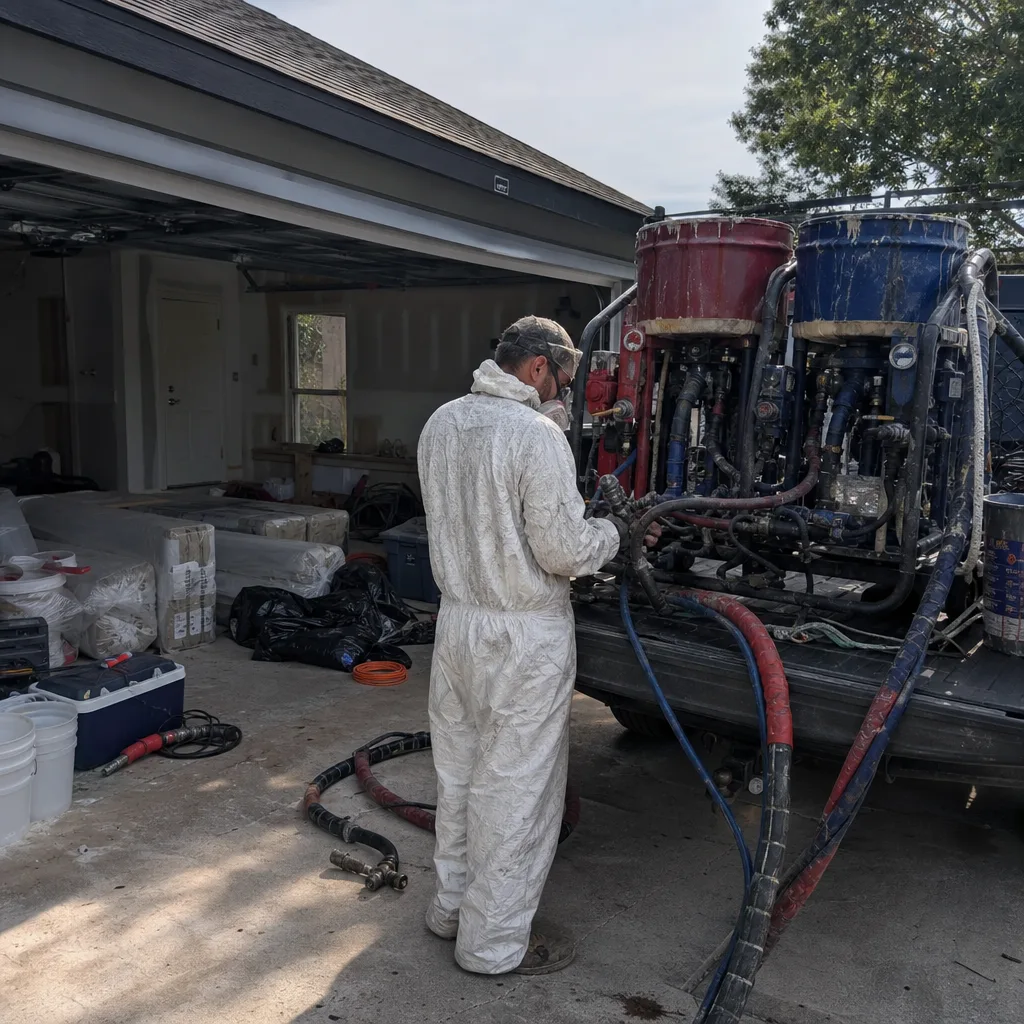
Yes, but it requires slow-rise closed-cell applied in staged lifts through a staggered injection pattern - standard blown-in fiberglass will migrate into the attic cavity, and standard spray foam will drain down before it sets. We were called to a 1920s railroad-era cottage a few blocks off downtown Taylor where the homeowner had tried to air-seal wall cavities himself and the foam had sagged into a mess at the bottom plates. Our tech drilled a staggered pattern of injection ports, used a slow-rise closed-cell alongside Icynene open-cell in the rim joist, and fed the gun in short controlled lifts so the material set against the balloon framing instead of running. The house held 68°F through the next July afternoon with the original window units running less than before. Call (737) 259-8352 for a written scope and price.
Because the spec builder likely installed blown fiberglass at code minimum thickness, which compresses and leaves gaps at the eaves. We see this in post-2022 Taylor subdivisions where rushed timelines produced attics that technically pass inspection but perform poorly. Open-cell spray foam at 5.5 inches - or closed-cell at 3 inches if you want the structural benefit - seals the envelope and maintains R-value for the life of the house. We moisture-test the sheathing first; if it’s still damp from construction, we dry it before foaming so the adhesion holds. Call (737) 259-8352 for a free assessment and written price.
Yes, if it’s closed-cell at proper thickness with an approved ignition barrier. Closed-cell doesn’t absorb moisture and maintains R-value when the temperature drops, which is why we specify it for any garage ceiling with living space above. The bigger issue in downtown Taylor is often air leakage at the rim joist where the garage meets the house, not the ceiling itself. We blower-door test to find the real leaks, then foam in the right order. Your documentation includes before-and-after CFM50 readings so you can verify the result. Call (737) 259-8352 to schedule.
We plan staging before the crew leaves the shop. Some blocks near Davis Street allow rig access; others require a portable reactor or longer hose runs with temperature monitoring at the gun. We’ve learned which alleys in the historic core accommodate what equipment, and we never guess - we drive the route first if we haven’t been on that block. The foam temperature and ratio are checked every 30 minutes, and if we can’t maintain spec, we reschedule rather than spray off-ratio product. Your written scope includes the access plan. Call (737) 259-8352 to discuss your specific property.
Open-cell is lighter, cheaper per R-value, and vapor-permeable - it lets moisture dry through, which is good for roof decks that might leak undetected. Closed-cell is denser, adds structural rigidity, and blocks vapor - better for attics with HVAC equipment where condensation risk is high, or where the roof deck has known moisture history. In Taylor’s climate, both work if specified correctly; the wrong choice is usually open-cell where bulk water is present, or closed-cell where the roof deck needs to breathe. We test and specify, not guess. Call (737) 259-8352 for a written recommendation and price.
Written by Wes Okafor, Owner at Envelope Insulation Co., serving Taylor since 2016 under The Haven Standard.