
Knauf Attic Insulation: The Pflugerville Owner’s Guide
We stock and install Knauf-compatible blown-in fiberglass attic insulation in Pflugerville, with most retrofits running $1.80 to $3.20 per square foot depending on existing depth and target R-value. Same-day installation is available when we have your target depth and square footage confirmed by phone. Homeowners usually discover their Knauf insulation is failing when second-floor rooms won’t stay cool through July afternoons despite the AC running continuously, or when they pull back a hatch and find batts compressed to half their labeled thickness by years of foot traffic and rodent nesting.
Which Knauf Models This Applies To
Knauf’s residential attic line breaks into two families we see regularly in Pflugerville: EcoFill Wx blown-in fiberglass and Jet Stream Ultra, the higher-density product spec’d for tighter cavities and higher R-value per inch. EcoFill Wx ships in 25-pound bags with a loose-fill density of roughly 0.5 pounds per cubic foot; Jet Stream Ultra runs closer to 1.6 pounds per cubic foot and requires a specific hopper setting on the blowing machine. If you’re matching existing insulation, check the paper bag label for the product name and manufacture date. Knauf switched bag designs in 2019, so older stock may read “Knauf Insulation” in green lettering rather than the current black-and-white EcoFill branding.
We do not carry proprietary Knauf bags as an authorized dealer. We source Knauf-compatible blown-in fiberglass from the same supply houses, and we match the thermal performance spec rather than the brand name on the bag. For most Pflugerville attics, the relevant number is the settled R-value per inch: EcoFill Wx delivers R-2.3 per inch, Jet Stream Ultra R-3.7 per inch. If your existing insulation was blown to R-30 in 2015 and has settled 20 percent, you’re likely sitting at R-24 or below. We measure actual depth with a ruled probe during our attic inspection and calculate the gap to your target.
Topside Attic Insulation Pflugerville is an independent service provider, not affiliated with Knauf Insulation.
Signs Your Knauf Attic Insulation Is Failing
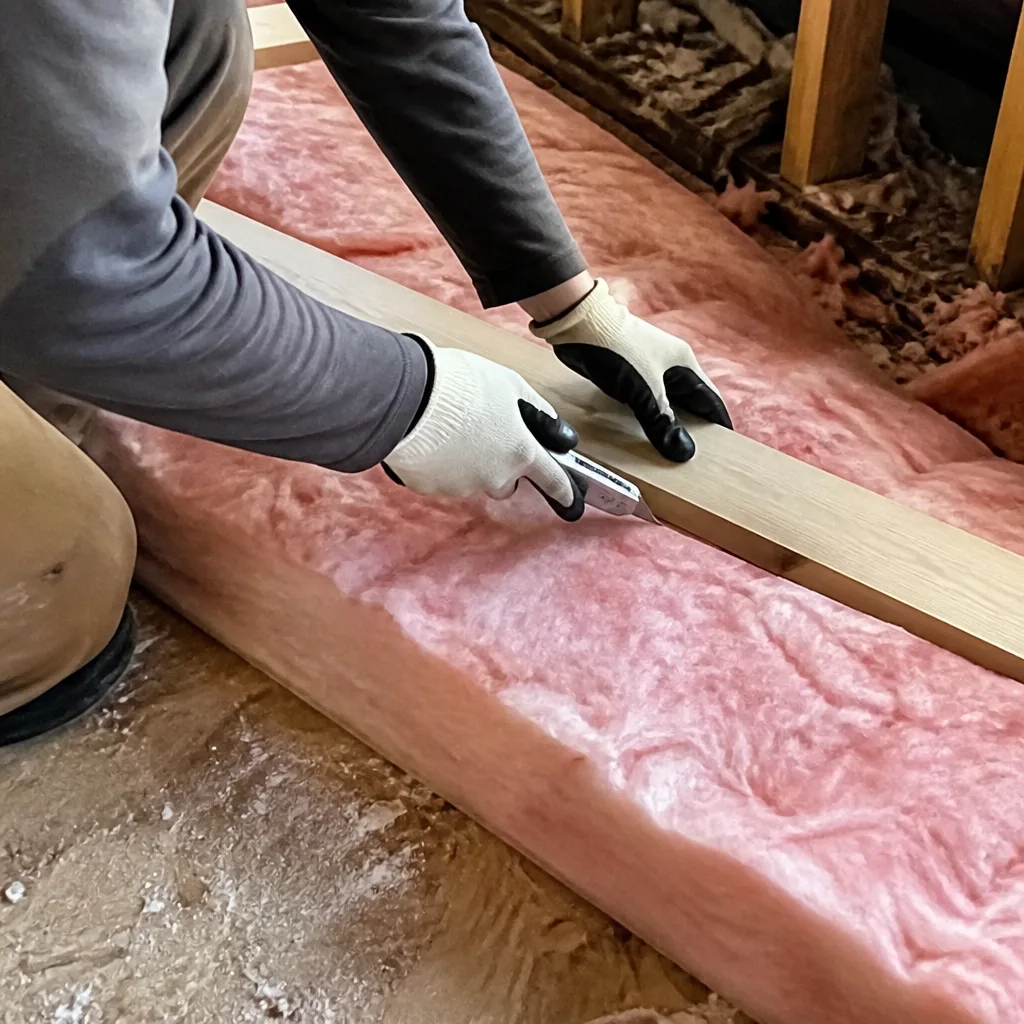
- Uneven temperature zones between rooms. When insulation settles or gets displaced, the attic floor becomes a patchwork of thermal resistance. We see this most often above Pflugerville’s older Stone Hill Town Center builds where blown-in was added over poorly sealed top plates, and convection currents through the gaps have slowly redistributed the fiberglass toward the eaves.
- Ice damming or heavy frost on roof decking in winter. Warm, moist interior air hits the cold sheathing and condenses. In Knauf installations without proper air sealing, the insulation acts like a filter rather than a barrier, trapping moisture against the wood. We’ve pulled back batts in January to find blackened decking above otherwise “insulated” ceilings.
- Dust accumulation around ceiling registers and can lights. This signals that your attic is breathing into the house, pulling fiberglass particulates through gaps the insulation was supposed to cover. Knauf fiberglass is low-dust when installed, so visible particles usually mean the thermal boundary has a leak, not that the product is defective.
- Energy bills climbing year-over-year with no rate change. A blower-door test - a pressurization reading that shows, in one number, how much air your building envelope is losing - will typically reveal that the house has returned to pre-insulation leakage rates as seals dry out and insulation shifts.
- Compressed or matted batts in walkable areas. Knauf batts lose loft permanently once crushed. We find this near attic hatches and HVAC platforms where homeowners or technicians have stepped repeatedly without laying down a walking board.
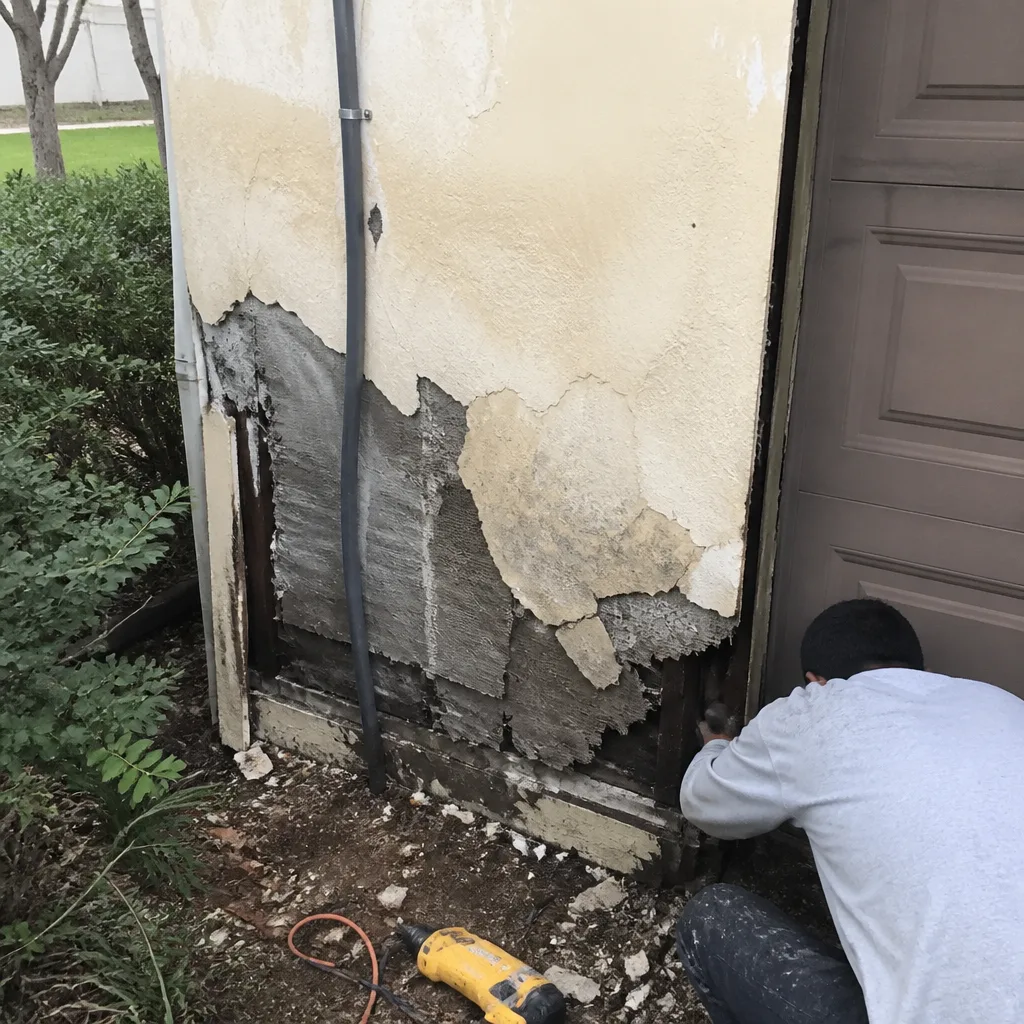 Before
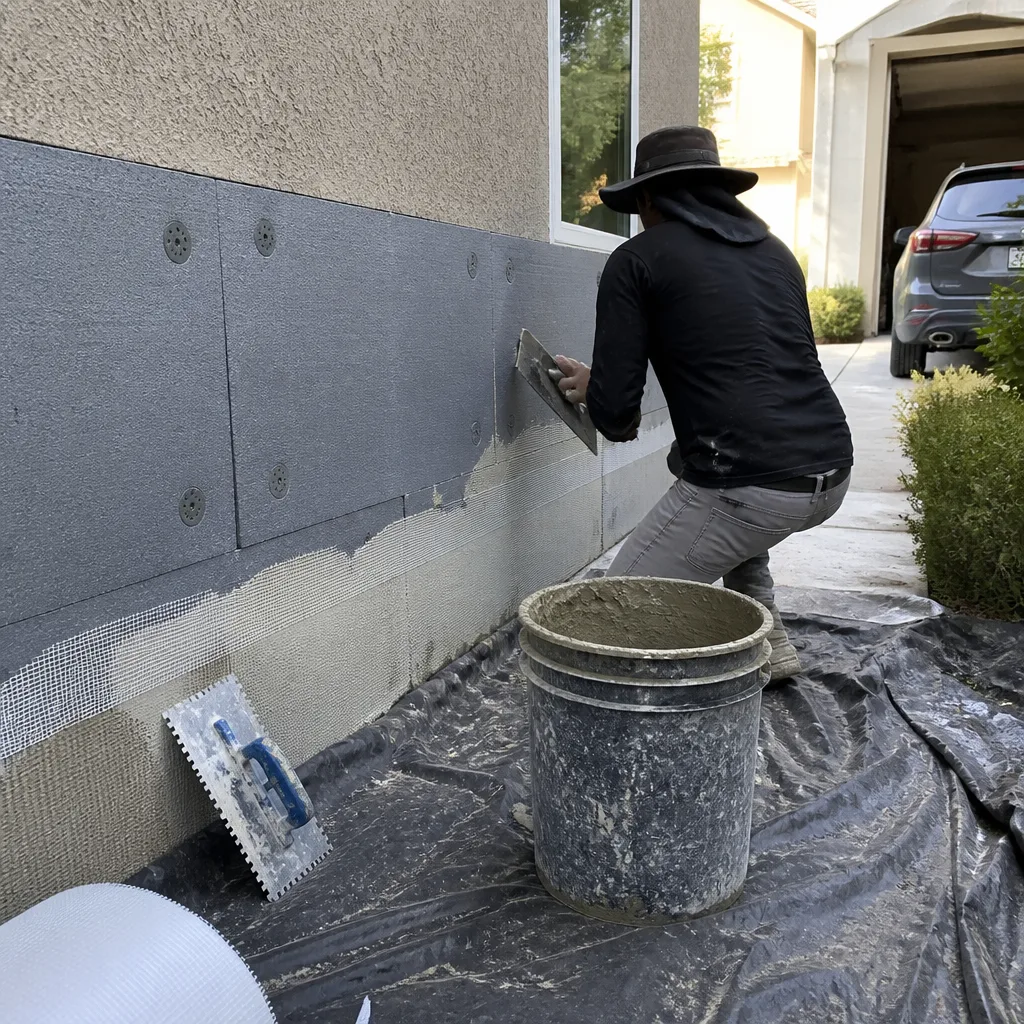 After
AfterReplacement Cost & What’s Included
Most Knauf attic insulation replacements in Pflugerville run between $1.80 and $3.20 per square foot for blown-in fiberglass, with the full job on a 2,000-square-foot attic typically landing between $2,800 and $5,400. The spread depends on three factors: current insulation depth and whether removal is required, target R-value (R-38 is code minimum for our climate zone; R-49 is common for homeowners planning to stay long-term), and the extent of air sealing needed before new material goes in.
Our price includes removal and bagging of existing degraded insulation if needed, air sealing of top plates, can lights, and penetrations with caulk and fire-rated foam, installation of new blown-in fiberglass to specified depth, and a documented photo record of before, during, and after. On applicable jobs, we run a blower-door test before and after, and you receive a written report with actual CFM50 numbers. The 365-Day Done Right Promise applies to all completed work.
| Component | Price Range |
|---|---|
| Blown-in fiberglass (material + labor) | $1.80 - $3.20 / sq ft |
| Insulation removal and disposal | $0.60 - $1.10 / sq ft |
| Air sealing (top plates, penetrations) | $400 - $900 (typical attic) |
| Blower-door test with written report | Included on applicable jobs |
DIY or Call Us?
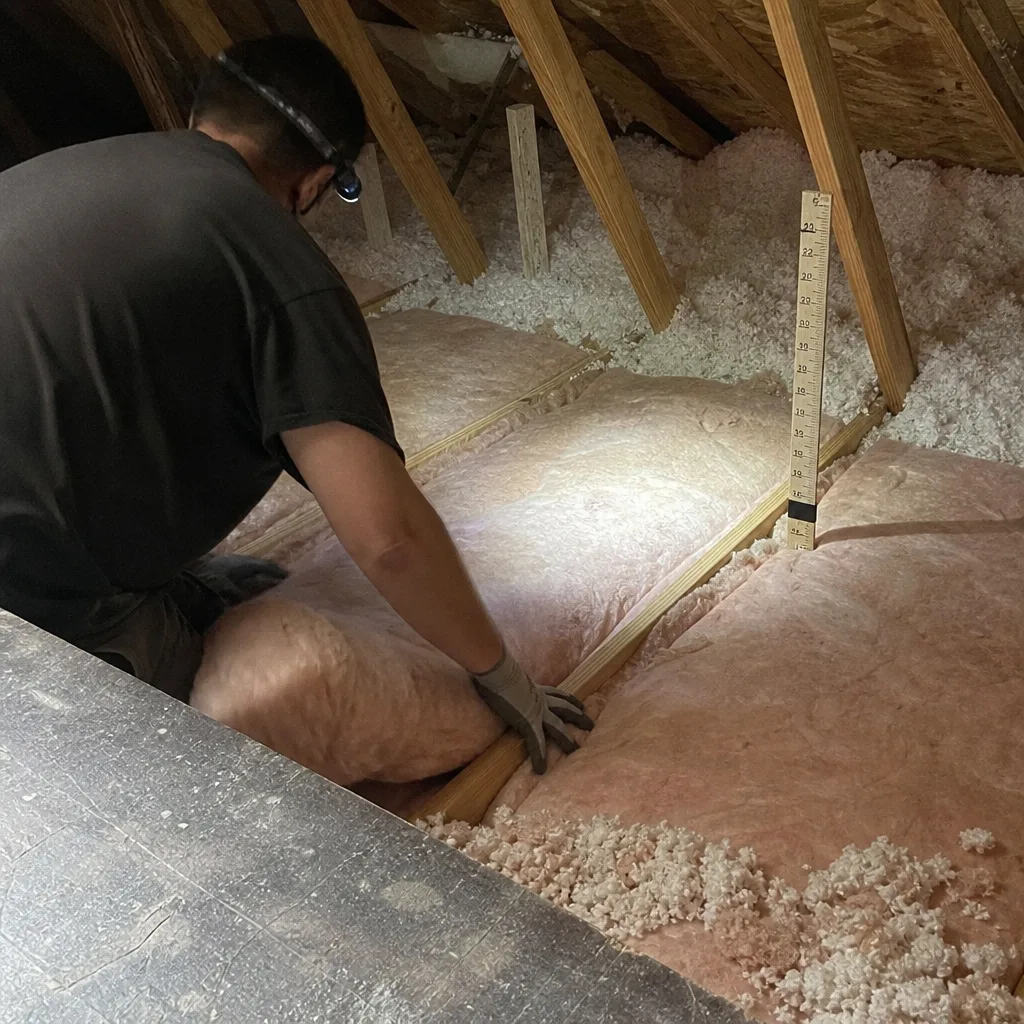
What you can safely check yourself: measure existing insulation depth with a ruler or tape measure at multiple points, photograph any bag labels you find in storage, and note temperature differences between rooms with an infrared thermometer. These three pieces of information will save us thirty minutes on the phone.
Where DIY goes wrong: blowing fiberglass to the wrong density, covering soffit vents and choking attic ventilation, or adding new insulation over air leaks that will simply redistribute the material within two seasons. The blower-door test tells you what the house does. The insulation changes what the house does. Those are two different conversations. We also do not recommend homeowners handle degraded insulation that may contain rodent droppings or asbestos-containing vermiculite without proper PPE and containment.
If you want a written price before any work starts, call (737) 259-8352. We also offer a free second opinion on any written estimate you’ve already received.
FAQs
Blown-in fiberglass retains its thermal performance for 80 to 100 years if left undisturbed, but in practice we see effective lifespans of 15 to 25 years in Central Texas attics due to settlement, moisture cycling, and disturbance during HVAC maintenance. The material doesn’t “wear out” chemically; it stops working because it moves, compresses, or gets bypassed by air leaks. Call (737) 259-8352 for an attic inspection that measures actual settled depth against your target R-value.
Spot repairs work only if the failure is localized, such as a single compressed batt near an attic hatch or a small area disturbed by a roof leak. Widespread settlement, moisture damage, or insulation installed over unsealed air leaks requires removal or supplementation plus air sealing to solve the underlying problem. We do not blow new insulation over degraded or contaminated existing material. Call (737) 259-8352 for a written scope and price before any work starts.
A typical Pflugerville attic of 2,000 to 2,500 square feet takes one full day when removal, air sealing, and new installation are all required. Same-day completion is possible for simpler jobs where existing insulation can be supplemented rather than removed. We arrive with a written scope, a named technician, and a text when the crew is on the way. Call (737) 259-8352 to check availability.
We stock blown-in fiberglass compatible with Knauf thermal specifications on our Pflugerville-based trucks, sourced from regional distributors carrying Owens Corning, Johns Manville, Knauf, Rockwool, and other major brands. We do not stock proprietary Knauf-labeled bags, and we do not lock customers into a single manufacturer. The product we install matches or exceeds the R-value per inch of your existing Knauf insulation. Call (737) 259-8352 to confirm material availability for your target depth and square footage.
Written by Wes Okafor, Owner, Topside Attic Insulation Pflugerville at Topside Attic Insulation Pflugerville, serving Pflugerville and nearby areas.