
Rockwool Radiant Barrier Installation: The Pflugerville Owner’s Guide
Rockwool radiant barrier installation in Pflugerville typically runs $2,400-$4,800 for a standard 2,000-square-foot attic, and we stock Rockwool Comfortbatt and Comfortboard-compatible radiant barrier assemblies for same-day starts on most jobs. Most homeowners realize something’s wrong when their second-floor rooms won’t cool below 78°F by mid-afternoon in July, or when their July electric bill jumps 30% year-over-year despite the thermostat never moving. The radiant barrier - the reflective surface that blocks radiant heat transfer from your roof deck into the living space - has either detached, oxidized, or was never properly integrated with the insulation layer to begin with.
Which Rockwool Models This Applies To
Rockwool does not manufacture a standalone radiant barrier product; the term “Rockwool radiant barrier installation” refers to the assembly where Rockwool stone wool insulation (typically Comfortbatt R-30 or R-38 for attics, or Comfortboard 80 for thermal breaks) is paired with a reflective radiant barrier substrate, either foil-faced or installed as a separate radiant barrier sheet across the roof deck or rafter bays. In Pflugerville, we see this most often in homes built 2015-2022 in the Stone Hill Town Center corridor and the Meadows at Blackhawk, where builders spec’d Rockwool batts with a thin radiant barrier stapled to the rafters as a cost-saving measure.
To identify what you have: check the attic for pinkish-brown batts with the Rockwool logo and density stamp (Comfortbatt runs 0.6-0.8 pounds per cubic foot, noticeably denser than fiberglass). The radiant barrier will be either foil-faced on one side of the batt, or a separate sheet of perforated aluminum foil or metallized polyethylene stretched across the rafters. If the foil is torn, has turned chalky white, or has pulled away from the fasteners, the assembly is compromised. We source OEM-compatible radiant barrier material from Reflectix and other manufacturers rated for stone wool contact, and we verify the perm rating - the measure of how much moisture vapor can pass through - so we don’t trap humidity against the Rockwool, which is hydrophobic but not immune to condensation damage in Central Texas humidity swings.
Signs Your Rockwool Radiant Barrier Installation Is Failing
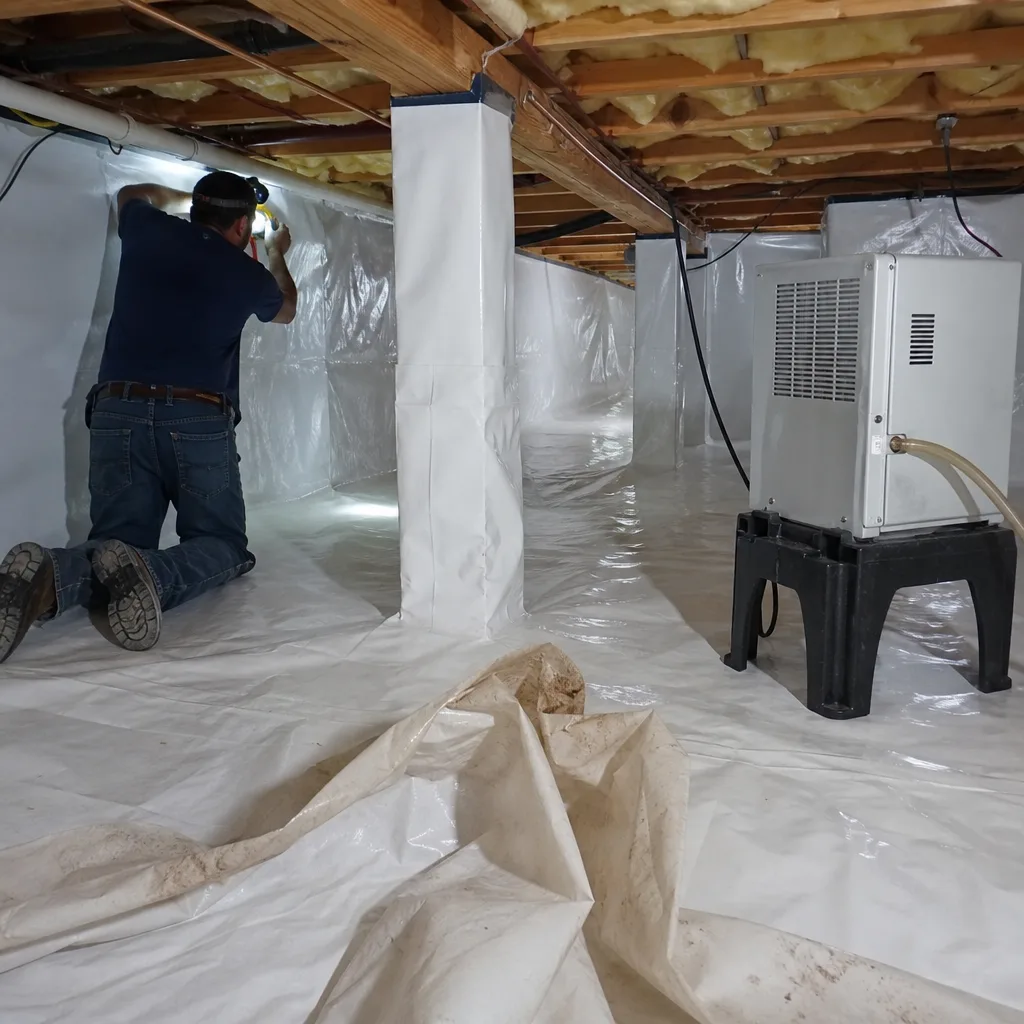
- Second-floor rooms heat up by 2-4 PM and won’t recover until after sunset. The radiant barrier has detached from the rafters or the foil surface has oxidized, losing its reflectivity. In Pflugerville’s climate, unvented attic temperatures hit 140°F regularly in August; without a functioning barrier, that radiant load transfers directly through the insulation into conditioned space.
- Your HVAC runs continuously from noon to 7 PM in summer but maintains temperature fine in spring. This timing pattern points to radiant heat gain overwhelming the cooling capacity, not an undersized unit. The Rockwool batt itself may still be intact, but the radiant barrier layer has failed, forcing the insulation to do work it wasn’t designed for.
- You find strips of shiny foil on the attic floor or draped over joists. Staple failure is common in homes where the barrier was installed with standard T50 staples into OSB roof decking rather than solid lumber rafters. The expansion and contraction cycles in a Pflugerville attic - 40°F winter mornings to 140°F summer peaks - work fasteners loose over 5-7 years.
- Visible chalking or white oxidation on the foil surface. This is not dust. The metallized coating has degraded, dropping reflectivity from 95% to 60% or lower. Once oxidation starts, it accelerates; the barrier is effectively retired.
- Moisture staining on the ceiling drywall below the attic, but the roof is not leaking. A failed radiant barrier in a vented attic can disrupt the temperature gradient enough to cause condensation on the attic side of the ceiling drywall during shoulder seasons. The Rockwool may be dry, but the assembly is no longer managing heat and moisture transport correctly.
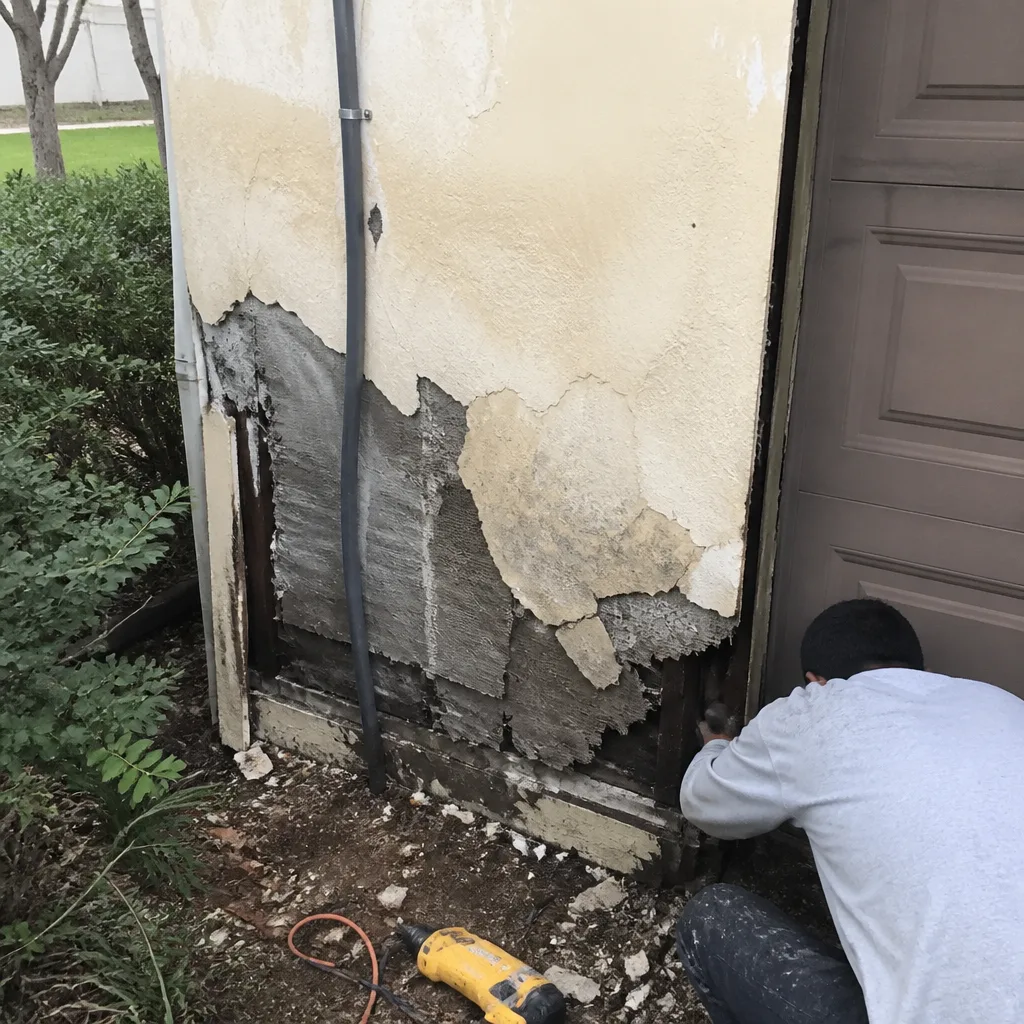 Before
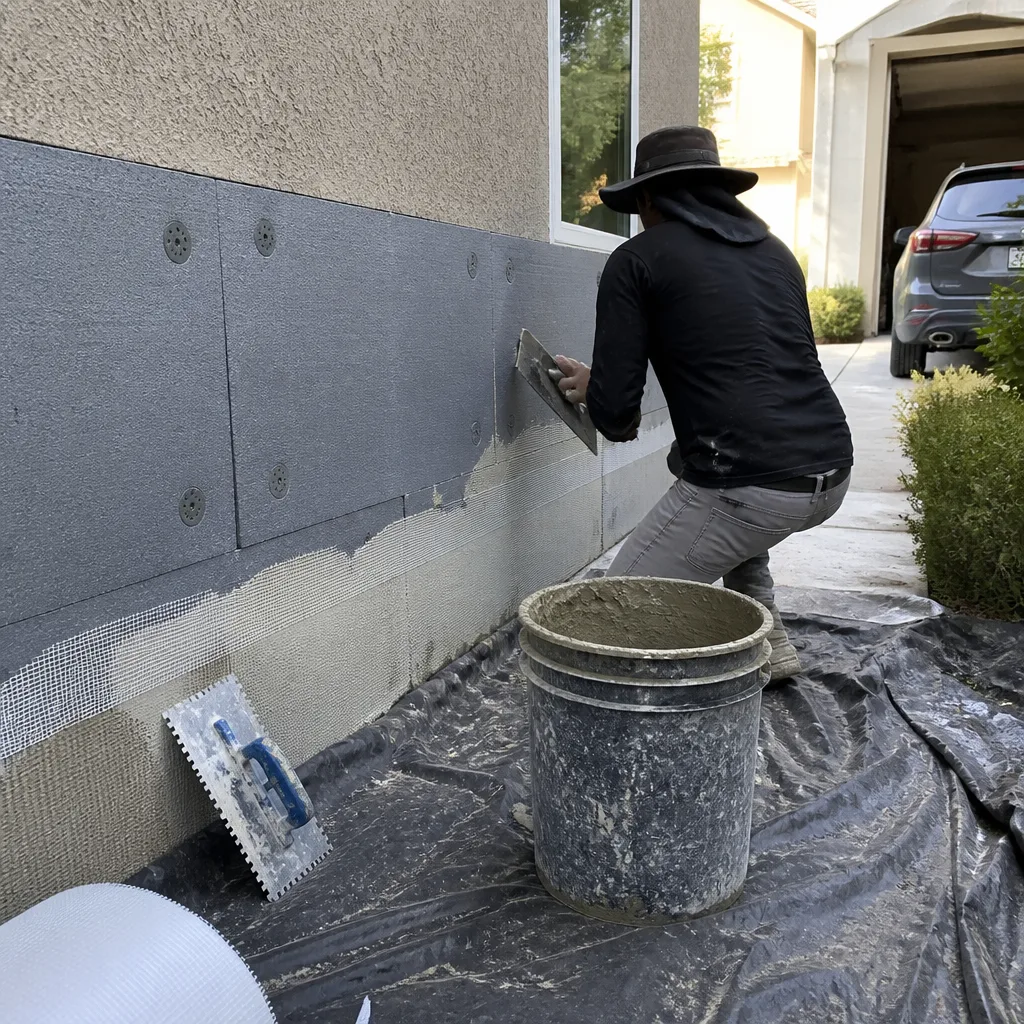 After
AfterReplacement Cost & What’s Included
Most Rockwool radiant barrier installations in Pflugerville homes run $2,400-$4,800, with the final price driven by attic square footage, roof pitch (steeper = slower work), whether we can access from a scuttle or need to cut a new hatch, and whether the existing Rockwool can stay or must be removed first. Here’s how that breaks down:
| Component | Typical Range |
|---|---|
| Radiant barrier material (foil or metallized substrate) | $0.75-$1.50/sq ft installed |
| Rockwool Comfortbatt replacement (if existing is compromised) | $1.20-$2.10/sq ft installed |
| Air sealing of top plates, can lights, penetrations | $400-$900 (flat, most attics) |
| Blower-door test - before and after | Included |
| Documented Photo Record | Included |
We do not quote by phone without seeing the attic. Under Haven Standard Clause 1, you get a flat written price, a written scope, and a written warranty before anyone lifts a tool. The 365-Day Done Right Promise applies to all completed work. Every job includes a blower-door test - a pressurization measurement that shows, in one number, how much air your building envelope was losing before and after - and a Documented Photo Record of the completed assembly.
DIY or Call Us?
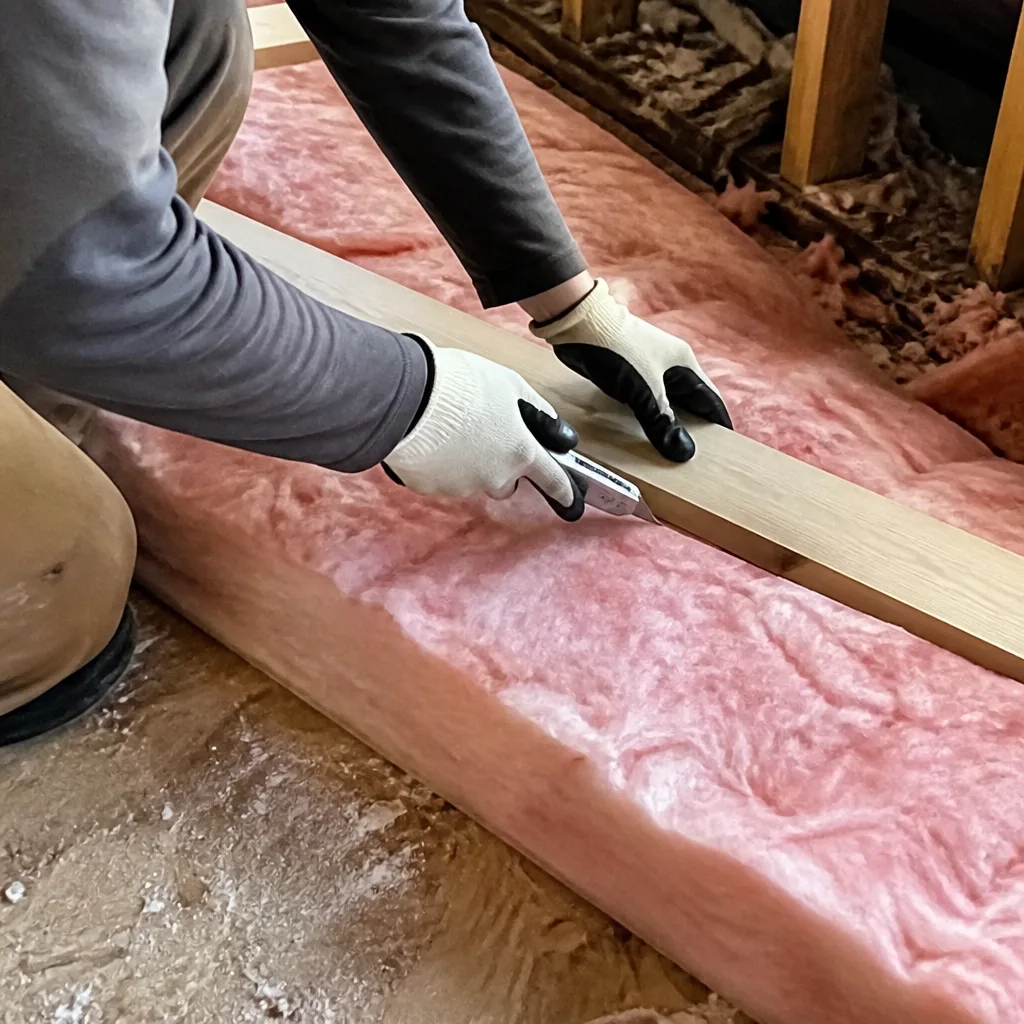
There is no high-tension danger in radiant barrier work, but there is a performance danger: we have seen more failed DIY radiant barrier jobs in Pflugerville than we care to count, and they all share the same flaw. The homeowner stapled foil to the rafters, left the can lights and top plates unsealed, and wondered why the upstairs still cooked in July. A radiant barrier is only as good as the air sealing beneath it; if conditioned air is leaking into the attic through electrical boxes and partition wall top plates, you are paying to cool your roof deck.
What you can safely check: whether the foil is still attached, whether it is visibly oxidized, and whether your attic hatch is weatherstripped. What you should not attempt: installing a new barrier over unsealed penetrations, or working in an attic without proper walk boards and respiratory protection - Rockwool fibers are less irritating than fiberglass but still not something you want in your lungs without a P100 respirator.
We carry Rockwool-compatible radiant barrier assemblies on our trucks, and we air-seal before we insulate, always. Call (737) 259-8352 for a written estimate.
FAQs
A properly installed radiant barrier in a vented Pflugerville attic lasts 15-25 years, but the fasteners often fail sooner. The foil itself does not degrade quickly, but the expansion cycles of a Central Texas attic - 100°F daily swings in summer - work staples loose in 5-7 years if they were not corrosion-resistant or were driven into OSB rather than solid wood. We use washer-headed fasteners into rafter framing and verify attachment during our Documented Photo Record. Call (737) 259-8352 for an exact quote - estimates are free.
Patching small tears is possible, but oxidation and staple failure are usually widespread by the time symptoms show indoors. A partial repair often leaves gaps where radiant heat still enters, and mismatched foil ages differently, creating visible seams. We assess whether the existing Rockwool batts can stay - they often can, since stone wool does not settle like fiberglass - and quote replacement of only the barrier layer if the insulation is still performing. Call (737) 259-8352 for an exact quote - estimates are free.
Most Rockwool radiant barrier installations in Pflugerville homes are completed in one day, occasionally spilling into a second morning for attics over 3,000 square feet or those requiring Rockwool removal first. We air-seal the morning of day one, run the pre-work blower-door test, install the barrier and any replacement batts, and run the post-work test before we leave. You receive the written report with CFM50 numbers and the photo record within 24 hours. Call (737) 259-8352 to schedule.
We stock Rockwool Comfortbatt and Comfortboard in R-values matched to Pflugerville’s climate zone, plus Reflectix and other OEM-compatible radiant barrier substrates rated for direct contact with stone wool. We do not stock every Rockwool SKU - Rockwool produces specialty industrial densities we rarely see in residential work - but we carry what Central Texas homes actually need and can source specialty items in 48 hours if required. Topside Attic Insulation Pflugerville is an independent service provider, not affiliated with Rockwool. Call (737) 259-8352 to confirm compatibility with your specific assembly.
We’ve been in and out of attics throughout Pflugerville’s Stone Hill Town Center corridor often enough that the regional heat load patterns up there are not a surprise to us. The report tells you what the house does. The insulation changes what the house does. Those are two different conversations. Wes Okafor trained in building systems technology at Kennedy-King College on Chicago’s South Side, where the emphasis on air-sealing fundamentals - sealing can lights and top plates before blowing insulation - still shapes how this crew approaches every attic in Pflugerville.
Written by Wes Okafor, Owner, Topside Attic Insulation Pflugerville at Topside Attic Insulation Pflugerville, serving Pflugerville and nearby areas.