
Icynene Attic Insulation: The Pflugerville Owner’s Guide
Most Icynene open-cell spray foam attic jobs in Pflugerville run between $2.40 and $3.80 per board foot installed, with a typical 1,800-square-foot attic at R-38 landing between $4,800 and $7,200. We stock Icynene MD-R-200 and LD-C-50 drums on our trucks, and we can usually start the same day you call. Homeowners usually figure out something’s wrong when their summer electric bill spikes $80-$150 over the previous year, or when they notice the second floor of their Pflugerville home won’t cool below 78 degrees even after sundown.
Which Icynene Models This Applies To
Icynene’s product line breaks into two families that matter for attics in this market: the MD-R-200 medium-density open-cell series and the LD-C-50 light-density open-cell series. MD-R-200 runs about 0.5 pounds per cubic foot and gives you roughly R-3.7 per inch; LD-C-50 is lighter at roughly 0.4 pounds per cubic foot and R-3.6 per inch. The label you’re looking for is on the cured foam itself, usually visible at an attic hatch or where a prior installer left a sample tag. If you see “MD-R-200” or “LD-C-50” stamped into the foam surface, that’s your product identifier.
The compatibility gotcha in Pflugerville’s 2015-2022 build stock: some builders spec’d Icynene for the roof deck but skipped the air-sealing package at the top plates and can-light housings. We’ve pulled into Stone Hill Town Center homes where the Icynene on the rafters looked fine, but the ceiling plane below it was leaking 1,800 CFM50 of conditioned air. Adding more Icynene without sealing first is throwing money at the wrong surface. OEM Icynene foam is what we install; there is no quality aftermarket equivalent that matches the closed-cell content and vapor permeability profile. We are an independent service provider, not affiliated with Icynene.
Wes Okafor checks the existing foam’s density with a core sample before quoting any touch-up or replacement. If the previous installer used a generic two-pound foam and called it “just like Icynene,” the vapor permeability is wrong for our climate zone, and you’ll know it by the way the sheathing traps moisture in January.
Signs Your Icynene Attic Insulation Is Failing
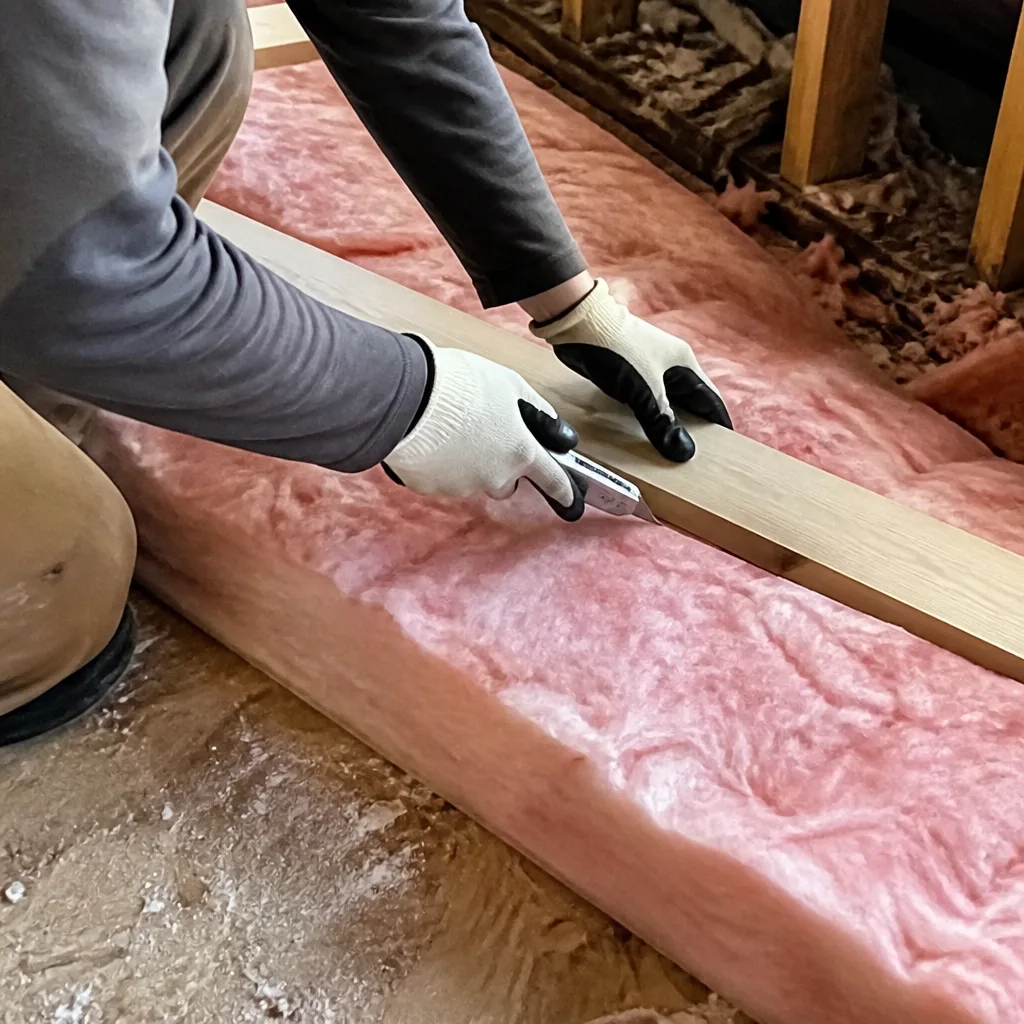
- Uneven cooling upstairs. The Icynene has pulled away from the roof deck at the eaves, or it was never sprayed thick enough at the critical junction. In Pflugerville’s August heat load, a half-inch thin spot at the soffit line becomes a thermal highway. We measure these with an infrared camera; the dark stripe shows up every time.
- Musty smell from ceiling registers. Open-cell Icynene is vapor-permeable by design, which means it lets moisture move through. If the attic ventilation was blocked during install, or if the foam was sprayed too cold and shrank, humid air hits the sheathing and mold follows. The foam itself isn’t mold food, but the dust that settles on it is.
- Cracking or yellowing foam surface. UV exposure degrades Icynene in about 18 months if the attic hatch gasket failed or if a prior contractor left foam exposed at a gable vent. The top 1/4 inch oxidizes and powders off. We see this in older Pflugerville subdivisions where attic fans were installed after the fact and pulled unfiltered air across the foam.
- Ice damming at the gutters in rare freeze events. Even in Central Texas, a January 2024-style cold snap will reveal where the thermal envelope is broken. Icynene that delaminated from the deck lets roof heat escape exactly at the eave line, melting snow that refreezes at the gutter. The report tells you what the house does. The insulation changes what the house does. Those are two different conversations.
- Sudden spike in HVAC runtime. Your air conditioner isn’t less efficient; the building envelope is leaking more. We compare current blower-door readings to the original construction specs. In a 2018-built Pflugerville home that originally tested at 3,200 CFM50, a reading of 4,800 CFM50 tells us the Icynene has failed at its bond or the air sealing underneath it has degraded.
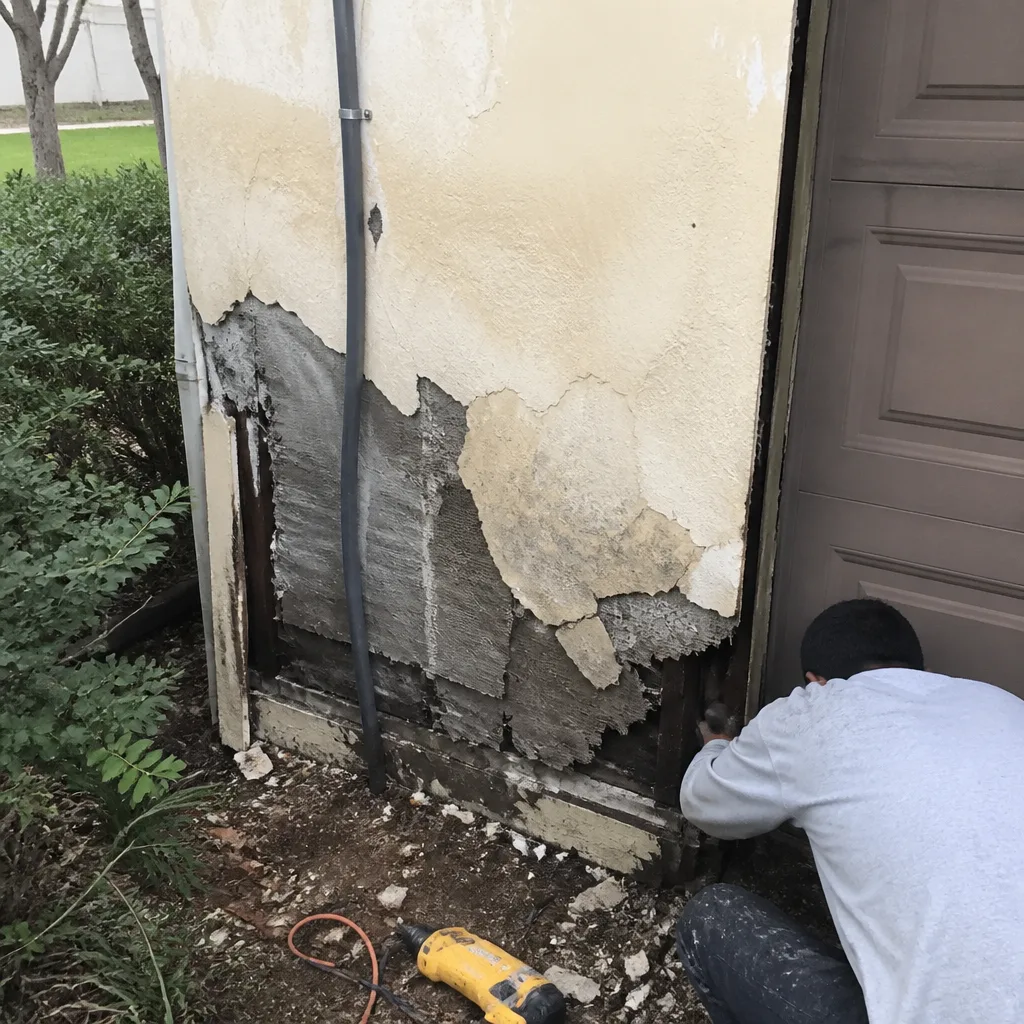 Before
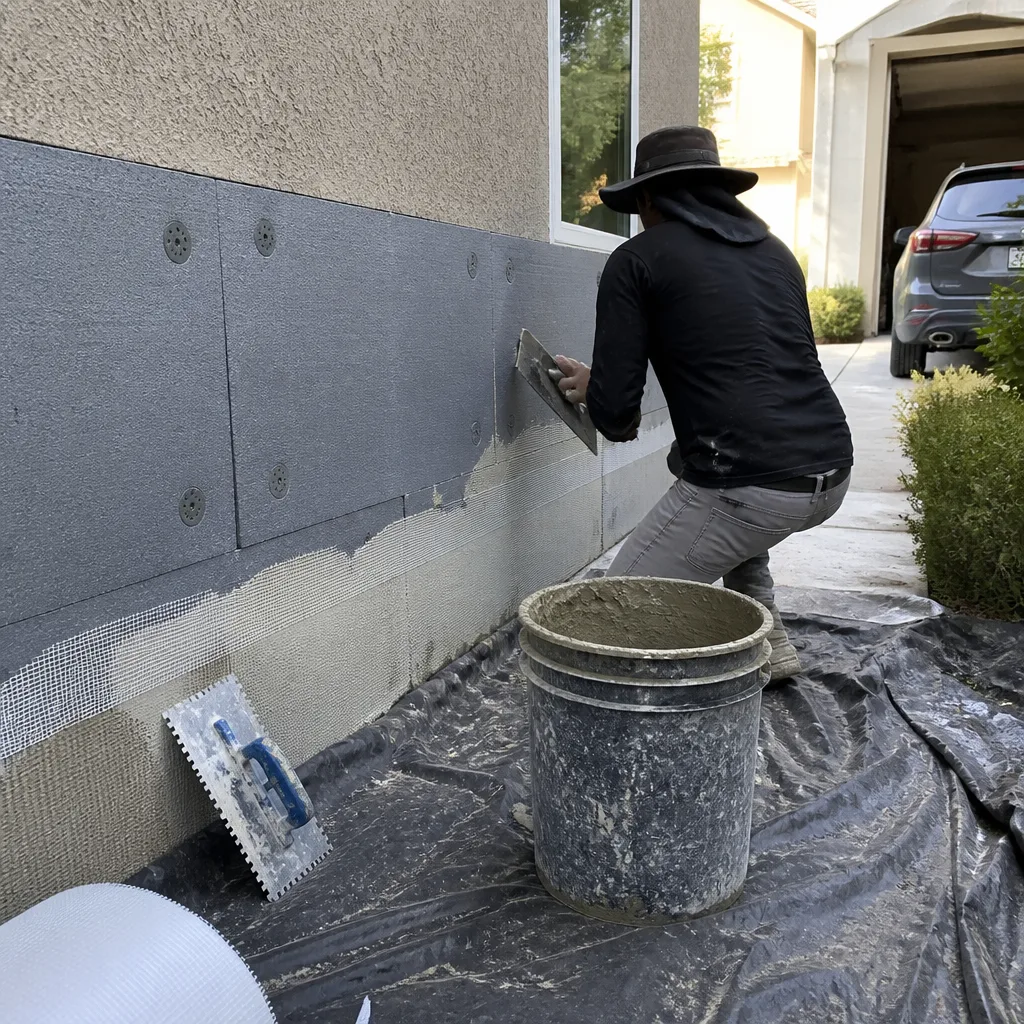 After
AfterReplacement Cost & What’s Included
For a full Icynene removal and re-spray in a typical Pflugerville attic, most jobs run $6,200 to $11,400 depending on square footage, thickness, and how much failed material has to come out. Touch-up work, where the existing foam is sound but thin at the eaves or around a new skylight, runs $1,800 to $3,400. The price includes core sampling the existing foam, blower-door testing before and after, full air sealing at top plates and penetrations, Icynene MD-R-200 or LD-C-50 application to spec’d thickness, and a Documented Photo Record delivered with your written invoice.
What moves the number: attic accessibility (steep pitches add labor), existing foam removal (some jobs require mechanical scraping), and whether the roof deck needs repair before re-spray. We give you a Written Price Before Any Work Starts, always. The 365-Day Done Right Promise covers delamination, shrinkage, or coverage gaps. We source Icynene through our supplier network alongside Owens Corning, Johns Manville, Knauf, Rockwool, CertainTeed, Demilec, and GreenFiber.
DIY or Call Us?
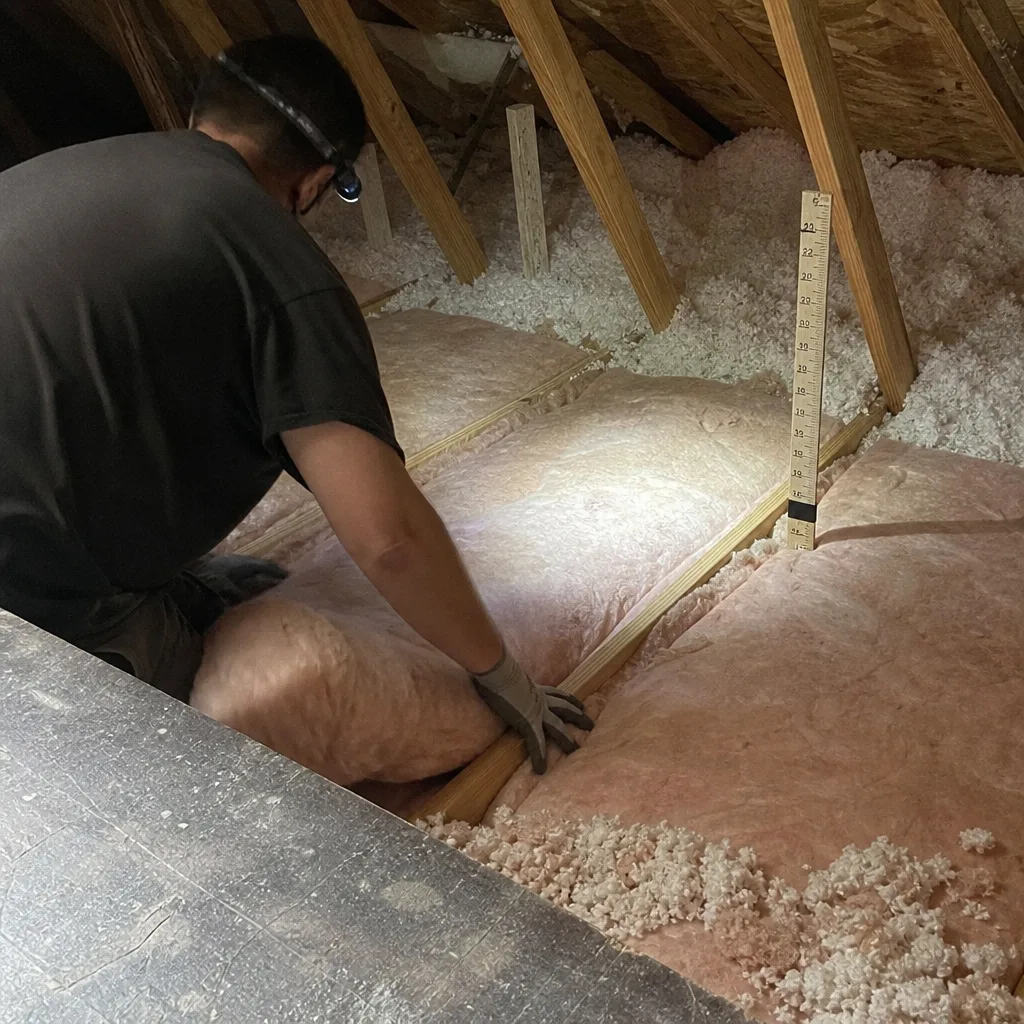
Here’s what you can safely check yourself: look at the foam surface with a flashlight for yellowing, cracking, or gaps at the eaves. Note any musty smells when the HVAC kicks on. Read your electric bills year-over-year for July and August. That’s the limit.
What you should not do: spray foam is a two-component chemical reaction requiring calibrated proportioning equipment, heated hoses, and respiratory protection beyond a hardware-store mask. The isocyanate component is a sensitizer; once you’re sensitized, you can’t work around it again. We’ve been called to Pflugerville attics where a homeowner’s weekend project left uncured, sticky foam that had to be mechanically removed at triple the cost of a proper install. The vapor permeability and density have to match the existing assembly, or you create a moisture trap. Call (737) 259-8352 and we’ll core-sample, test, and quote before anyone lifts a tool.
FAQs
Properly installed Icynene open-cell foam lasts 25 to 30 years in our climate, but the effective lifespan drops to 8 to 12 years if the attic ventilation was compromised or the air sealing underneath was skipped. The 110-degree attic temperatures in Pflugerville’s July accelerate UV degradation at any exposed surface. Call (737) 259-8352 for a free core sample and condition assessment.
Localized delamination or thin spots can be scarfed back and re-sprayed if the surrounding foam tests at proper density and bond. Widespread shrinkage, moisture contamination, or uncured original material requires full removal. We determine this with core samples and adhesion pull-testing, not guessing. Call (737) 259-8352 for an exact scope and written price.
Most full-attic removals and re-sprays take two to three days: one day for removal and deck prep, one day for air sealing and spray, and a partial day for inspection and blower-door verification. Touch-up work is usually same-day completion. We text you a named technician and arrival window under Haven Standard: Arrive on schedule.
We stock MD-R-200 and LD-C-50 sets, heated hose assemblies, and replacement gun mix chambers on our Pflugerville-based trucks. For larger jobs or specialty densities, we pull from our Austin-area supplier with same-day availability. We do not start work without confirming the material lot and expiration date in writing.
Ready to stop guessing about your attic? Call (737) 259-8352 for a free estimate. We’ll run a blower-door test, core-sample your existing foam, and hand you a written price before any work starts. That’s Haven Standard Clause 1, and it’s how we’ve done it since 2016.
Written by Wes Okafor, Owner, Topside Attic Insulation Pflugerville at Topside Attic Insulation Pflugerville, serving Pflugerville and nearby areas.