
Icynene Spray Foam Insulation in Pflugerville: What to Know First
We provide independent Icynene spray foam insulation service in Pflugerville, typically completing open-cell and closed-cell jobs within one to two days of scheduling. Most attic and roof deck applications in this market run between $3,200 and $6,800 depending on board feet, access, and whether we’re working over existing insulation or starting from the joists. We publish a written price before any work starts, and we don’t begin until you’ve seen it.
This page is for homeowners who already have Icynene foam in their building envelope and need to know whether it’s performing as specified, or who are considering Icynene for a new install and want to understand what can go wrong before they commit. We’re an independent Icynene service provider, not affiliated with or authorized by the manufacturer. Call (737) 259-8352 for a free estimate or to schedule a blower-door assessment.
How Icynene Products Fail - and How We Fix Them
- Icynene Classic Max (open-cell) shrinkage from seasonal humidity swings. In Pflugerville’s spring and fall, when attic humidity spikes between 40% and 70% in a single week, Classic Max can pull back from framing members at the stud bay perimeter. We’ve measured gaps up to 3/8 inch in homes near Stone Hill Town Center. We cut back the separated foam, prime the substrate with a moisture-barrier-compatible adhesive, and reapply to the full specified thickness rather than spot-patching, which delaminates again within two seasons.
- Icynene MD-R-200 (closed-cell) off-ratio curing from technician error. This two-component system requires precise A-side/B-side temperature matching at the gun. When the ratio drifts, the foam develops a tacky, cheese-like core that never fully hardens and traps solvent odor for months. We remove the affected lift entirely, verify substrate moisture content with a calibrated probe, and reapply using fresh drums from the same lot to eliminate batch-variation risk.
- Icynene LD-C-50 (low-density open-cell) dusting and surface degradation in vented attics. The 0.5 pcf density doesn’t hold up to repeated air movement across its surface. In Pflugerville homes with ridge vents and minimal soffit intake balance, turbulent attic airflow gradually erodes the exposed foam face. We assess the ventilation geometry first, then either encapsulate with an ignition barrier coating or recommend upgrading to a higher-density product if the ventilation can’t be corrected.
- Icynene Water-blown formulations and hydrolytic stability concerns in crawl spaces. Water-blown open-cell foam in crawl spaces with seasonal groundwater intrusion can exhibit hydrolysis, the chemical breakdown of the urethane polymer chain in sustained damp conditions. We see this in Pflugerville’s clay-heavy soils where vapor barriers were omitted or punctured. Our fix is full removal, remediation of the moisture source, installation of a proper 6-mil vapor barrier sealed at seams, then reapplication with a closed-cell product specified for below-grade use.
- Icynene ProSeal Eco (closed-cell) inadequate lift thickness in rim joist applications. Some installers spray a single 1-inch pass to save material, but ProSeal Eco needs 2 to 3 inches to achieve its stated R-value and vapor permeance. In winter, thin lifts in rim joists create cold spots that condense interior moisture. We remove the undersized application and rebuild to full specified thickness in controlled passes, with inter-lift cure times documented, so the thermal and moisture performance matches the label.
Our Icynene Spray Foam Insulation Process
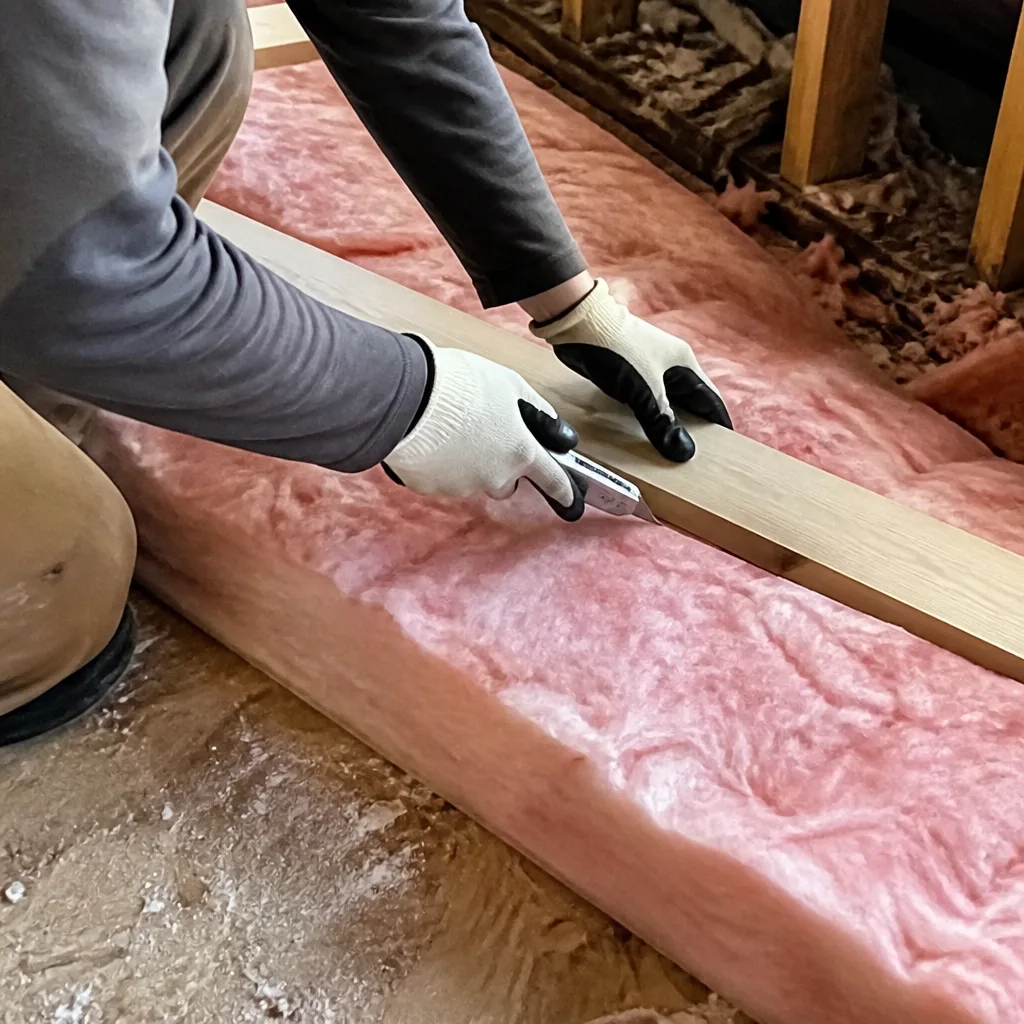
- 1
Call and scheduling. A live person answers. We book a site visit, send a text with your technician’s name and ETA window, and email a pre-visit checklist so you know what access we’ll need.
- 2
Blower-door test and visual assessment. We run a pressurization test to establish your baseline CFM50, then inspect all Icynene surfaces with moisture probes, thermal imaging, and core sampling where indicated. The report tells you what the house does. The insulation changes what the house does. Those are two different conversations.
- 3
Written scope and pricing. Before any work starts, you receive a flat price, a written scope of work, and a written warranty. No exceptions. This is Haven Standard Clause 1.
- 4
Repair or reinstallation with parts decision. Where Icynene-specific materials are required for warranty-safe repair, we source them. Where a quality aftermarket equivalent meets or exceeds the original specification, we document that choice and explain why. We also work with Reflectix and other brands when a hybrid approach makes sense for your envelope.
- 5
Post-work blower-door test and documentation. We test again, hand you the before-and-after CFM50 numbers in writing, and deliver a Documented Photo Record of all work areas. On applicable jobs, the performance change is verifiable in a single figure.
- 6
Cleanup and 365-Day Done Right Promise activation. The crew vacuums, removes protective sheeting, and leaves. Your warranty and scope documents are already in your inbox. If it’s not done right, we make it right.
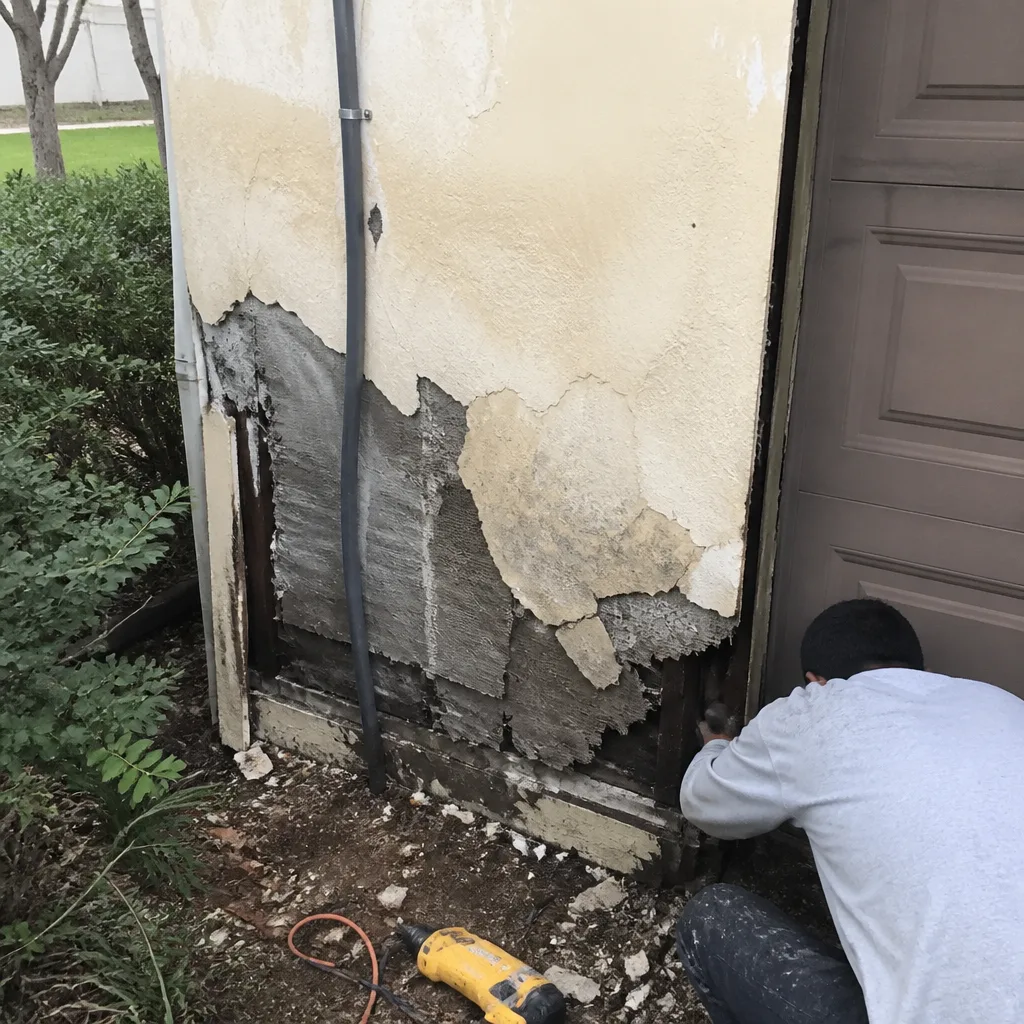 Before
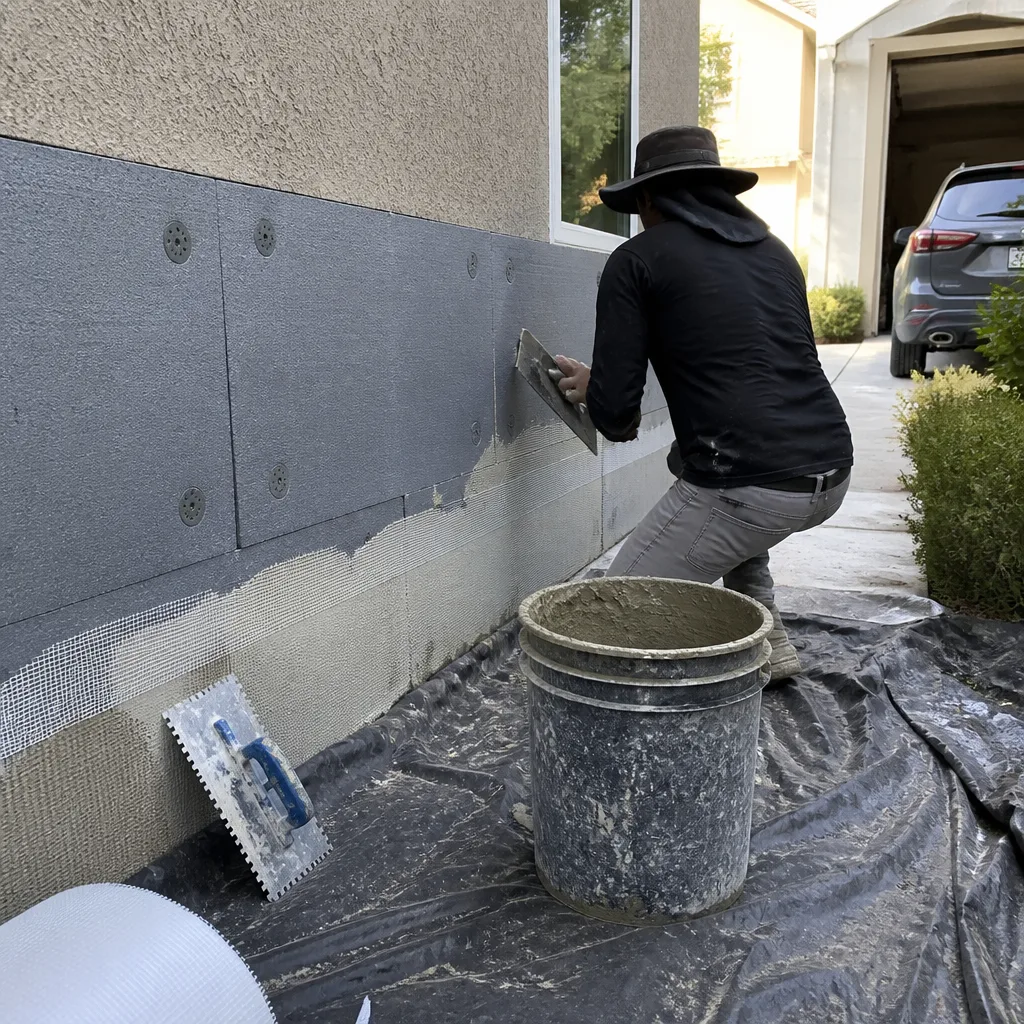 After
AfterWhat Icynene Spray Foam Insulation Costs in Pflugerville
| Job Type | Typical Range | What Moves the Price |
|---|---|---|
| Open-cell attic (1,200-1,800 sq ft footprint) | $3,200 - $5,400 | Existing insulation removal, deck height, top-plate sealing extent |
| Closed-cell roof deck (same footprint) | $4,800 - $7,200 | Deck pitch, rafter depth for full specified thickness, ignition barrier requirement |
| Rim joist (typical 1,500 sq ft slab) | $1,800 - $3,100 | Access, foundation wall condition, whether prior foam must be removed |
| Garage ceiling (2-car, conditioned space above) | $2,400 - $4,200 | Fire separation requirements, duct penetrations, existing drywall |
| Icynene removal and replacement | Add 40-60% to above | Volume of failed foam, disposal, substrate remediation, moisture source correction |
These ranges reflect what we’ve written on actual proposals in Pflugerville over the past three years. Your price may fall outside them depending on what we find. Call (737) 259-8352 for a free estimate, and bring us any competing written quote for a Free Second Opinion.
Why Pflugerville Homeowners Call Topside Attic Insulation Pflugerville for Icynene Work
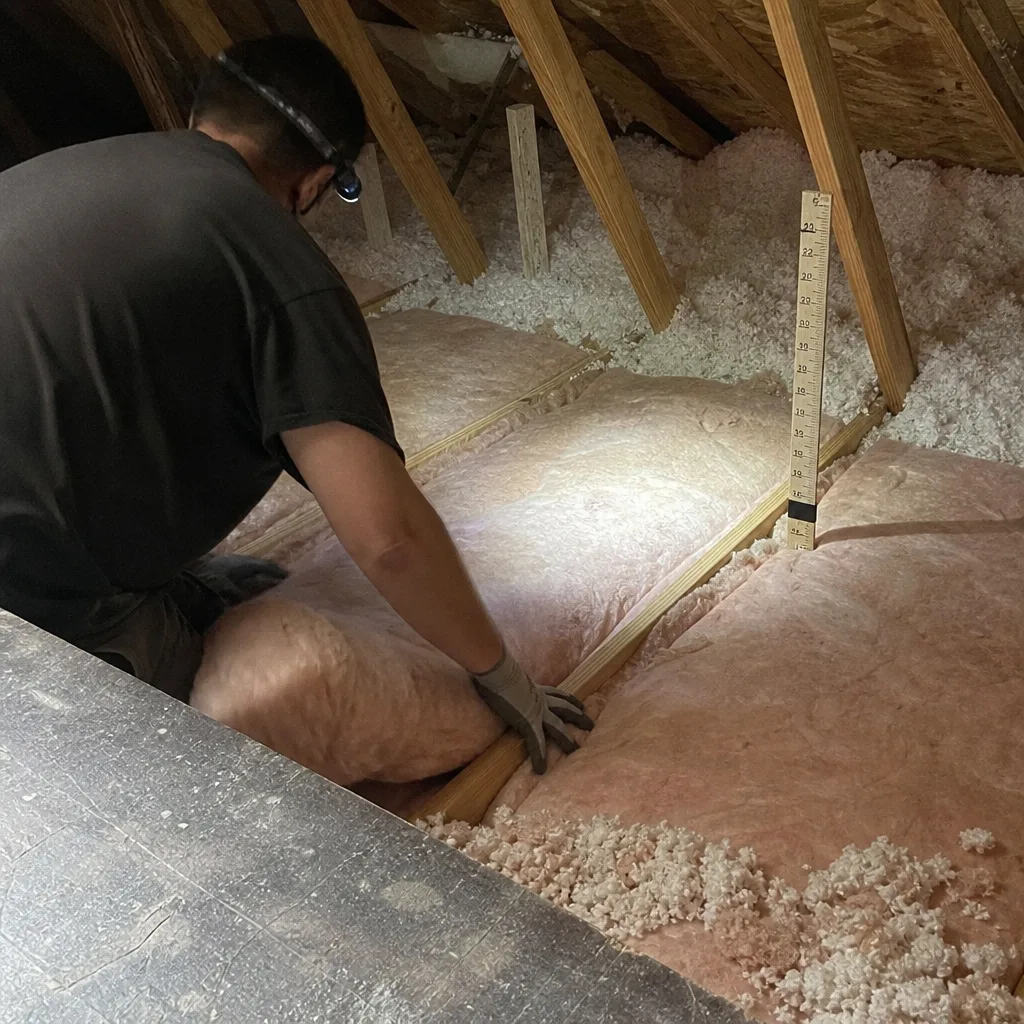
We’ve been in and out of attics throughout Pflugerville’s Stone Hill Town Center corridor often enough that the regional heat load patterns aren’t a surprise to us. Wes Okafor trained in building systems technology at Kennedy-King College on Chicago’s south side, where the curriculum drilled air-sealing fundamentals before insulation was even discussed. That sequence, sealed first then insulated, is how we still operate.
Every applicable job gets before-and-after blower-door numbers. Every visit produces a Documented Photo Record. Every price is written before any work starts. Our technicians are background-checked and uniformed, and a live person answers calls 24/7. We source materials from Icynene, Owens Corning, Johns Manville, Knauf, Rockwool, CertainTeed, Demilec, and GreenFiber, so we’re not locked into pushing one product line that doesn’t fit your house. We’ve sealed and insulated over 9,000 homes since 2016.
FAQs
It depends on who does the work and what materials they use. Icynene’s limited warranty typically requires application by a certified contractor using Icynene-specified components; our repairs use manufacturer-compatible materials and are documented as independent service, which does not extend the original warranty but also does not automatically void it unless the original installer can prove our work caused the failure. We explain this distinction in writing before we start. Call (737) 259-8352 if you want us to review your original warranty language with you.
We source Icynene-formulated materials when the repair requires chemical compatibility with the existing foam, particularly for open-cell touch-ups where adhesion and vapor permeance must match. For closed-cell applications, quality aftermarket two-component systems often meet or exceed the original specification at lower material cost, and we’ll document that choice with test data if you prefer. We do not use generic single-component canned foam for structural insulation repairs.
Spot repairs make sense when the failure is localized to less than 15% of the total installed area and the substrate is sound. Full removal and replacement is the better investment when the failure pattern indicates systemic application error, when moisture damage has compromised the structural substrate, or when the original product specification no longer meets current code. We’ll give you both prices and explain which conditions we found that push the recommendation one way or the other.
Most assessments are scheduled within 48 hours of your call. Work starts within three to five business days after you approve the written scope, assuming material availability. Icynene-specific components sometimes require a two-day lead time from our Austin-area distributor. Call (737) 259-8352 to check current scheduling.
We work with Icynene in all building envelope locations: attics, roof decks, rim joists, crawl space walls, garage ceilings, and conditioned basement band joists. Each location has different code requirements for ignition barriers, thermal barriers, and moisture management, and we specify accordingly. Pflugerville’s clay soils and seasonal groundwater patterns make crawl space work particularly detail-sensitive, which is why we always start with a moisture assessment before quoting foam in that environment.
Ready to find out what your Icynene installation is actually doing? Call (737) 259-8352 for a free estimate. We’ll run a blower-door test, show you the numbers, and give you a written price before any work starts.
Written by Wes Okafor, Owner, Topside Attic Insulation Pflugerville at Topside Attic Insulation Pflugerville, serving Pflugerville and nearby areas.