
Crawl Space Vapor Barrier in Pflugerville, TX
A crawl space vapor barrier is a polyethylene or reinforced poly sheeting installed directly on the crawl space floor – and often up the stem walls – to block ground moisture from migrating into your home’s structural framing and conditioned living space. In Pflugerville, where clay-heavy soils in neighborhoods like Avalon and Heatherwilde hold water long after a rain event and summer humidity regularly pushes above 70%, an unsealed crawl space isn’t a minor maintenance item. It’s a slow-motion damage event. Most Pflugerville homes with unprotected crawl spaces see measurable wood moisture readings above 19% within two or three wet seasons – the threshold where mold establishes and structural decay begins.
At Topside Attic Insulation Pflugerville, vapor barrier work is part of our full Crawl Space Encapsulation & Vapor Barrier in Pflugerville service. Wes Okafor leads every project scope personally. We give you a written price before anyone enters your crawl space, document the condition with photos before and after, and back the work with our 365-Day Done Right Promise. If you want an honest look at what your crawl space is actually doing right now, call us at (737) 259-8352 and we’ll schedule a free estimate – no voicemail, no callback window, a live person picks up.
When You Need a Crawl Space Vapor Barrier
- You’re smelling musty air inside the house. Crawl space air moves upward through floor penetrations, plumbing chases, and rim joist gaps. If the ground moisture has no barrier, that earthy, damp smell ends up in your living area – a pattern we see regularly in older sections of Pflugerville near Gilleland Creek, where the water table sits closer to the surface than most homeowners realize.
- Your hardwood or laminate floors are cupping or gapping. Wood floors respond to the relative humidity of the air below them. A crawl space reading 80% RH in July will push moisture into your subfloor and finish flooring. We’ve documented subfloor moisture readings above 25% in homes where the crawl space had no barrier at all.
- Your HVAC runs longer than it used to. When humid crawl space air infiltrates the conditioned envelope, your air conditioner works harder to remove that latent load. A vapor barrier alone doesn’t fix an HVAC problem, but it removes one of the sources your system is fighting.
- You see visible condensation on your ductwork or floor joists. Condensation on cold surfaces in the crawl space – ducts, pipes, structural wood – is a direct sign that vapor pressure from the ground is winning. Left alone, that moisture feeds mold within weeks during a Pflugerville summer.
- Your home was built before 1990 and has a bare dirt floor. Many homes in the older sections of Pflugerville and the surrounding Pflugerville ISD footprint were built with minimal or no crawl space ground cover. Code standards have changed substantially since then, and what passed inspection in 1985 doesn’t reflect what we know today about moisture migration through soil.
- A home inspection flagged crawl space moisture or mold. If a report came back with language about elevated moisture, wood discoloration, or suspected mold in the crawl space, a properly installed vapor barrier is the starting point for remediation – not an add-on to it.
Our Crawl Space Vapor Barrier Process
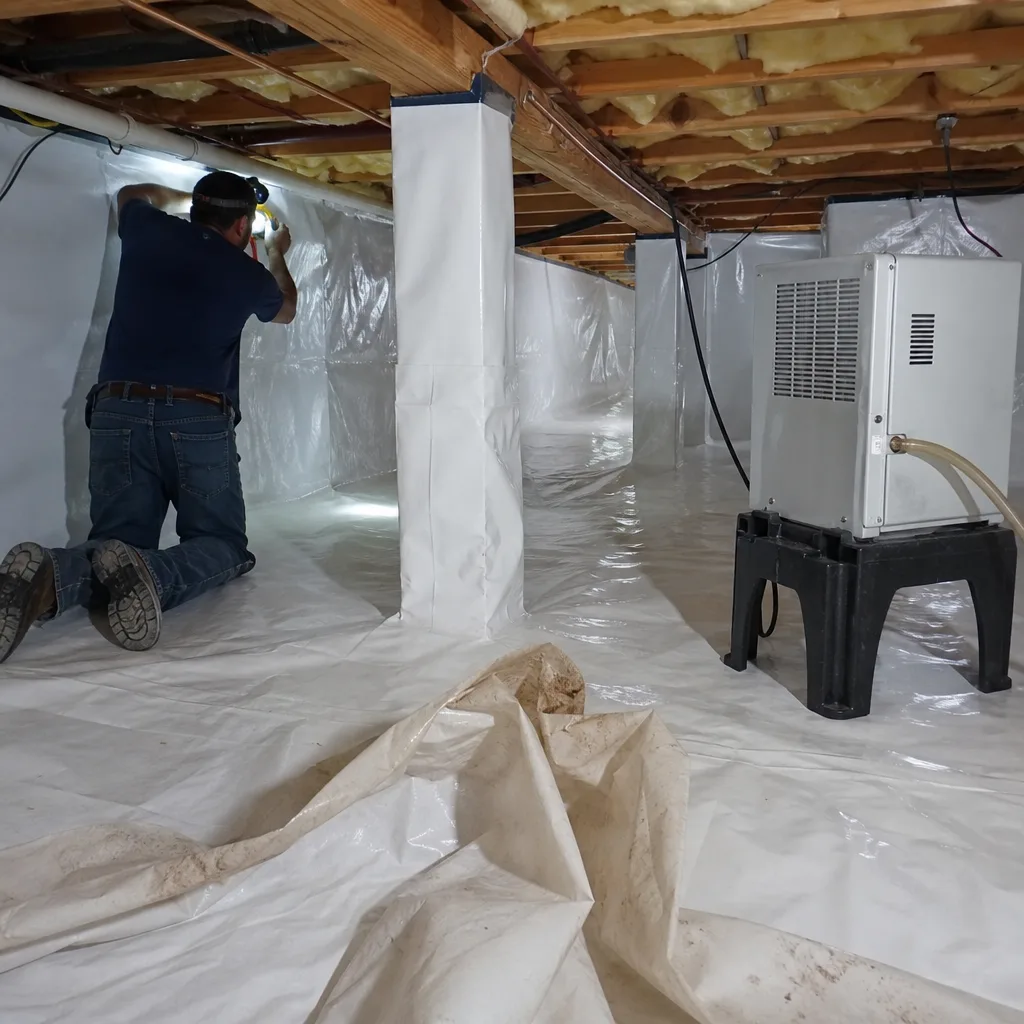
We follow the same documented sequence on every job. You receive a written scope before we start and a photo record when we’re done. Here’s exactly what the work looks like:
- Pre-installation inspection and moisture documentation. Before any material goes in, we measure the existing conditions: we record crawl space relative humidity, take wood moisture readings on the floor joists and sill plate, photograph the ground and perimeter, and note any standing water, existing debris, or pest evidence. These baseline readings go into your job file and are part of the Documented Photo Record you receive at close. Under the Haven Standard, you see what we found before we touch anything.
- Debris removal and ground prep. Old, failed sheeting – the thin 6-mil poly that was common in Pflugerville homes built through the 1990s – gets pulled and removed. Organic debris, wood scraps, and construction waste come out. The ground is leveled where practical. This step matters because a 20-mil reinforced barrier laid over old degraded poly or loose debris won’t seal the way the spec requires.
- Barrier installation on the ground plane. We install a reinforced polyethylene vapor barrier – typically 12-mil to 20-mil material, depending on what the scope calls for – across the entire dirt floor. Seams are overlapped a minimum of 12 inches and sealed with a compatible tape rated for the application. No shortcuts on seam coverage: an unsealed seam is a gap, and a gap is where moisture enters.
- Stem wall coverage and mechanical attachment. The barrier runs up the interior face of the foundation stem walls and is mechanically fastened to the concrete above the soil line. We seal the top edge to prevent moisture from working behind the sheeting. This step is what separates a true vapor barrier installation from a dirt cover – the perimeter attachment is where most failed DIY attempts and low-cost installs break down.
- Penetration sealing. Every pipe, post, and column that passes through the barrier gets sealed at the point of contact. These penetrations are the same category of detail we address in attic air sealing – the point where the assembly meets reality. An unsealed pipe penetration can allow as much vapor transmission as a square foot of bare ground.
- Post-installation documentation and close-out. We re-measure crawl space humidity where conditions allow a meaningful reading, photograph the completed installation from multiple angles, and compile the Documented Photo Record. You receive the written scope, the warranty documentation, and the photo file before we leave. The 365-Day Done Right Promise applies from the date of completion.
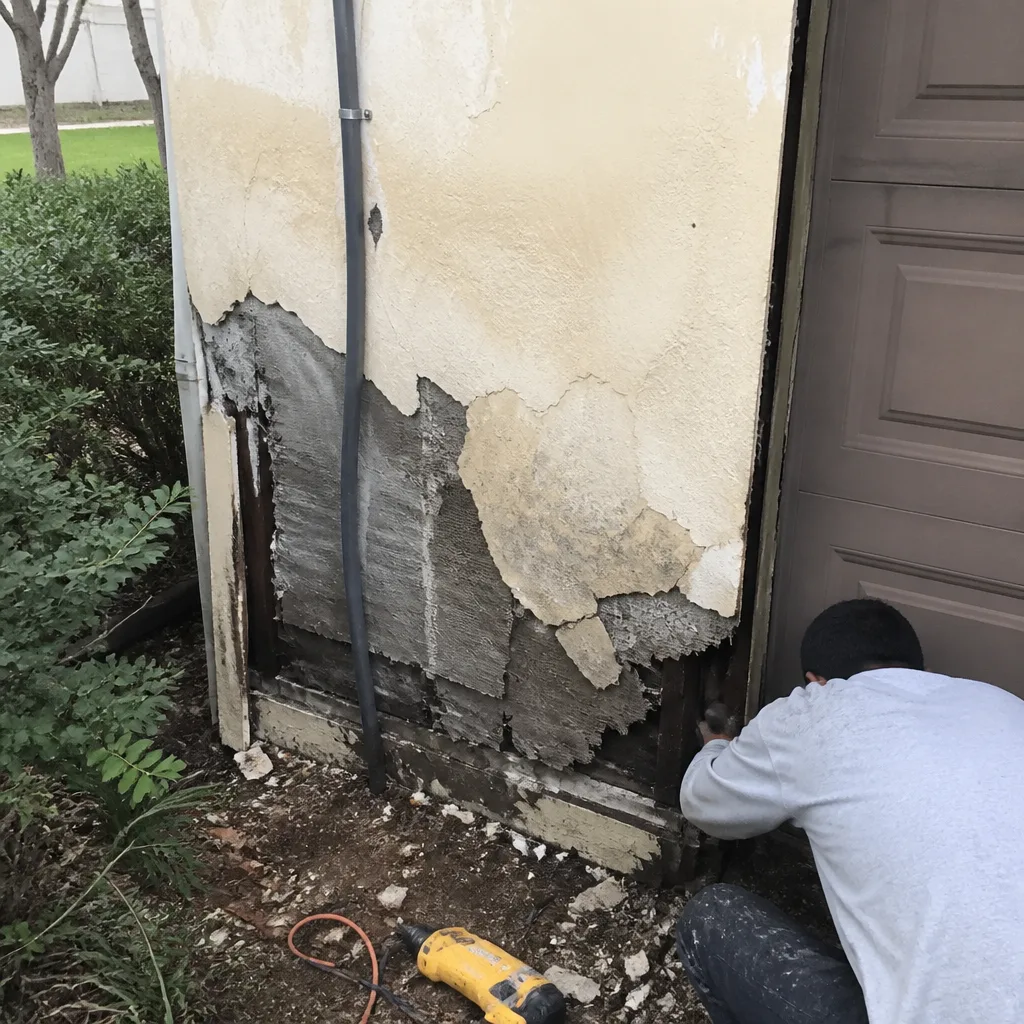 Before
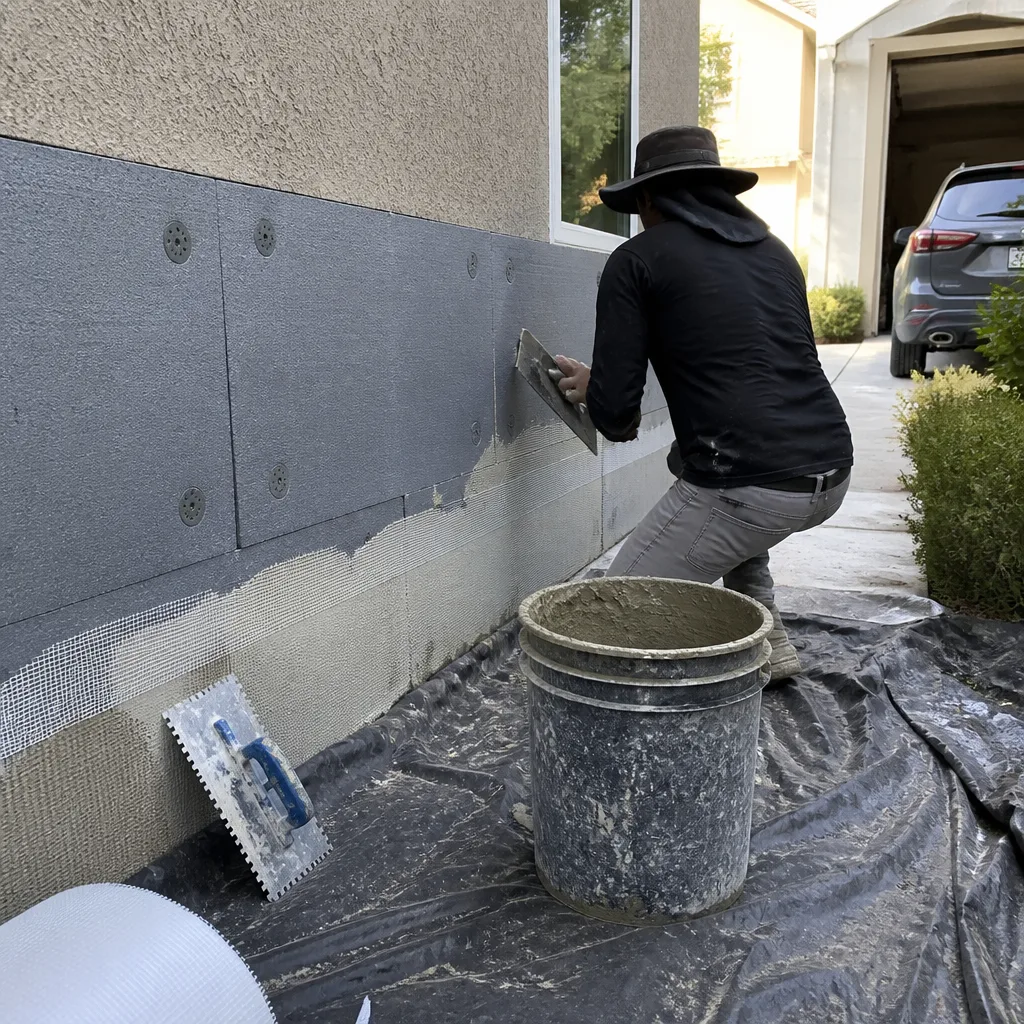 After
AfterCrawl Space Vapor Barrier Pricing in Pflugerville
Vapor barrier installation in Pflugerville typically runs between $1,200 and $4,500 for a standalone vapor barrier job, depending on the factors below. For a full breakdown, see How Much Does Crawl Space Encapsulation & Vapor Barrier Cost? (2026 Price Guide) - Pflugerville, TX. That range covers the material, labor, debris disposal, and the documentation you receive. It doesn’t include remediation for existing mold or structural repair – those are separate scopes.
| Factor | Typical Effect on Price |
|---|---|
| Crawl space square footage | The single largest cost driver. A 600 sq ft crawl space costs less than a 1,800 sq ft one – material and labor scale roughly with area. |
| Barrier mil thickness | 12-mil reinforced poly is the standard. 20-mil scrim-reinforced material costs more but carries a longer service life and is better suited to crawl spaces with rough ground or high-traffic access. |
| Crawl space height and access | Spaces under 18 inches significantly increase labor time. Older Pflugerville homes with original pier-and-beam construction sometimes have access points that require crew to work prone for the full installation. |
| Debris removal volume | Failed old sheeting, construction debris, and organic matter all add to disposal cost. We photograph what we remove so you see exactly what came out. |
| Stem wall coverage | Full perimeter stem wall coverage adds material and labor compared to ground-only coverage. It’s standard practice for any installation meant to perform long-term. |
| Existing moisture conditions | Standing water or active seepage may require additional prep or drainage work before the barrier goes in. We flag this during the inspection and price it separately – it won’t appear on your vapor barrier scope unless you’ve approved it. |
Under Haven Standard Clause 1: you receive a written price before any work starts – a flat price, a written scope, and a written warranty. No estimate given over the phone without an inspection, and no scope changes without your written sign-off. If you’ve already received a written estimate from another contractor, bring it to us. We offer a free second opinion on any written estimate and will read it with you line by line.
To get an accurate number for your home, call (737) 259-8352. We’ll schedule a free estimate at a time that works for you.
FAQs – Crawl Space Vapor Barrier
What thickness of vapor barrier do I need in a Pflugerville crawl space?
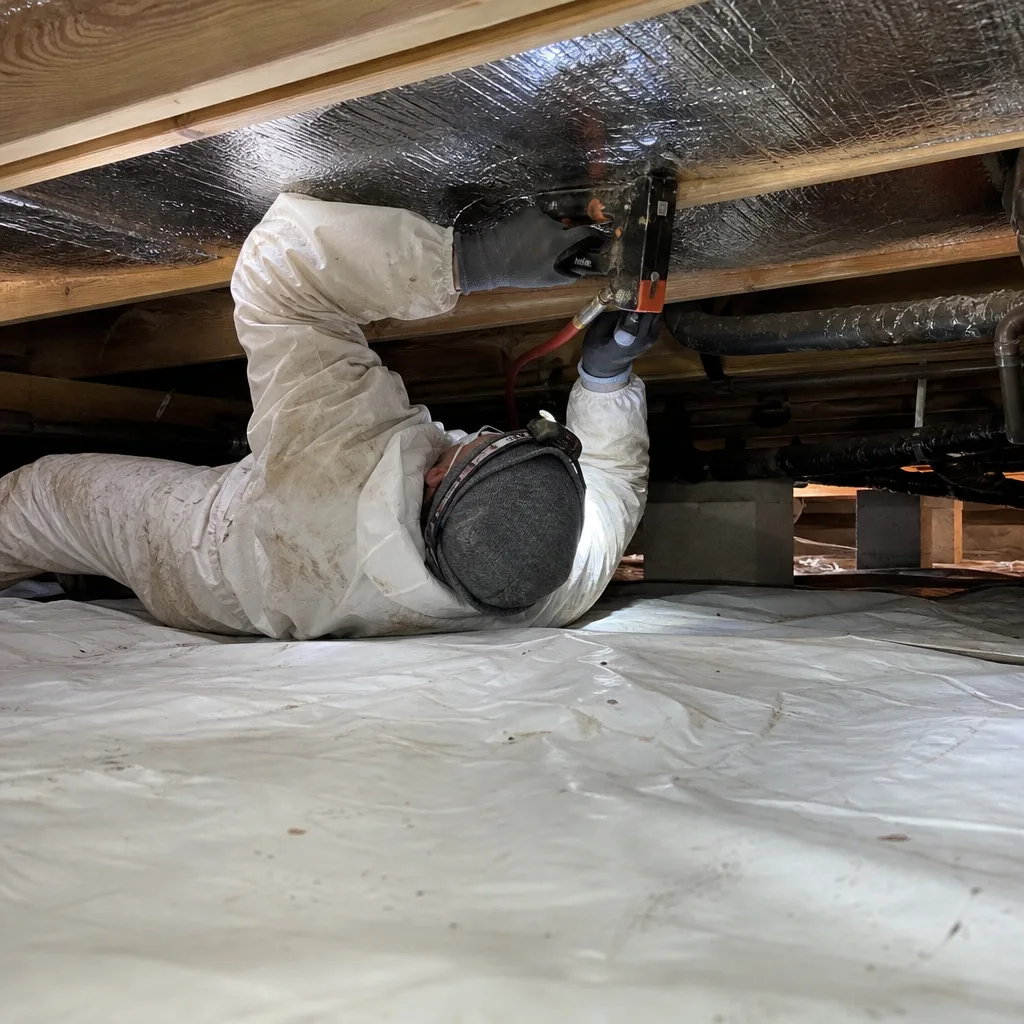
For most Pflugerville homes, a 12-mil reinforced polyethylene barrier paired with Crawl Space Insulation is the minimum worth installing. The thin 6-mil sheeting common in older installations degrades within five to seven years under the temperature swings and occasional standing moisture that Central Texas crawl spaces see. If your crawl space has rough caliche or rock ground, or if access requires crew to crawl across the material during installation, 20-mil scrim-reinforced poly is a better fit – it resists puncture during installation and holds up longer under foot traffic during routine HVAC or plumbing access. We’ll tell you which material fits your specific conditions in the written scope before any work starts.
Is a vapor barrier the same thing as full crawl space encapsulation?
A vapor barrier addresses ground moisture migration, but it’s not the same as full encapsulation. Full Crawl Space Encapsulation & Vapor Barrier in Pflugerville typically adds conditioned air supply or a dehumidifier, sealed vents, and rim joist insulation on top of the barrier – converting the crawl space from a vented, unconditioned space to a conditioned semi-sealed one. A vapor barrier alone is a meaningful improvement, but it doesn’t control humidity inside the crawl space the way a full encapsulation system does. We’ll document what your crawl space actually needs and price each scope separately so you can decide what makes sense for your budget.
How long does crawl space vapor barrier installation take in Pflugerville?
Most vapor barrier installations in Pflugerville homes complete in one day. A straightforward 1,000 to 1,200 square foot crawl space with good access, no debris removal, and standard ground conditions typically runs four to six hours from first entry to photo documentation at close. Tighter access, significant debris, or larger footprints push into a second day. We give you a realistic time estimate in the written scope – not a best-case window designed to win the bid. Call (737) 259-8352 for a free estimate and we can give you a more specific range once we’ve seen the space.
Will a vapor barrier fix the musty smell coming up from my crawl space?
A vapor barrier eliminates the primary moisture source that feeds the conditions causing the smell – ground vapor moving into the crawl space air and then into your living area. In most cases where the smell traces to soil moisture rather than an existing mold colony, a properly installed barrier reduces or eliminates the odor within a few weeks as the crawl space dries out. If existing mold is already established on the joists or subfloor, remediation needs to happen before or alongside the barrier installation – sealing the space over active mold doesn’t solve the problem. We document moisture readings and visible mold indicators during the inspection so you know exactly what you’re dealing with before the scope is written.
Why Pflugerville Crawl Spaces Need More Than a Basic Barrier
Pflugerville sits on expansive clay soils that shrink in the summer and swell significantly after a rainfall. That soil movement creates gaps along foundation perimeters that shift seasonally – which means a vapor barrier that’s mechanically attached only at installation may pull away from the stem wall over time if the fastening system doesn’t account for movement. We’ve inspected crawl spaces in the Stone Oak Ranch and Carmel neighborhoods where barrier installations done five or six years ago by other contractors had separated from the stem walls along 30 to 40 percent of the perimeter. The ground coverage was intact, but the moisture pathway along the foundation wall was fully open.
The other factor specific to this part of Pflugerville is the grade. Homes on the lower lots near the Pflugerville Parkway corridor and toward the Lake Pflugerville watershed sit in areas where surface drainage can push toward the foundation after heavy rain. Williamson County averages around 35 inches of annual rainfall, with a meaningful share arriving in intense spring events. A vapor barrier installed without attention to how water approaches the foundation in those rainfall events will see hydrostatic pressure that degrades the perimeter seal faster than normal.
We account for both of these conditions in the written scope. If the site drainage suggests a higher moisture load, we note it. If the soil conditions at the perimeter suggest we need a more aggressive fastening approach on the stem wall, that goes into the documentation before work starts, not discovered after the fact.
What You Receive When the Job Is Done
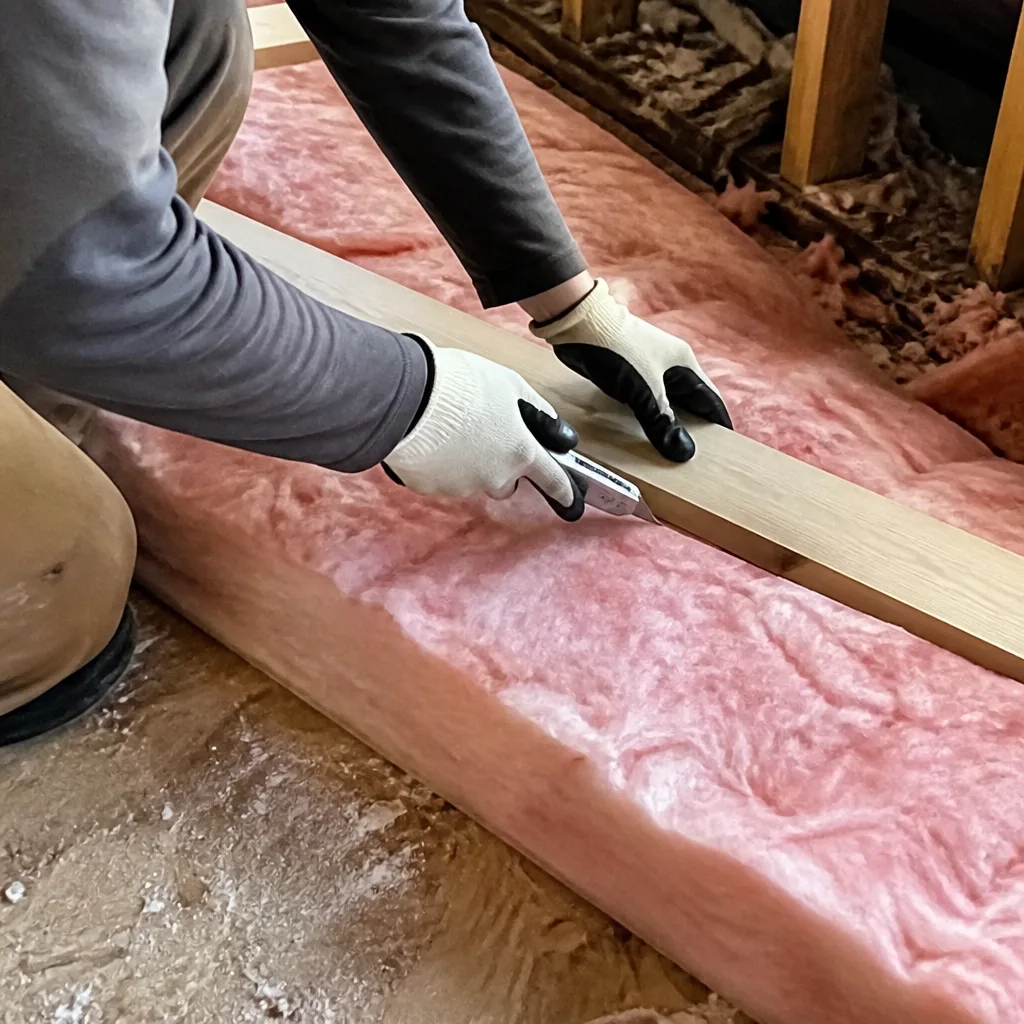
Documentation is part of the service, not an add-on. Every Topside Attic Insulation Pflugerville job closes with:
- A Documented Photo Record – photos of the crawl space before work started, during installation, and at completion, including close-ups of seams, penetration seals, and stem wall attachment points.
- The written scope of work, signed before the job began, showing the exact material specification, footage covered, and any conditions noted during inspection.
- The written warranty, which documents the 365-Day Done Right Promise: if something isn’t right, we come back and make it right.
- Pre- and post-installation moisture readings where measurable, so you have a documented baseline for any future inspection or real estate transaction.
Wes Okafor reviews every completed job file before it closes. That’s not a process statement – it’s how the Haven Standard operates in practice. The written scope that goes out with the crew is the same written scope the customer receives at close, and any field change requires a written amendment with your approval.
If you’re in Pflugerville and want to know what’s actually happening in your crawl space, call (737) 259-8352. Wes and the Topside team will schedule a free inspection, show you what we find, and give you a written price before anyone picks up a tool.
Written by Wes Okafor, Owner at Topside Attic Insulation Pflugerville, serving Pflugerville since 2016.