
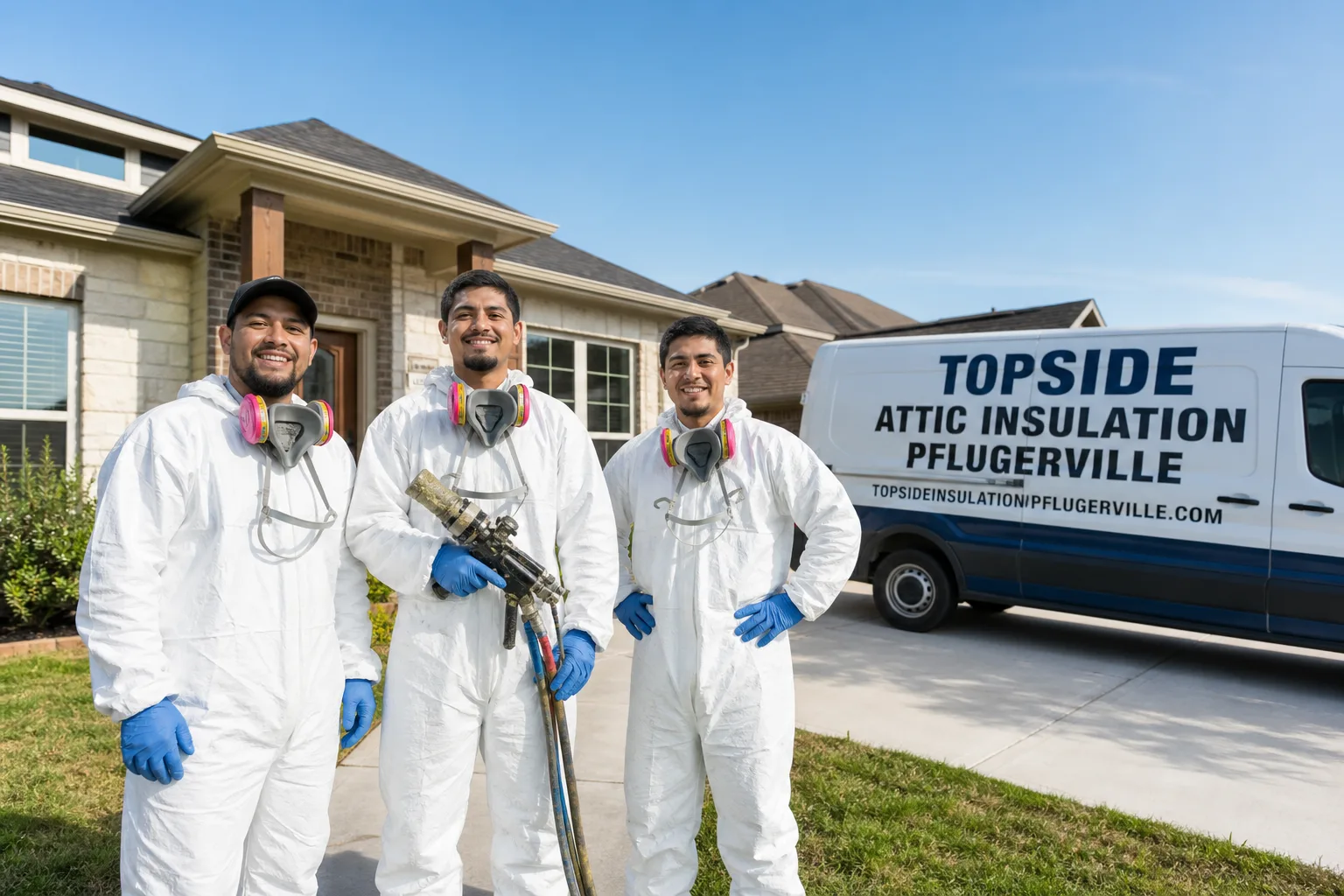
How Much Does Attic Air Sealing Cost in Pflugerville?
Attic Air Sealing services in Pflugerville, TX typically run between $950 and $2,800 for a single-family home, with most jobs in the 1,800-to-2,800-square-foot range landing around $1,200 to $1,900. That price covers sealing top plates, can lights, plumbing and electrical penetrations, and the attic hatch before any insulation is added – because in our experience, insulation placed over unsealed gaps does roughly half the work it should.
If you want a written price before anyone touches your attic, Attic Air Sealing in Pflugerville walks through exactly what the work involves and what you receive when it’s done.
Attic Air Sealing Cost Breakdown (2026)
Most Pflugerville homeowners who call us have already gotten one quote that either lumps air sealing into the insulation line item (which makes it impossible to know whether it was actually done) or skips it entirely. The table below breaks out what you’re actually paying for when the job is scoped correctly.
| Scope of Work | Typical Price Range | Notes |
|---|---|---|
| Basic air sealing only – home under 1,500 sq ft | $850 – $1,100 | Fewer penetrations, smaller attic footprint |
| Standard air sealing – 1,500 to 2,400 sq ft | $1,100 – $1,600 | Most Pflugerville homes built 1995-2010 |
| Larger home – 2,400 to 3,500 sq ft | $1,600 – $2,400 | More top-plate runs, typically more can lights |
| High-penetration attic (recessed lights throughout) | $2,000 – $2,800 | Each IC or non-IC can adds time and material |
| Blower-door test (before and after) | $250 – $450 | Verifies results; Envelope publishes both readings |
| Combined air sealing + blown-in insulation | $2,400 – $5,200 | Depends on existing R-value and attic area |
| Air sealing only as a standalone second opinion | Free estimate, written price before work starts | Bring a competing quote – we read it with you |
A few things push these numbers in either direction. On the lower end: newer homes in Stone Creek or Windermere Pflugerville sometimes have smaller top-plate runs and fewer retrofit can lights because they were built with better framing callouts. On the higher end: homes in Avalon or Falcon Pointe that were finished-out with recessed lighting in every room – which was extremely common in Pflugerville builds from 2003 to 2012 – can have 30 to 60 penetrations in the attic floor that each need individual attention. One unsealed can light in a vaulted living room can leak as much conditioned air as leaving a window cracked an inch all summer.
The blower-door test – a pressurization reading that measures, in a single number called CFM50, how much air the home’s building envelope is losing per minute – is not always included in a base quote. We include before-and-after readings on every applicable job because a number you can verify is worth more than a technician’s word that the job went well. If a contractor can’t show you the CFM50 before and after, you have no way to know whether anything changed.
What Affects Attic Air Sealing Pricing in Pflugerville
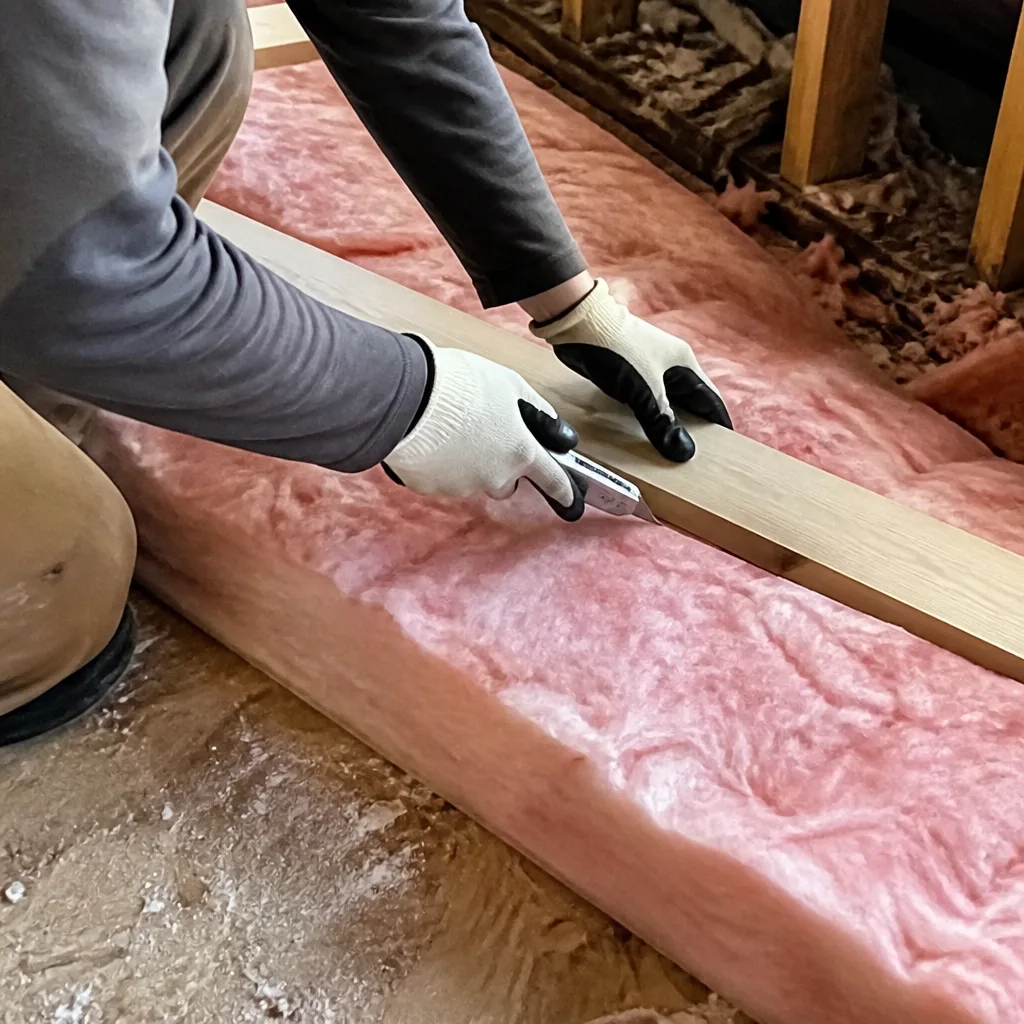
- Home size and attic footprint: Larger attics mean more linear feet of top plate to seal, more penetrations to locate, and longer crew time on-site. A 3,200-square-foot home in Falcon Pointe with a complex roofline can take six to eight hours of sealing work; a 1,400-square-foot home in Bohls might take two to three.
- Number of recessed (can) lights: Non-IC-rated recessed fixtures – the kind installed in tens of thousands of Pflugerville homes through the early 2000s – are essentially open holes into the attic. Sealing each one with an approved cap or box adds roughly $18 to $35 per fixture in labor and material. A home with 40 can lights adds $700 to $1,400 to the job before anything else is counted.
- Existing insulation condition: If the attic already has blown-in insulation that has to be moved aside to reach the top plates and penetrations, that adds time. Wet, compressed, or rodent-contaminated insulation that needs removal before sealing can add $400 to $900 to the total, though insulation removal is typically quoted as a separate line item.
- Attic access and clearance: Pflugerville’s flat-lot neighborhoods like Verona and Cele Road corridor have some of the tallest attic clearances in the area, which makes work faster. Homes with low-pitch rooflines or finished-room-above-garage layouts – common in some Pflugerville subdivisions built after 2010 – have restricted zones that take longer to work through.
- HVAC duct and chase penetrations: Where return air chases or supply plenums pass through the attic floor, the gaps around them can be significant. These are not always visible from the attic hatch and require a methodical walk of the whole floor to find. Homes in Pflugerville with older builder-grade duct systems often have these gaps at every joist bay transition.
- Whether a blower-door test is included: Adding a before-and-after blower-door test to the scope raises the price by $250 to $450 but gives you an independently verifiable number. In Pflugerville’s Central Texas climate – where cooling loads run June through September and homes can see attic temperatures above 140 degrees – knowing your actual air change rate before and after the work is the only way to confirm the job performed as paid for.
A note on Pflugerville’s specific climate conditions
Central Texas heat is not a gentle load on a building envelope. Pflugerville sits in a climate zone where the design cooling load (the heat gain the HVAC system is sized to handle) often exceeds what the original contractor assumed, partly because air leakage was not adequately addressed at rough-in. During summer blower-door tests we’ve run on homes in Pflugerville, pre-sealing CFM50 readings in the 4,000 to 6,500 range are common on homes that were never air-sealed at the attic plane. Post-sealing, those same homes typically read 2,000 to 3,500 CFM50 – a 40 to 55 percent reduction in measured air leakage. That reduction shows up on the electric bill in July and August in ways a thermostat setback alone doesn’t replicate.
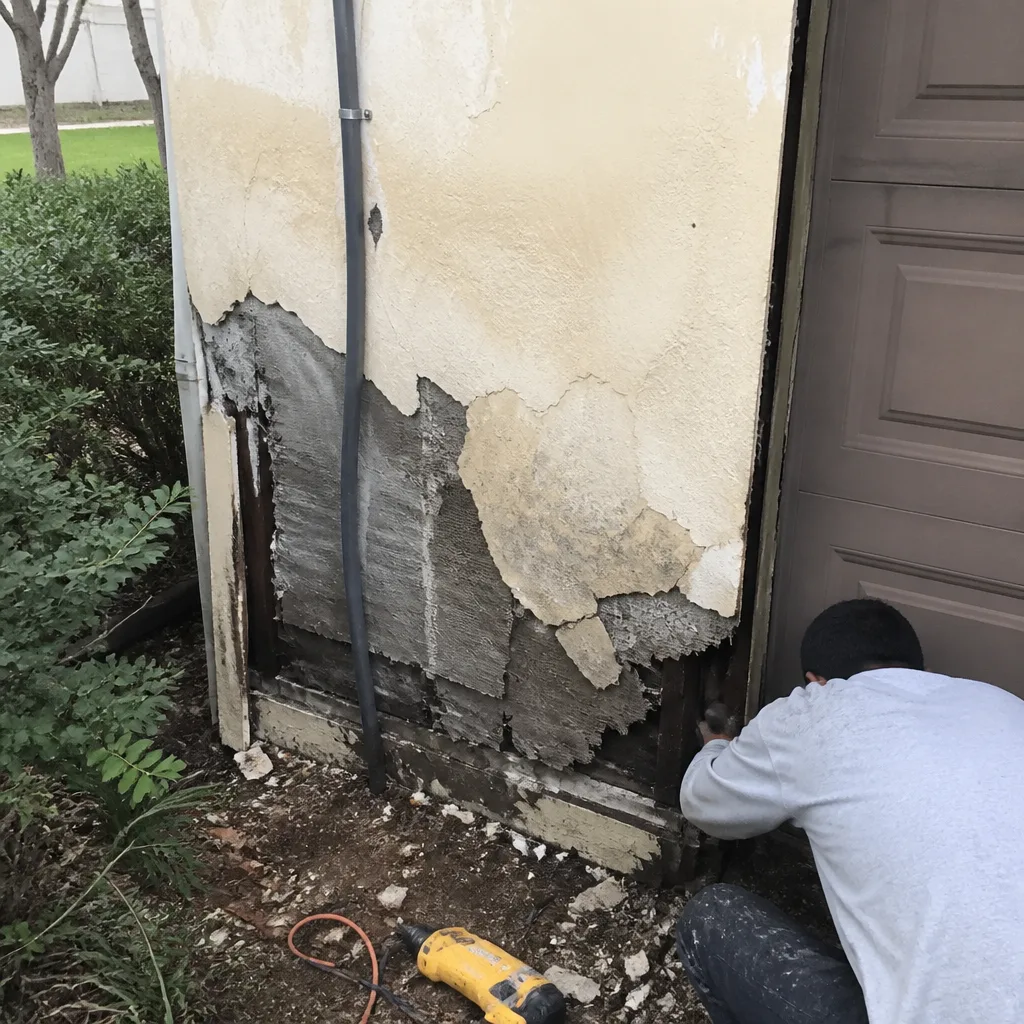 Before
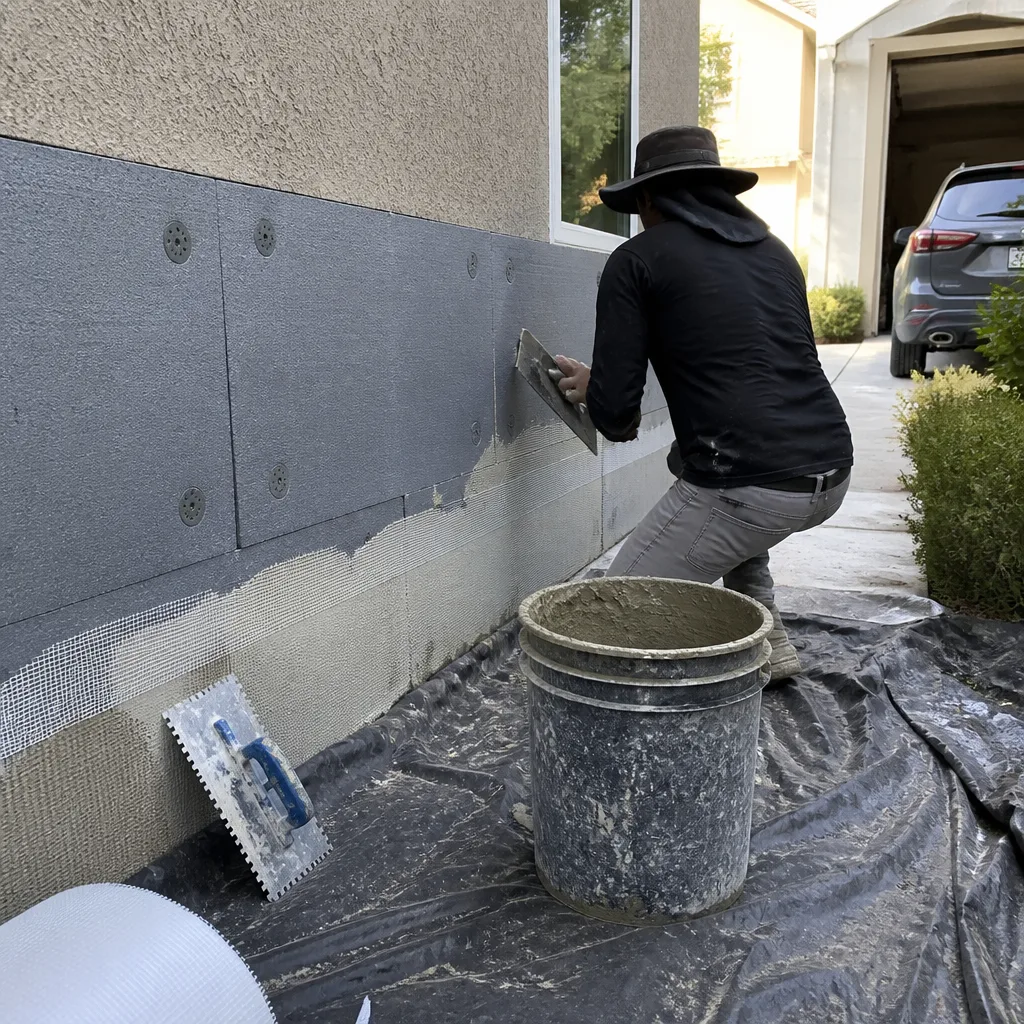 After
AfterWhat the Work Actually Includes
Air sealing is not a single product – it’s a sequence of tasks performed in a specific order. Here is what a properly scoped attic air sealing job covers, and why the order matters.
Top plate sealing
The top plate is the framing member that sits at the top of your interior walls, directly below the attic floor. Where drywall doesn’t seal tightly to the top plate – which is nearly everywhere in production-built homes – conditioned air from the living space travels up through the wall cavity and into the attic. Sealing these gaps with closed-cell spray foam or appropriate caulk is the single highest-return task in attic air sealing. In a 2,200-square-foot Pflugerville home, the total linear footage of top plate can run 400 to 600 feet.
Recessed light fixtures
This is where the labor concentration is. Each recessed fixture is capped and sealed from the attic side. Non-IC (non-insulation-contact) fixtures require an airtight box with ventilation maintained above the cap; IC-rated fixtures can be sealed more directly. The difference matters for fire code compliance, and a technician who doesn’t distinguish between the two is skipping a step. Safety note: work around recessed lighting in an attic involves proximity to electrical junction boxes and, on older fixtures, potentially degraded wiring. This is not a DIY task – it requires a trained technician who can identify the fixture type, confirm the box rating, and seal appropriately without creating a fire or electrical hazard.
Plumbing and electrical penetrations
Every pipe, wire bundle, and HVAC line that passes through the attic floor is a potential air pathway. These are sealed individually using fire-rated caulk or foam, depending on the penetration type and proximity to mechanical equipment.
Attic hatch
The attic access panel is often the single largest unsealed opening in the entire attic floor. A basic plywood hatch with no weatherstripping is functionally an open vent. Sealing and insulating the hatch is included in a complete scope.
The documentation you receive
Under the Haven Standard, every visit closes with a Documented Photo Record – images taken before and after the work that show what was found and what was done. On jobs where a blower-door test is included, the written report shows both the pre-sealing CFM50 reading and the post-sealing CFM50 reading. You leave with a number that proves the envelope changed, not just a technician’s assurance that it did.
Sealed First, Then Insulated – Why the Order Matters
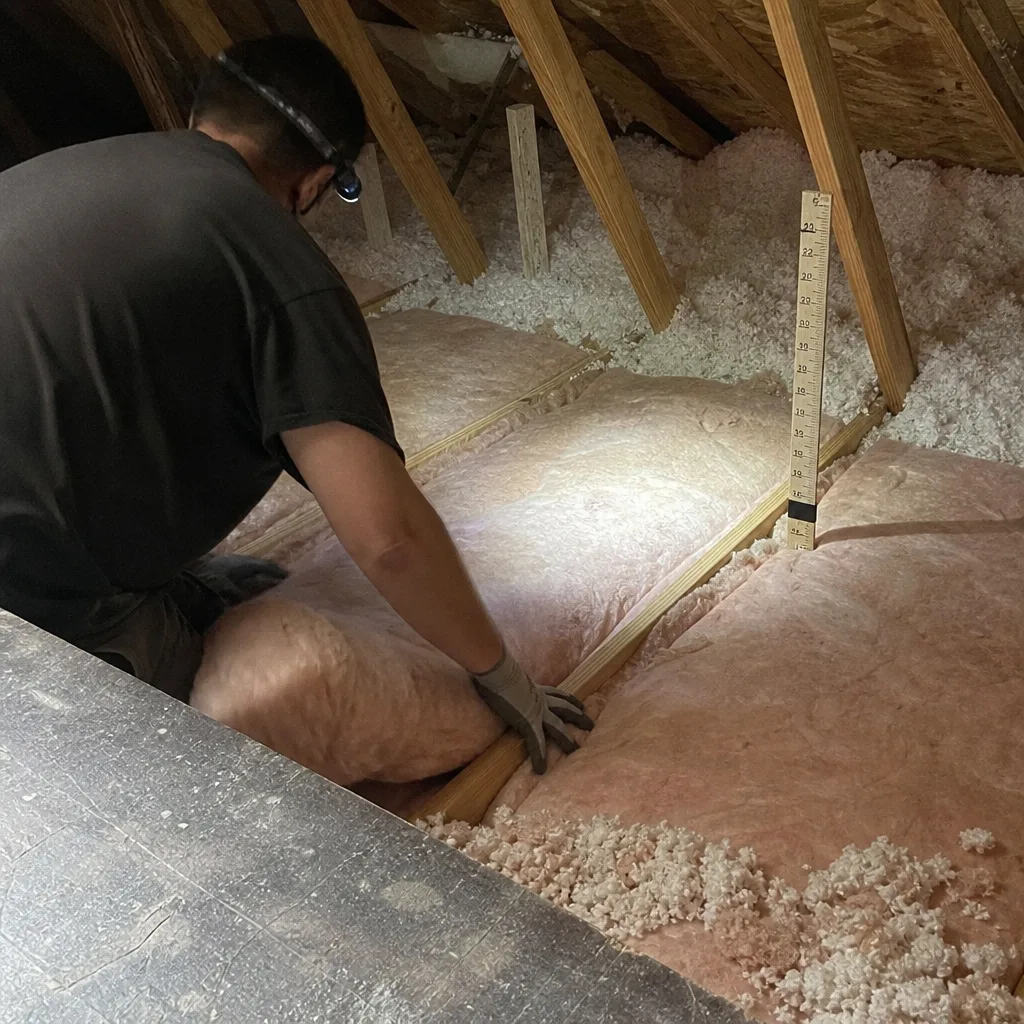
This is probably the most important sentence on this page: insulation slows heat transfer, but it does not stop air movement. If air can flow through a gap, it will – regardless of how many inches of blown-in cellulose or fiberglass are sitting above it. Attic insulation installed over an unsealed floor still allows stack-effect air movement through every top plate gap and can light, which means the insulation is doing perhaps 60 percent of the work it should.
At Envelope Insulation Co., we operate under a hard rule: we will not blow insulation over an unsealed attic floor. Air sealing is completed first, documented, and then insulation is added over a sealed substrate. This is not a premium add-on. It’s the correct sequence, and we’ve held to it since 2016 across more than 9,000 homes sealed and insulated in the Austin metro area.
For homeowners in Pflugerville who already have insulation in place, this means a proper retrofit involves moving or temporarily displacing existing insulation to access the attic floor, sealing, and then reinstating insulation to the correct R-value. That adds time and occasionally adds cost. But the alternative – sealing over insulation, or not sealing at all – leaves the job incomplete in a way that a blower-door test will expose.
How to Save on Attic Air Sealing in Pflugerville
There are real ways to reduce what you pay for this work. There are also ways to appear to save money that cost more later. Here’s how to tell them apart.
Bundle air sealing with insulation work
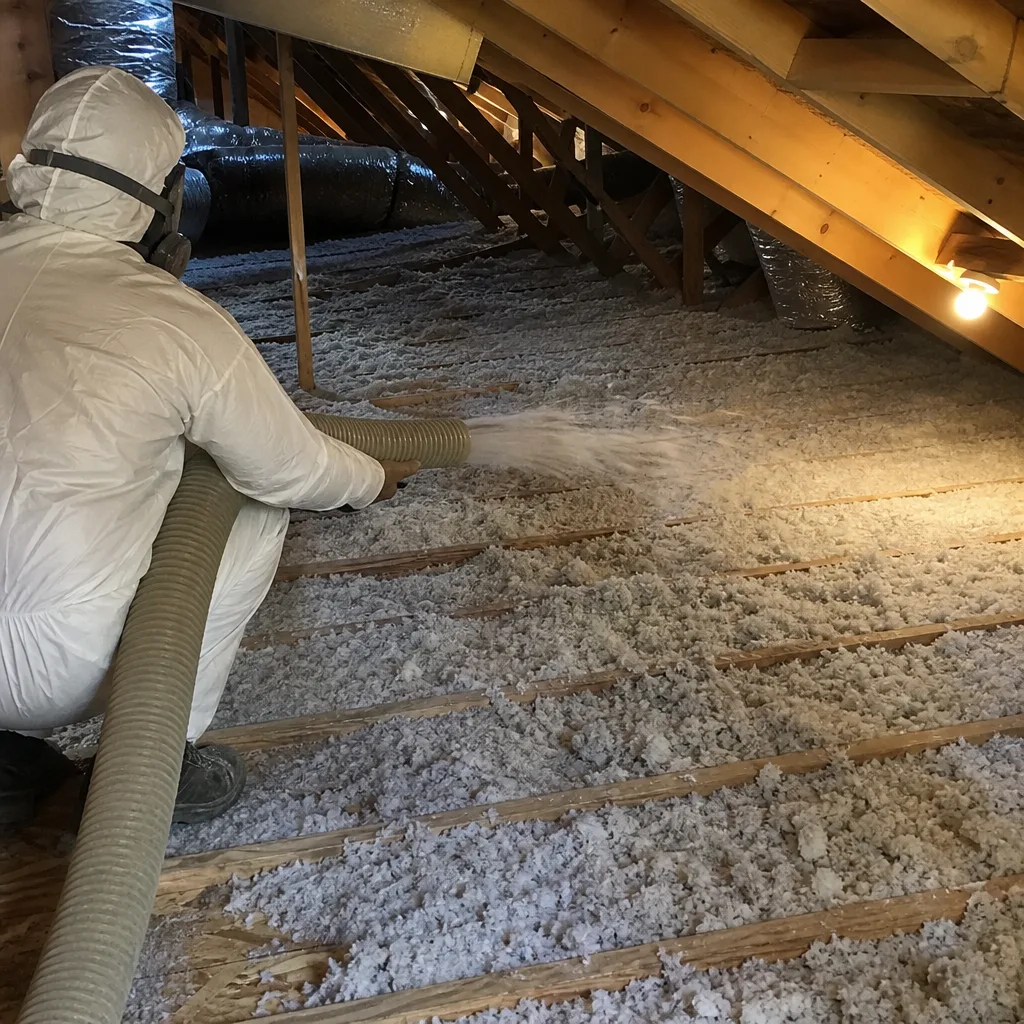
If your attic needs both air sealing and additional insulation – which is true of most Pflugerville homes built before 2015 that have never been retrofitted – scheduling both at once cuts mobilization costs. A crew that is already in your attic sealing can transition directly to insulation installation, and you pay one setup charge instead of two. Combined jobs in the 2,000-to-2,800-square-foot range typically save $200 to $500 compared to scheduling them separately.
Ask for a written, itemized scope
A quote that says “attic air sealing – $1,400” tells you nothing about what is and isn’t included. A written scope that lists top plates, number of penetrations addressed, can light count, and whether a blower-door test is included gives you a basis for comparison. Under Haven Standard Clause 1, a flat price and written scope are delivered before anyone starts work – that’s not a negotiating tactic, it’s the baseline. If a competing quote doesn’t itemize this way, you’re comparing unlike things.
Get a second opinion on any written estimate
If you have a written quote from another contractor, bring it. We offer a Free Second Opinion on any written estimate – we’ll read through it with you, identify what’s included and what’s missing, and give you our written price for the same scope. Call (737) 259-8352 to set that up; estimates don’t cost anything.
Check for utility rebates
Oncor and Austin Energy periodically offer rebates for residential air sealing and insulation upgrades that include a blower-door test before and after. The rebate structures change year to year, but in 2025 eligible Pflugerville homeowners could recoup $150 to $400 on qualifying attic air sealing projects. Ask your contractor to document the pre- and post-sealing CFM50 readings in a format the utility accepts – that documentation is what triggers the rebate, and it should be included on any properly scoped job regardless.
Don’t skip the blower-door test to save $300
A blower-door test costs $250 to $450 added to the job. Skipping it saves you that money upfront but removes the only independent verification that the sealing work performed as described. In Pflugerville’s climate, where air conditioning accounts for 40 to 55 percent of summer energy use in an average home, a sealed attic that actually performs to spec versus one that was nominally sealed can represent $400 to $700 in annual savings. The test cost pays for itself in the first year if the work was done correctly – and confirms whether it was.
FAQs – Attic Air Sealing Cost in Pflugerville
How much does attic air sealing cost in Pflugerville, TX?
Most Pflugerville homes fall in the $950 to $2,800 range, with the largest concentration of jobs landing between $1,200 and $1,900 for homes in the 1,800-to-2,800-square-foot range. The biggest variable is the number of recessed light fixtures – each one adds $18 to $35 in labor and material. A written price for your specific attic is available before any work starts; call (737) 259-8352 and we can schedule a no-cost estimate.
Is attic air sealing worth the cost in Texas?
In Pflugerville specifically, yes – and the math is straightforward. Homes we’ve tested before and after sealing show a 40 to 55 percent reduction in CFM50 air leakage. At Pflugerville’s average electricity rate and typical cooling load, that reduction corresponds to roughly $350 to $700 in annual energy savings for a 2,000-square-foot home running a standard 14-SEER system. At a project cost of $1,200 to $1,600, most jobs pay back in two to four years – before accounting for the reduced wear on the HVAC system from running fewer total hours.
Can I air seal my attic myself to save money?
The basic material cost for attic air sealing – spray foam cans, fire-rated caulk, attic hatch insulation board – runs $150 to $350. But DIY attic air sealing has real limits: identifying every top-plate gap requires a systematic walk of the entire attic perimeter; non-IC recessed fixtures require specific capping procedures for fire code compliance; and without a blower-door test before and after, you have no way to know whether the leakage rate actually changed. More directly: attic work in Pflugerville from June through September involves heat exposure above 130 degrees, and proximity to electrical fixtures and junction boxes carries genuine risk. For top-plate sealing and can light work specifically, a trained technician is the safer and more reliable choice. What you can do yourself: weatherstrip the attic hatch, seal obvious pipe penetrations from the living space side, and make sure attic access panels have gaskets.
Does attic air sealing include insulation, or are they separate?
They are separate services with separate price lines, and that distinction matters. Air sealing addresses the gaps and penetrations in the attic floor that allow air to move freely between the living space and the attic. Insulation addresses thermal resistance – slowing the rate at which heat moves through the attic floor by conduction. Both are needed for a complete envelope. The correct sequence is: seal first, insulate second. A contractor who quotes them as a single bundled item without distinguishing what was done to each may be skipping the sealing step. Our quotes always list them separately, with a written scope for each.
How long does attic air sealing take, and how soon can I schedule in Pflugerville?
A standard attic air sealing job on a 2,000-square-foot Pflugerville home takes three to six hours for a two-person crew, depending on penetration count and existing insulation condition. Scheduling lead time varies by season – summer months (May through September) book faster because cooling-season demand is high – but a written estimate can typically be scheduled within a few days of contact. Call (737) 259-8352; a live person answers, no voicemail. The estimate itself is free, written, and delivered before any commitment is made.
What is a blower-door test, and do I need one?
A blower-door test uses a calibrated fan mounted in an exterior doorframe to depressurize the home to a standard pressure (50 Pascals), then measures how much air flows through the fan to maintain that pressure. The result – expressed in CFM50 (cubic feet per minute at 50 Pascals) – tells you in one number how much air the building envelope is losing. For context: an energy-efficient new home might read 1,200 to 2,000 CFM50; an older unsealed Pflugerville home commonly reads 4,000 to 7,000 before any work. You don’t need the test to get the sealing done, but without it you can’t verify whether the sealing changed the leakage rate. We include before-and-after blower-door readings on every applicable job and publish both numbers in the Documented Photo Record you receive when the crew leaves.
Why Pflugerville Homes Leak More Than the Builder’s Spec Suggests
This is worth understanding before you decide whether to budget for air sealing.
Pflugerville went through significant residential build-out from 2000 to 2015, with large subdivision developments in areas like Falcon Pointe, Avalon, and Villages of Hidden Lake. Builder-grade construction in that period was framed to code, but Texas building code at the time did not require blower-door testing or documented air sealing at the attic plane. The standard practice was to run insulation to the specified R-value and move to the next lot. Air sealing – when it was done at all – was incidental, not systematic.
The result is that most Pflugerville homes built in that period have top plates that were never sealed, can lights that were never capped, and HVAC penetrations that were never foamed. Over 15 to 20 years, the drywall has settled slightly from the framing (normal), and those gaps have widened. The insulation has compressed and shifted. And the HVAC system, originally sized for a tighter envelope than the one it’s actually conditioning, has been running more hours per year than the original load calculation assumed.
We see this pattern consistently on Pflugerville homes – a nominal R-30 or R-38 attic that’s been there for 15 years, sitting over an attic floor that’s never been sealed, with a blower-door reading that tells the real story. The insulation is doing its job on the conduction side; the air leakage is bypassing it entirely on the convection side.
That’s the gap – literally – that attic air sealing addresses.
What to Expect When You Call for an Estimate
When you call (737) 259-8352, a live person picks up. Not a call center, not a scheduling bot with a 48-hour callback window. You’ll speak with someone who can ask the right questions about your home – square footage, approximate build year, whether you have recessed lights, current insulation condition if you know it – and schedule a no-cost on-site estimate.
The technician who comes out is background-checked and uniformed. You’ll receive a text when they’re on the way. The estimate is written, flat-priced, and scoped in detail – materials, tasks, and what the job does not include. Under Haven Standard Clause 1, no work starts without that written price in your hands first.
If you already have a written quote from another contractor, bring it or send it ahead. We offer a Free Second Opinion on any written estimate – we’ll go through it line by line with you and give you our written price for the same scope. That offer exists because an informed homeowner makes a better decision, and a better decision is better for everyone involved.
Wes Okafor leads the team at Envelope Insulation Co., and the documentation standard – the written scope, the Documented Photo Record, the before-and-after blower-door numbers – is something Wes put in place when we started taking on Pflugerville jobs and has never walked back from. It’s not a feature we offer on certain jobs. It’s how the work gets done.
If the job isn’t done right, the 365-Day Done Right Promise means we come back and make it right. That’s in writing too.
To find out where your attic stands and what sealing it would cost for your specific home, the starting point is a free estimate. The price will be on the page – or in this case, on the written scope you receive – before anyone picks up a foam gun.
Explore more about what the work involves on our home page, or go deeper into the process and local pricing context on our Attic Air Sealing in Pflugerville page.
Written by Wes Okafor, Owner at Envelope Insulation Co. (operating as Topside Attic Insulation Pflugerville), serving Pflugerville since 2016. Pricing reflects the Pflugerville, TX market as of 2026. Topside Attic Insulation Pflugerville offers free, written estimates – call (737) 259-8352.
What Our Customers Say
"Two other companies quoted to blow more insulation on top of what was there. These were the only ones who said the existing material had to come out first, and explained why."
- Clifford E."They air-sealed the attic floor before insulating and showed me the blower-door number before and after. The upstairs is finally the same temperature as downstairs."
- Marisol D."They photographed rodent damage in the old insulation that we had no idea about, and priced the exclusion work separately so we could decide."
- Harriet N.