
Attic Baffles & Ventilation Prep in Pflugerville, TX
Attic baffles – also called rafter vents or vent chutes – are rigid channels installed between roof rafters that keep soffit airflow open after insulation is blown in. Without them, blown-in insulation migrates toward the eaves, blocks the soffit vents, and turns your attic into a heat trap. In Pflugerville, where August attic temperatures routinely climb past 150°F, a blocked soffit vent doesn’t just waste energy – it shortens shingle life and creates moisture conditions that rot decking from underneath.
Ventilation prep is the work that happens before any insulation goes in: installing or replacing baffles, confirming ridge and soffit vent ratios meet the IRC 1:150 passive ventilation standard (or 1:300 with balanced ridge-and-soffit intake), and air sealing every penetration at the attic floor so conditioned air stops leaking into the cavity. At Topside Attic Insulation Pflugerville, that prep work is not optional – it is the job. We’ve operated this way under The Haven Standard since 2016, and our crew won’t touch a bag of blown-in insulation until the ventilation path is confirmed open and the air leaks are sealed. Call us at (737) 259-8352 to schedule a documented assessment, or keep reading to understand exactly what this service includes and what it typically costs in this market.
This page covers baffles and ventilation prep as a specific phase within the broader scope of Attic Insulation in Pflugerville. If you’re still deciding whether your attic needs new insulation at all, that parent page is the right starting point.
When You Need Attic Baffles & Ventilation Prep
Not every attic needs baffles replaced, but most Pflugerville homes built before 2010 need at least some ventilation prep before new insulation is added. Here are the clearest indicators:
- Your soffit vents are partially or fully buried in insulation. This is the most common finding in Pflugerville homes where insulation was added without baffles – the blown cellulose or fiberglass migrated to the eaves over time. Once the vents are blocked, airflow stops and attic temperatures spike. We see this frequently in the Falcon Pointe and Blackhawk subdivisions, where original builders used minimal baffles and later owners added insulation without inspection.
- Your upstairs rooms are significantly hotter than the rest of the house in summer. When soffits are blocked, hot air has nowhere to exit the attic. That heat radiates down through the ceiling. A blower-door test – a pressurization reading that shows, in one number, how much air your building envelope is losing – often reveals both the ventilation gap and the air sealing failures that compound the problem.
- You’re adding insulation and don’t know whether baffles are already in place. If you’re planning to bring your attic from R-22 to R-38 or higher, the added depth makes this question urgent. Insulation blown past 10 inches has a real chance of covering soffit vents if baffles aren’t confirmed and extended to match the new depth.
- Your roof is less than 10 years old but shingles are already showing granule loss or premature aging. Trapped attic heat is a known accelerant for shingle degradation. If your roofer hasn’t flagged a ventilation problem, an attic assessment often finds one. We’ve documented this pattern in Stone Oak Ranch and Springbrook neighborhoods, where attic temps exceeded 155°F on standard summer afternoons.
- You’ve had moisture staining or condensation on attic decking. In Pflugerville winters – short but humid – an attic without adequate exhaust ventilation can accumulate enough moisture to stain decking and eventually support mold growth. Baffles and a balanced vent ratio are the first line of correction.
- Your current baffles are cardboard, collapsed, or missing from specific rafter bays. Many homes built in the 1990s used cardboard vent chutes that compress over time or were never installed in every bay. Foam baffles installed today last the life of the insulation and hold their shape under blown-in material.
Our Attic Baffles & Ventilation Prep Process
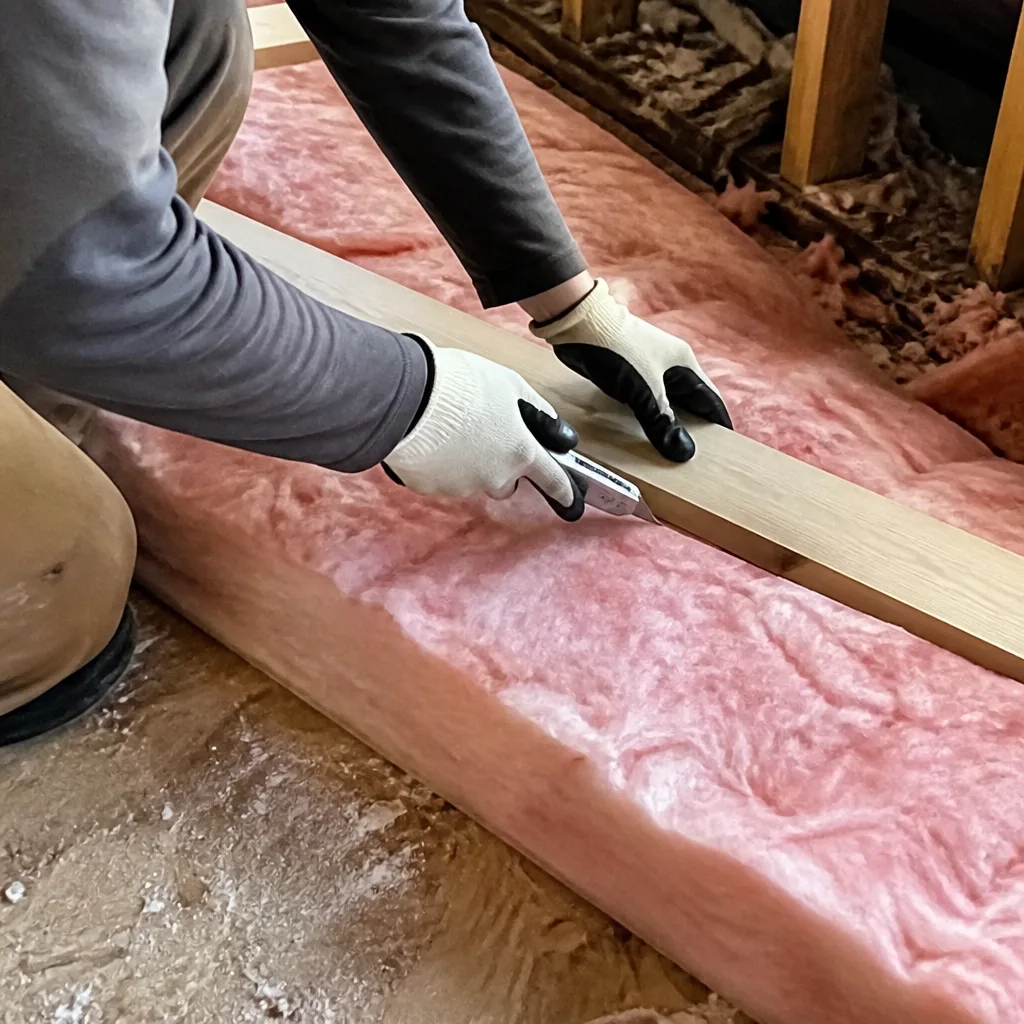
Every job starts with a written price – no work starts without it. That’s Haven Standard Clause 1, and it applies here the same as it applies to every other service we provide. Here’s what the prep process actually looks like, in order:
-
Documented attic inspection and vent ratio calculation.
Our technician enters the attic with a lumen-rated headlamp and a tape measure, not just a flashlight. We photograph the existing baffle condition in every accessible rafter bay, document the soffit vent dimensions and spacing, and calculate the net free area against the attic square footage. The IRC 1:150 ratio is the baseline; if your home has ridge venting that creates balanced exhaust, the 1:300 calculation applies. You get a photo record of what we found before we touch anything – that’s included on every visit, not available on request. -
Air sealing of the attic floor – before any insulation is moved or added.
This is the step most contractors skip or treat as optional. We don’t. Top-plate gaps, can-light housings, plumbing and electrical penetrations, and attic hatch perimeters are sealed with two-component spray foam or fire-rated caulk before any insulation work begins. On a typical Pflugerville home, this step alone drops blower-door readings by 25-40%. We record the pre-seal number, do the work, and record the post-seal number so you can verify the result in a single figure – not a feeling.A note on can lights and attic penetrations: older recessed-light housings that are not rated for insulation contact (non-IC-rated) need to be addressed before foam is applied around them. We identify these during inspection and flag them in the written scope. Covering non-IC-rated housings with insulation is a fire hazard, and we will not do it.
-
Baffle installation or replacement across all rafter bays.
We use rigid foam baffles – typically 1-inch or 1.5-inch polystyrene – cut and friction-fitted into each rafter bay from the attic side. Where existing cardboard or collapsed baffles are present, they come out first. Each baffle is stapled and foam-sealed at the top plate to prevent air bypass around the edges. For attics receiving insulation depths above 12 inches, we extend the baffle height accordingly so the airway stays clear above the finished insulation line. -
Ridge vent and soffit vent verification.
A baffle does nothing if the exhaust path above it is blocked. We confirm that ridge vent material is unobstructed along the full ridge length and that soffit vent screens are clear of debris, paint, or pest nesting material. Pflugerville’s cedar elm and live oak canopy drops enough debris that soffit screens clog more often than homeowners realize. Where screens are blocked, we clear them and document the before/after condition with photos. -
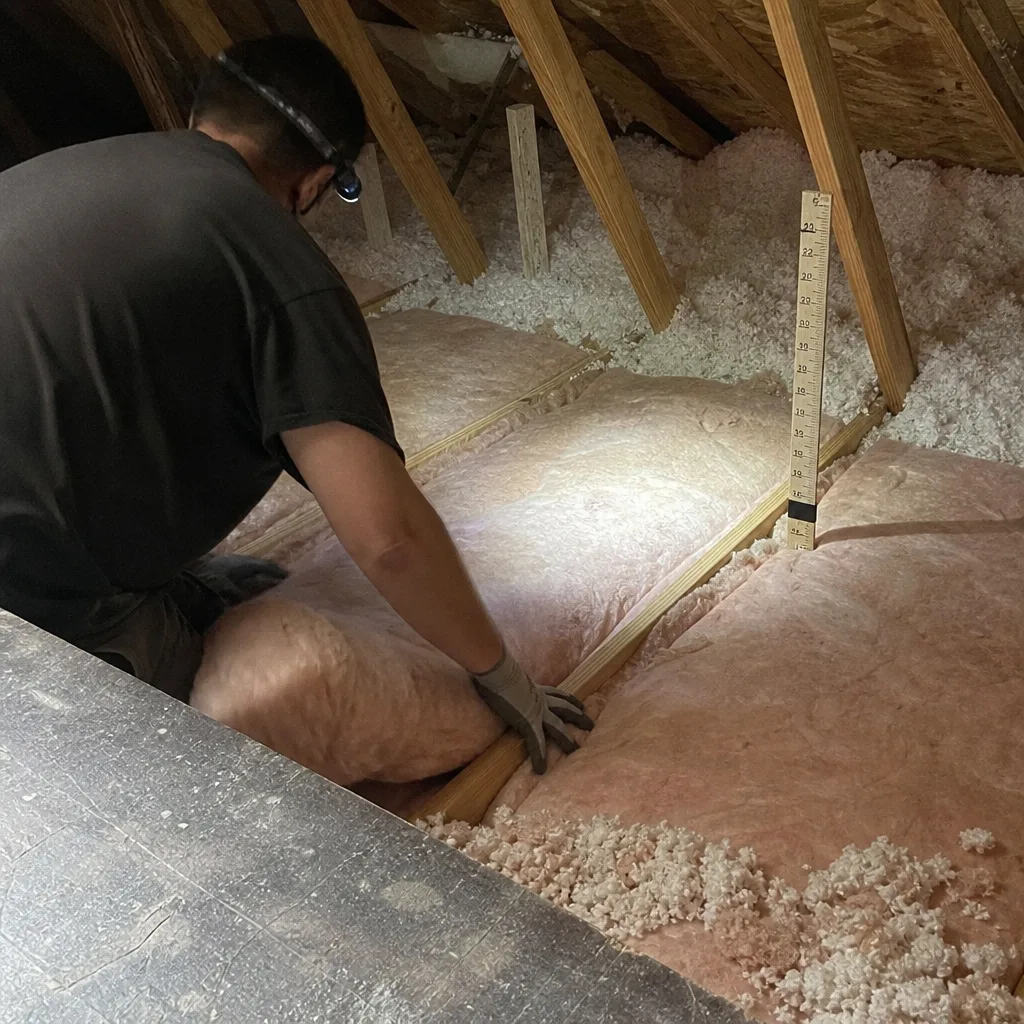
Insulation depth markers set at target R-value height.
Before any blown-in material goes in, we place IECC-compliant depth markers – small rulers staked into the attic floor at regular intervals – so the crew hitting target depth has a visual reference across the whole attic, not just near the hatch. This prevents uneven coverage and makes the final inspection straightforward. For most Pflugerville homes, current IECC Climate Zone 2 requirements call for a minimum of R-38 in the attic. -
Final documentation and written sign-off.
When the prep work is complete, you get a Documented Photo Record showing baffle installation, sealed penetrations, vent confirmation, and depth marker placement. If a blower-door test was part of the scope, you get the before and after CFM50 readings in writing. The 365-Day Done Right Promise applies from the date of written sign-off – if anything we installed or sealed isn’t performing as documented, we come back and make it right.
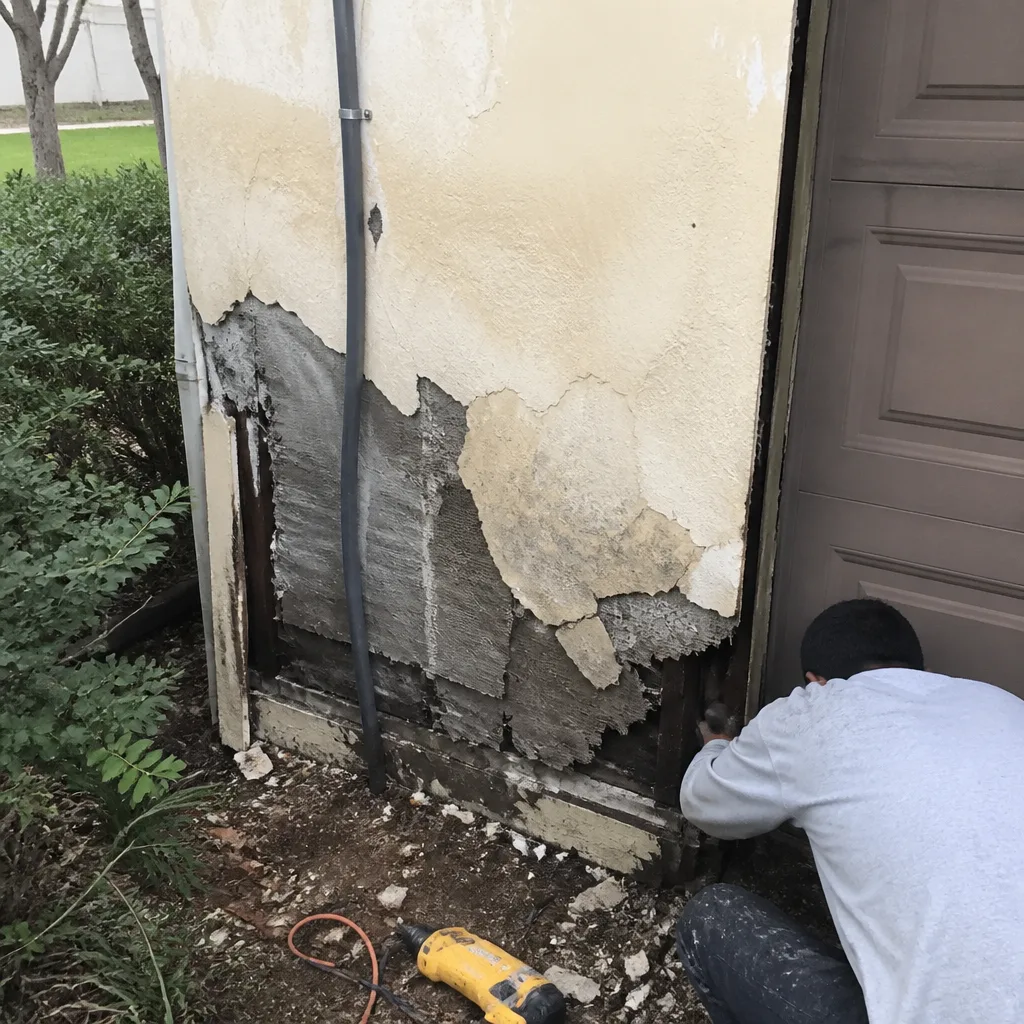 Before
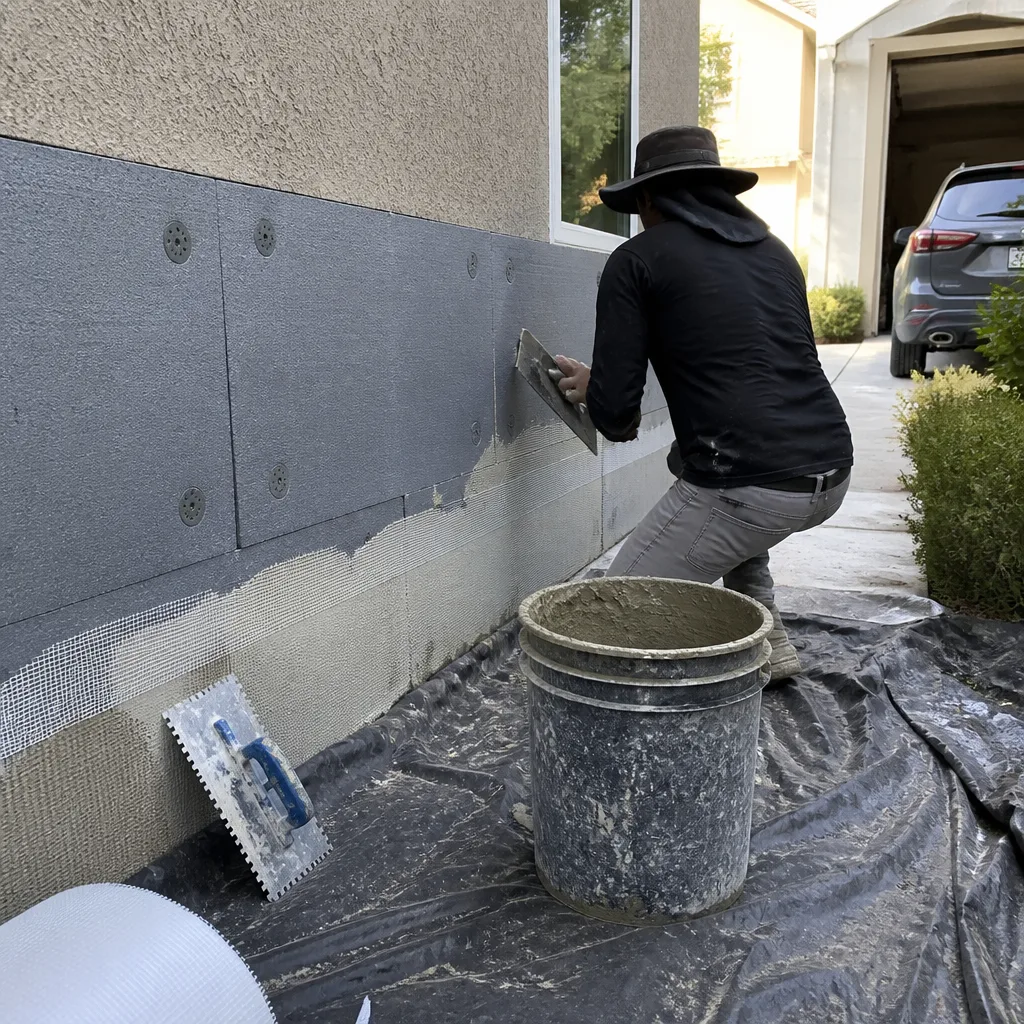 After
AfterAttic Baffles & Ventilation Prep Pricing in Pflugerville
Most attic ventilation prep jobs in Pflugerville – covering baffle installation and air sealing on a standard single-story home between 1,400 and 2,200 square feet – run between $380 and $780 when performed as a standalone service. When bundled with our Attic Insulation services, the prep work is priced separately on the written scope so you can see exactly what you’re paying for each phase.
Here’s a breakdown of what affects cost:
- Attic square footage and rafter bay count. More bays mean more baffles and more linear feet of foam sealing. A 1,600 sq ft home typically has 40-60 rafter bays accessible from the attic. A two-story home with a more complex roofline adds access time and material.
- Existing baffle condition. If every bay already has a functional foam baffle, prep costs less because we’re confirming and sealing rather than installing from scratch. Homes with fully collapsed cardboard baffles – common in Spring Trails and Meadows of Blackhawk – require full removal and replacement, which adds labor time.
- Number and type of attic penetrations. Older Pflugerville homes – particularly those built between 1995 and 2005 when can-light use was near its peak – may have 20 or more recessed light penetrations in the attic floor. Each one needs to be sealed or addressed. Non-IC-rated housings that need replacement are quoted as a separate line item with a separate written price.
- Blower-door testing. If before-and-after pressurization testing is included in the scope, add $120 to $200 for equipment setup and reporting. We recommend it on any job where air sealing is a primary goal – a blower-door test is the only way to verify the work produced a measurable result, not just a visual one.
- Ridge or soffit vent upgrades. If your ridge vent material is inadequate, blocked, or missing from sections of the ridge, replacement is quoted separately. Continuous ridge vent replacement on a standard Pflugerville roofline typically runs $180 to $350 depending on linear footage and access.
Under Haven Standard Clause 1: you get a flat price, a written scope, and a written warranty before anyone lifts a tool. There is no “we’ll tell you what it costs when we’re done.” If scope changes mid-job because we find something unexpected – a collapsed vent or a non-IC fixture we couldn’t see from the hatch – we stop, photograph it, write a revised price, and get your approval before continuing. Call (737) 259-8352 for a scheduled assessment; we’ll give you a number before we leave the driveway.
FAQs – Attic Baffles & Ventilation Prep
What are attic baffles, and do I actually need them before adding insulation?
Attic baffles are rigid channels – typically polystyrene foam – installed between roof rafters that keep the path from soffit vent to ridge vent open after insulation is added. You need them if your attic has soffit vents and you’re adding any depth of blown-in insulation. Without baffles, insulation migrates into the eave space, blocks the soffit vents, and stops the airflow that keeps your attic from overheating. In Pflugerville’s climate, where attic temperatures regularly exceed 150°F in summer, a blocked soffit vent creates enough thermal load on your ceiling that your HVAC system compensates for years before you connect the problem to the cause. Most existing homes need at least partial baffle installation before Attic Batt Insulation or other new insulation goes in – we document exactly which bays need them during the inspection phase.
Can’t the insulation crew just blow in the new material and skip the baffle step?
They can, and some do – but we won’t. Blowing insulation over an unventilated attic floor traps the problem under R-38 of material where it becomes invisible and stays that way until moisture damage or shingle failure becomes obvious. Under The Haven Standard, air sealing and ventilation prep happen before insulation is added, in that order, every time. We’ve been doing this since 2016 across more than 9,000 homes, and the reason we publish before-and-after blower-door numbers on applicable jobs is precisely so homeowners can see that the prep work produced a verifiable result – not just a claim.
How long does baffle installation and ventilation prep take?
For a typical single-story Pflugerville home between 1,600 and 2,000 square feet, the prep phase runs 3 to 5 hours. Homes with more complex rooflines, high rafter bay counts, or significant penetration sealing needs can run a full day. We give you a time estimate as part of the written scope. A named technician texts you when they’re on the way – no arrival window measured in half-days.
What materials do you use for baffles, and how long do they last?
We use rigid expanded polystyrene (EPS) foam baffles – the same class of material used in commercial insulation assemblies by manufacturers like CertainTeed and Rockwool in their system specifications. Properly installed EPS baffles don’t compress, absorb moisture, or collapse over time the way cardboard vent chutes do. Under normal attic conditions – even Pflugerville’s temperature swings from 20°F in a January cold snap to 150°F+ in July – rigid foam baffles are expected to outlast the insulation they protect. We seal each baffle at the top plate with two-component spray foam so there’s no air bypass at the edges.
Key Takeaways
- Attic baffles keep soffit vents clear after insulation is blown in – without them, vents block and attic temperatures spike.
- Air sealing the attic floor before insulation is added is the step most contractors skip; Topside Attic Insulation Pflugerville completes it as a hard prerequisite, not an upsell.
- Ventilation prep in Pflugerville typically runs $380 to $780 for a standard single-story home; blower-door testing adds $120 to $200 and is the only way to verify the air-sealing result in a measurable number.
- You get a written price, written scope, and written warranty before work starts – Haven Standard Clause 1, no exceptions.
- A Documented Photo Record is included on every visit; on applicable jobs, before-and-after blower-door readings are provided in writing.
- The 365-Day Done Right Promise applies to all completed work.
Schedule Your Ventilation Prep Assessment in Pflugerville
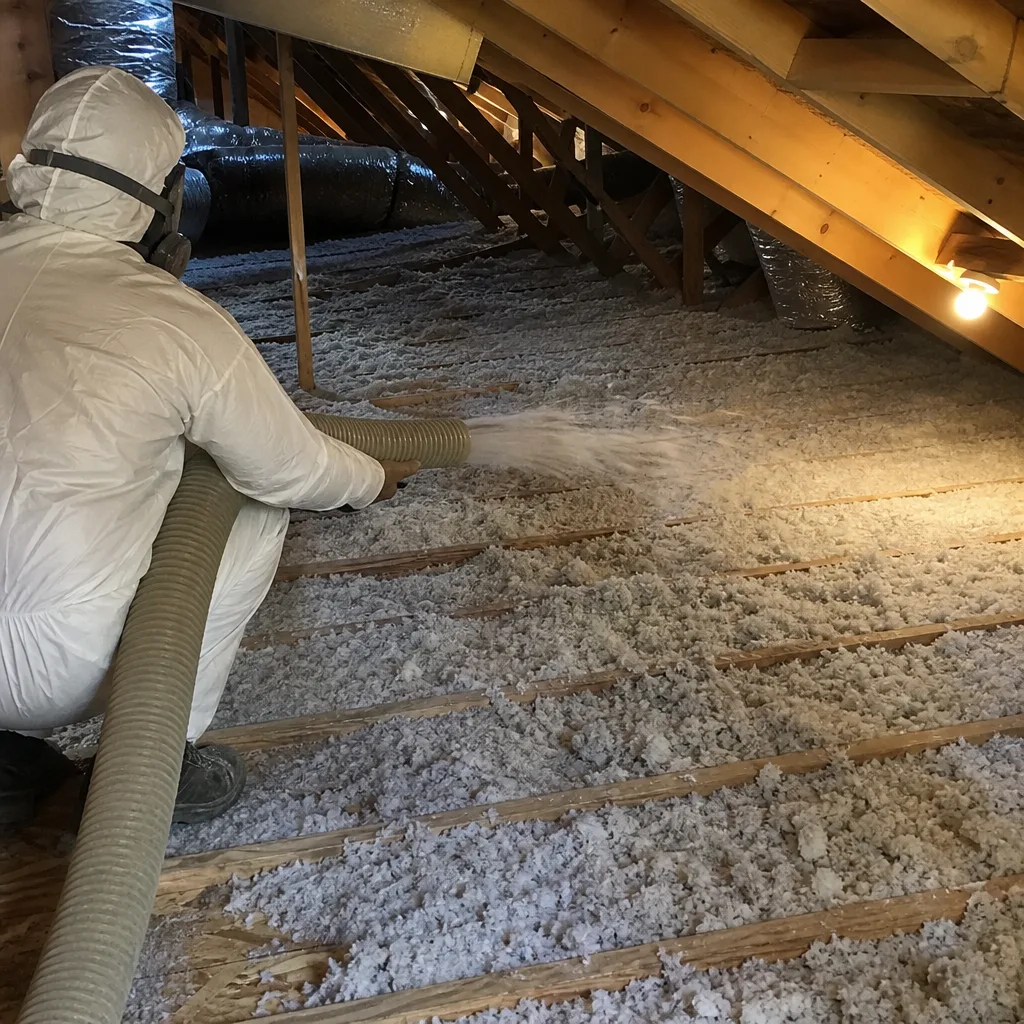
If you’re adding insulation this season or you’ve noticed signs of blocked soffit vents – hot upstairs rooms, early shingle wear, or moisture on attic decking – the right first step is a documented inspection, not a bag of blown-in material. Wes Okafor and the crew at Topside Attic Insulation Pflugerville will assess your attic, photograph what we find, and give you a written price before anyone starts work – search Attic Insulation Near Me in Pflugerville, TX to find us. Call (737) 259-8352 to schedule. A live person answers – no voicemail loop, no callback window measured in business days.
Written by Wes Okafor, Owner at Topside Attic Insulation Pflugerville, serving Pflugerville since 2016.