
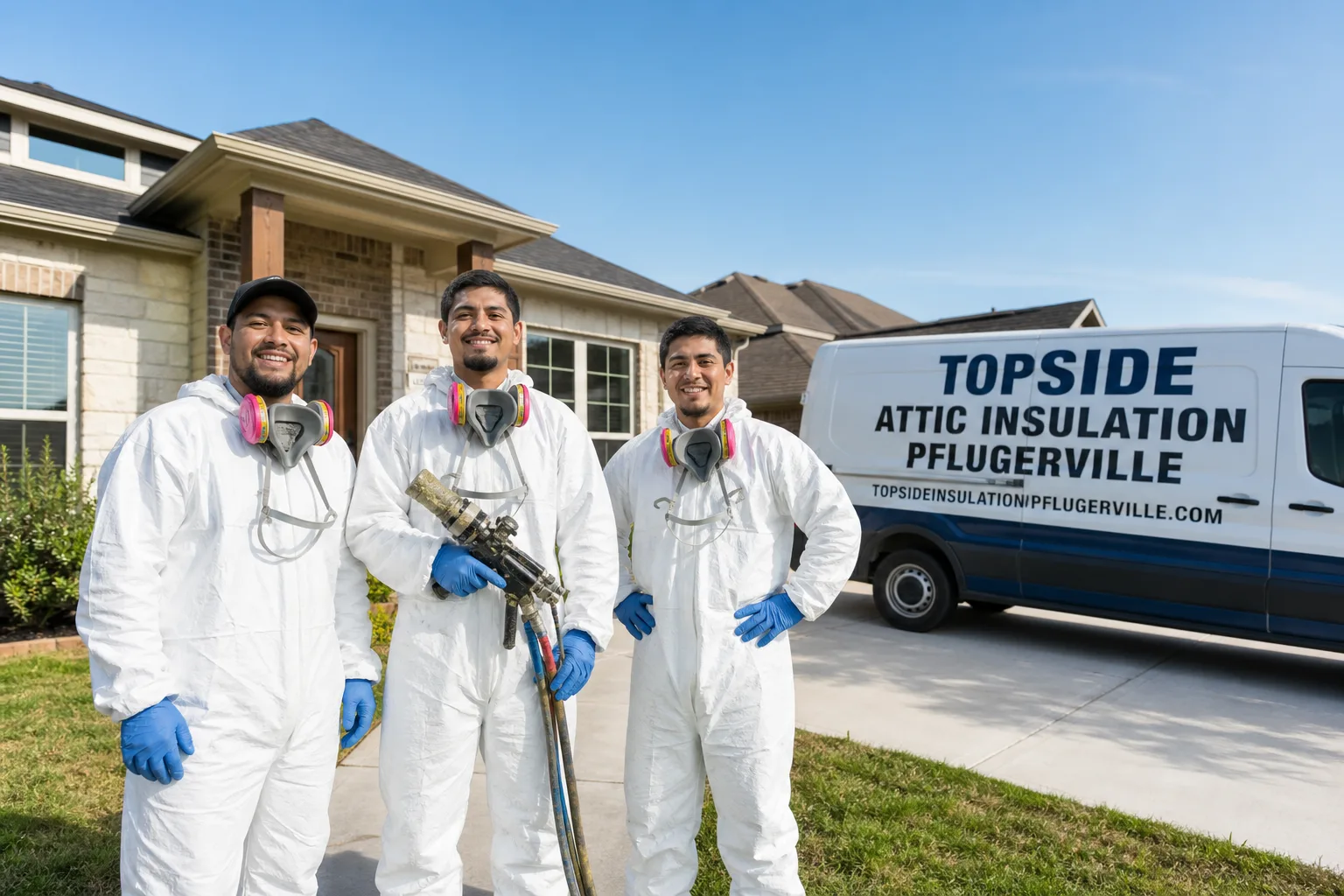
Fast, Reliable Attic Insulation Across Leander
Most attic insulation jobs in Leander run $1,800-$4,500 depending on square footage and whether air sealing is needed, and our crews typically schedule within 48 hours of your call. We’re familiar with the production-home patterns out here - the DR Horton and Lennar builds in Bryson, the oversized attic volumes in Bar W Ranch, the way 183A traffic can narrow your window for a weekday appointment. Dispatch and scheduling are coordinated from our Austin office, but the crews serving Leander live in the area and know the difference between a Larkspur address and a Mason Hills call. If your upstairs never cools off in August or your February power bill still stings from Uri, call (737) 259-8352 and we’ll put a written price in your hand before anyone touches your attic.
Why Topside Attic Insulation Pflugerville Is Leander’s Preferred Attic Insulation Company
We’ve sealed and insulated over 9,000 homes since 2016, and a growing share of them are in Leander’s 2010s-era subdivisions where the original builder-grade work is just starting to show its limits. Our Leander customers tend to find us after reading the three-star reviews as carefully as the five-stars - they want to know what happens when something goes wrong, and they stay because we document everything.
Response time to Leander is typically same-day or next-day, with crews running out of the northern Austin metro area. You get a text when your technician is en route, a named technician who is background-checked and uniformed, and a Documented Photo Record delivered when the job closes - not available on request, included on every visit.
What separates us in Leander specifically is that we know these houses. We’ve opened enough attics in Bryson and Bar W Ranch to recognize the production-builder shortcuts before we pull the ladder down. That local pattern recognition means fewer surprises, one trip, and a scope that matches what your home actually needs.
Our Attic Insulation Services in Leander
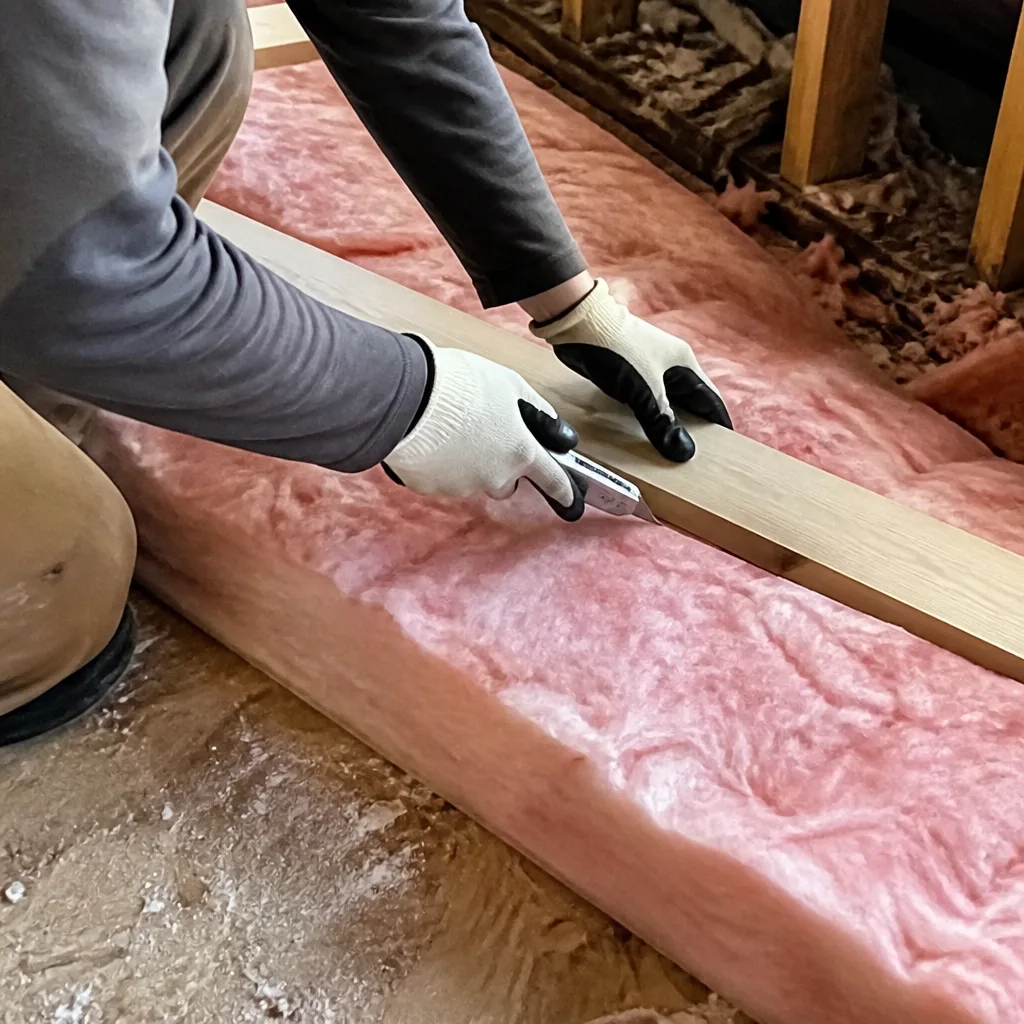
Attic Insulation Top-Up
This is our dominant job type in Leander, and there’s a reason for it. Most homes here were built between 2015 and 2023 with blown fiberglass to the Texas 2015 IECC minimum of R-38 - far below the R-49 to R-60 optimal for IECC Climate Zone 2. A top-up adds material over the existing layer, bringing the total depth and R-value to where it should have been from the start. In Leander’s 2,500-4,000+ sq ft homes, that builder-minimum R-38 gets spread thin across expansive attic volumes, vaulted great rooms, and bonus rooms over garages. We check existing depth with a ruled probe, photograph the deck before we start, and deliver a documented record of final depth and coverage.
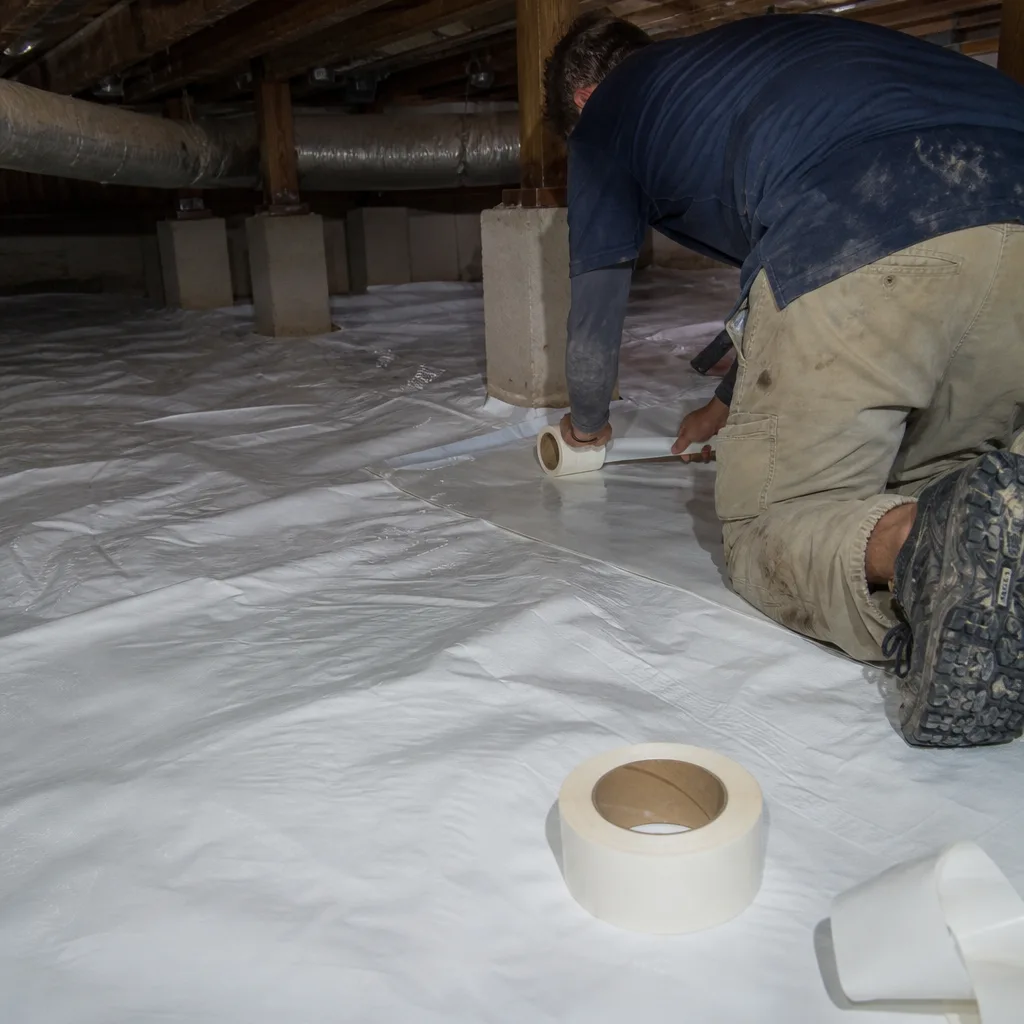
Blown-In Attic Insulation
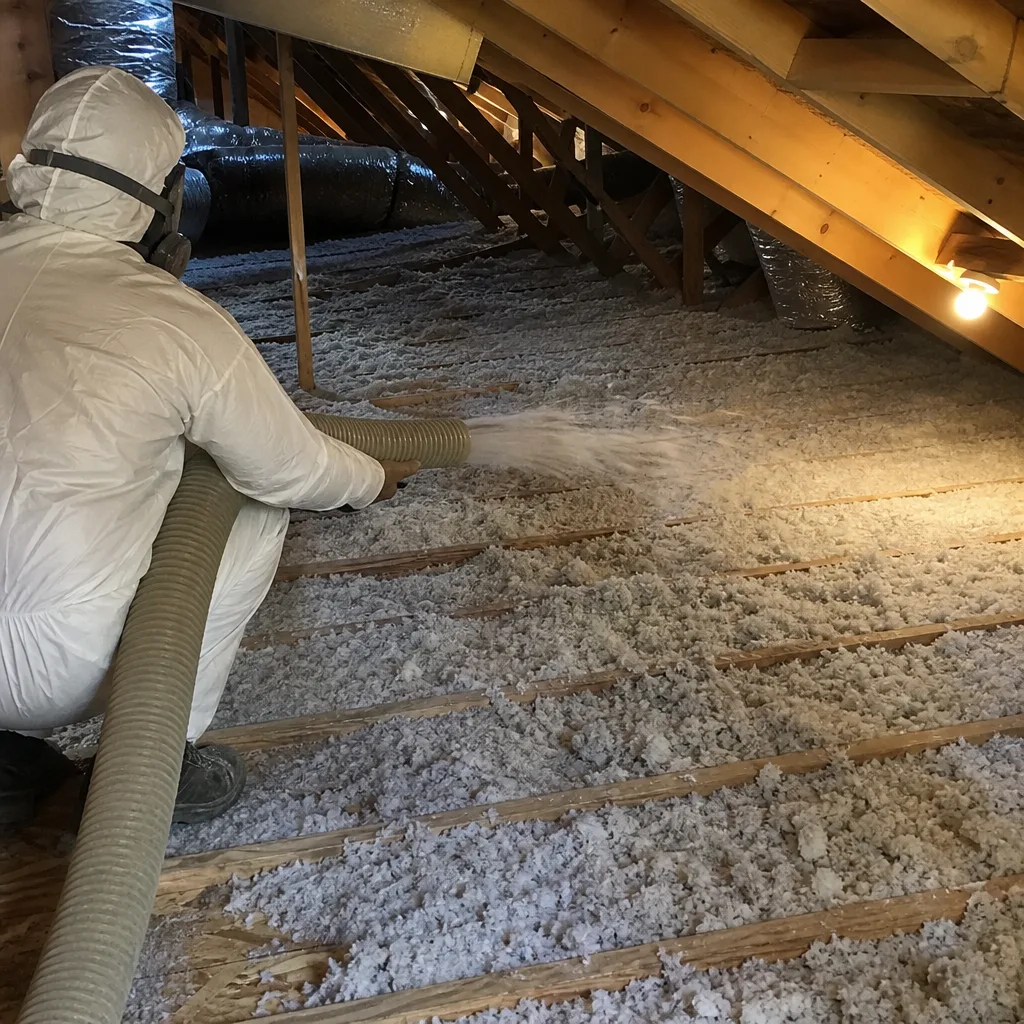
We install blown-in fiberglass and cellulose for new construction, finished attics, and full replacements where the existing material is compromised. In Leander, we typically use Owens Corning or GreenFiber products - no proprietary lock-in, so we match the material to the application. Blown-in conforms to irregular joist bays and fills around penetrations better than batts, which matters in production homes where framing isn’t always square. Our Attic Insulation team completes air sealing of top plates, can lights, and penetrations before any insulation goes in. We don’t blow over unsealed leaks. That’s not an upsell; it’s the order of operations.
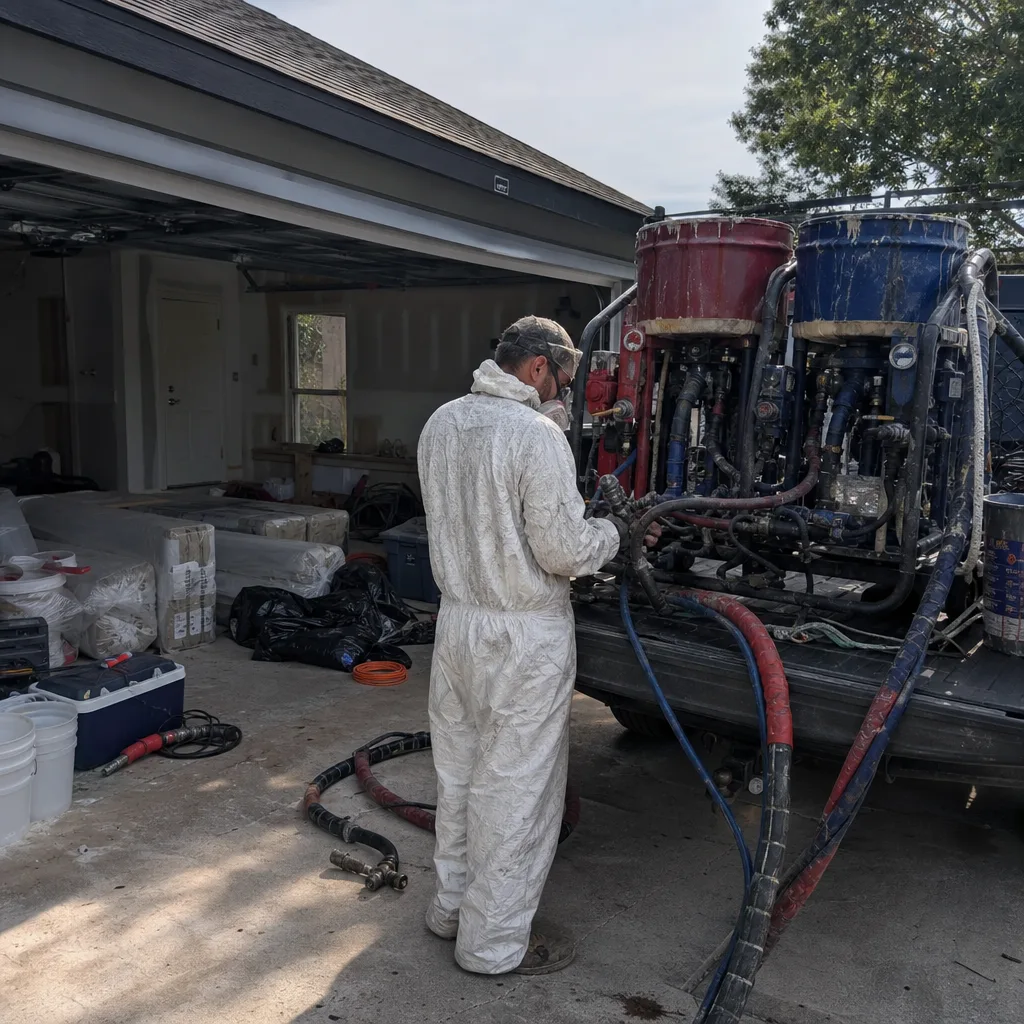
Attic Batt Insulation
Batt insulation has a place in Leander homes, particularly in knee walls, attic hatches, and areas where blown-in would spill or settle improperly. We use Johns Manville and Owens Corning batts, cut to fit the bay with no compression gaps. In Leander’s newer homes with spray-foam sealed envelopes and targeted batt applications, we often pair batts with blown-in for a hybrid system. Every batt job includes the same air-sealing prerequisite and documented photo record.
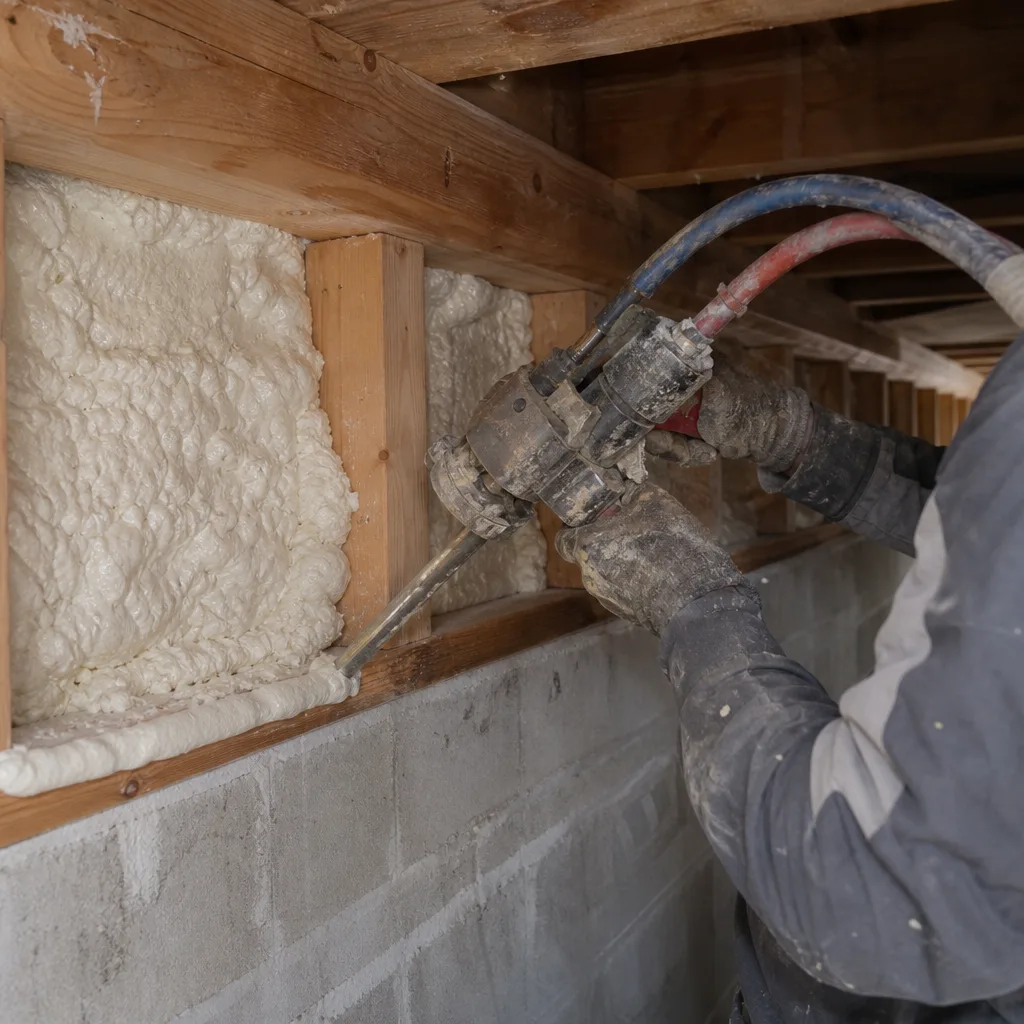
Attic Insulation Replacement
When existing insulation is water-damaged, rodent-compromised, or simply too thin to salvage, we remove and replace. In Leander, this is less common than top-ups because the housing stock is young, but we handle it when needed. Removal is bagged and hauled, the deck is cleaned and inspected, air sealing is completed, and new material is installed to the specified depth. You get before-and-after photos and a written scope showing what was removed, what was sealed, and what was installed.
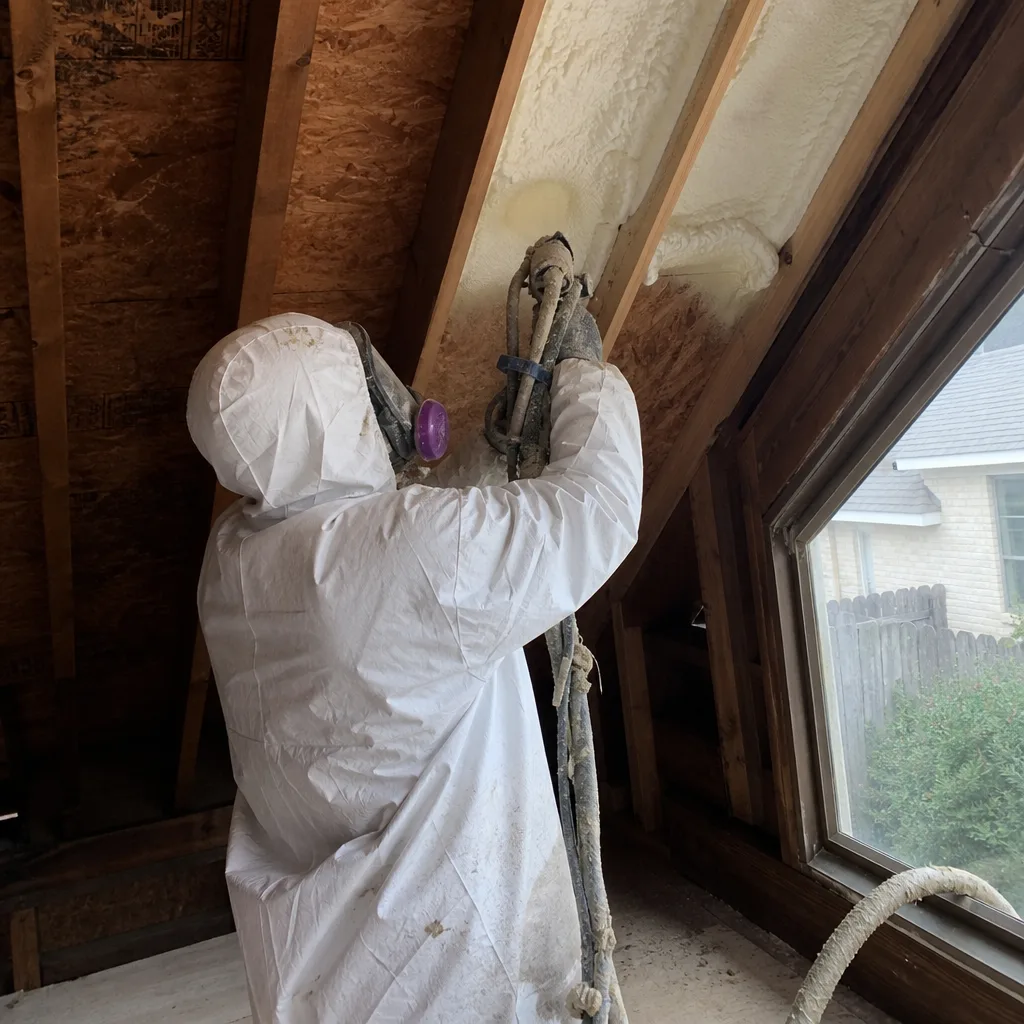
Attic Baffles & Ventilation Prep
Leander’s 150°F+ summer attic decks demand airflow. Baffles - also called vent chutes or rafter vents - maintain the intake path from soffit vents up to the ridge vent, preventing insulation from blocking that channel. In production homes, we routinely find baffles missing or improperly placed, especially at complex roof intersections over vaulted great rooms. We install or replace baffles as part of any top-up or blown-in job where soffit ventilation is present. No baffles, no top-up - blocked soffits turn your attic into a solar oven.
What happens when you call
- 1
A real person answersNo phone trees - you reach a local pro.
- 2
You get an upfront price rangeHonest numbers before anyone is dispatched.
- 3
A background-checked tech heads outLicensed & insured, dispatched right away.
- 4
You approve before work beginsNothing starts until you say go.
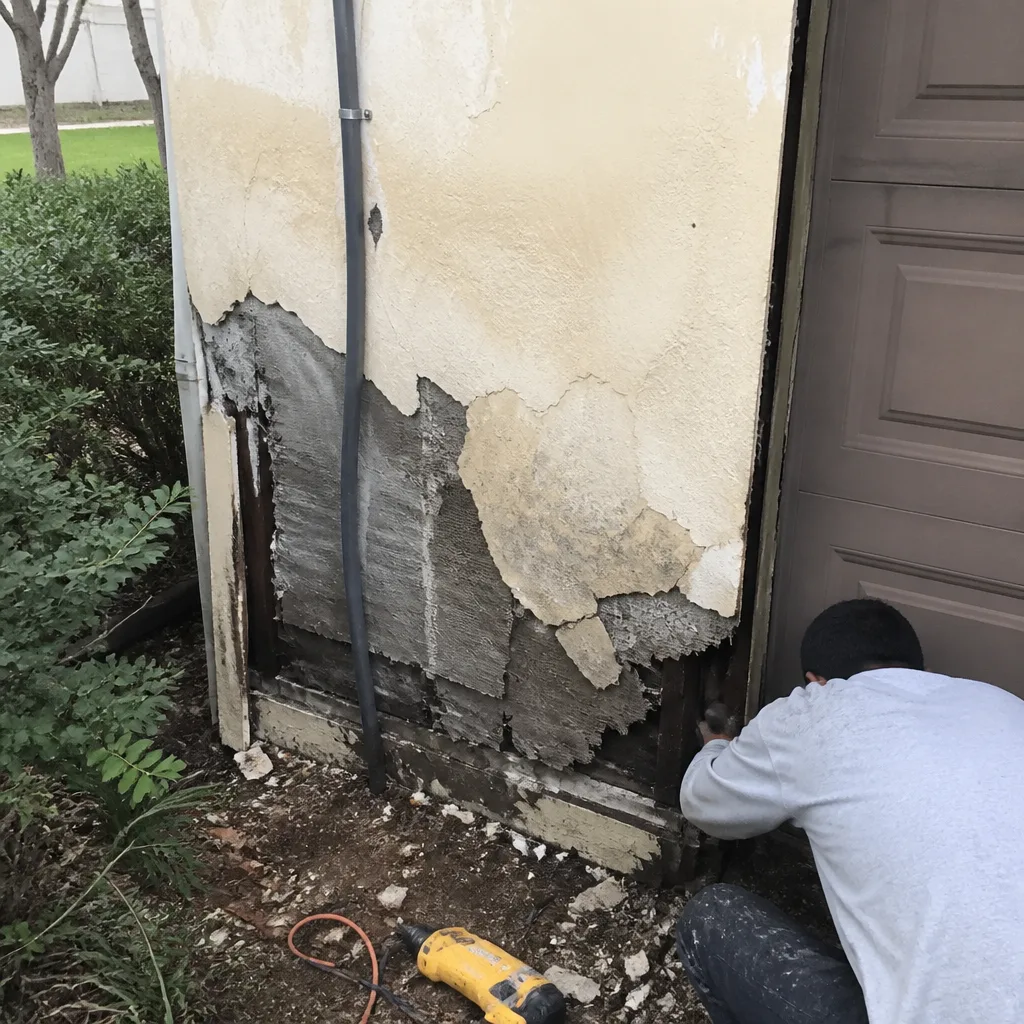 Before
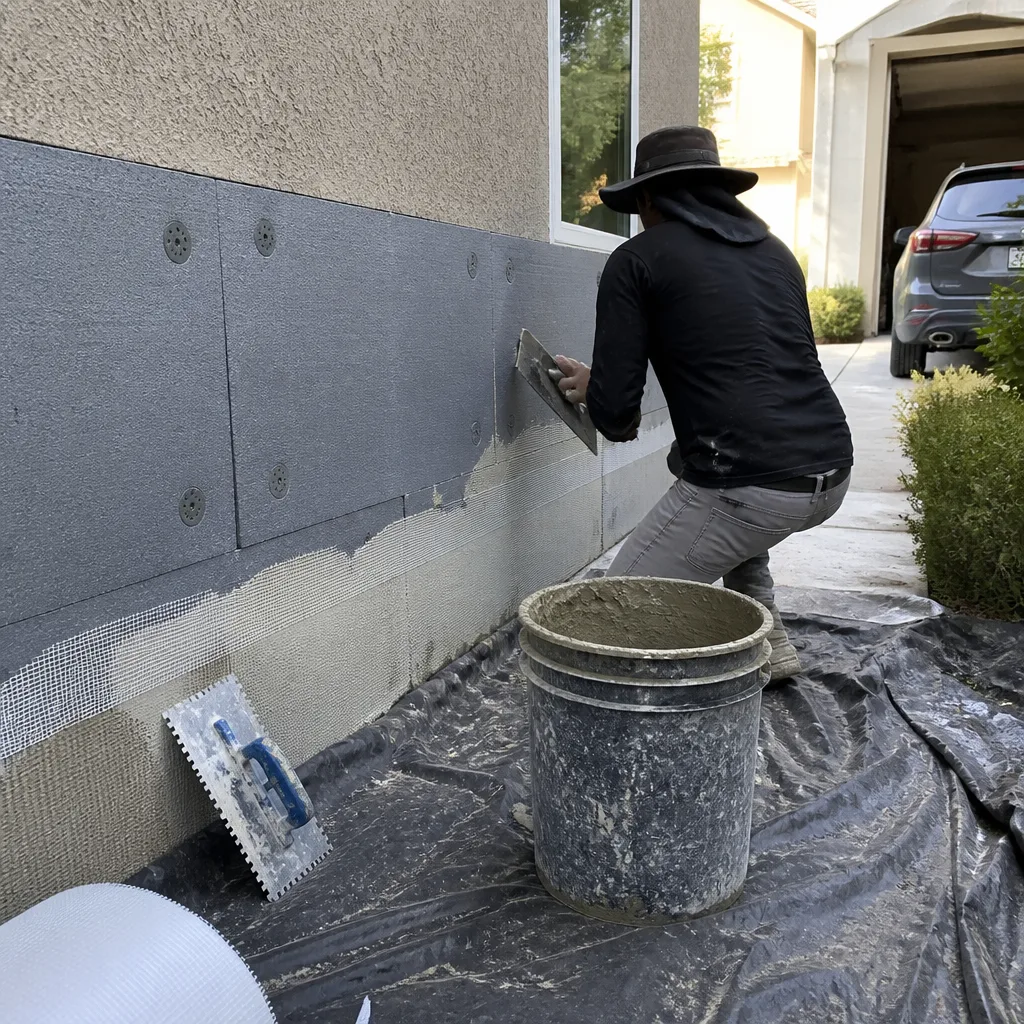 After
AfterTrusted Brands We Service in Leander
We source materials from Owens Corning, Johns Manville, Knauf, Rockwool, CertainTeed, Icynene, Demilec, and GreenFiber - no proprietary product lock-in, no brand exclusivity. For Leander’s climate and housing stock, we typically specify Owens Corning blown fiberglass or GreenFiber cellulose for top-ups, depending on the attic conditions and homeowner preference. Icynene and Demilec spray foams are available for conditioned attic conversions or specialized air-sealing applications. We stock common materials locally for fast turnaround, and we don’t mark up the material to push one brand over another. The specification is driven by what your attic needs, not what we need to move.
Common Attic Insulation Problems We See in Leander Homes
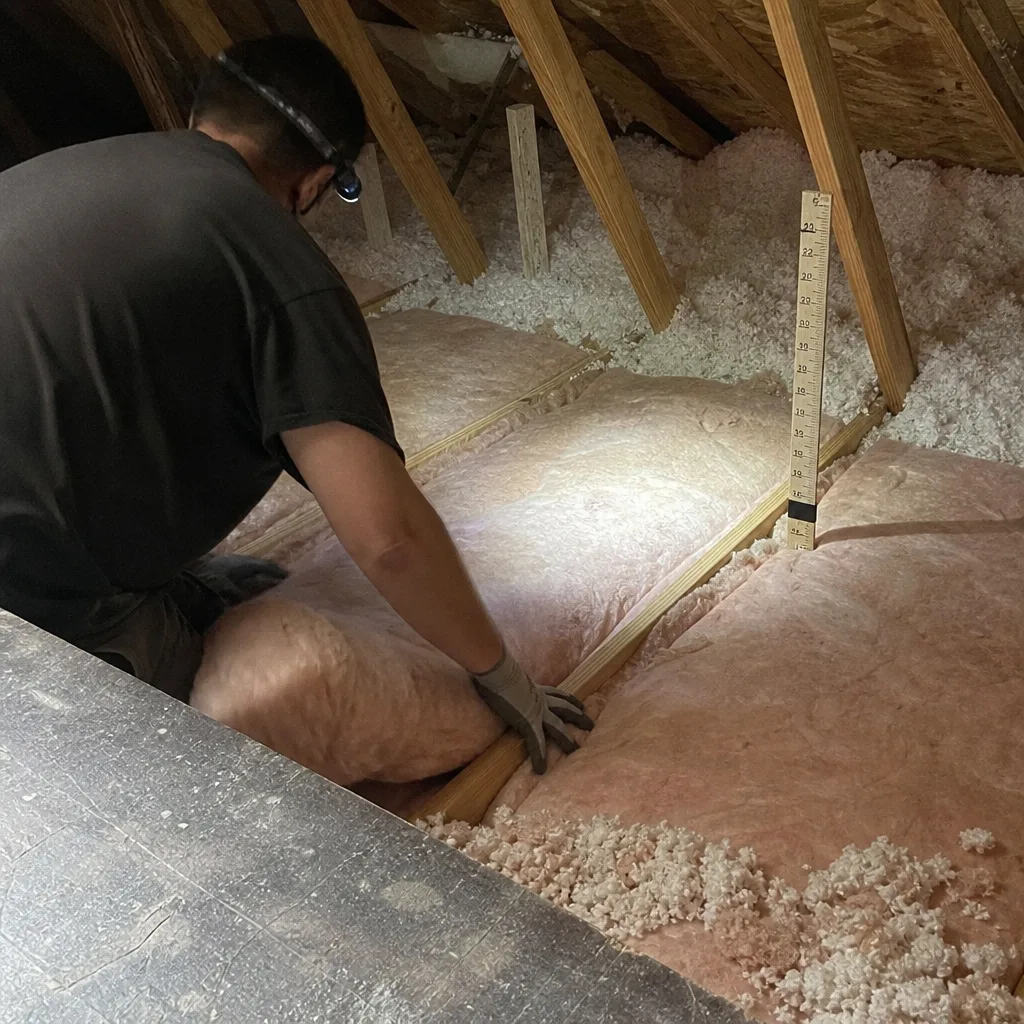
- Blown fiberglass stopped short of the ridge. In production-builder attics across Bryson and Mason Hills, the blown fiberglass often doesn’t reach the highest point of the roof deck. That leaves the hottest part of the attic volume effectively uninsulated while the homeowner assumes R-38 coverage is uniform. We map the deck with a thermal camera and probe before quoting.
- Unsealed can-light penetrations through the top plate. Recessed cans in vaulted great rooms are punched through the top plate with no air sealing, so 150°F+ attic air gets pulled straight into conditioned space every time the HVAC runs. This is nearly invisible without a blower door or thermal camera, and it’s a consistent shortcut in 2018-2023 Lennar and DR Horton builds.
- Oversized attic volumes with builder-minimum R-38 spread too thin. A 2,500 sq ft home with a simple gable roof might hit R-38 at uniform depth. A 3,800 sq ft home with multiple dormers, a vaulted great room, and a bonus room over the garage won’t. The same bag of fiberglass covers more square footage and loses depth.
- Winter performance gaps exposed by ice storms. February 2021 showed Leander homeowners what their production builders didn’t deliver: under-sealed top plates and thin attic coverage that let heat escape fast when the grid was already stressed. The fix is air sealing first, then insulation. Same crew, same visit, documented result.
Pricing for Attic Insulation in Leander, TX
A typical attic insulation top-up in Leander runs $1,800-$3,200 for homes between 2,000 and 3,500 square feet, with most falling in the $2,200-$2,800 range. Full removal and replacement starts around $3,500 and can reach $5,500+ for larger homes with complex attic geometry. Air sealing as a standalone prerequisite adds $400-$900 depending on can-light count, top-plate linear footage, and penetrations. Attic baffles and ventilation prep run $8-$14 per linear foot of soffit.
What moves the number: attic square footage, existing material condition, accessibility (vaulted ceilings and bonus rooms over garages add labor), and whether air sealing is needed. We don’t guess. Every job begins with a written price - flat, itemized, delivered before any work starts. That’s Haven Standard Clause 1. Bring us a competing written estimate and we’ll give you a Free Second Opinion, line by line. Call (737) 259-8352 to schedule.
We Also Serve Cities Near Leander
Our crews run regularly to Cedar Park, Georgetown, Round Rock, and Pflugerville from the northern Austin metro. If you’re in one of these areas and found this page, the same pricing structure, same documentation, and same Attic Insulation in Leander crew standards apply. We don’t franchise; we’re independently owned and operated under The Haven Standard since 2016.
Serving Leander, TX - Our Local Coverage Area
We’re based in the Leander area and know this community well. Use the map below to see our service coverage - if you’re nearby, we can almost certainly help.
FAQs - Attic Insulation in Leander
Your 2019 home was almost certainly insulated to the Texas 2015 IECC minimum of R-38, which is the legal floor, not the optimal level for IECC Climate Zone 2. In Leander’s 150°F summer attics, R-38 performs like a thinner blanket than it would in cooler climates, and production builders often spread that fiberglass thin across oversized attic volumes. A top-up to R-49 or R-60 corrects both the code minimum and the installation shortfall. Call (737) 259-8352 for a written price - estimates are free.
A blower-door test is a pressurization reading that shows, in one number, how much air your building envelope is losing - measured in CFM50, or cubic feet per minute at 50 Pascals of pressure. For Leander’s production homes, we typically see starting readings of 3,500-5,000 CFM50, with 15-25% of that leakage coming from the attic plane alone (unsealed top plates, can lights, penetrations). After air sealing and insulation, we target a 30-50% reduction. You get the before-and-after numbers in writing. No number, no proof.
Yes. We inspect or install baffles at every soffit vent before adding material. In Leander’s newer subdivisions, we often find baffles missing at complex roof intersections or crushed by the original blown-in. Without baffles, new insulation blocks intake airflow and turns the attic into a static heat sink. We won’t top up an attic with blocked ventilation. The baffles are part of the scope, not an extra.
We don’t do blown-in without air sealing first. Sealing top plates, can lights, and penetrations is a hard prerequisite - not an upsell - because blowing insulation over unsealed leaks buries them and makes future access harder. In Leander’s production homes, the air sealing is often where the real performance gain lives; the insulation top-up maintains it. Same crew, same visit, one documented result. Splitting them into separate jobs costs more in labor and loses the integrated warranty.
They stress the same weak point: an under-sealed, under-insulated attic envelope. Summer heat radiates down through thin coverage and pulls conditioned air out through leaks; winter cold reverses the stack effect and lets heat escape exactly where the sealing failed. February 2021 proved that R-38 and unsealed top plates aren’t enough when the grid fails. We design for both extremes because Leander sees both. Call (737) 259-8352 and we’ll show you what your attic looks like under a thermal camera.
Written by Wes Okafor, Owner at Topside Attic Insulation Pflugerville, serving Leander since 2016 under The Haven Standard.