
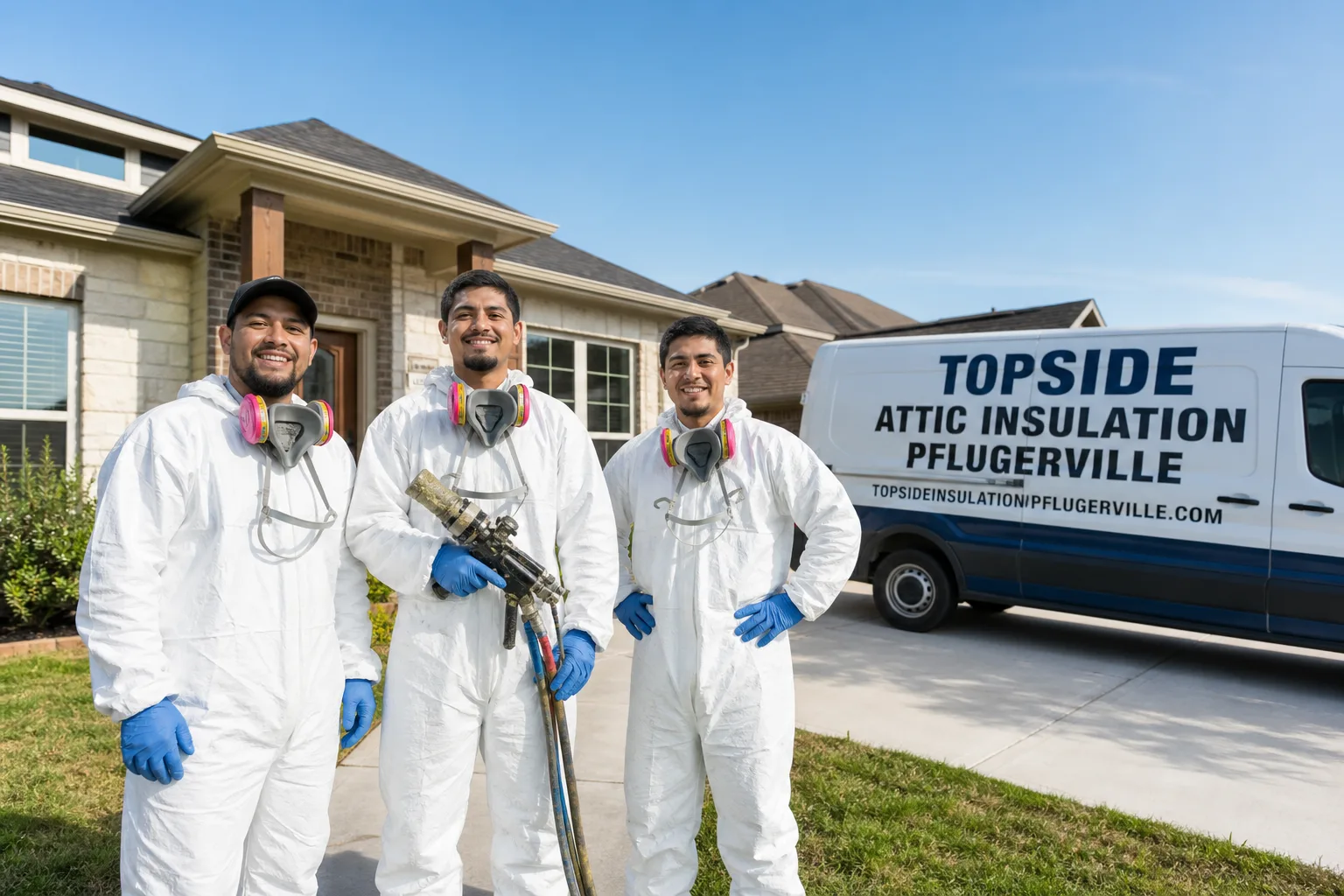
How Much Does Blown-In Insulation Cost in Pflugerville?
Blown-In Insulation services in Pflugerville, TX typically run between $1,200 and $3,800 for a standard attic, depending on square footage, current R-value, and whether air sealing is completed first. Most homeowners in neighborhoods like Blackhawk, Avalon, and Stone Hill Town Center pay somewhere in the $1,600 to $2,400 range for a 1,500-to-2,200-square-foot attic brought up to R-38 or R-49. Get a written price before any work starts – that is what every job at Envelope Insulation Co. begins with, no exceptions.
Blown-In Insulation Cost Breakdown (2026)
The table below reflects actual pricing in the Pflugerville market for 2026. These are not national averages pulled from an aggregator – they are based on real job scopes in Central Texas homes, where summer attic temperatures can exceed 140°F and the difference between R-19 and R-49 shows up directly on a July CPS/Oncor bill.
| Job Type / Scope | Typical Price Range (Pflugerville, 2026) | Notes |
|---|---|---|
| Small attic top-up (under 1,000 sq ft, adding 4-6 inches) | $600 – $1,100 | Existing insulation in decent shape; no air sealing needed |
| Standard attic (1,000-1,500 sq ft) to R-38 | $1,100 – $1,700 | Common in older Pflugerville subdivisions built before 2005 |
| Standard attic (1,500-2,200 sq ft) to R-38 | $1,600 – $2,400 | Most common job scope in Pflugerville |
| Standard attic (1,500-2,200 sq ft) to R-49 | $1,900 – $2,900 | Recommended for homes with ducted HVAC systems in the attic |
| Larger attic (2,200-3,000 sq ft) to R-49 | $2,600 – $3,800 | Typical in Stone Hill Town Center, Bohl’s Farm, and Carmel Creek |
| Attic air sealing (top plates, can lights, penetrations) before blowing | $400 – $900 add-on | Always completed before insulation at Envelope Insulation Co. – not optional |
| Old insulation removal before re-insulating | $600 – $1,400 | Required when existing material is contaminated, rodent-damaged, or wet |
| Walls (dense-pack blown-in, per 100 sq ft of wall) | $180 – $380 per 100 sq ft | Depends on access method – retrofit holes vs. open framing |
| Crawl space blown-in (where applicable) | $900 – $2,200 | Less common in Pflugerville due to slab-on-grade construction |
What Pushes the Price Up
Attic access matters more than most homeowners expect. A standard 22×30-inch pull-down stair is fine. A 14×24-inch hatch tucked behind a water heater in the garage adds time and sometimes a second technician. In Pflugerville’s newer builds, particularly in Blackhawk and Commons at Rowe Lane, builders often installed minimal access hatches that slow equipment setup.
Depth also compounds quickly. If your attic floor currently sits at R-11 – common in homes built in the late 1990s along FM 685 – getting to R-49 means adding roughly 16 to 18 inches of blown cellulose or fiberglass. That volume of material has a direct cost, and the blower truck’s time does too.
Air sealing scope is the biggest variable for the total project cost. A home with 40 recessed can lights in the ceiling below the attic requires significantly more sealing labor than one with eight. In Pflugerville, the Meadows of Blackhawk area in particular has a high density of homes built between 2003 and 2010 with recessed lighting that was never air-sealed from the attic side – each one is a direct conditioned-air leak.
What Brings the Price Down
Accessible attics, minimal existing debris, and a solid starting R-value (R-19 or above) all reduce scope. Cellulose tends to come in slightly cheaper than fiberglass blown-in for equivalent R-values, though both are effective in Pflugerville’s climate. Combining attic insulation with a radiant barrier installation in the same visit reduces mobilization cost and is worth asking about when scheduling.
What Affects Blown-In Insulation Pricing in Pflugerville
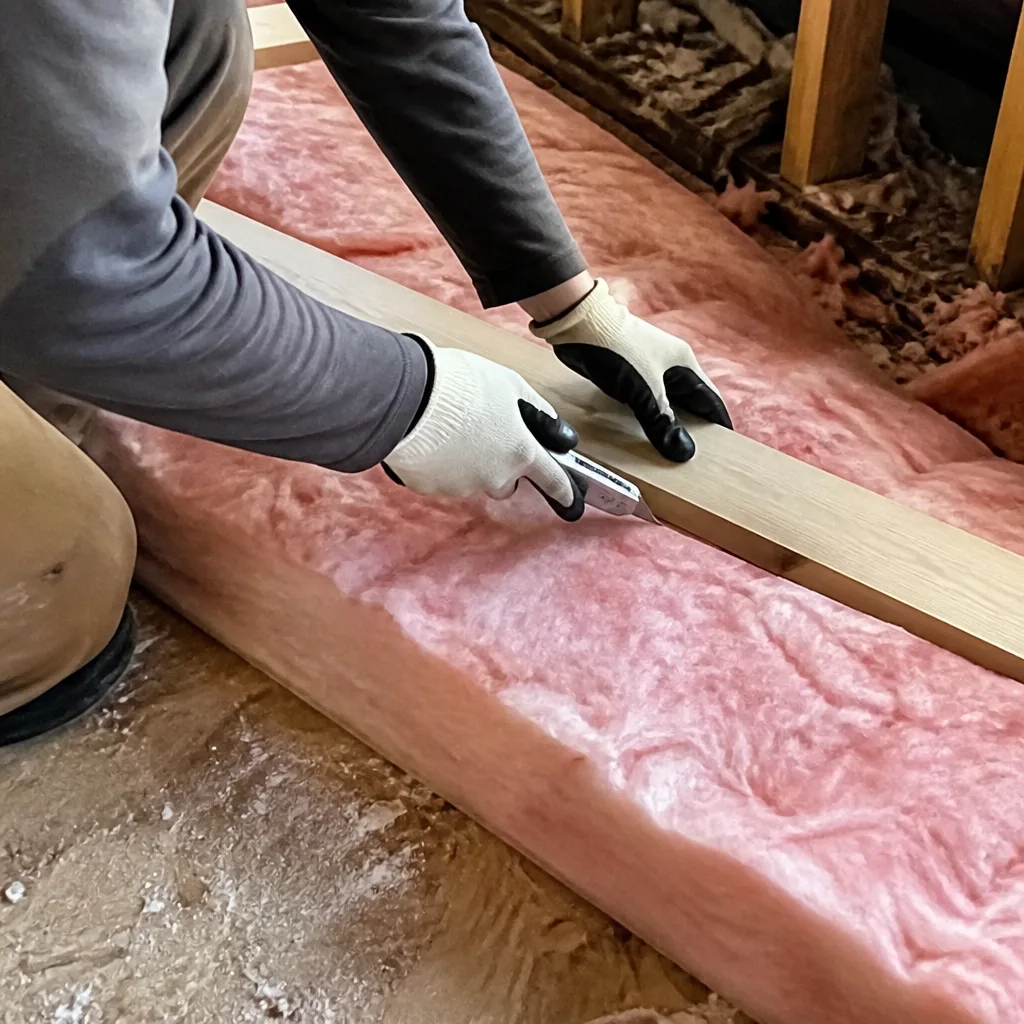
- Attic square footage and geometry: Larger attics cost more – straightforward. But geometry matters too. Hip-roofed homes, which are common throughout Pflugerville’s master-planned communities, have more perimeter framing and tighter knee-wall areas that slow installation. A 2,000-square-foot attic with multiple jogs and dropped soffits takes meaningfully longer than a clean rectangle of the same size.
- Current R-value and depth of existing insulation: Texas code requires R-38 minimum for new construction attics, but many Pflugerville homes built before 2008 were finished with R-19 or R-22. Topping those up requires more material than adding to a home already near code. A blower-door test – a pressurization reading that shows, in one number, how much air the building envelope is losing – often reveals that thin insulation isn’t the only problem.
- Air sealing complexity before the blow: At Envelope Insulation Co., air sealing of top plates, recessed can lights, plumbing penetrations, and HVAC chases is completed before any insulation goes in. That is a hard requirement, not an upsell. The price for that work scales with how many penetrations exist and how well the framing was detailed at the time of construction. Pflugerville homes from the early 2000s frequently have unsealed top plates and 30 to 60 unboxed recessed fixtures.
- Material choice – cellulose vs. fiberglass blown-in: Cellulose (recycled paper fiber, typically sourced from GreenFiber) and blown fiberglass (from brands like Owens Corning or Johns Manville) are both effective in the Austin metro’s climate. Cellulose generally runs slightly lower in installed cost per square foot. Fiberglass blown-in is lighter and doesn’t compress as much over time, which matters in attics with low clearance. Both are available – no proprietary product lock-in.
- Attic access and staging conditions: Central Texas summer heat creates a real working-condition issue. Attic work in Pflugerville between June and September typically starts early morning. Attics over 120°F have shortened productive windows. If a job requires multiple trips due to heat breaks, that can affect scheduling and occasionally scope – something an honest written estimate accounts for upfront.
- Removal of old or damaged insulation: If the existing insulation has rodent damage, moisture intrusion from a past roof leak, or settled below R-11, removal is typically recommended before new material goes in. In Pflugerville, homes near Pflugerville Lake and in older sections of Rowe Lane have occasionally shown moisture damage from condensation caused by poorly detailed vapor barriers. Removal adds $600 to $1,400 depending on volume and contamination level.
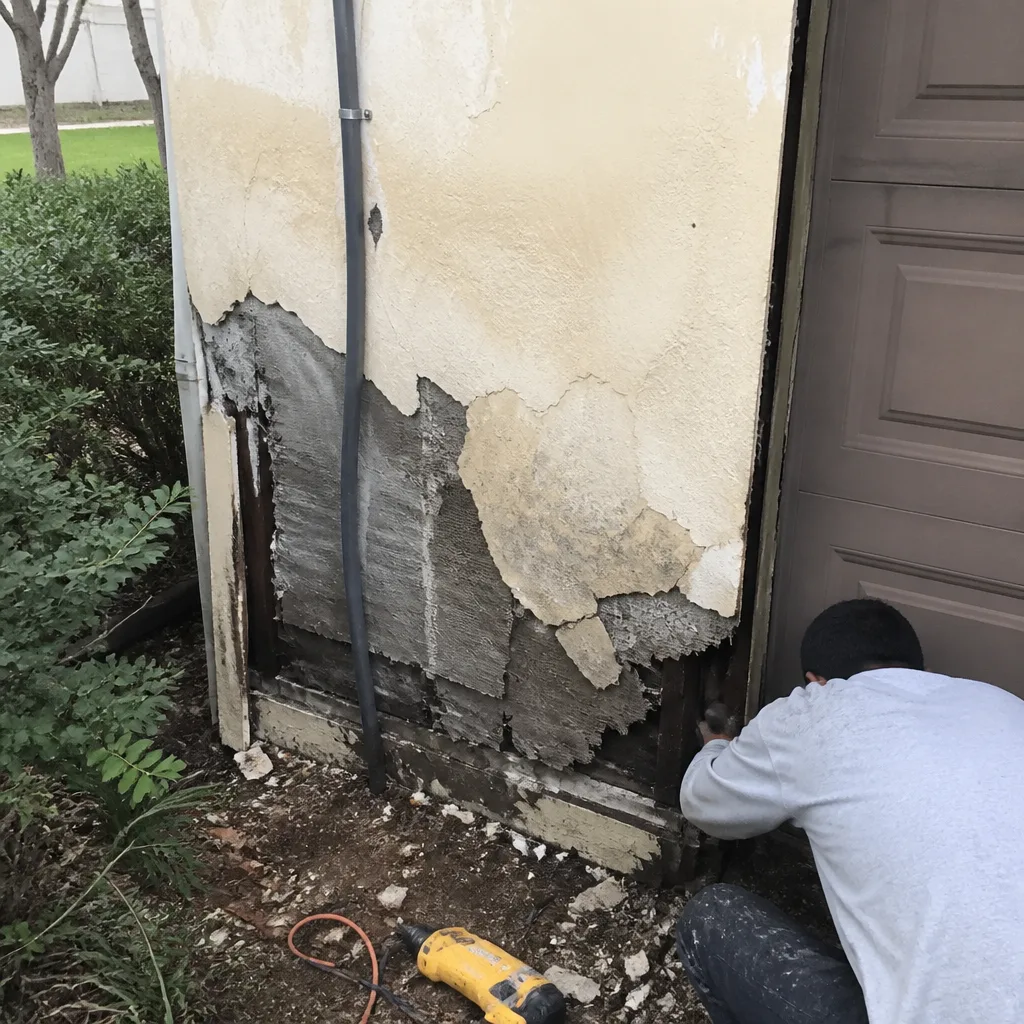 Before
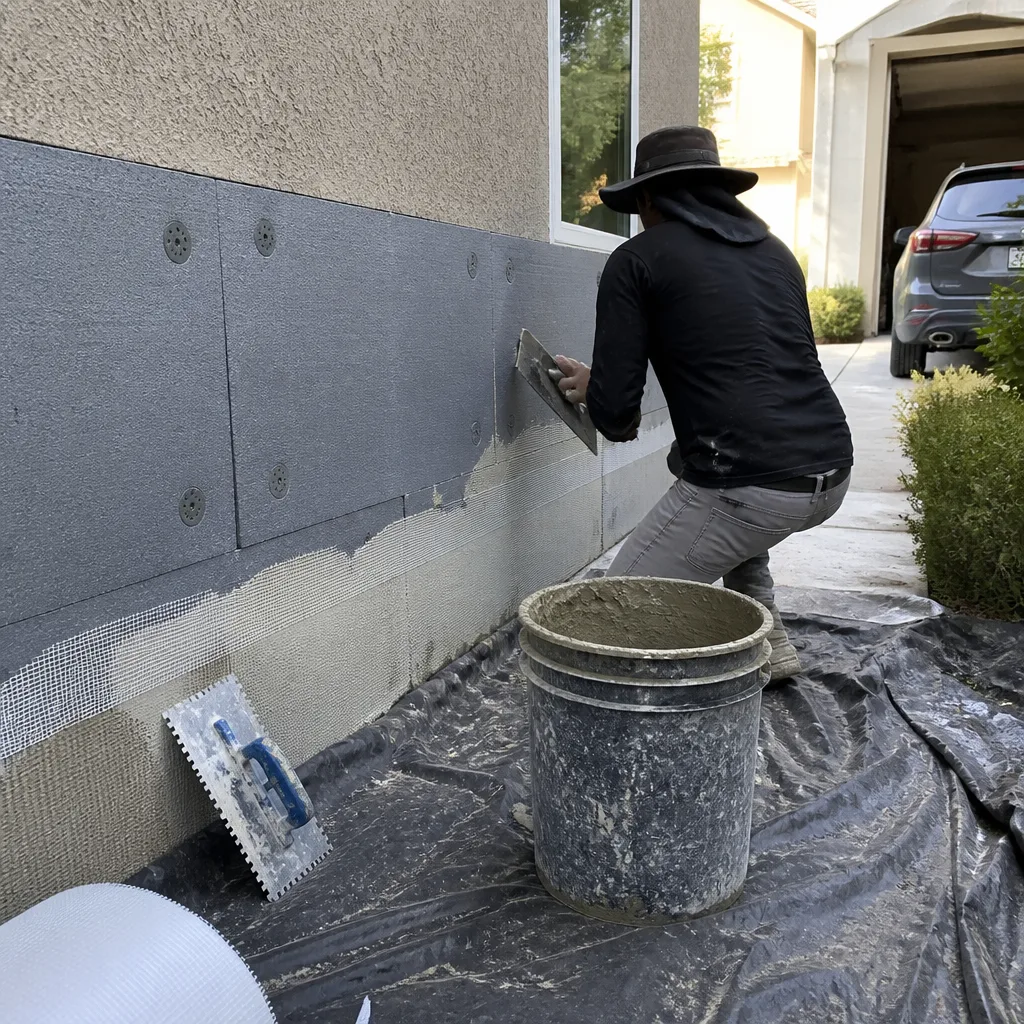 After
AfterPflugerville-Specific Factors Worth Knowing
Pflugerville sits in Travis County with portions extending into Williamson County, and the City of Pflugerville operates under the International Energy Conservation Code (IECC) as adopted by Texas. For new construction and permitted additions, attic insulation must meet R-38 minimum, though R-49 is increasingly standard and provides meaningfully better performance in Central Texas’s Climate Zone 2/3 boundary conditions.
The region’s climate creates an insulation performance pattern that differs from northern markets. Here, the primary driver is cooling load – keeping the August heat out of the conditioned space – rather than winter heat retention. That means the performance gap between R-22 and R-49 shows up most visibly on summer electric bills, not winter gas bills. Homes in Pflugerville running standard split-system heat pumps often see June-through-August electric bills drop $60 to $120 per month after a proper attic seal-and-insulate project, though exact results depend on duct condition, HVAC sizing, and thermostat behavior.
Pflugerville’s slab-on-grade construction is near-universal in newer subdivisions, which means the attic is typically the dominant envelope component. There is no crawl space to deal with in most cases. The entire thermal and air barrier conversation in a Pflugerville home usually starts and ends in the attic – which is why getting it right, starting with the air sealing, matters so much.
For a full picture of what the installation process looks like from inspection to final blower-door reading, the Blown-In Insulation in Pflugerville service page covers scope, materials, and what the documented record includes when the crew leaves.
How to Save on Blown-In Insulation in Pflugerville
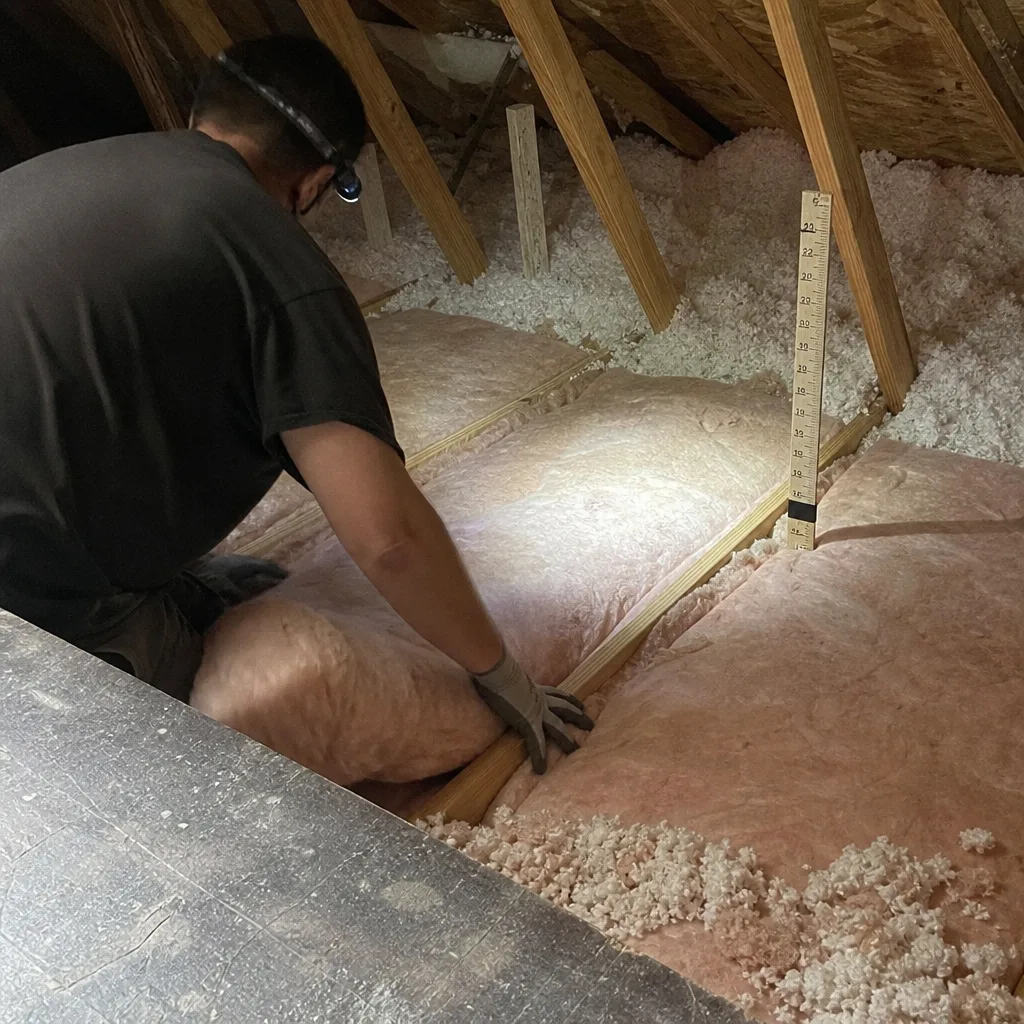
Get a Written Second Opinion
If you have an existing written estimate, bring it. Envelope Insulation Co. offers a free second opinion on any written estimate – someone will read it with you and flag anything that looks underscoped or overpriced. This is especially useful for comparing quotes that differ by $800 or more, where the difference is often in what is and isn’t included (air sealing, access modifications, blower-door documentation).
Bundle Air Sealing and Insulation in One Visit
Mobilization costs are real. Scheduling air sealing and blown-in insulation as a single project saves on crew time and equipment setup compared to treating them as separate visits. This is how every Envelope Insulation Co. job is scoped – sealing first, insulation second, in the same project window.
Ask About Adding a Radiant Barrier in the Same Visit
Installing a radiant barrier on the underside of the roof decking while the crew is already in the attic reduces the incremental cost of that upgrade. In Pflugerville’s climate, a radiant barrier combined with R-49 blown-in insulation is one of the highest-ROI building-envelope improvements available. The attic surface temperature difference it creates – often 20 to 30 degrees lower on the barrier-side – reduces the heat load the insulation has to handle, which extends HVAC runtime savings.
Check for Utility Rebates
Austin Energy and Oncor (for Pflugerville customers on the Oncor distribution grid) have offered rebate programs for attic insulation upgrades in recent years. Eligibility and amounts change, so confirm current offers directly with your utility. A blower-door test result – which Envelope Insulation Co. provides on applicable jobs – can serve as documentation for rebate applications that require proof of air-sealing work.
Don’t Skip Air Sealing to Save Money
This one sounds counterintuitive as a savings tip. But insulating over unsealed penetrations in a Pflugerville attic produces a job that underperforms for the life of the home. The insulation holds heat but doesn’t stop the airflow that moves it. Skipping air sealing to reduce the upfront price typically means higher monthly energy costs for years, plus the eventual cost of doing the air sealing anyway. It costs more over time. Envelope Insulation Co. will not blow insulation over an unsealed attic floor – that policy exists because it produces better results, not to run up job totals.
To get a written price specific to your home’s square footage and current conditions, call (737) 259-8352. Every estimate is free, and you will have a flat written scope before any work is authorized.
FAQs – Blown-In Insulation Cost in Pflugerville
How much does blown-in insulation cost for a 1,500-square-foot attic in Pflugerville?
A 1,500-square-foot attic brought from a low R-value to R-38 typically runs $1,400 to $2,000 in the Pflugerville market, including basic air sealing of major penetrations. Getting to R-49, which is the better target for Central Texas’s cooling-dominated climate, usually adds $300 to $500 to that range. If the attic has a high density of recessed can lights or significant gap sealing needed at the top plates, plan for the upper end. Call (737) 259-8352 and describe the home’s age, square footage, and any known insulation issues – that call takes about five minutes and ends with a scheduled estimate visit, not a vague range.
Is blown-in insulation cheaper than batt insulation for an attic?
For attic applications, blown-in insulation is typically $0.10 to $0.40 per square foot cheaper installed than fiberglass batt at equivalent R-values, partly because blown-in fills irregular joist bays and around obstructions without cutting. In Pflugerville attics with HVAC equipment, ducts, and electrical runs across the floor, blown-in provides better coverage. Batt is still appropriate in some wall and floor applications, but for attic top-ups and full attic installs, blown-in is the standard approach and generally the better value per R-value achieved.
Does blown-in insulation require a permit in Pflugerville, TX?
Attic insulation installation – including blown-in – generally does not require a separate building permit in Pflugerville for existing residential homes when it is not part of a permitted addition or renovation. However, if the work is tied to a permitted remodel or HVAC replacement that includes energy compliance documentation, insulation specs may need to be submitted. Always confirm with the City of Pflugerville Development Services department for your specific project. Envelope Insulation Co. provides a written scope and documented photo record on every job, which covers you for any documentation a utility rebate or permit office might request.
How long does blown-in insulation last in a Pflugerville attic?
Quality blown-in cellulose or fiberglass insulation in a properly sealed Pflugerville attic typically maintains its rated R-value for 20 to 30 years or more, assuming no moisture intrusion or pest activity. Central Texas heat does not degrade these materials the way UV exposure does to radiant barriers or roofing. The bigger risk is settling – blown-in cellulose typically settles 15 to 20 percent over the first few years, which is factored into the installed depth during a properly scoped job. Fiberglass blown-in settles less. Both materials sourced from manufacturers like Owens Corning, Johns Manville, GreenFiber, and Knauf carry manufacturer performance data you can review before the job starts.
Can blown-in insulation be installed in summer in Pflugerville?
Yes – summer installation is common in Pflugerville, but it requires early-morning scheduling and experienced crews. Attic temperatures in July and August regularly exceed 130 to 140°F by midday, which creates real working-condition limits. Jobs at Envelope Insulation Co. are scheduled with those conditions in mind; summer attic work typically starts at or before 7 a.m. and the installation phase is completed before peak heat. If you are concerned about summer availability, calling to schedule during spring or early fall gives you the widest appointment flexibility. Call (737) 259-8352 to check current availability – a live person answers, no voicemail loop.
What is the difference between blown-in insulation and spray foam for an attic?
Blown-in insulation – whether cellulose or fiberglass – is installed on the attic floor between and over the joists, keeping the attic space itself outside the conditioned envelope. Spray foam, when used in an attic, is typically applied to the underside of the roof decking (a “hot roof” or unvented attic assembly), which brings the attic into the conditioned envelope. Spray foam in this application runs $3,500 to $8,000+ for a typical Pflugerville attic and makes more sense when HVAC equipment is located in the attic space. Blown-in on the attic floor is the right call for most standard residential attics in Pflugerville. A written estimate will spell out which approach is appropriate for the specific home – both are available, and no one approach is pushed for margin reasons.
Does Envelope Insulation Co. show before-and-after results for blown-in insulation jobs?
Yes. On applicable jobs, a blower-door test – a pressurization measurement, expressed in CFM50, that shows in a single number how much air the building envelope was losing – is performed before and after the air sealing and insulation work. The before and after readings are documented and provided to the homeowner. A job that started at 4,800 CFM50 and finished at 2,600 CFM50 is a result you can see and verify, not a feeling. That documentation is part of the Documented Photo Record included on every applicable job.
Key Takeaways
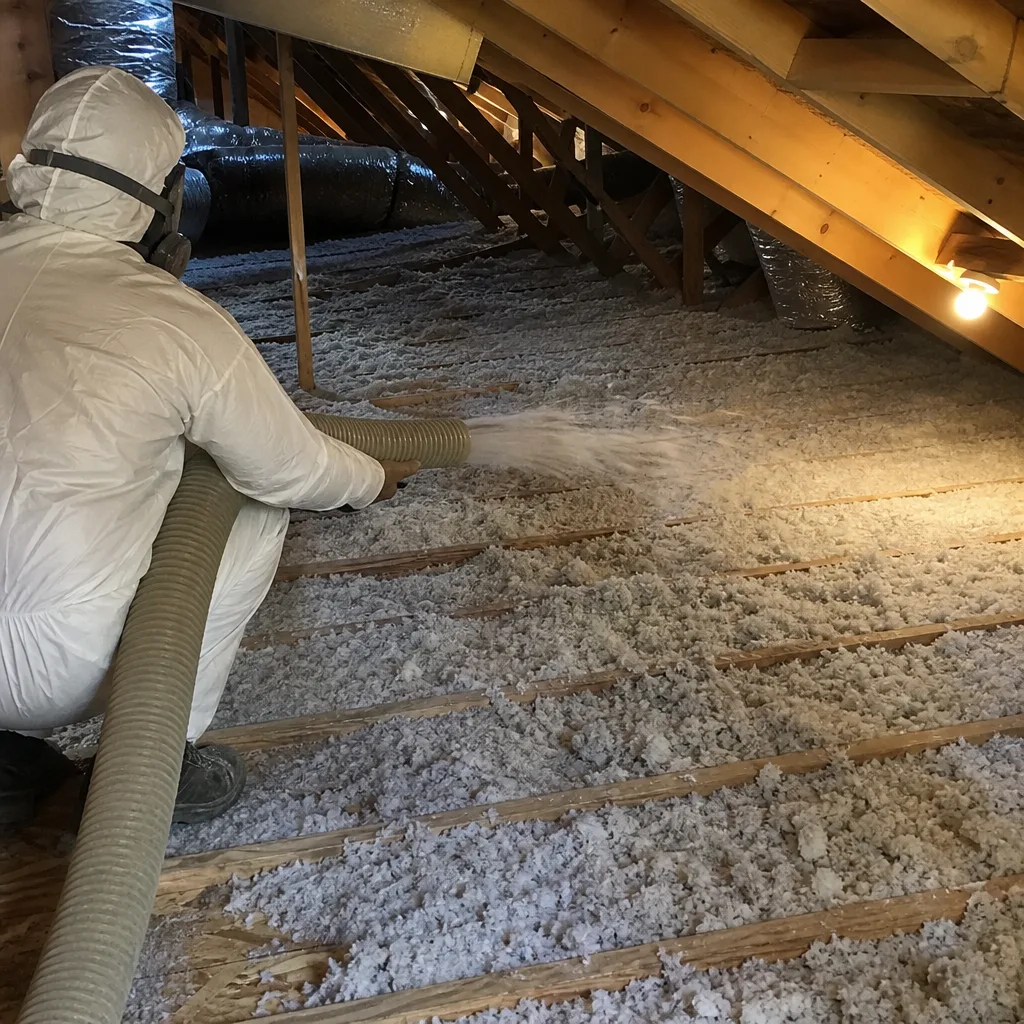
- Most Pflugerville attics run $1,200 to $3,800 for blown-in insulation, with the $1,600 to $2,400 range covering the most common job scope (1,500-2,200 sq ft to R-38).
- Air sealing of top plates, recessed lights, and penetrations must come before the insulation – not after. This is not optional at Envelope Insulation Co. and it directly affects performance.
- Pflugerville homes built before 2008 are frequently under-insulated (R-19 to R-22) and often have dozens of unsealed recessed fixtures in the ceiling plane below the attic.
- R-49 is the recommended target in Central Texas for cooling-load performance, not just the code-minimum R-38.
- Every job at Envelope Insulation Co. begins with a written price and ends with a Documented Photo Record – no work starts without the written scope and price in hand.
- Before-and-after blower-door readings are provided on applicable jobs so you can see the measurable air-sealing result you paid for.
- The 365-Day Done Right Promise applies to all completed work – if it’s not done right, it gets made right, backed by a written warranty delivered before the crew starts.
Ready for a Written Price on Your Pflugerville Home?
Wes Okafor and the team at Envelope Insulation Co. have been operating under The Haven Standard since 2016 – which means every estimate starts with an actual inspection, ends with a flat written price and written scope, and never asks you to authorize work without knowing what you are agreeing to. Across more than 9,000 homes sealed and insulated, that process has not changed.
If you have a competing estimate in hand, bring it. The free second opinion offer is genuine – someone will read it with you and tell you plainly what it includes and what it doesn’t.
For a free written estimate on blown-in insulation at your Pflugerville home, call (737) 259-8352. A live person answers – no voicemail, no callback window. Or start with the home page to see the full service line and what the Haven Standard means in practice before you call.
Under Haven Standard Clause 1: you will have a written price before anyone lifts a tool. That is the standard Wes holds every job to, and it is the standard you should expect from any contractor working in your home.
Pricing reflects the Pflugerville market as of 2026. Topside Attic Insulation Pflugerville offers free estimates – call (737) 259-8352.
Written by Wes Okafor, Owner at Envelope Insulation Co., serving Pflugerville, TX since 2016.
What Our Customers Say
"Two other companies quoted to blow more insulation on top of what was there. These were the only ones who said the existing material had to come out first, and explained why."
- Clifford E."They air-sealed the attic floor before insulating and showed me the blower-door number before and after. The upstairs is finally the same temperature as downstairs."
- Marisol D."They photographed rodent damage in the old insulation that we had no idea about, and priced the exclusion work separately so we could decide."
- Harriet N.