
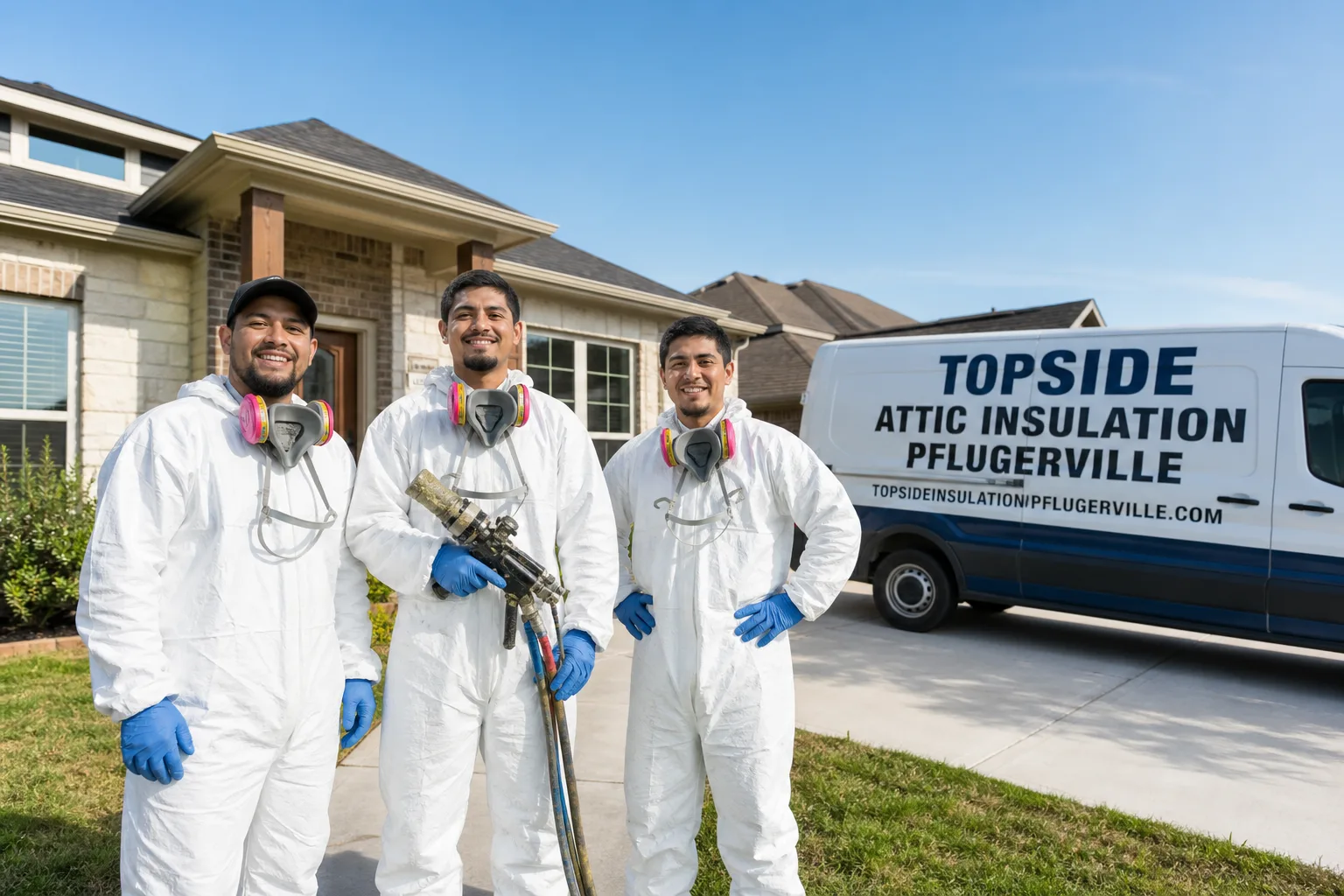
Fast, Reliable Blown-In Insulation Across Round Rock
Blown-in insulation in Round Rock typically costs $1.80 to $3.40 per square foot for attic work, with most complete air-seal-and-blow-over jobs running $2,800 to $5,500 for a 2,500-square-foot home. We’re usually on-site in Round Rock within 24 to 48 hours of your call, and same-day starts are common for attic jobs once the written price is approved. Our crews dispatch from the Austin office, but they live and work in Round Rock neighborhoods like Forest Creek, Teravista, and Round Rock Ranch, so they know the exact housing stock they’re walking into. Call (737) 259-8352 for a free estimate with a written price before any work starts.
Why Topside Attic Insulation Pflugerville Is Round Rock’s Preferred Blown-In Insulation Company
We’ve sealed and insulated over 9,000 homes since 2016, and a significant share of them sit in Round Rock’s early-2000s production subdivisions. Our reviews from Round Rock customers consistently mention the blower-door numbers we leave behind, the photos we document, and the fact that we don’t start until the price is in writing. Wes Okafor built this company on the Haven Standard, and that means every Round Rock job gets a written scope, a written warranty, and a 365-Day Done Right Promise before anyone touches an attic hatch.
Response time to Round Rock is same-day or next-day for estimates, because our crews already know the area. They know which DR Horton plans in Forest Creek have the knee-wall chases from unconditioned garages. They know which Teravista lots face west and bake the attic to 160°F by 4 p.m. in August. That local knowledge means we quote accurately the first time, and we arrive with the right materials and the right crew size for what your home actually needs.
Our Blown-In Insulation Services in Round Rock
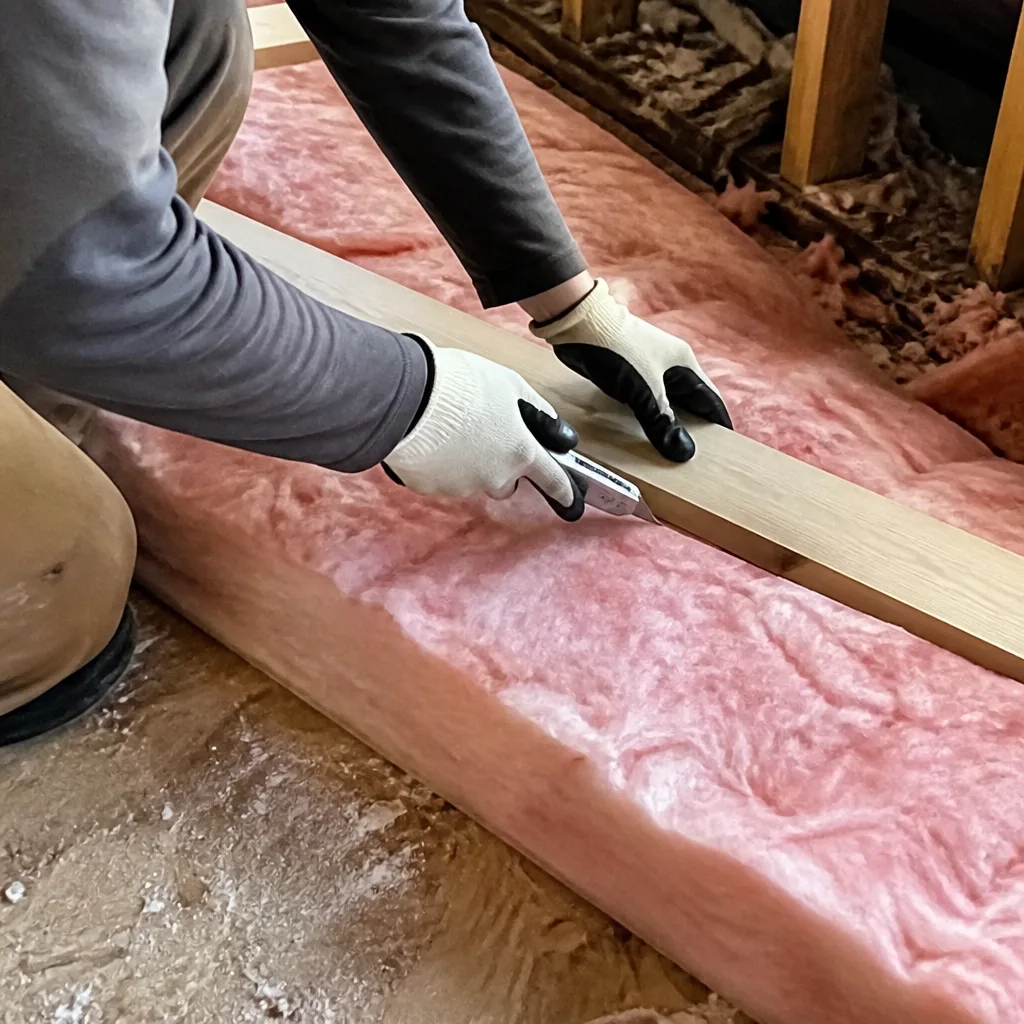
Blown-In Cellulose
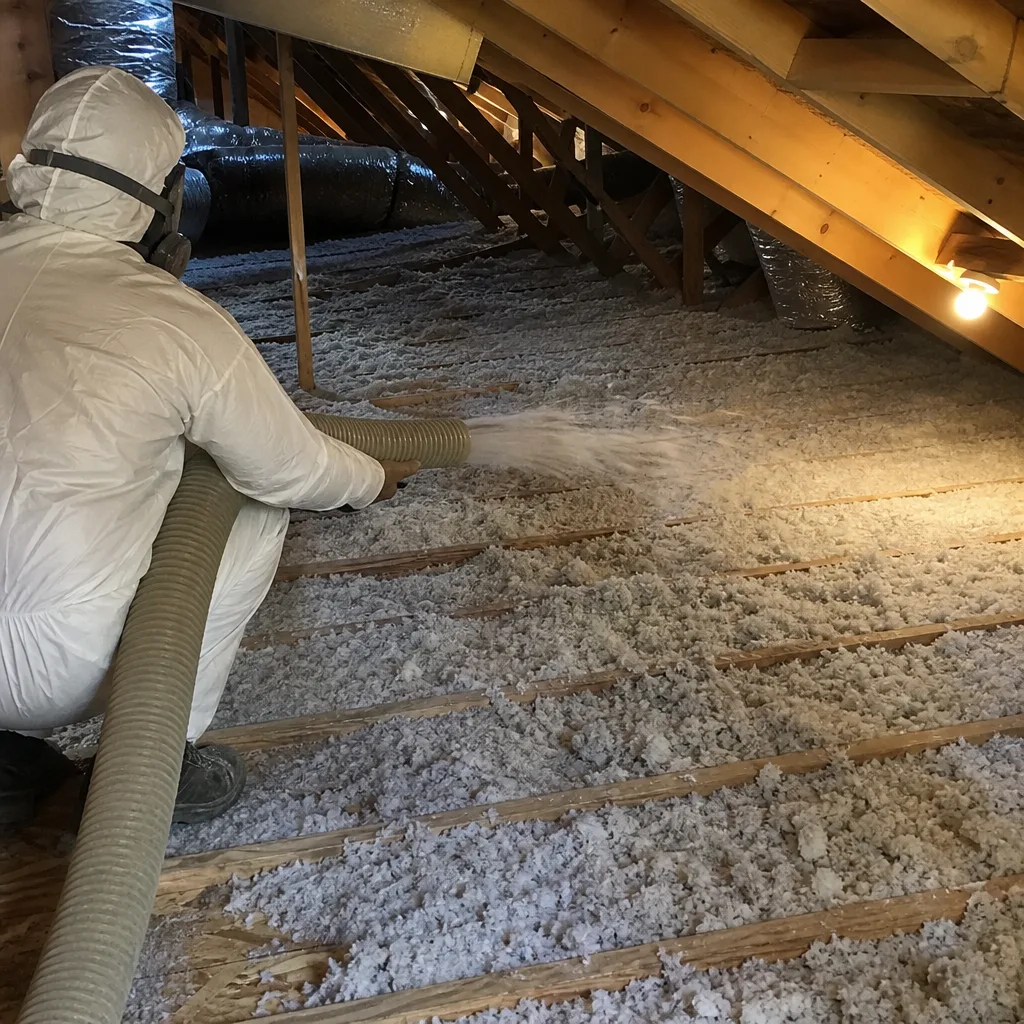
We use GreenFiber cellulose for most Round Rock attic blow-overs, especially in Forest Creek and Teravista homes where the original blown fiberglass has settled to effective R-15 or less under two decades of 140°F attic heat. Cellulose packs tighter around irregular joist bays and top plates, and it performs better at the temperature extremes Round Rock attics hit in July and August. Our Blown-In Insulation team always air-seals first, then blows, because cellulose over a leaky air barrier is just expensive dust.
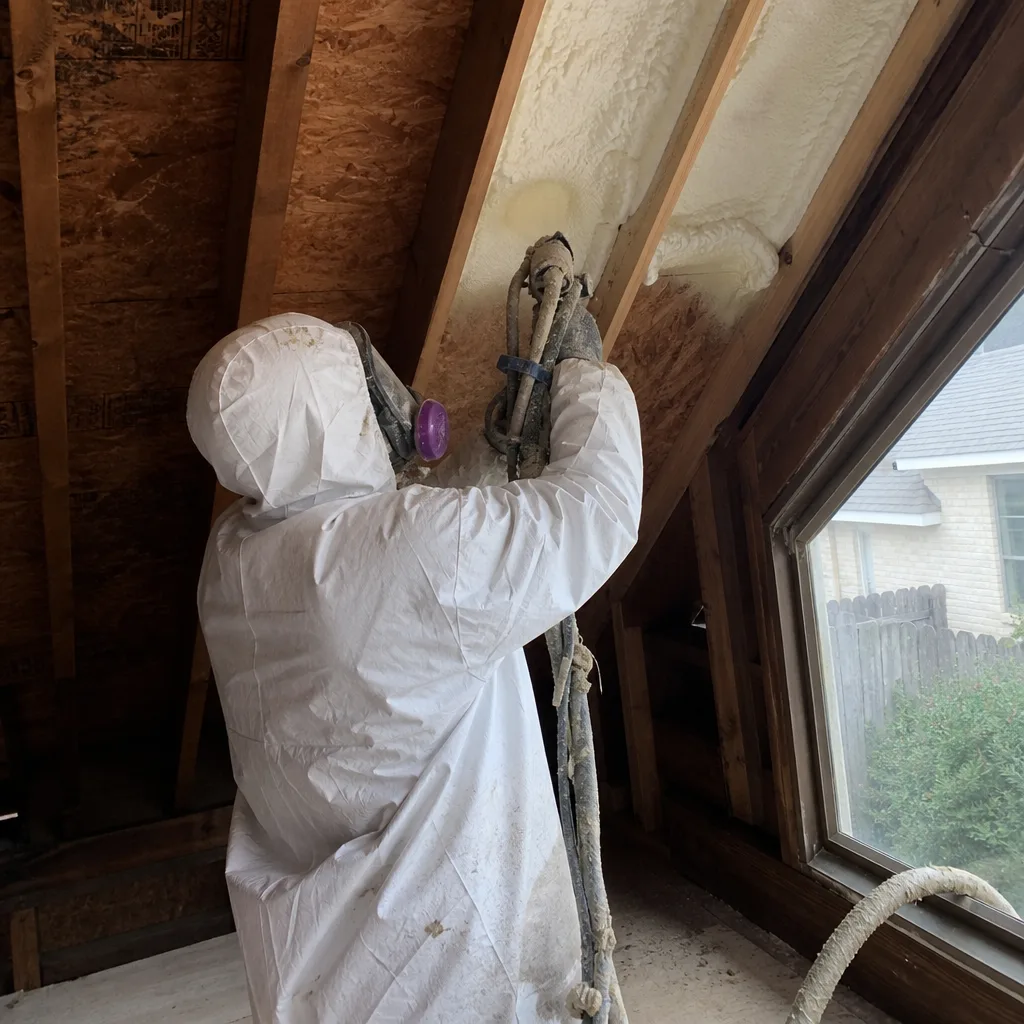
Blown-In Fiberglass
For homeowners who prefer fiberglass, we source Owens Corning blown-in systems that achieve consistent density and coverage depth. In Round Rock Ranch and newer Round Rock builds, where the existing insulation may still be structurally intact but underweight, blown fiberglass can be the right match. We still seal every can light, every top plate, and every chase first. The blower-door test tells us whether we got it right, and you get the before-and-after numbers in writing.
Dense-Pack Wall Insulation
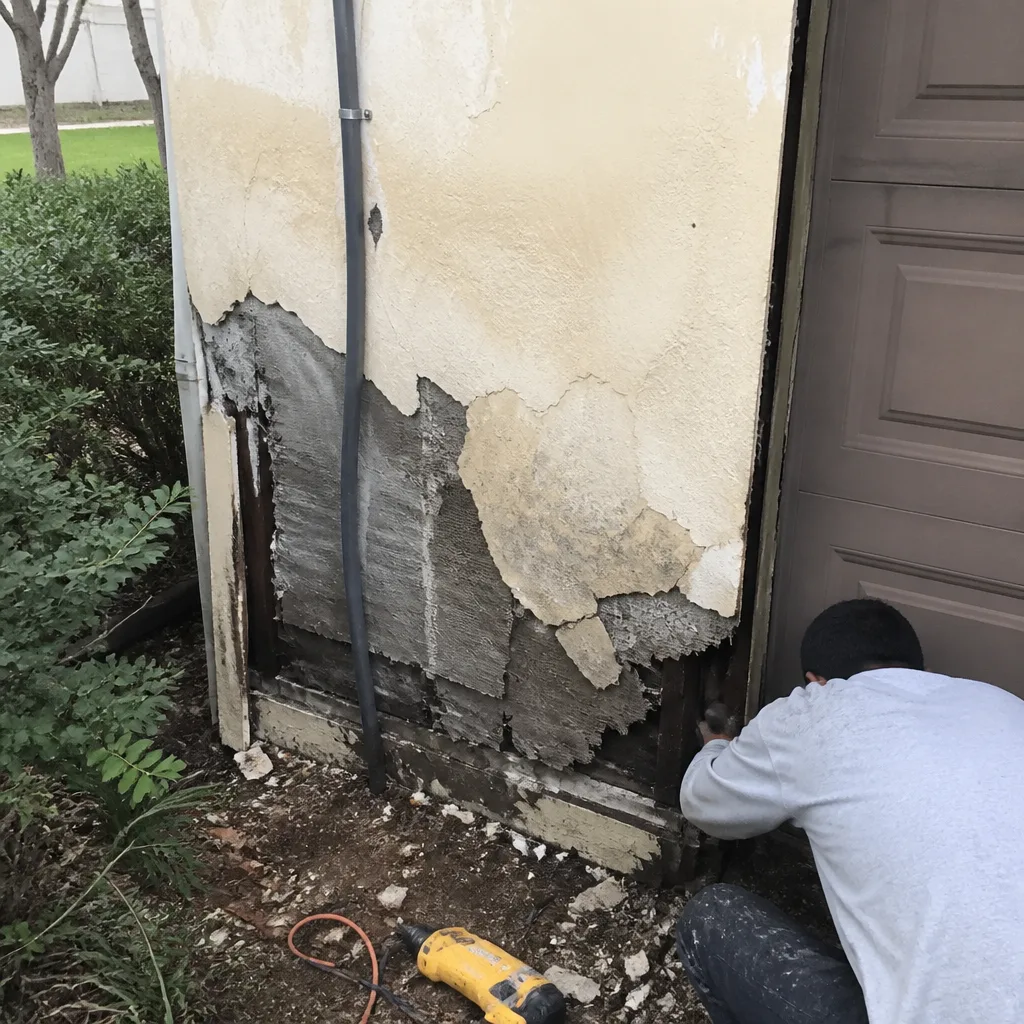
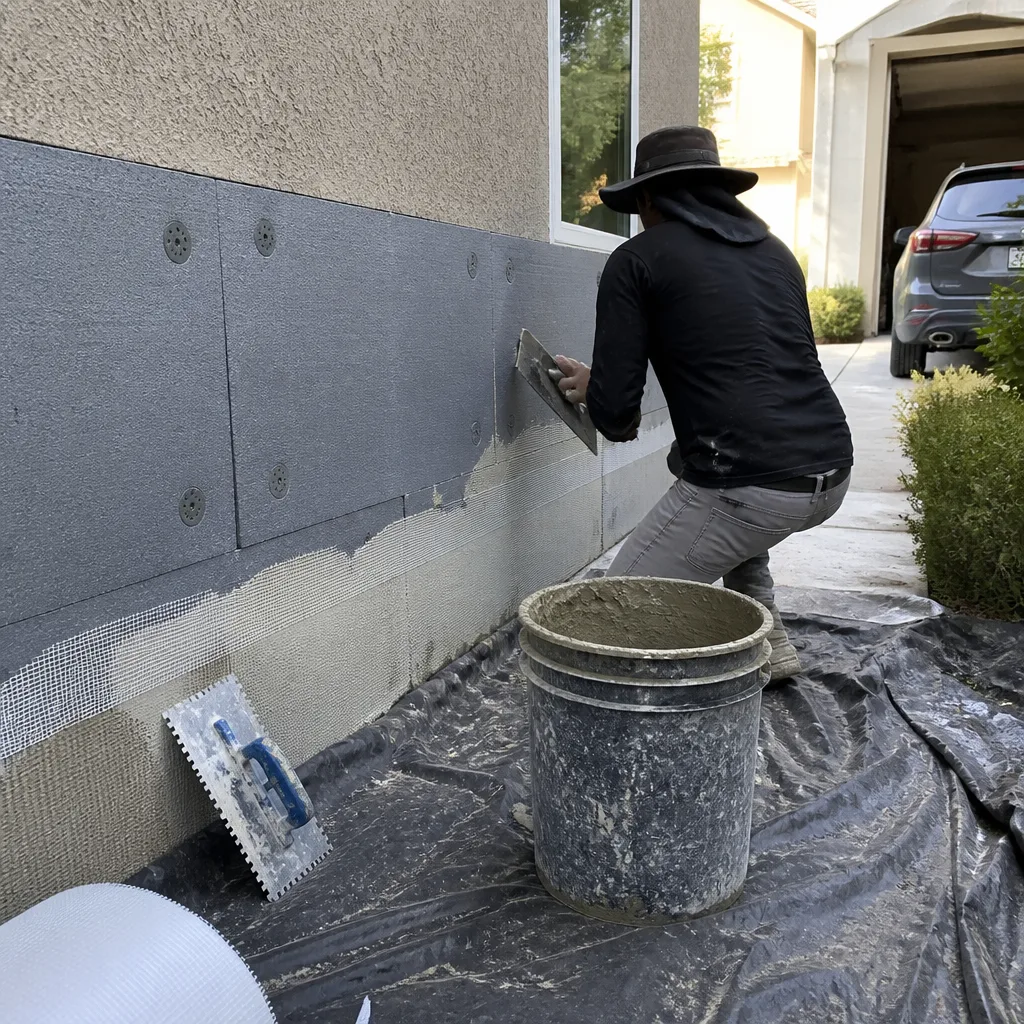
Round Rock’s production-era homes often have empty or poorly insulated exterior walls, especially around plumbing chases and behind vinyl siding. Dense-pack cellulose fills those wall cavities at 3.5 pounds per cubic foot, creating an air-impermeable barrier that slows both conductive heat and air infiltration. After Winter Storm Uri in 2021, we dense-packed dozens of Round Rock homes where supply lines had frozen in uninsulated exterior walls. The material we use is GreenFiber, packed to spec, with photo documentation of every cavity filled.
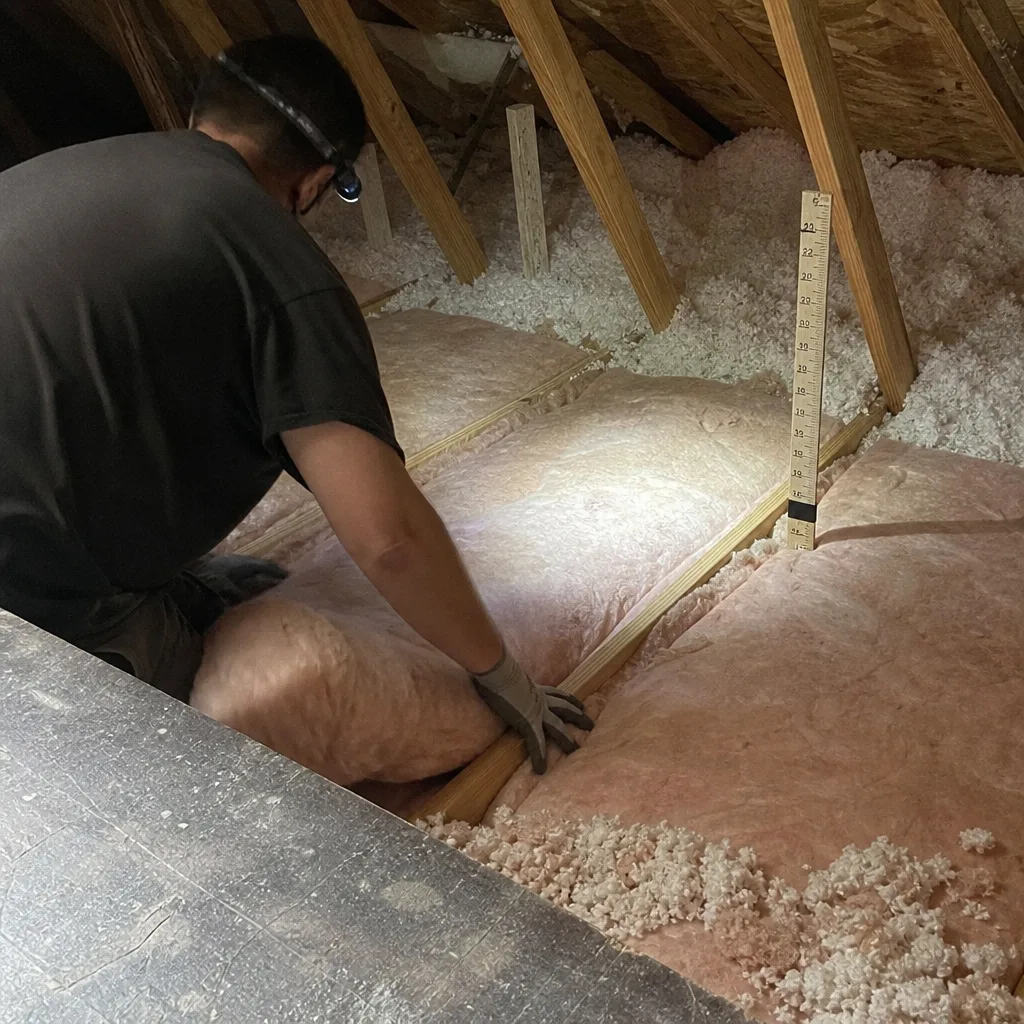
Blown-In Top-Up
We offer top-ups in Round Rock, but we’re upfront about when they’re appropriate and when they’re not. If your attic has settled blown fiberglass but the air barrier is intact, a top-up to R-38 or R-49 can make sense. If you’ve got unshielded recessed cans, a knee-wall chase from the garage, or visible black fiberglass where air has been moving through the insulation for years, we’ll tell you: a top-up without air sealing is burying the problem. Our written price will show both options, and we’ll explain which one actually changes your energy bill.
What happens when you call
- 1
A real person answersNo phone trees - you reach a local pro.
- 2
You get an upfront price rangeHonest numbers before anyone is dispatched.
- 3
A background-checked tech heads outLicensed & insured, dispatched right away.
- 4
You approve before work beginsNothing starts until you say go.
 Before
 After
AfterTrusted Brands We Service in Round Rock
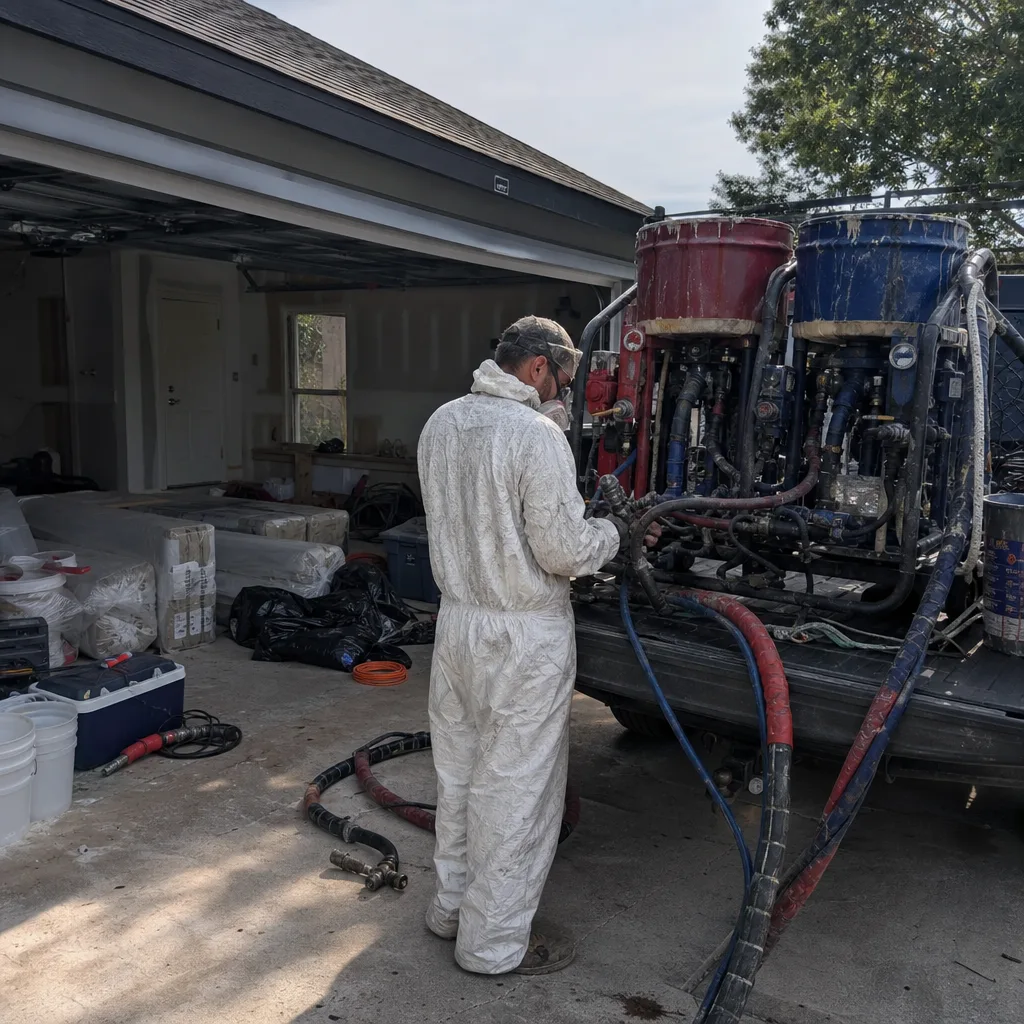
We stock Owens Corning, GreenFiber, and Icynene materials locally for Round Rock jobs, with no proprietary lock-in that forces you into a single product line. Owens Corning blown fiberglass is our go-to for homeowners who want that specific material performance. GreenFiber cellulose is what we reach for in most Round Rock attics where settled fiberglass and air leakage are the paired problem. Icynene open-cell spray foam comes into play for complex chases, bonus rooms over garages, and the kind of thermal bypasses common in Round Rock’s two-story production homes. Because we keep inventory moving through the Austin office, turnaround on Round Rock jobs is fast, and we’re not waiting on a distributor to ship from Dallas or Houston.
Common Blown-In Insulation Problems We See in Round Rock Homes
- Unshielded recessed-can penetrations in early-2000s DR Horton and Lennar homes let conditioned air pour straight into 150°F attics. New blown-in insulation installed over these leaks delivers a fraction of its rated R-value because the air barrier is still broken.
- Settled and compacted blown fiberglass in Forest Creek and Teravista has dropped from original R-19 to R-26 down to effective R-15 or less. A simple top-up without air sealing just buries the old problem deeper and wastes material.
- Open floor plans with vaulted ceilings and attached unconditioned garages create thermal bypasses between garage and living space. A blown-in job has to address the knee wall and attic chase, or the home stays drafty no matter how much attic insulation goes in.
- Post-Uri freeze damage exposed how many Round Rock homes had zero insulation around supply lines in exterior walls or unconditioned attic chases. We still get calls from homeowners who patched the plumbing but never fixed the insulation gap that let it freeze.
Pricing for Blown-In Insulation in Round Rock, TX
Most complete air-seal-and-blow-over jobs in Round Rock run $2,800 to $5,500 for a typical 2,000 to 3,000 square foot home, depending on attic square footage, accessibility, and how many penetrations need sealing. Dense-pack wall insulation adds $1,200 to $2,800 for a whole-house job. A straightforward blown-in top-up on an attic that’s already sealed and just underweight runs $1,400 to $2,600.
What moves the price: attic accessibility (steep roof pitch or limited hatch access adds labor), number of recessed can lights requiring fire-rated covers and foam sealing, whether knee-wall chases need blocking and air sealing, and whether we’re removing degraded or rodent-contaminated insulation before blowing new material. Every Round Rock estimate includes a written price, a written scope, and a written warranty before any work starts. Call (737) 259-8352 for your free estimate.
We Also Serve Cities Near Round Rock
Our crews work Blown-In Insulation in Round Rock and the surrounding communities: Pflugerville, Hutto, Georgetown, and Cedar Park. Dispatch is coordinated from our Austin office, but the trucks that roll to your home are stocked for the specific housing stock and climate conditions of your neighborhood.
Serving Round Rock, TX - Our Local Coverage Area
We’re based in the Round Rock area and know this community well. Use the map below to see our service coverage - if you’re nearby, we can almost certainly help.
FAQs - Blown-In Insulation in Round Rock
No, and we’ll show you why in writing. The original blown fiberglass in Forest Creek homes has settled and compacted under 20 to 30 years of 140°F attic heat, and the dozens of unshielded recessed-can penetrations are still leaking conditioned air. We air-seal every penetration first, then blow new cellulose or fiberglass over the old material to achieve the target R-value. Call (737) 259-8352 for a free estimate with a written scope.
Round Rock’s dominant housing stock was built during the fastest suburban build-out in Texas history, to energy codes that predated modern air-sealing standards. Those attics have settled insulation, unsealed can lights, and thermal bypasses from attached garages that newer homes simply don’t have. A generic top-up approach wastes material and money here. Call (737) 259-8352 and we’ll walk you through what your specific home needs.
Yes. Each unshielded can light is a hole in your attic air barrier, and a typical Teravista home has 20 to 40 of them. In summer, conditioned air pours through those holes into a 150°F attic. In winter, cold attic air drops into your living space. We seal every can with a fire-rated cover and foam before blowing insulation, because insulation over a leaky air barrier is just expensive padding. Call (737) 259-8352 for an exact quote.
The knee wall and attic chase between your conditioned living space and that unconditioned garage is a thermal bypass. In summer, garage heat radiates through the chase. In winter, cold garage air drops into bedrooms. We block and air-seal that chase as part of every complete Round Rock job, then dense-pack or blow insulation to break the thermal bridge. The blower-door test proves we got it. Call (737) 259-8352 for a free estimate.
We typically use GreenFiber cellulose for both, because it performs well in Round Rock’s temperature extremes and packs to the density wall cavities need. For attic top-ups where the air barrier is intact, Owens Corning blown fiberglass is also an option. We don’t lock you into a proprietary product. The written scope we deliver before work starts names the exact material, the exact R-value target, and the exact coverage area. Call (737) 259-8352 for your written price.
Written by Wes Okafor, Owner at Topside Attic Insulation Pflugerville, serving Round Rock since 2016 under The Haven Standard.