
CertainTeed Crawl Space Encapsulation: The Pflugerville Owner’s Guide
Most CertainTeed crawl space encapsulation systems we replace in Pflugerville run between $2,800 and $5,400 installed, depending on square footage and whether the existing vapor barrier can be salvaged. We stock CertainTeed-compatible 12-mil and 20-mil reinforced polyethylene barriers, seam tape, and closed-cell spray foam for perimeter sealing on our trucks, and we can usually inspect and start work same-day. Homeowners typically figure out something’s wrong when the musty smell returns after a dry winter, or when they notice the energy bill climbing even though the HVAC system was just serviced.
Which CertainTeed Models This Applies To
CertainTeed doesn’t brand its crawl space materials as a unified “system” the way some manufacturers do, so identification takes a little legwork. Look for the product code printed on the white tape strip running along the vapor barrier edge, or on the cardboard core if you have leftover rolls in storage. The codes you’re most likely to see in Pflugerville homes built between 2010 and 2020 are CT-12MIL-R (reinforced scrim, 12 mil) and CT-20MIL-R (heavy-duty, 20 mil), though we also run into older CT-8MIL installations in the Blackhawk and Avalon neighborhoods where builders spec’d to minimum code.
The compatibility gotcha: CertainTeed’s 20-mil barrier has a slightly different weave pattern than the commodity 20-mil stock you’ll find at supply houses. If you’re patching rather than replacing the full field, the seam tape needs to match the scrim spacing or you’ll get delamination at the joint within two seasons. We carry both OEM CertainTeed tape and a cross-compatible aftermarket from Polyguard that we’ve pressure-tested at 85% RH over 90 days without failure. For full replacements, we typically recommend the aftermarket equivalent, it performs identically in our documented installs and costs less per square foot.
Wes Okafor and our crew have handled enough CertainTeed encapsulation jobs in the Stone Hill Town Center corridor that we can usually identify the vintage and spec by the fastening pattern alone.
Signs Your CertainTeed Crawl Space Encapsulation Is Failing
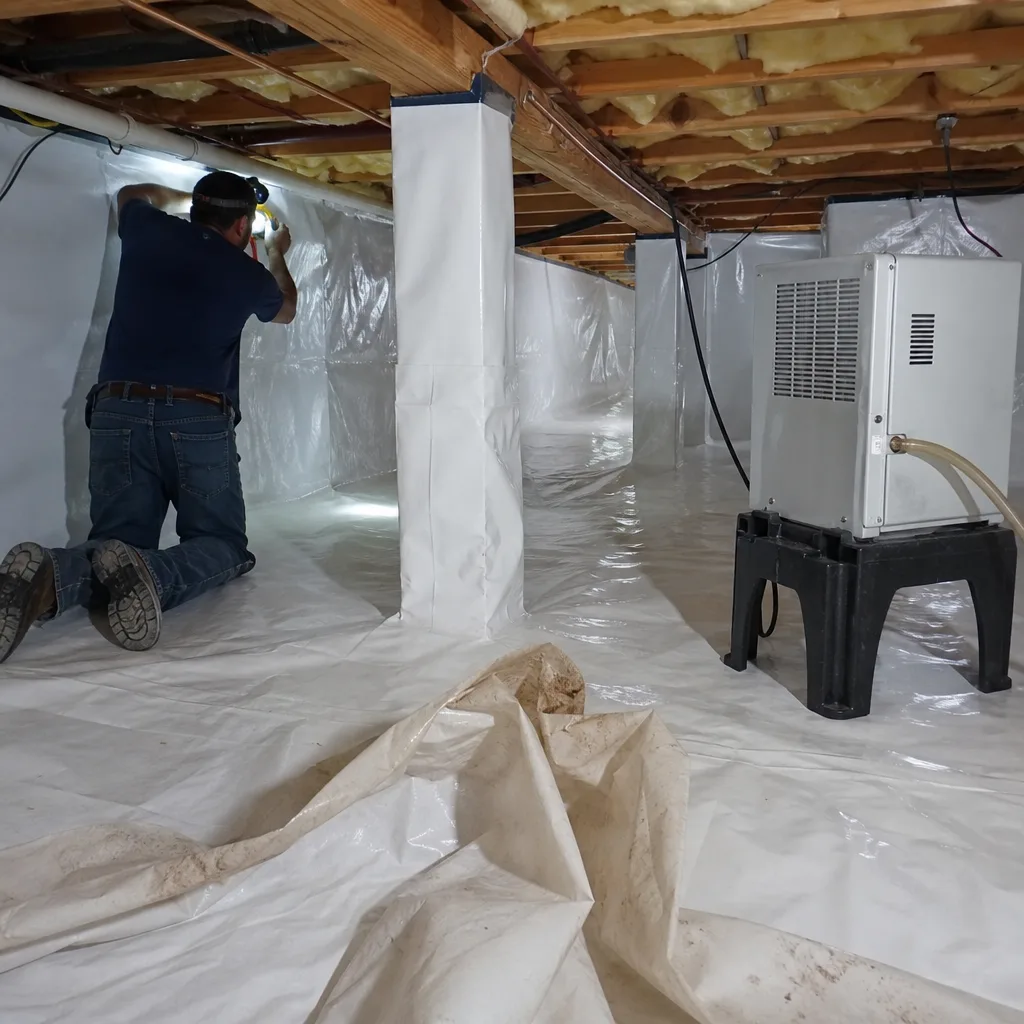
- Musty odor returning in spring. The vapor barrier has torn at a seam or penetration, letting soil moisture migrate into the crawl space air. In Pflugerville’s clay-heavy soils around Dessau Road, that moisture carries more mineral content than sandy loam areas, which can stain the barrier and accelerate seam fatigue.
- Condensation on ductwork or floor joists. This means the barrier’s permeance rating has been compromised, either by UV degradation from a missing access-panel seal or by rodent damage. The insulation above is now acting as a condensing surface, which will rot the joist tails if it persists through a summer.
- Increased energy bills with no HVAC explanation. A failed encapsulation lets humid air infiltrate the crawl, and your ductwork (especially flex runs) loses efficiency fighting that latent load. We’ve measured supply air temperature drops of 4-7°F at registers when crawl humidity climbs above 70%.
- Soft or cupping hardwood floors above. Moisture is wicking up through the subfloor because the barrier no longer isolates the crawl space from ground vapor. This shows up first in hallways and at exterior walls where the barrier was hardest to seal completely.
- White chalky residue on the barrier surface. That’s calcium efflorescence from groundwater wicking through concrete or soil and depositing minerals as it evaporates. It means the barrier has pinholed or the perimeter seal has failed, letting vapor bypass the membrane.
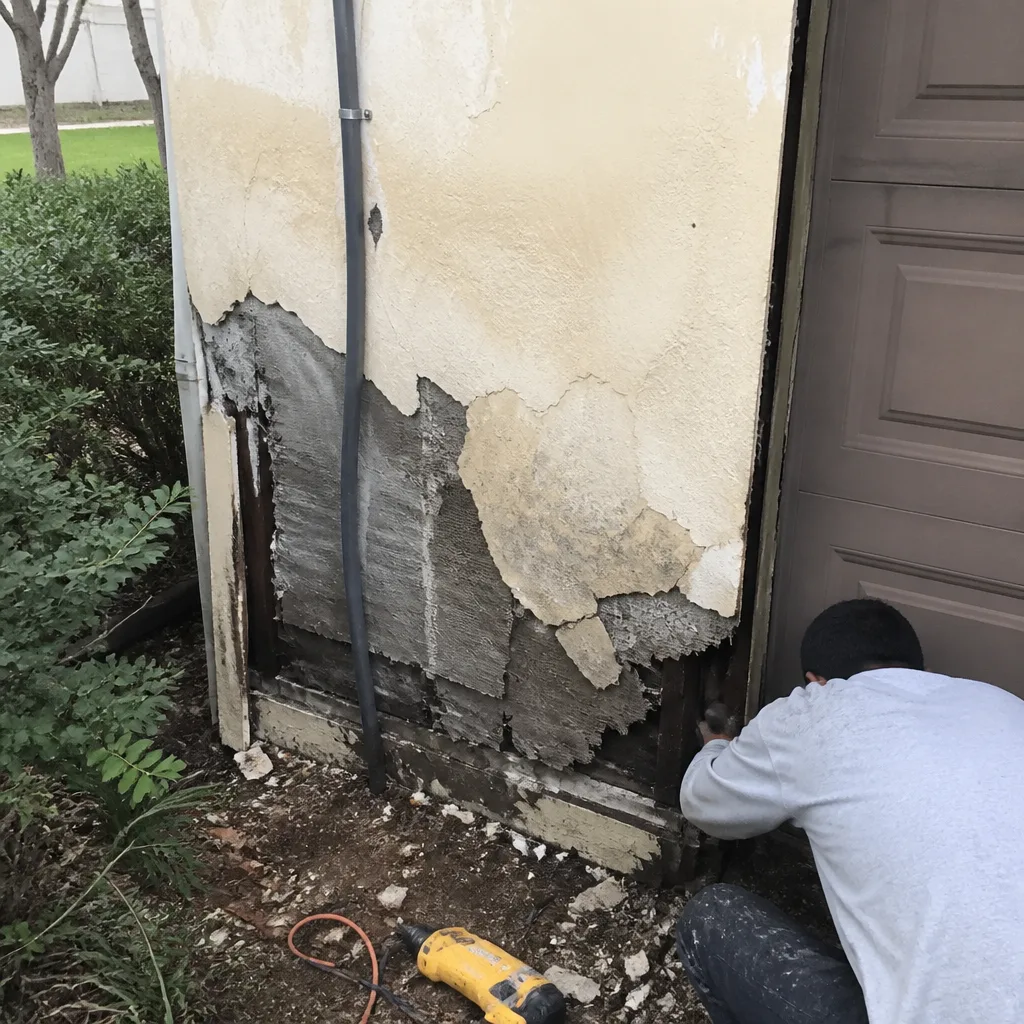 Before
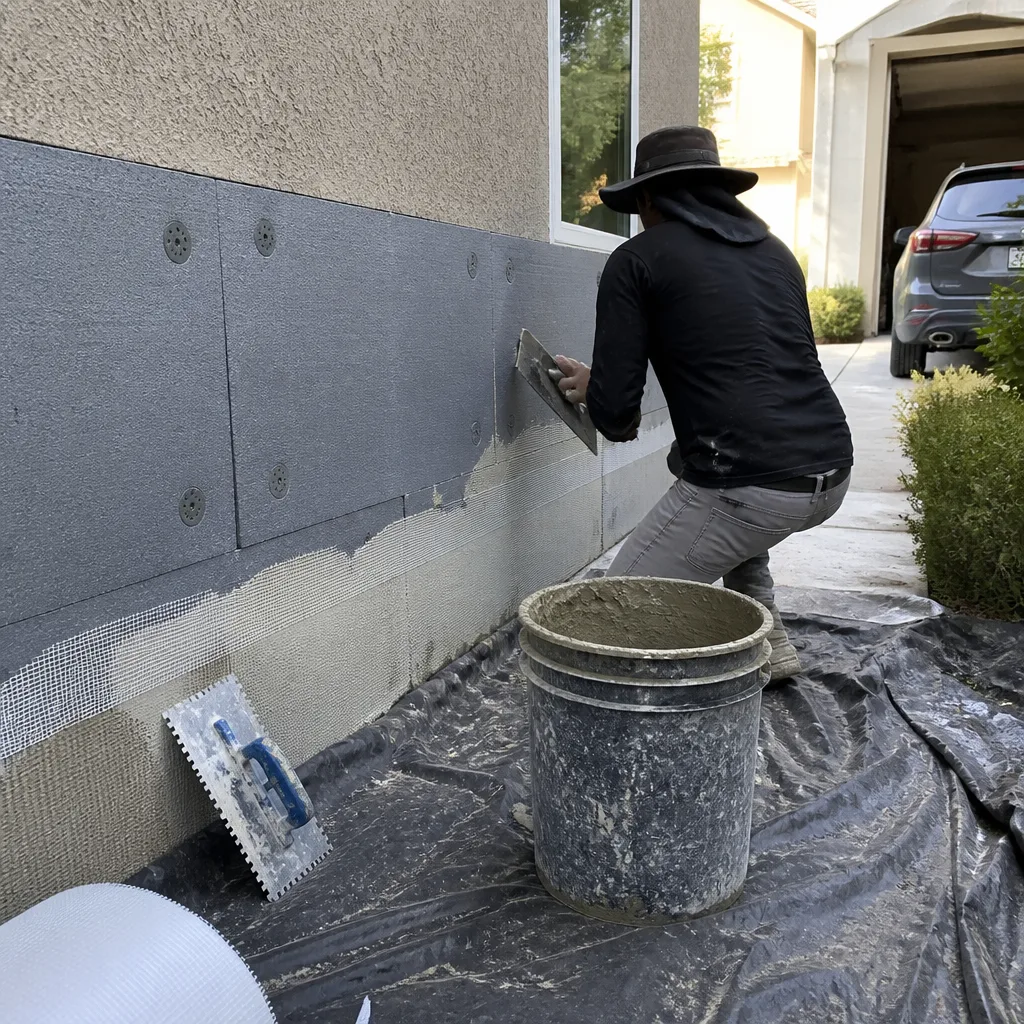 After
AfterReplacement Cost & What’s Included
| Component | Typical Range (Pflugerville) |
|---|---|
| 12-mil reinforced barrier, full replacement | $2,800 - $4,200 |
| 20-mil reinforced barrier, full replacement | $3,600 - $5,400 |
| Perimeter wall sealing (closed-cell foam, 2″) | $800 - $1,400 |
| Sump pump or dehumidifier add-on | $1,200 - $2,800 |
| Spot repair (under 200 sq ft, seam + tape) | $650 - $1,100 |
What drives the range: crawl square footage is obvious, but the bigger variables are access (a 24-inch hatch vs. a full-height door changes labor hours significantly), whether we need to remove and dispose of the old barrier, and how much of the perimeter wall sealing has failed. We also check the sill plate and rim joist for rot while we’re down there, if we find it, we’ll photograph it and give you a separate written scope before touching it. Every encapsulation job includes a Documented Photo Record, and on homes where we’re also air-sealing the attic, we run a blower-door test before and after so you can see the whole-envelope improvement in CFM50.
Under our 365-Day Done Right Promise, if a seam lifts or a perimeter seal fails within a year, we fix it at no charge. The Haven Standard: written scope, written warranty, before anyone starts.
DIY or Call Us?
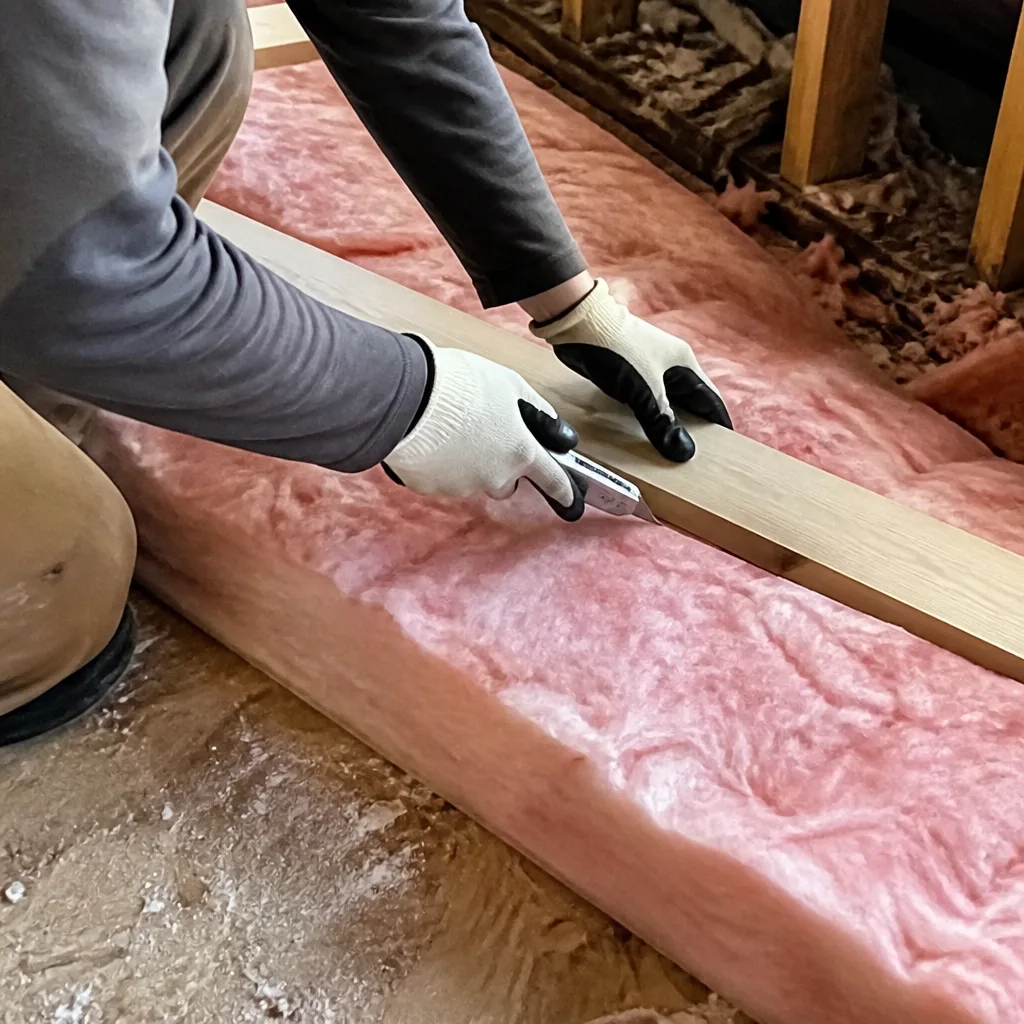
There’s no high-tension danger here like a garage door spring, but crawl space work has its own hazards: confined space entry, possible mold or rodent contamination, and the chance of disturbing asbestos-containing pipe wrap in older Pflugerville homes (pre-1985 construction in the original downtown grid). What you can safely check yourself: the access hatch seal, any obvious tears visible from the entry point, and whether your dehumidifier or sump pump is actually running.
Where DIY goes wrong: cutting the barrier to fit around piers and plumbing stacks without overlapping and taping properly creates funnel points for vapor. We’ve also seen homeowners staple the barrier to sill plates, which guarantees tearing when the wood expands and contracts through our humidity swings. The seam tape needs roller pressure and a clean, dry surface, neither of which you get working overhead in a 36-inch crawl.
If you’re seeing symptoms, call (737) 259-8352. We’ll give you a free second opinion on any written estimate you’ve already collected, and we’ll show up with a written price before any work starts.
FAQs
A properly installed 12-mil or 20-mil reinforced barrier should last 15-20 years, but we’ve seen premature failure at 8-10 years in homes with high groundwater or where the original installer skipped perimeter wall sealing. Pflugerville’s clay soils hold moisture longer than Hill Country rock, so drainage management matters as much as the barrier itself. Call (737) 259-8352 for an inspection if you’re past the decade mark.
Yes, if the tear is isolated and the surrounding material is still supple. We cut a patch 6 inches larger than the damage on all sides, clean the surface with denatured alcohol, and use pressure-sensitive tape with a hand roller. If the barrier is brittle, chalking, or has multiple failure points, patching is false economy. We’ll tell you which category you’re in after inspection, estimates are free.
Most residential crawl spaces in Pflugerville, 1,200 to 2,000 square feet, take one to two days. Day one is removal, surface prep, and perimeter sealing; day two is barrier installation, taping all seams, and sealing penetrations. We also stock Reflectix materials if your application calls for radiant barrier augmentation at the crawl ceiling.
We carry CertainTeed-compatible 12-mil and 20-mil reinforced polyethylene, seam tape, and closed-cell spray foam on every encapsulation truck. We’re an independent service provider, not affiliated with CertainTeed, but we’ve sourced their spec-grade materials long enough to know the compatibility quirks. If your job requires a specific CertainTeed OEM part we don’t stock, we can typically have it within 24 hours.
The report tells you what the house does. The insulation changes what the house does. Those are two different conversations.
Ready to get it fixed right? Call (737) 259-8352. A live person answers 24/7, and we’ll schedule a free inspection with a written price before any work starts. Bring us a competing estimate, we’ll read it with you.
Written by Wes Okafor, Owner, Topside Attic Insulation Pflugerville at Topside Attic Insulation Pflugerville, serving Pflugerville and nearby areas.