
GreenFiber Home Energy Audit in Pflugerville: What to Know First
We provide independent GreenFiber home energy audit in Pflugerville, typically completing diagnostic visits same-day or next-day with a written price before any work starts. Most GreenFiber system audits in this market run between $180 and $420 depending on test scope, and we publish before-and-after blower-door numbers on every job where air sealing is performed. This page is for homeowners who have GreenFiber cellulose insulation in their attic or walls and need to know whether their building envelope is performing as designed, or whether gaps, compression, or moisture intrusion have degraded what was installed. Call (737) 259-8352 to schedule. We answer live, 24/7.
How GreenFiber Products Fail - and How We Fix Them
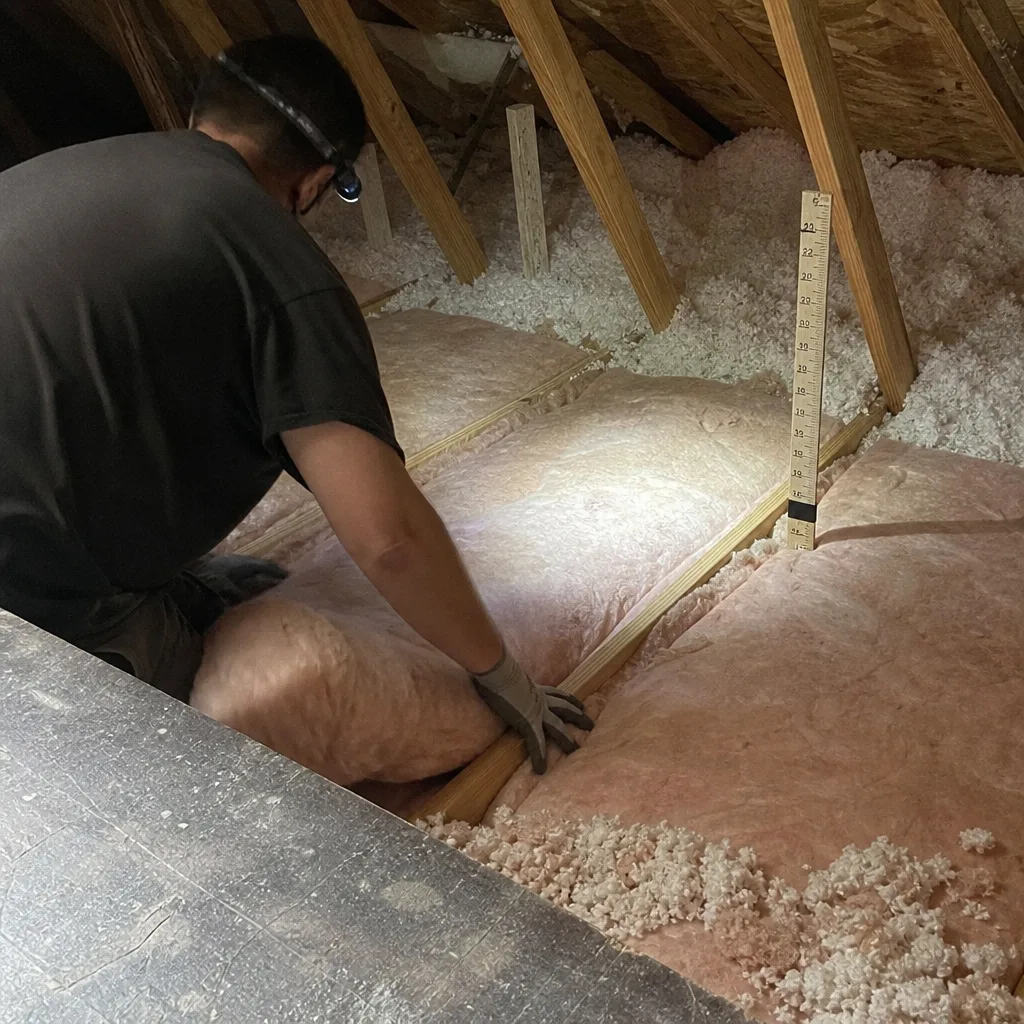
- Low-Spray stabilized cellulose settling in Pflugerville’s heat-cycling attics. GreenFiber’s Low-Spray series, common in 2018-2022 builds near Stone Hill Town Center, relies on adhesive activation that can degrade when attic temperatures swing from 65°F winter mornings to 140°F July afternoons. We’ve pulled samples from Pflugerville attics where the material settled 15-20% below the labeled R-value within four years. We measure settled depth with a ruled probe, calculate the thermal bridge, and recommend either top-off with fresh GreenFiber or conversion to a denser pack if the cavity allows.
- Insulation Silver loose-fill migration away from eaves and top plates. The Insulation Silver line’s lighter density makes it prone to wind-washing in vented attics with marginal baffle depth, a pattern we see repeatedly in Pflugerville’s Windsong Ranch and Avalon subdivisions where builders spec’d minimum-code ventilation. The fix isn’t more insulation; it’s sealing the top plates and electrical penetrations first, then re-distributing with proper vent dams. We blower-door before and after so the homeowner sees the CFM50 drop.
- Cocoon stabilized cellulose moisture absorption in crawl spaces. GreenFiber’s Cocoon series is marketed for floor-cavity use, but in Pflugerville’s clay-heavy soils where crawl space humidity hangs above 70% for weeks after spring rains, we’ve found Cocoon samples reading 18-22% moisture content, well above the 14% threshold where mold risk escalates. Our protocol: moisture mapping with thermal imaging, vapor barrier assessment, then either Cocoon removal with encapsulation or replacement with a hydrophobic alternative if the homeowner prefers.
- Legacy All Borate-treated batts disintegrating at knee-wall junctions. Older GreenFiber batts in Pflugerville’s 1990s-era homes near Dessau Road often crumble where they meet unconditioned attic space behind knee walls, creating a direct thermal bypass. The borate treatment preserves against pests but doesn’t protect the paper facing from humidity cycling. We remove the degraded sections, air-seal the knee-wall framing with canned foam and rigid board, then re-insulate with a material suited to the cavity depth and moisture profile.
- Fire-rated products compressed by homeowner storage. GreenFiber’s Flame Spread 25 line in attics over Pflugerville’s two-story plans frequently gets compressed by plywood storage platforms installed after move-in. Compressed cellulose loses R-value in a linear relationship; 50% compression equals roughly 50% performance loss. We document the compression with depth gauges and photos, remove the platform if the homeowner agrees, and restore design thickness with a matching blow.
Our GreenFiber Home Energy Audit Process
- 1
Call and scheduling. A live person answers, confirms GreenFiber product age and location if known, and books a diagnostic window. We text when the technician is en route.
- 2
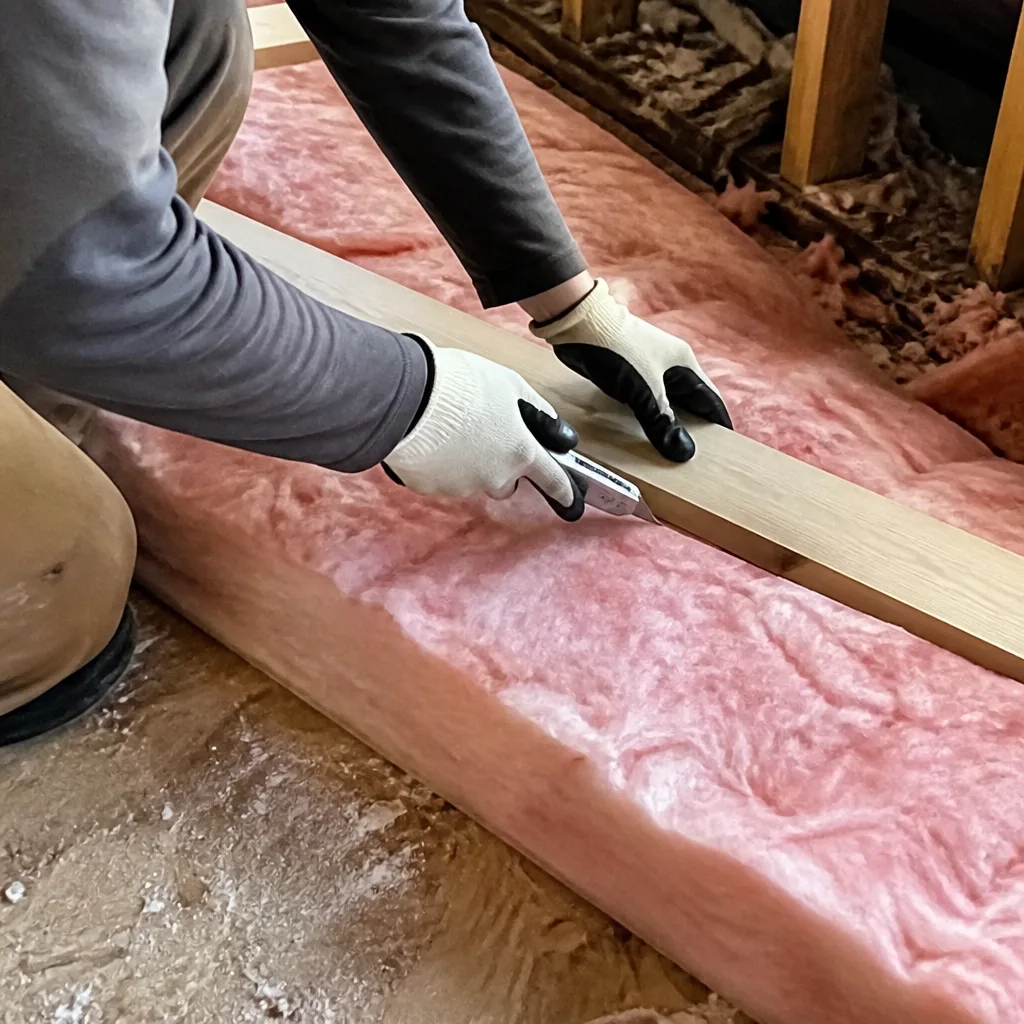
Visual and thermal inspection. Our tech photographs the GreenFiber installation condition, probes for settled depth, and runs a FLIR scan to find thermal bypasses the eye misses.
- 3
Blower-door test. We depressurize the house to -50 Pascals and record the CFM50 reading - the single number that quantifies total envelope leakage. This baseline is essential; without it, any insulation recommendation is guesswork.
- 4
Leak location and prioritization. With the house under pressure, we use theatrical smoke and infrared to pinpoint where conditioned air escapes through GreenFiber gaps, top plates, can lights, and duct chases.
- 5
Written scope and price. Before any work starts, you receive a flat price, written warranty, and documented photo record. Haven Standard Clause 1: no surprises, no open-ended hourly rates.
- 6
Air sealing first, then insulation correction. We seal what leaks, re-test to verify CFM50 reduction, then address GreenFiber top-off, redistribution, or replacement as scoped. You walk away with pre- and post-job blower-door numbers in writing.
 Before
 After
AfterWhat GreenFiber Home Energy Audit Costs in Pflugerville
Most GreenFiber home energy audits in Pflugerville fall between these ranges:
- Diagnostic audit only (blower-door, thermal imaging, written report): $180-$260
- Audit plus targeted air sealing of top plates and penetrations: $340-$420
- Audit with air sealing and GreenFiber top-off to restore design R-value: $520-$780
- Full GreenFiber removal, encapsulation, and replacement in moisture-compromised cavities: $1,800-$2,400
What moves the price: attic square footage, accessibility (steep pitch or limited scuttle), whether the GreenFiber is in a vented attic or encapsulated crawl space, and whether duct leakage testing is added to the scope. We also service Reflectix radiant barrier systems when they’re part of the same envelope assembly. Every estimate is free, written, and valid for 30 days. Bring us a competing quote; we’ll read it with you line by line.
Why Pflugerville Homeowners Call Topside Attic Insulation Pflugerville for GreenFiber Work
We’ve been in Pflugerville attics since 2016, and the regional heat load patterns around Stone Hill Town Center aren’t a surprise to our crew. The 365-Day Done Right Promise applies to every job, backed by a written scope delivered before anyone lifts a tool. Our technicians are background-checked, uniformed, and trained specifically on GreenFiber’s density specs and failure modes, not generic cellulose handling. Because we source from Owens Corning, Johns Manville, Knauf, Rockwool, CertainTeed, Icynene, Demilec, and GreenFiber with no proprietary lock-in, we recommend what fits the house, not what moves a single brand’s inventory. Wes Okafor, our owner, runs a blower-door test before and after every applicable job and hands customers the CFM50 numbers in writing. The report tells you what the house does. The insulation changes what the house does. Those are two different conversations.
FAQs
No. GreenFiber’s product warranty covers manufacturing defects, not diagnostic testing or proper installation corrections by an independent service provider. As an independent GreenFiber service provider, we document our work with photos and written reports, which actually strengthens any future warranty claim by establishing baseline conditions. If you’re unsure about your specific warranty terms, we can review them during your free estimate. Call (737) 259-8352.
Replacement is only necessary when moisture has degraded the cellulose structure or when settled depth has dropped below 50% of design thickness. Most Pflugerville GreenFiber installations we audit need targeted air sealing and top-off, not full removal. The blower-door test separates air leakage problems from insulation problems; we’ve seen homes where the GreenFiber was fine but the envelope leaked 3,500 CFM50. Call (737) 259-8352 and we’ll tell you which category you’re in before charging a dollar.
GreenFiber cellulose is a loose-fill or batt product, not a component system, so “parts” means matching density and treatment type for repairs. We stock GreenFiber-equivalent borate-treated cellulose and can source original GreenFiber bags through regional distributors with 2-3 day lead time when exact matching matters for warranty documentation. For most Pflugerville repairs, our Knauf or Johns Manville cellulose matches the thermal performance at equivalent density. We disclose the source on every written scope.
Repair is almost always cheaper in the near term: a GreenFiber audit and air sealing typically runs $340-$420 versus $3,500-$6,000 for full attic spray foam in a Pflugerville home this size. Spray foam may yield lower long-term energy costs, but the payback period in our climate is usually 8-12 years. We run the math both ways in our written estimate so you decide with actual numbers, not pressure. Call (737) 259-8352 for a free second opinion on any competing quote.
Same-day or next-day for most calls, including weekends. We don’t use callback windows measured in business days; a live person answers 24/7 and schedules directly. Emergency situations - suspected active moisture intrusion or post-pest contamination - get priority. Call (737) 259-8352 now and we’ll give you a firm arrival window, not a four-hour guess.
Ready to know what your house is actually doing? Call (737) 259-8352 for a free GreenFiber home energy audit estimate in Pflugerville. We’ll show up on time, run the blower-door test, and hand you a written price before any work starts. Haven Standard: Have it in writing.
Written by Wes Okafor, Owner, Topside Attic Insulation Pflugerville at Topside Attic Insulation Pflugerville, serving Pflugerville and nearby areas.