
GreenFiber Spray Foam Insulation in Pflugerville: What to Know First
We provide independent GreenFiber spray foam insulation service in Pflugerville, typically scheduling within 24-48 hours and completing most jobs same-day. Most residential spray foam projects in the Pflugerville market run between $1,800 and $4,200 depending on cavity depth, foam type, and whether the existing GreenFiber cellulose needs extraction first. We publish a written price before any work starts, and every job closes with a documented photo record.
This page is for homeowners who have GreenFiber cellulose insulation in their attics or walls and need to supplement or replace it with spray foam - often after settling, moisture intrusion, or the realization that cellulose alone isn’t sealing the air leaks. If you’re in the Stone Hill Town Center corridor, the Blackhawk neighborhood, or anywhere in 78660, we can get a technician out fast. Call (737) 259-8352 or text us - a live person answers either way, 24/7.
How GreenFiber Products Fail - and How We Fix Them
- GreenFiber All-Bor cellulose settling in 2×10 attic joists. Blown cellulose loses 20% of its labeled R-value within the first five years in Central Texas attics due to vibration from HVAC units and thermal cycling. We find this constantly in Pflugerville homes built 2015-2020. Our fix: extract the settled material, air-seal top plates and can lights with closed-cell foam at the lid, then install open-cell spray foam to the full 9.5″ cavity depth for a true R-38 that doesn’t shift.
- GreenFiber Sanctuary stabilized cellulose bridging over irregular framing. The boric-acid stabilization resists fire and pests, but the fibers bridge across uneven ceiling joists rather than packing tight, leaving thermal bypass channels. In Pflugerville’s clay-heavy soil zones, this shows up as hot spots on infrared scans during July afternoons. We remove the bridged sections and spray open-cell foam directly against the roof deck for continuous contact and no gaps.
- GreenFiber low-dust formula absorbing rim joist moisture. The low-dust treatment uses a food-grade oil binder that can wick moisture in crawl spaces with seasonal groundwater fluctuation - common in the areas east of SH-130 where the water table sits high. Saturated cellulose at the rim joist rots the sill plate. We extract the wet material, dry the cavity with forced air, then apply 2″ of closed-cell spray foam as both insulation and vapor barrier.
- GreenFiber retrofit jobs stuffed over unsealed recessed housings. Previous installers in Pflugerville often blew cellulose directly over IC-rated can lights without sealing the housing perimeter first. The cellulose filters conditioned air into the attic for years. We pull back the GreenFiber, seal each housing with fire-rated caulk and closed-cell foam, then reinstall or upgrade to spray foam depending on cavity geometry.
- GreenFiber wall-spray settling in balloon-framed gable ends. Dense-pack wall spray in older Pflugerville homes with balloon framing settles toward the bottom of the stud bay over time, creating a 3-4 foot uninsulated zone at the top. We drill and extract the settled material, then fill with slow-rise open-cell foam that adheres to all six sides of the cavity and stays put.
Our GreenFiber Spray Foam Insulation Process
- 1
Call and schedule. A live person answers. We ask about the GreenFiber product line if you know it, the year of install, and what you’re seeing - hot rooms, high bills, musty smells. We schedule a site visit, usually within 24 hours in Pflugerville.
- 2
On-site assessment with blower-door test. We run a pressurization reading - a blower-door test that shows, in one number, how much air your building envelope is losing. For GreenFiber homes, we also probe cavity depths and pull sample cores to check for settling or moisture. You get the CFM50 number in writing before we propose anything.
- 3
Written price and scope. Under Haven Standard Clause 1, you receive a flat price, written scope, and written warranty before anyone lifts a tool. No work starts without it. If you have a competing estimate, we offer a free second opinion - we’ll read it with you line by line.
- 4
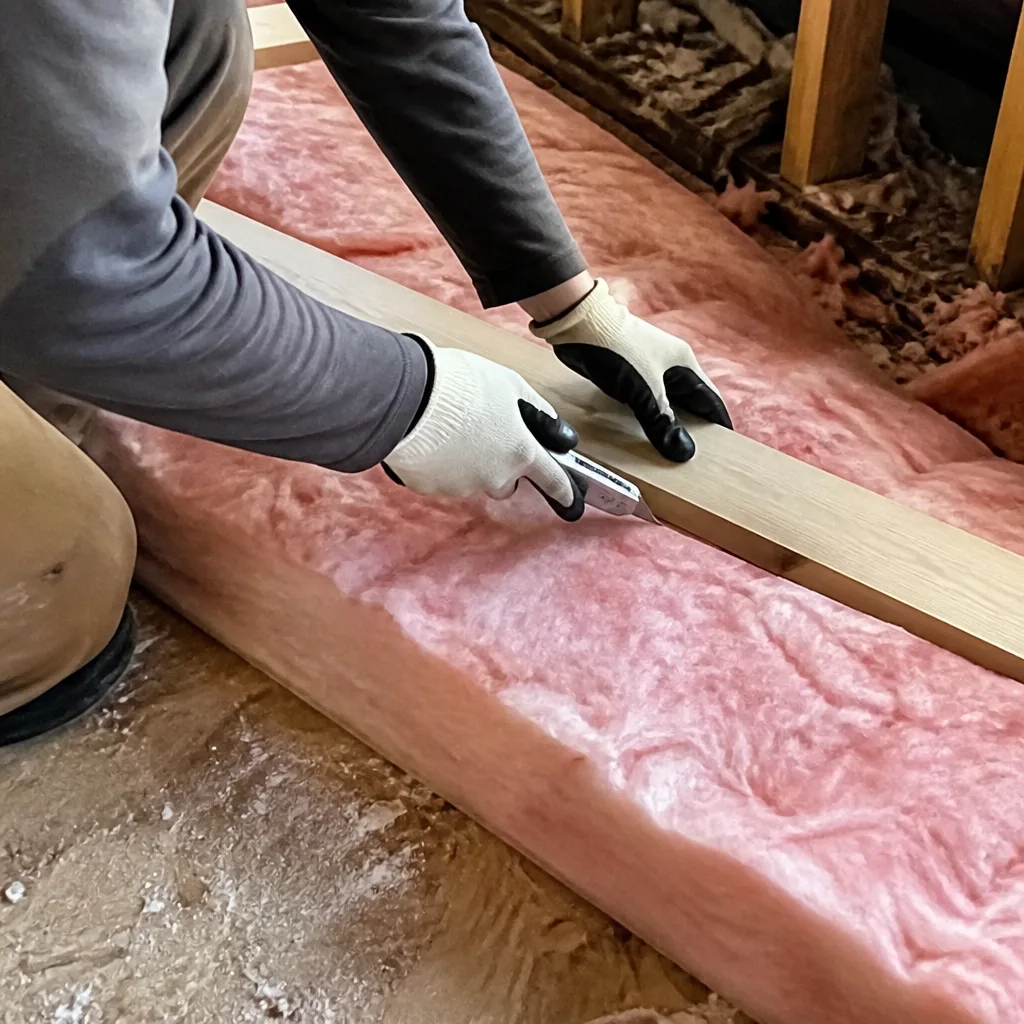
Extraction and air sealing first. We remove failed or inappropriate GreenFiber material, then seal all top plates, penetrations, and junctions with closed-cell foam. The report tells you what the house does. The insulation changes what the house does. Those are two different conversations.
- 5
Spray foam installation and documentation. We install specified open-cell or closed-cell foam to depth, with real-time thickness checks. Every job gets a Documented Photo Record. On applicable jobs, we run a second blower-door test and hand you the pre- and post-job report with actual CFM50 numbers.
- 6
Cleanup and 365-Day Done Right Promise. We leave the site clean, the paperwork complete, and your warranty active. If it’s not done right, we make it right.
 Before
 After
AfterWhat GreenFiber Spray Foam Insulation Costs in Pflugerville
| Job Type | Typical Range | What Moves the Price |
|---|---|---|
| GreenFiber extraction + open-cell attic spray (1,200 sq ft) | $2,400 - $3,800 | Cavity depth, access difficulty, extent of air sealing needed |
| Rim joist closed-cell spray after GreenFiber moisture failure | $1,800 - $2,900 | Linear feet of rim, sill plate condition, crawl access |
| Garage ceiling open-cell over existing GreenFiber | $1,600 - $2,600 | Whether extraction is required, duct routing complexity |
| Roof deck open-cell spray (complete GreenFiber replacement) | $3,200 - $5,500 | Roof pitch, square footage, need for venting modification |
These are real numbers for the Pflugerville market in 2024-2025. Your job may land above or below depending on what we find. The only way to get an exact figure is a site visit - estimates are free, and you’ll have a written price before any work starts. Call (737) 259-8352 for an exact quote.
Why Pflugerville Homeowners Call Topside Attic Insulation Pflugerville for GreenFiber Work
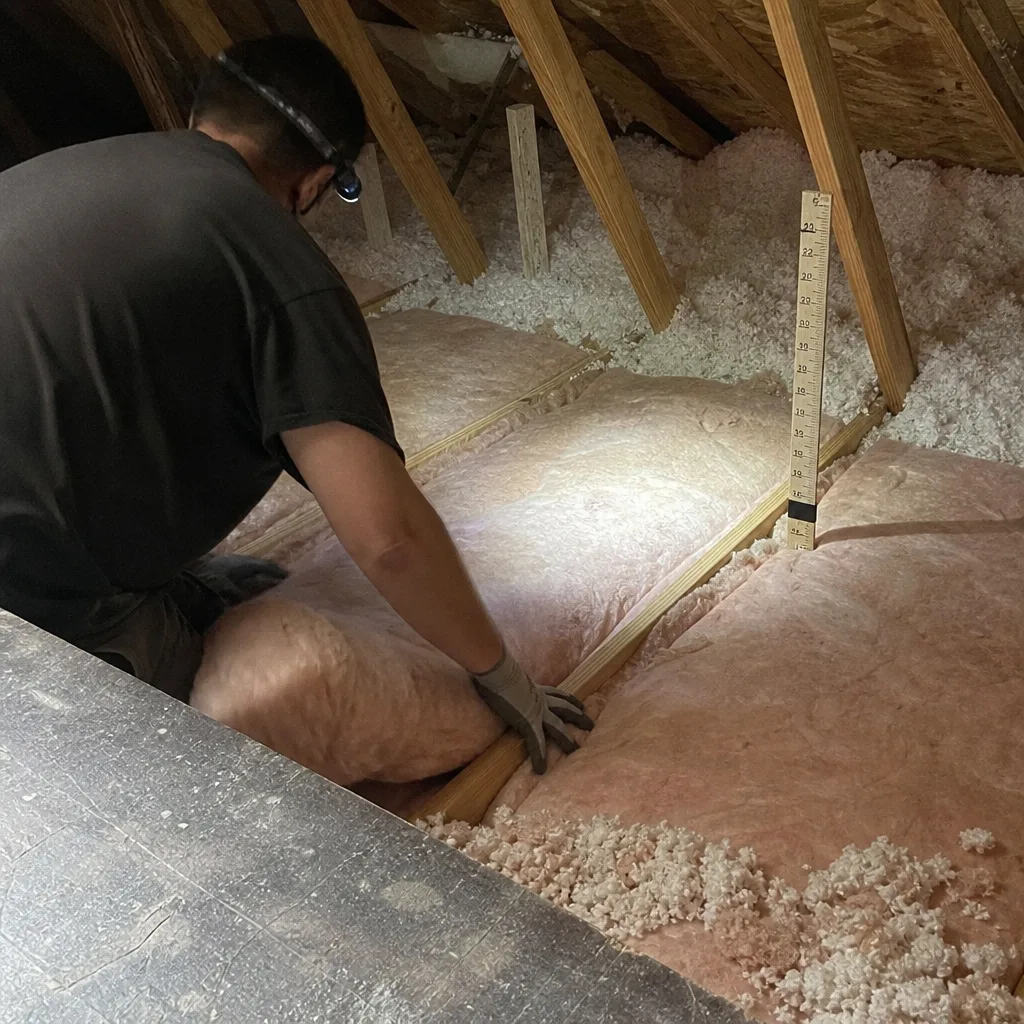
We’ve been in and out of attics throughout Pflugerville’s Stone Hill Town Center corridor often enough that the regional heat load patterns up there aren’t a surprise to us. Wes Okafor trained in building systems technology at Kennedy-King College on Chicago’s south side, where instructors drilled air-sealing fundamentals - the idea that blown-in insulation is only half the job if the can lights and top-plates are still leaking conditioned air into the attic. That training shows up in how we handle GreenFiber jobs: we don’t blow anything over an unsealed surface.
Our materials come from Owens Corning, Johns Manville, Knauf, Rockwool, CertainTeed, Icynene, Demilec, and GreenFiber - no proprietary lock-in. If GreenFiber isn’t the right product for your situation, we’ll tell you. We also service Reflectix radiant barrier systems when that’s the better fit. Every technician is background-checked and uniformed. Calls are answered by a live person, 24/7. The 365-Day Done Right Promise applies to all completed work, and we publish before-and-after blower-door numbers on every applicable job so you can verify the air-sealing result yourself.
FAQs
No. GreenFiber’s limited warranty covers product defect, not the method of supplemental or replacement installation. As an independent GreenFiber service provider, we document the existing product condition before modification so any legitimate product claim remains traceable. If you’re concerned about warranty status, we photograph the lot codes on the original bags during extraction and include them in your job file. Call (737) 259-8352 if you want us to review your specific install documentation.
Yes, and typically exceed it. GreenFiber All-Bor is labeled at R-3.7 per inch; open-cell spray foam runs R-3.6-3.8 per inch, and closed-cell runs R-6.0-7.0. The difference is air sealing - spray foam creates an air barrier that cellulose cannot, so the effective performance in a real Pflugerville attic is higher even at similar labeled R-value. We calculate target thickness based on your cavity depth and energy goals, then verify with thermal imaging.
For settled attic cellulose under 6″ deep, extraction plus spray foam typically costs 15-25% more than re-blowing cellulose but delivers measurable air sealing that re-blowing cannot. In Pflugerville’s climate, that performance gap usually pays back in 4-7 years on utility bills. For moisture-damaged rim joist GreenFiber, spray foam is often cheaper long-term because it eliminates the vapor barrier retrofit that cellulose requires. We quote both approaches when both are viable - no upsell pressure. Call for a free estimate.
Most Pflugerville homeowners are scheduled within 24-48 hours, and we complete most jobs same-day once started. Emergency situations - active water intrusion through failed rim joist insulation, for example - get priority scheduling. A live person answers calls 24/7, so you’re not waiting for a callback window measured in business days.
GreenFiber does not manufacture spray foam; they produce cellulose insulation. When we’re supplementing or replacing GreenFiber cellulose with spray foam, we source foam from Icynene, Demilec, or other manufacturers we name in your written scope. For the cellulose extraction and disposal phase, we use standard trade equipment - no “OEM” distinction applies. We document every material by manufacturer and batch in your job record.
Written by Wes Okafor, Owner, Topside Attic Insulation Pflugerville at Topside Attic Insulation Pflugerville, serving Pflugerville and nearby areas.