
Rockwool Attic Insulation: The Pflugerville Owner’s Guide
Rockwool attic insulation installed in Pflugerville homes typically runs $2.80 to $4.20 per square foot depending on thickness and density, and we stock Comfortbatt, Comfortboard, and AFB evo lines for same-day installation. Most homeowners notice the problem when their summer electric bills spike $80 to $150 above the previous year, or when they find batts compressed, moisture-stained, or displaced by rodents in the attic. The mineral wool itself does not degrade like fiberglass, but installation errors, air bypasses, and Pflugerville’s combination of 100-degree attic heat and sudden spring storms create failure patterns that show up as hot second-story rooms and ice-damming in winter.
Which Rockwool Models This Applies To
We work with three Rockwool product families in Pflugerville attics: Comfortbatt (semi-rigid batts, R-15 to R-30, wood stud cavities), Comfortboard 80/110 (rigid boards for thermal breaks and cathedral ceilings), and AFB evo (fire-rated batts for floor assemblies and partition walls). The critical compatibility gotcha: Comfortbatt labeled for steel framing has a higher density (3.0 pcf) than wood-framing batts (2.4 pcf) and will not compress properly between standard 16-inch on-center joists, leaving gaps that ventilate away your R-value.
Identification is straightforward. Rockwool batts carry a printed label on the facing edge with the product name, density class, and intended cavity depth. For attics with existing insulation, we measure net free area and check for compression against the drywall below. If the previous installer used steel-framing batts in a wood-framing application, you’ll see the batt sitting proud of the joist top or bowing between bays. That is not a manufacturing defect. It is a specification error, and fixing it means pulling the wrong product before installing the right one.
We are an independent service provider, not affiliated with Rockwool. We source through regional distributors and can match OEM spec or recommend equivalent-density alternatives from Johns Manville or Knauf when supply or lead time matters.
Signs Your Rockwool Attic Insulation Is Failing
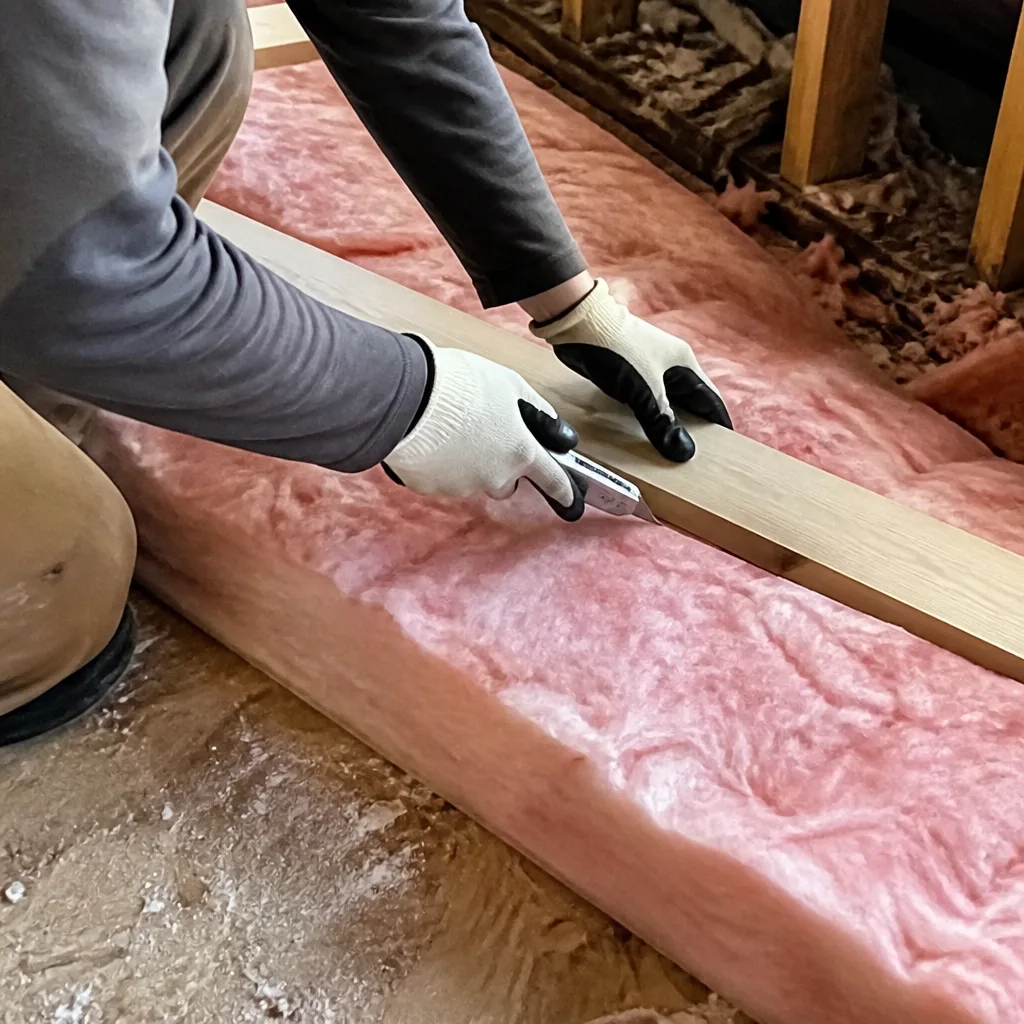
- Uneven temperatures between rooms. Rockwool maintains R-value across temperature swings, but if installers skipped air sealing at top plates or can lights, conditioned air escapes around the insulation rather than through it. The batt looks fine; the house performs poorly.
- Moisture staining on ceiling drywall below the attic. Rockwool is hydrophobic and will not hold water like cellulose, but Pflugerville’s spring storm cycles drive humid air through bypasses. When warm, moist air hits the cool underside of roof decking, condensation forms and drips onto the batt surface, leaving mineral deposits and compressed zones.
- Visible compression or displacement. Original Comfortbatt installed at proper loft should fill the joist cavity with slight spring-back. Walk-board storage, rodent activity, or previous trades crawling through the attic flatten batts to half their designed thickness, cutting effective R-value by 40 percent or more.
- Ice dams or icicle formation in winter. Even in Central Texas, hard freezes happen. Heat loss through under-insulated or bypassed attic planes melts roof snow; refreezing at the eave dams water behind shingles. Rockwool’s density makes it less prone to wind-washing than fiberglass, but only if the air barrier is intact.
- Dust or particulate settling in living spaces below. Properly installed Rockwool does not shed fibers. If you’re finding debris below ceiling penetrations, the batt may have been cut short of full cavity width, or the facing (if present) was torn during installation, creating an erosion path for attic air.
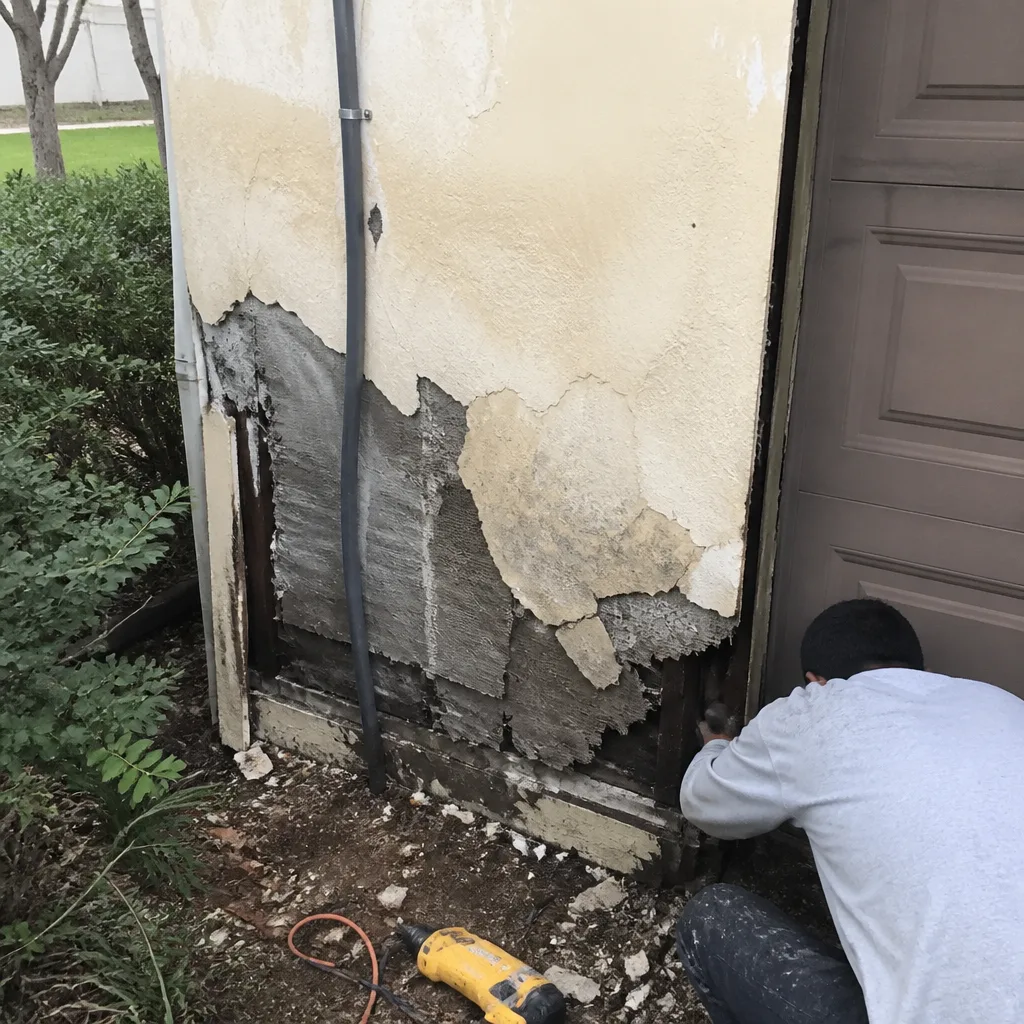 Before
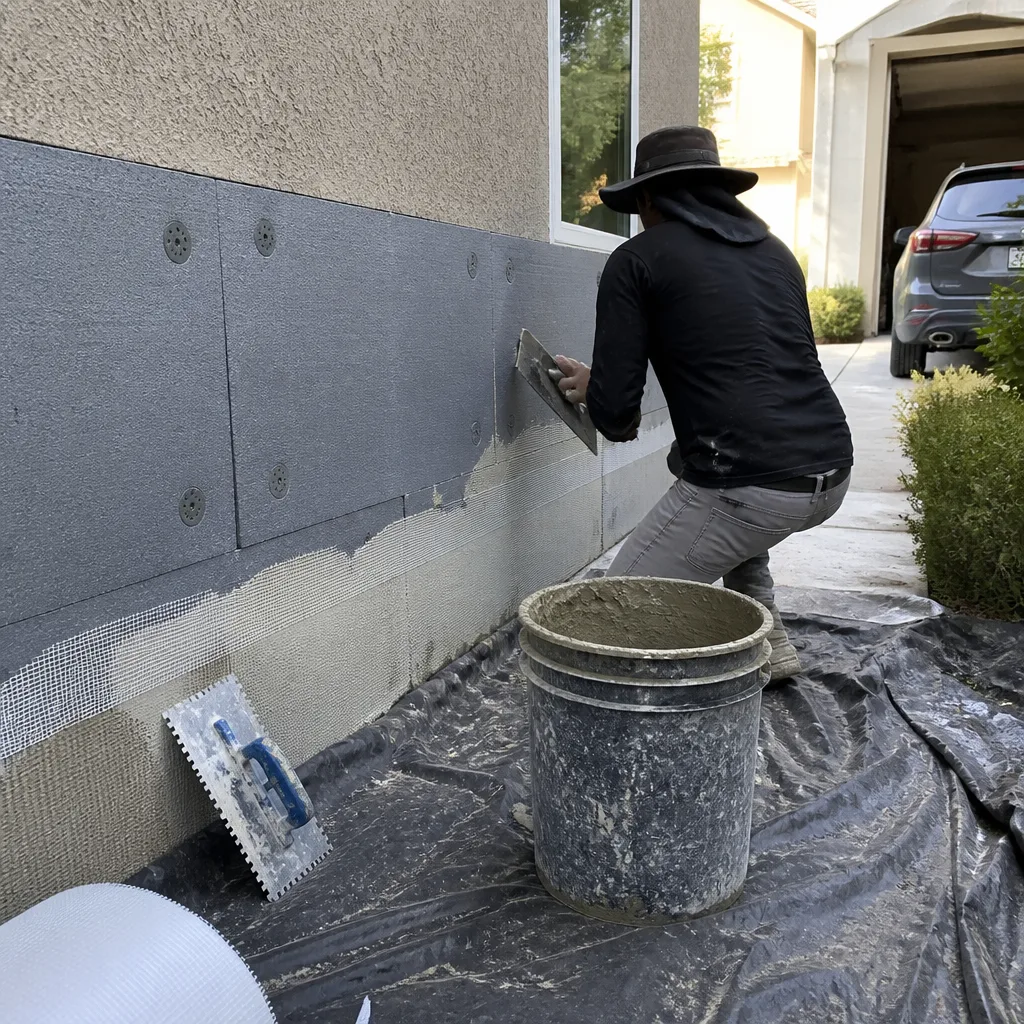 After
AfterReplacement Cost & What’s Included
Most Rockwool attic insulation jobs in Pflugerville run between $2,800 and $5,400 for a 1,500 to 2,500 square foot attic, including removal of failed material, air sealing, and new installation. The range depends on four factors: existing insulation depth and type (removal adds $0.50 to $1.20 per square foot), accessibility (hatch size, roof pitch, joist spacing), whether we need to build storage decking over the new insulation, and the target R-value, typically R-38 to R-49 for our climate zone.
Every job includes our written scope and flat price before anyone lifts a tool, per Haven Standard Clause 1. We air seal all top plates, electrical penetrations, and can-light housings before the first batt goes in. On completion, you receive a Documented Photo Record of the work and, for full attic replacements, before-and-after blower-door numbers showing the actual CFM50 reduction. The 365-Day Done Right Promise covers installation and material integrity.
DIY or Call Us?
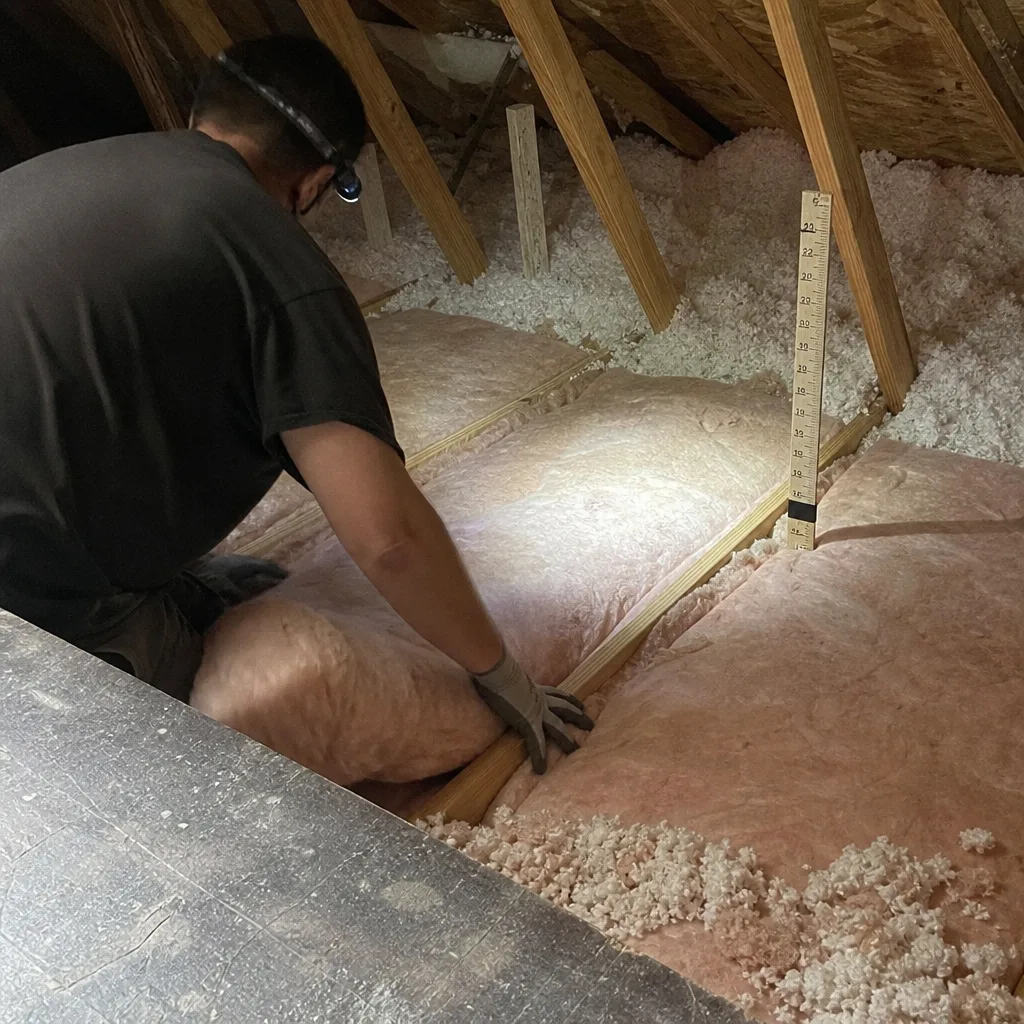
There is nothing in Rockwool installation that requires a license, but there is plenty that goes wrong when the person in the attic has not done it before. You can safely check: the product label for density and R-value, whether batts are compressed below joist height, and whether visible gaps exist at cavity edges. Do not attempt removal or replacement if you find vermiculite (gray, pebbly, pre-1990), active rodent waste, or if your attic has knob-and-tube wiring still in service. Those conditions require containment protocols and electrical evaluation we are equipped to handle.
The failure pattern we see most in Pflugerville’s Stone Hill Town Center corridor and similar developments: a homeowner adds batts over an unsealed attic floor, then calls us two summers later because the house still runs the AC continuously. The insulation was not the problem. The air leaks were. We fix that sequence.
Call (737) 259-8352 for a free estimate and written price before any work starts.
FAQs
Rockwool mineral wool itself is inert and does not degrade, settle, or support mold, so the material lifespan exceeds 50 years. The installation lifespan is shorter, typically 15 to 25 years in our climate, because Pflugerville’s thermal cycling and rodent pressure eventually compromise the air seal and physical position of the batts. Call (737) 259-8352 for an attic assessment that checks both material condition and air leakage.
Localized compression or displacement can sometimes be addressed by adding loose-fill Rockwool (Granulated ROCKWOOL) to restore depth, but only after the air bypass causing the failure is sealed. If the original batts are moisture-stained, contaminated, or installed at the wrong density, partial repair wastes money; full replacement with proper air sealing is the cost-effective path. We offer free second opinions on any written estimate.
A standard 2,000 square foot attic with removal, air sealing, and new Rockwool batts takes one to two days. Jobs requiring extensive bypass repair, decking rebuild, or cathedral ceiling work run longer. We provide a written schedule with the price before work starts.
We stock Comfortbatt in R-21 and R-30 thicknesses, Comfortboard 80 for thermal break applications, and Granulated ROCKWOOL for loose-fill topping on our Pflugerville service trucks. Less common densities or AFB evo fire-rated batts require next-day pull from our Austin distributor. Call (737) 259-8352 to confirm availability for your specific job.
Written by Wes Okafor, Owner, Topside Attic Insulation Pflugerville at Topside Attic Insulation Pflugerville, serving Pflugerville and nearby areas.