
Blown-In Attic Insulation in Pflugerville, TX
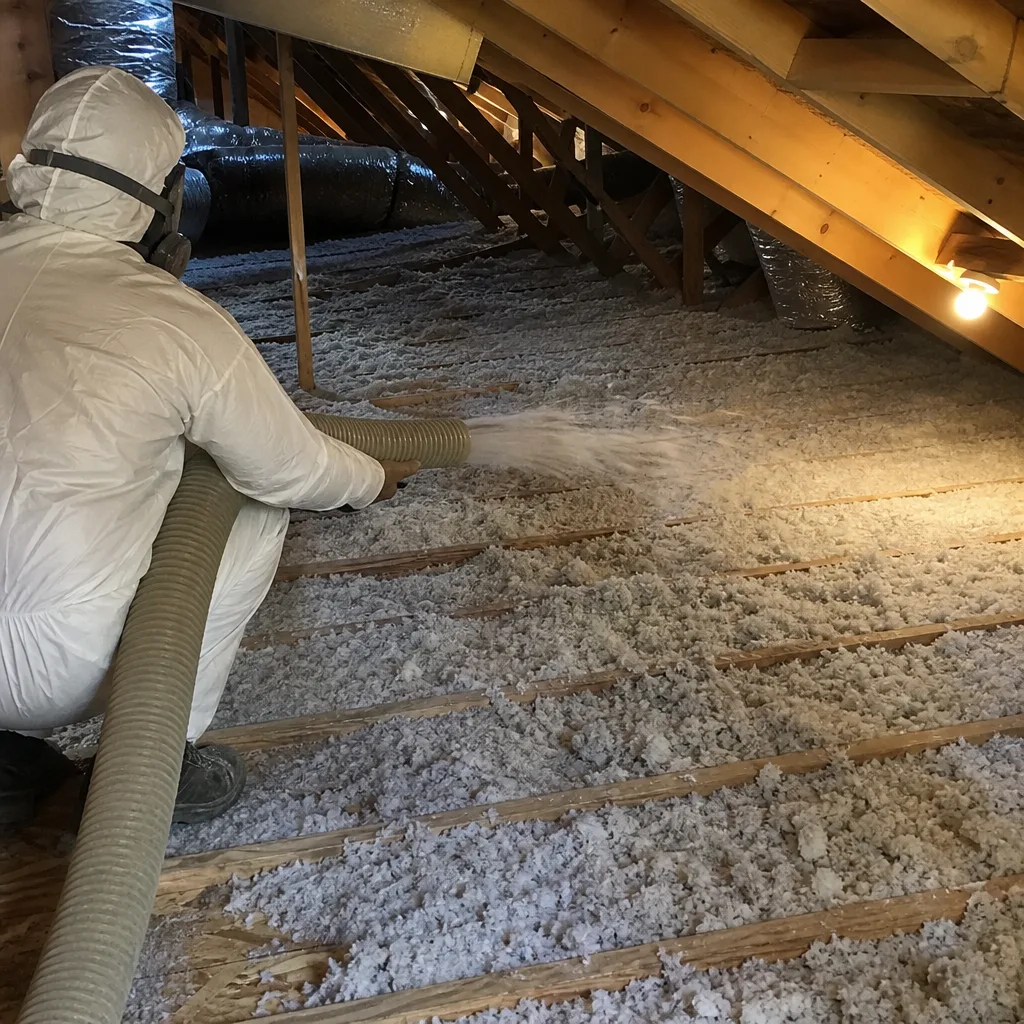
Blown-in attic insulation is a loose-fill installation method where cellulose or fiberglass insulation is pneumatically distributed across your attic floor, filling gaps and irregular cavities that Attic Batt Insulation never reaches cleanly. In Pflugerville, most homes built between 1995 and 2015 are running somewhere between R-19 and R-25 in the attic – well short of the R-38 to R-60 that the Texas climate actually demands. If your upstairs rooms stay stubbornly warm from May through October, that gap is usually where the problem lives.
At Topside Attic Insulation Pflugerville, we don’t start with the blower. We start with air sealing. Every blown-in job begins with a thorough inspection of the attic floor: top plates, can light penetrations, plumbing and electrical chases, any gap where conditioned air can move freely into an unconditioned space. Those get sealed first. Then we blow. That sequence matters because blown-in insulation slows conductive heat transfer, but it does almost nothing to stop air movement. Seal first, then insulate – that’s the order, and we don’t reverse it. Our full approach to Attic Insulation in Pflugerville explains why we treat air sealing as a prerequisite rather than an add-on.
To reach us directly, call (737) 259-8352. A live person answers – no voicemail loops, no callback windows measured in business days.
When You Need Blown-In Attic Insulation
A few scenarios come up repeatedly on Pflugerville job sites. If any of these match what you’re seeing, a blown-in top-up or full replacement is worth a serious look.
- Your upstairs rooms won’t cool below 78°F, even with the AC running hard. In Stone Hill Farms and Falcon Pointe subdivisions, we regularly find attics where the existing blown-in has settled to an effective R-15 or less. At that point, the insulation is doing almost nothing against a 105°F roof deck in August.
- You can see the tops of your ceiling joists. If existing insulation has compressed or settled to the point where the framing is visible, the R-value has dropped significantly. Blown-in cellulose and fiberglass both settle over time; if the joists are showing, the performance number on the original installation is no longer accurate.
- Your energy bills spiked after buying the home. Homes in Pflugerville that sold between 2018 and 2023 frequently had insulation inspections deferred. A blower-door test – a pressurization reading that shows, in one number, how much air the building envelope is losing – often reveals the source quickly.
- You’re adding square footage or converting a garage. Any time the conditioned footprint of the home expands, the attic above that new space needs to be brought up to current performance levels before the sheetrock goes up.
- The home had a roof replacement in the last five years. Roofing crews walking the attic floor routinely compress existing blown-in insulation. A depth check after a re-roof is cheap; finding out your R-38 became R-22 after the fact is not.
- You’re noticing drafts near recessed lights or ceiling fans. Recessed can lights are among the most common attic air leak points in Pflugerville homes built before 2010. Blown-in insulation alone won’t fix that – but properly sealed cans followed by blown-in coverage will.
Our Blown-In Attic Insulation Process
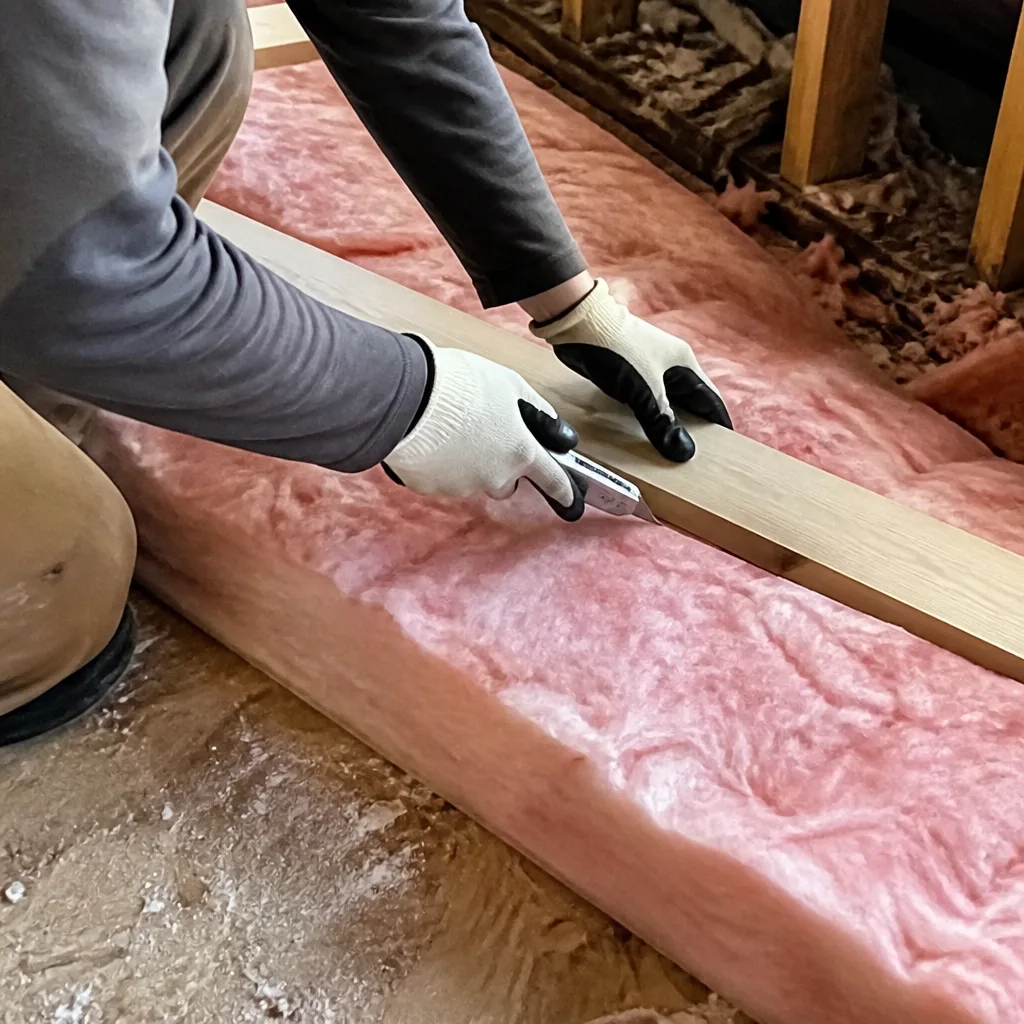
Here is what the job looks like, start to finish, on a standard Pflugerville house:
- Written price, written scope – before anything starts. Under Haven Standard Clause 1, you receive a flat price and a written scope of work before anyone enters the attic. No verbal estimates, no “we’ll confirm the final number after we see it.” You know exactly what you’re paying and what the work covers.
- Pre-installation blower-door baseline (on applicable jobs). We run a blower-door test before the air sealing begins. That reading – measured in CFM50, cubic feet per minute of air leakage at 50 pascals of pressure – becomes the before number we publish in your documented record. On a recent job in the Verona subdivision, this reading came in at 3,800 CFM50 before we touched the attic floor.
- Attic air sealing – top plates, penetrations, can lights. A background-checked, uniformed technician works the attic floor methodically: foam and caulk at top-plate gaps, canned-foam at plumbing and electrical penetrations, and fire-rated sealant around recessed light fixtures. This step is not optional and is not billed as an add-on. It is part of the blown-in job.
- Post-seal blower-door reading. After sealing, we re-test. You see the two numbers side by side. On that same Verona job, the post-seal reading dropped to 2,050 CFM50 – a 46% reduction before a single cubic foot of insulation went in. That’s the number that tells you whether the sealing work performed.
- Blown-in installation to specified depth and R-value. We use loose-fill materials sourced from manufacturers including GreenFiber and CertainTeed, depending on the project spec. Depth rulers are installed throughout the attic and photographed before the crew leaves. The installed depth – and the R-value it delivers – is documented in your Documented Photo Record.
- Final walk-through and documented handoff. You receive the written scope, both blower-door readings, and the full photo record before our truck leaves the driveway. The 365-Day Done Right Promise applies from that moment: if something isn’t right, we make it right – in writing, not just by phone.
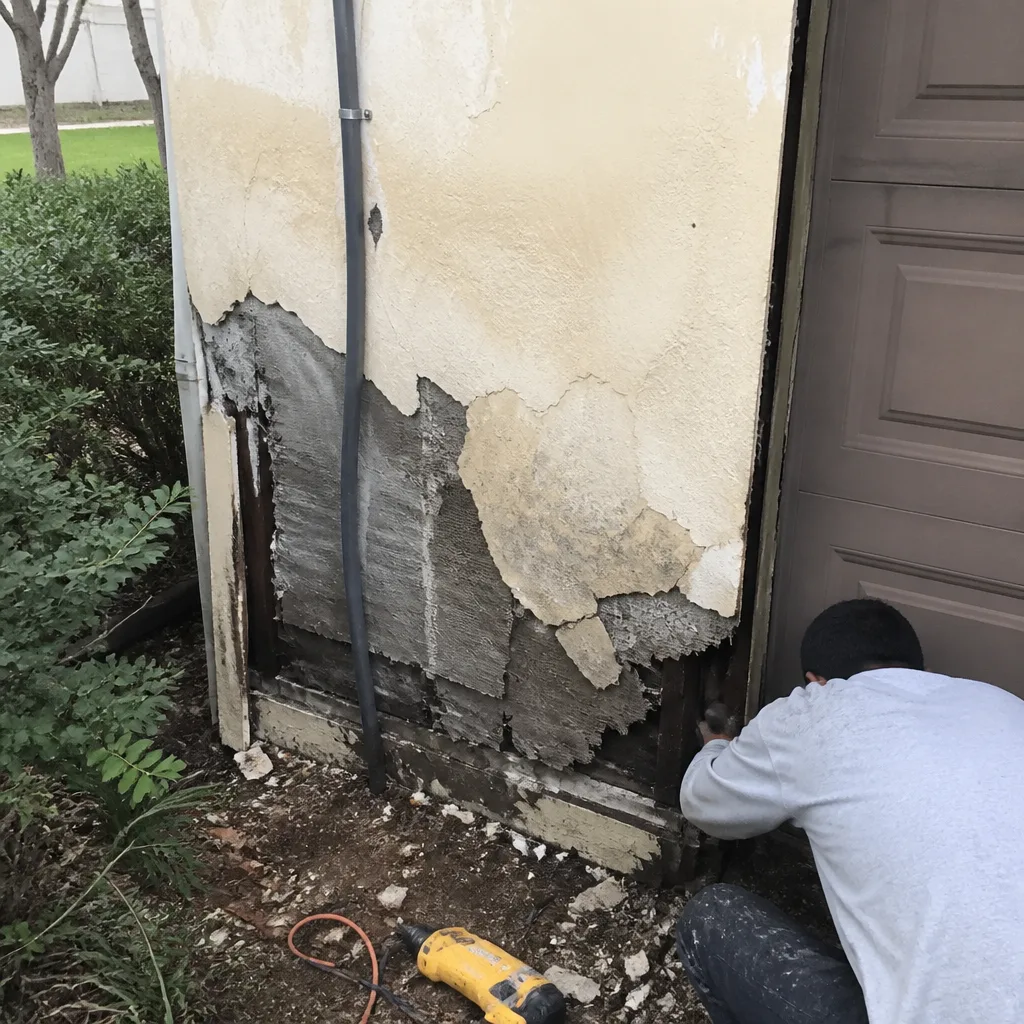 Before
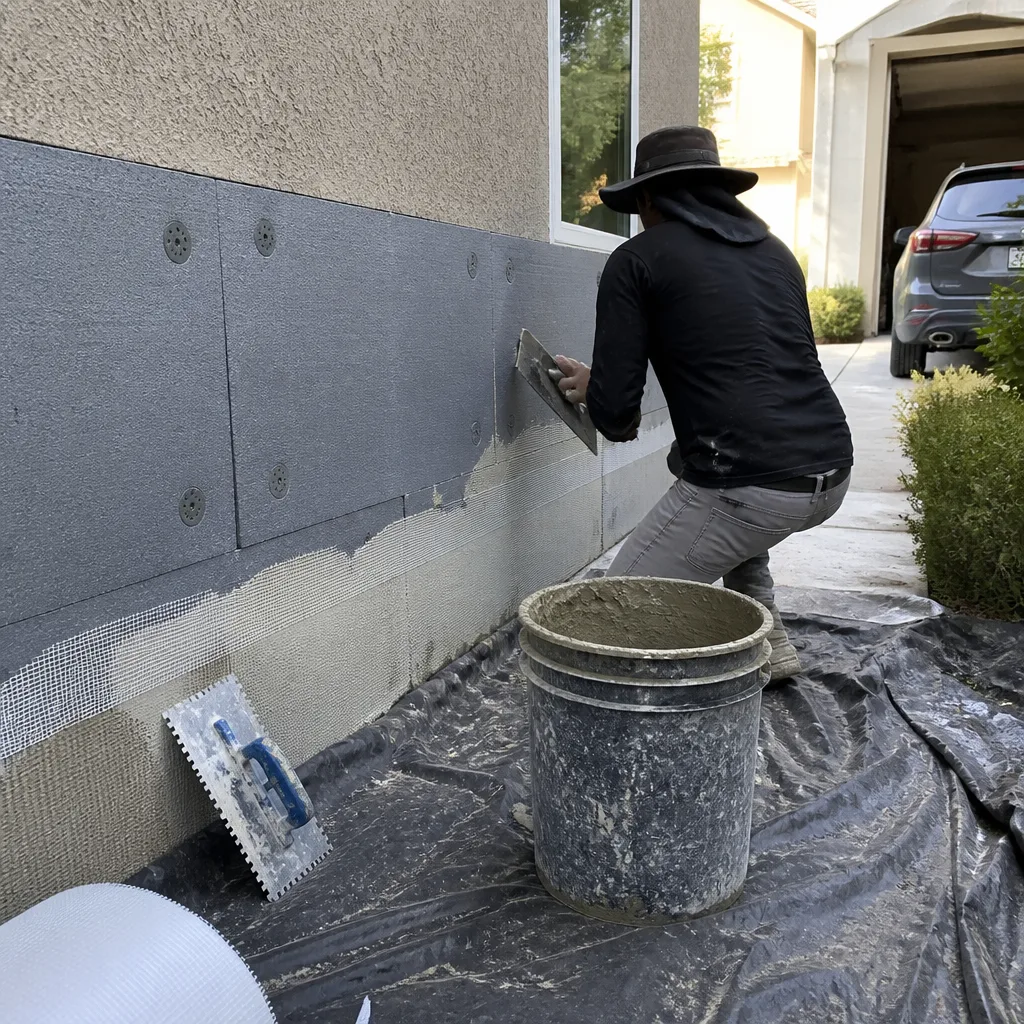 After
AfterBlown-In Attic Insulation Pricing in Pflugerville
How Much Does Attic Insulation Cost? (2026 Price Guide) - Pflugerville, TX: blown-in attic insulation typically runs between $1.50 and $2.80 per square foot of attic floor, installed. A 1,500-square-foot attic footprint – common in the tract homes along Kelly Lane and in the Heatherwilde area – generally falls between $2,200 and $4,200 for a full blown-in job that includes air sealing. Here’s how the main variables move that number:
- Current insulation depth: If there’s nothing in the attic, the crew starts from scratch and the per-square-foot cost is at the lower end of the range. Adding a top-up layer over existing material sometimes costs less in labor, but if the existing material is contaminated or severely compressed, removal comes first and adds cost.
- Air sealing scope: A 1990s-era home in Pflugerville’s older Windermere section might have 30 or more unaddressed can lights plus significant top-plate gaps. That sealing work takes more time than a newer build with sealed cans already installed.
- Attic access and configuration: Low-pitch rooflines with limited clearance take longer to work safely. Homes with HVAC equipment staged in the attic require more careful material routing around mechanical components.
- Target R-value: Reaching R-38 from a near-zero baseline costs less than reaching R-60. Most Pflugerville utility programs and standard practice target R-38 minimum; some energy-conscious homeowners in the Blackhawk area have been specifying R-49 or R-60, which is worth discussing during the estimate.
- Blower-door testing: On applicable jobs, pre- and post-installation blower-door tests are included. The cost of the testing is folded into the job scope, not billed separately.
The estimate you receive will name a flat price against a written scope, covering all of the above as they apply to your home. You’ll know the number before any work starts – that’s Haven Standard Clause 1, and it’s not negotiable on any job we do. If you have a competing written estimate already, bring it. We’ll read it with you as part of a free second opinion – line by line, not just the total.
Call (737) 259-8352 to schedule a free on-site estimate. Wes Okafor or a member of the Topside team will walk the attic, measure current depth, and deliver a written price the same visit.
FAQs – Blown-In Attic Insulation
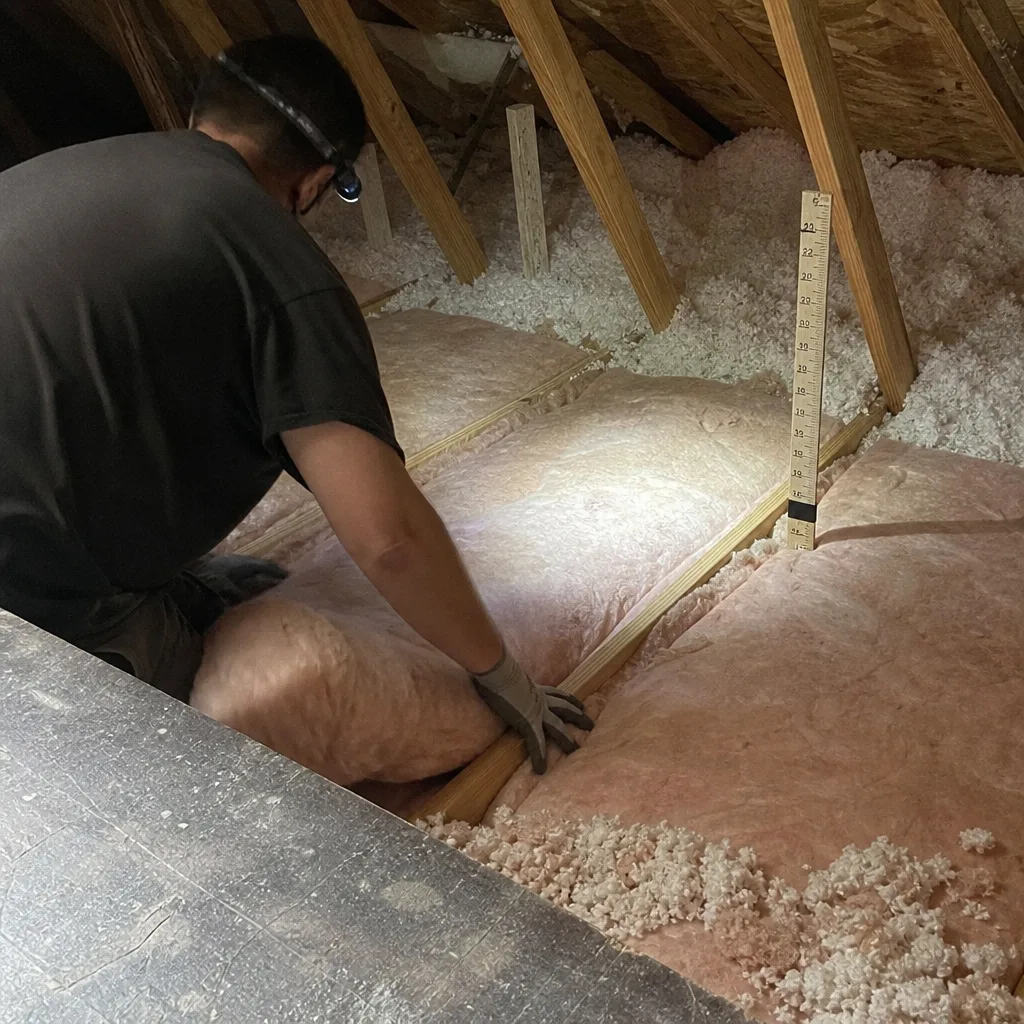
What R-value do I need for blown-in attic insulation in Pflugerville?
The current recommendation for Pflugerville – which sits in DOE Climate Zone 2 – is R-38 as a minimum and R-60 as a high-performance target. Most homes we inspect in Pflugerville are running between R-15 and R-25, often because original blown-in insulation has settled over the years or was never installed to the right depth to begin with. If you want the specific number for your house, a depth measurement during the free estimate will tell you exactly where you stand. Call (737) 259-8352 to schedule that visit.
What’s the difference between blown-in cellulose and blown-in fiberglass?
Blown-in cellulose – made primarily from recycled paper treated with a borate fire retardant – tends to settle slightly more over time but does a better job filling irregular cavities and has a higher density per inch, which gives it modest air-resistance properties at high depths. Blown-in fiberglass, such as the material available from CertainTeed, settles less but has a lower density and is more vapor-permeable, which can be relevant in attics with specific moisture concerns. Both perform well in Pflugerville’s climate when installed to the correct depth. The right choice depends on your specific attic geometry, existing material, and performance targets – something Wes Okafor will review with you during the estimate rather than defaulting to whichever material has a better margin for us.
Do I need to remove existing insulation before adding blown-in?
Not always. A top-up over existing material is appropriate when the current insulation is dry, free of contamination, and has no signs of pest activity or moisture damage. If the existing material is compressed to the point of minimal R-value, contaminated by rodents, or showing moisture staining from a past roof leak, removal before re-insulation is the correct call – not a sales tactic. We document the condition of existing material in the Documented Photo Record so you can see exactly what was found and why the recommendation was made. Learn more about our full building-envelope service line on the home page.
How long does blown-in attic insulation take in a typical Pflugerville home?
A standard 1,500-to-2,000-square-foot attic floor with moderate air sealing scope takes most crews four to six hours, start to finish. Larger attics, attics with extensive recessed lighting arrays, or homes requiring significant top-plate sealing work can run eight hours or more. The written scope you receive before work starts will include an estimated time range for your specific job. Same-day installation is common on jobs that don’t require prior removal of existing material.
Why the Air-Sealing Step Comes First
This is worth being direct about: a significant number of blown-in insulation jobs in Pflugerville are installed over attic floors that were never Attic Baffles & Ventilation Prepaired or properly sealed. That’s not an indictment of other contractors as a category – it’s a description of what we see on job sites regularly. Blown-in insulation is an excellent thermal barrier. It slows conductive heat transfer through the ceiling assembly. But it does not stop air from moving through gaps, and in a Pflugerville summer, the pressure differential between a 105°F attic and a 75°F living space drives meaningful air infiltration through every unaddressed penetration.
The building science on this is settled. Air sealing first – capping top plates, sealing around recessed lights, closing plumbing and electrical chases – then adding the blown-in layer on top delivers a compounding result. The blower-door readings we document on applicable jobs make that compound effect visible as two numbers: before and after. A homeowner in the Enclave at Pflugerville who called us after a different contractor had already blown in insulation over an unsealed floor was getting almost no benefit from the new material. The blower-door reading hadn’t moved materially from the pre-installation baseline. Sealing the attic floor after the fact – under the new blown-in material, working around it – costs more and delivers less than doing it in the right order to begin with.
We will not blow insulation over an unsealed attic floor. That’s not a brand statement. It’s a technical position, and it’s backed by blower-door data we’re willing to show you.
Key Takeaways
- Most Pflugerville attics are significantly under-insulated relative to the R-38 to R-60 range appropriate for Climate Zone 2.
- Blown-in insulation – cellulose or fiberglass loose-fill – is the most practical method for topping up existing insulation or starting from scratch in an attic with irregular framing.
- Air sealing (top plates, can lights, penetrations) must happen before the insulation goes in. The sequence is not interchangeable.
- Before-and-after blower-door readings document the air-sealing result in a single measurable number, published in your written record.
- A flat written price – covering every line of work – is delivered before anyone starts. That’s Haven Standard Clause 1 and it applies to every job Topside Attic Insulation Pflugerville does.
- The 365-Day Done Right Promise backs all completed work. If it’s not right, it gets made right.
Schedule Your Free Estimate in Pflugerville
If you’re ready to find out exactly where your attic stands – current depth, R-value, air sealing status – call Topside our Attic Insulation services team in Pflugerville at (737) 259-8352. A live person will answer. Wes Okafor or a member of the team will schedule an on-site visit, walk the attic, and deliver a flat written price before any work is discussed further. No verbal ballparks, no pressure, no work starts without your written sign-off. That’s how every job in Pflugerville has run since 2016, and it’s how this one will too.
Written by Wes Okafor, Owner at Topside Attic Insulation Pflugerville, serving Pflugerville since 2016.