
Last updated September 24, 2026
DIY vs Professional Insulation: The Pflugerville Homeowner’s Decision Guide
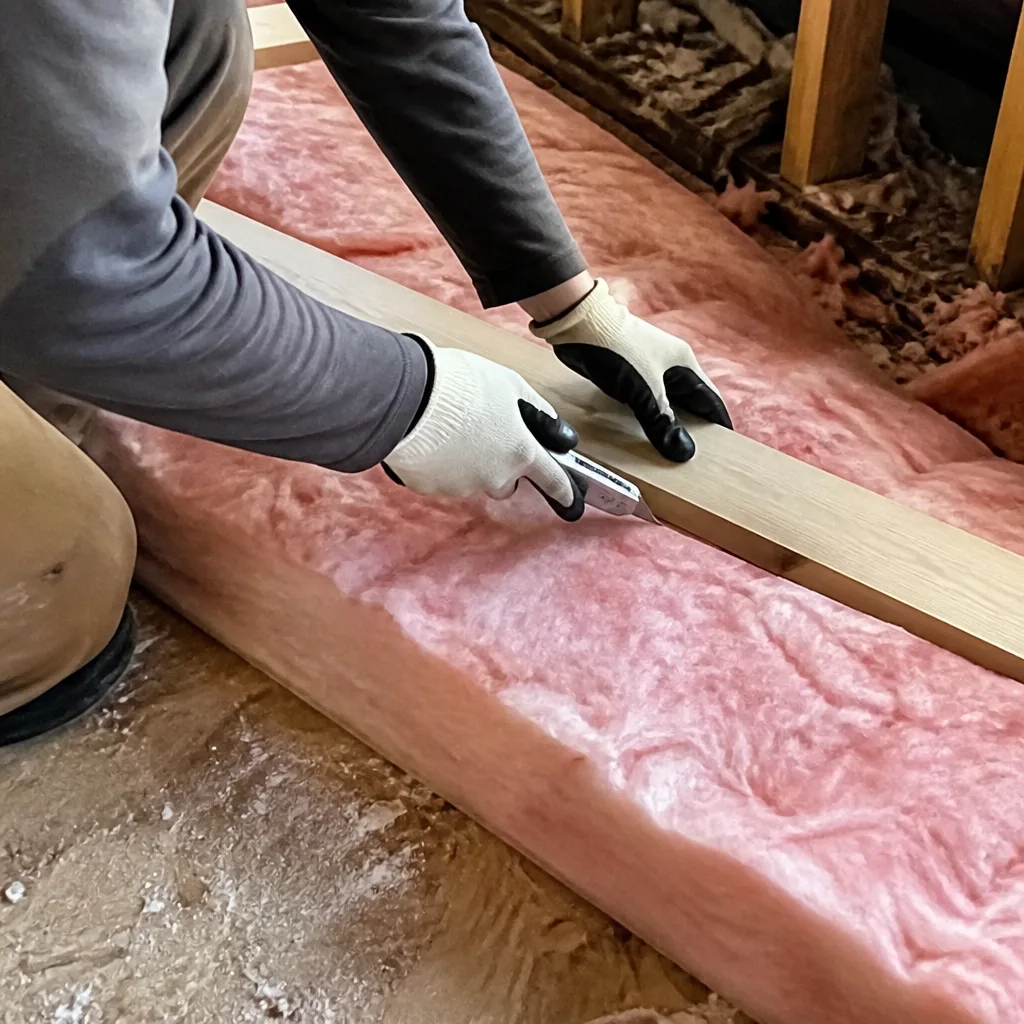
Renting a blower at Home Depot and adding R-19 of blown fiberglass to an already-adequate attic is the most expensive DIY insulation project a Pflugerville homeowner can do. Not because the material fails, but because it buries the air leaks that were actually driving the energy bill. In our work across Pflugerville neighborhoods from Blackhawk to Windermere, we’ve opened attics where the insulation depth looked textbook-perfect yet the blower-door test - a pressurization reading that shows, in one number, how much air the building envelope is losing - read 4,200 CFM50. The homeowner had spent a Saturday and $800 to make the real problem harder to find. This guide will show you which parts of an insulation project are genuinely DIY-appropriate, what professional-grade work looks like in Pflugerville’s climate and code environment, and how to tell whether your attic needs insulation, air sealing, or both. For more guidance, explore our more guides & resources. sealing, or both.
Quick Answer
Most Pflugerville homeowners can safely handle three insulation-related tasks themselves: measuring existing depth, photographing attic penetrations for a contractor, and weatherstripping the attic hatch. Everything else - blower-door diagnostics, two-component spray foam at top plates, and whole-attic blown-in installation with proper ventilation management - requires equipment and training that doesn’t pay off on a single project. If your attic floor has never been air-sealed, adding insulation before sealing is like replacing a roof with holes in the decking.
Table of Contents
- The Expensive Mistake: Insulating Over Air Leaks
- Three Attic Tasks That Are Genuinely DIY-Appropriate
- Two Tasks That Are Not DIY - And Why
- Real Costs: DIY vs Professional in Pflugerville
- The Spray Foam Reality for Homeowners
- Permits, Liability, and Pflugerville Code
- What to Request From Any Professional Job
- Common Mistakes to Avoid
- When to Call a Professional
- Frequently Asked Questions
- The Bottom Line
 Before
 After
AfterThe Expensive Mistake: Insulating Over Air Leaks
Pflugerville sits in IECC Climate Zone 2, which means our summers are long and our winters are mild but punctuated by hard freezes. The energy load here is cooling-dominant, and the attic is where most of that battle is lost. But here’s what the big-box insulation aisle won’t tell you: in a typical 1990s-2010s Pflugerville home, the attic floor leaks more conditioned air than the walls and windows combined.
Top plates - the horizontal framing member where interior walls meet the ceiling - are rarely sealed in production-built homes. Neither are plumbing vent stacks, electrical penetrations, or the gaps around chimney chases. In the Silverado neighborhood and similar developments across Pflugerville, we’ve found top-plate gaps running continuous for twenty feet, each one a highway for 72-degree air to escape into 140-degree attic space in July.
When a homeowner blows fiberglass or cellulose over these leaks, two things happen. First, the insulation becomes an air filter, trapping dust and creating dark streaks that look like roof leaks but are actually convective airflow. Second, the leaks become buried and harder to access. A crew that could have sealed those top plates in four hours with a two-component foam kit now has to rake back material, seal, and re-blow - essentially doing the job twice.
At Topside Attic Insulation Pflugerville home, we won’t blow insulation over an unsealed attic floor. Period. The Haven Standard requires air sealing of top plates, can lights, and penetrations before any insulation is added. We’ve seen too many attics in Pflugerville where the insulation looked generous and the performance was poor.
The diagnostic tool that prevents this mistake is the blower-door test. We run one before every air-sealing job and again after. A recent job in Heatherwilde read 3,800 CFM50 pre-sealing and 1,900 after. The homeowner had already received a quote for R-38 blown cellulose from another contractor. We showed her the numbers, sealed first, and added only R-19 to reach her target - because the air sealing did more for her comfort than the extra six inches of depth would have.
Three Attic Tasks That Are Genuinely DIY-Appropriate
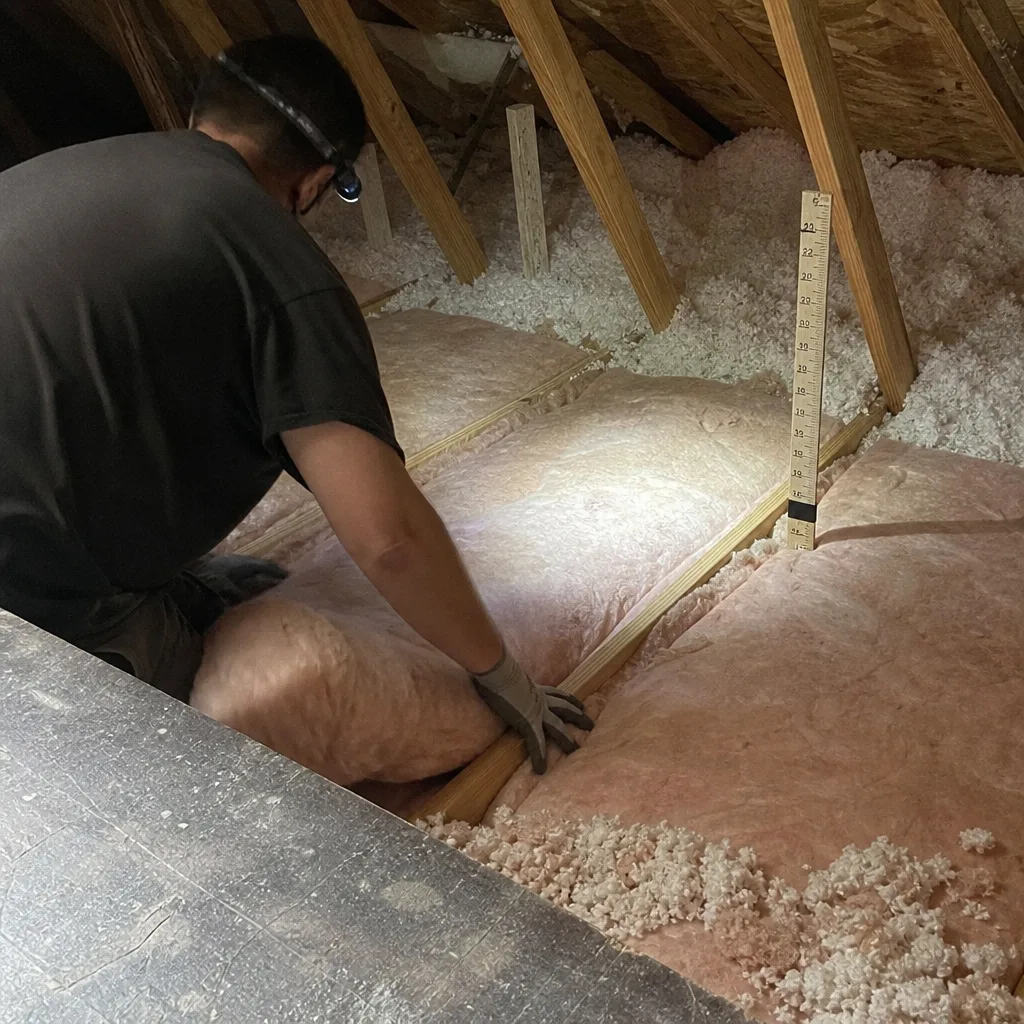
Not every attic task requires a crew. Here are three that a competent Pflugerville homeowner can handle with basic tools and a free Saturday morning.
1. Measuring Existing Insulation Depth
Use a tape measure or ruler to check depth in five spots: center, four quadrants. Take photos of each measurement with your phone. In Pflugerville, the 2021 IECC calls for R-38 to R-49 in attics, which translates to roughly 12-15 inches of fiberglass batt or 10-14 inches of blown cellulose depending on product density. If you’re measuring 4-6 inches of compressed, decades-old material, you have a legitimate depth problem. If you’re measuring 10 inches and still uncomfortable, you have an air-leak problem that no amount of additional depth will fix.
2. Photographing Penetrations and Problem Areas
Walk your attic with a flashlight and phone camera. Document: recessed can lights (especially pre-2010 non-IC fixtures), bathroom fan housings, plumbing vent stacks, electrical junction boxes, chimney chases, and any signs of moisture, rodent activity, or compressed insulation. These photos are invaluable when you request a professional assessment. A contractor who sees clear documentation of your attic’s condition can give you a tighter scope and a more accurate written price before any work starts.
3. Weatherstripping the Attic Hatch or Scuttle Hole
The attic hatch is often the largest unsealed hole in the ceiling plane. A 24×30 inch opening with no weatherstripping can leak as much air as a 6-inch diameter hole cut in the wall. Buy adhesive-backed closed-cell foam tape at any hardware store, clean the trim surface, and apply a continuous bead so the hatch compresses it evenly. Add insulation board to the back of the hatch if it’s uninsulated. This is a $15 fix that every Pflugerville homeowner should make before considering larger projects.
Two Tasks That Are Not DIY - And Why
1. Two-Component Spray Foam at Top Plates and Penetrations
The two-component foam kits sold at retail stores - typically 200-board-foot or 600-board-foot cylinders - are not the same product that professional contractors apply. Here’s the difference that matters for your attic:
- Yield and density: Retail kits often advertise “up to” yields achieved only in laboratory conditions. In a hot, ventilated Pflugerville attic in July, actual yield can drop 20-30% due to substrate temperature and humidity. Professional-grade closed-cell foam from manufacturers like Demilec or Icynene is temperature-conditioned and applied with proportioning equipment that maintains 1:1 ratio within 2%.
- R-value per inch: Retail closed-cell foam typically achieves R-5.5 to R-6 per inch when fully cured. Contractor-grade closed-cell at proper density achieves R-6.5 to R-7. That difference matters when you’re trying to hit code minimums in limited cavity depth.
- Air barrier certification: Professional foam installations can be documented as continuous air barriers under ASTM E2178. No retail kit carries this certification, which means a building inspector in Pflugerville may not accept it as the sole air-sealing method on a permitted project.
- Safety: Two-component foam requires respiratory protection beyond a standard dust mask (supplied-air or organic vapor cartridge respirator), full skin coverage, and ventilation management. The isocyanate component is a known sensitizer; improper exposure can trigger asthma-like reactions that persist indefinitely.
We’ve been called to attics in Pflugerville where a homeowner’s DIY foam job had shrunk, pulled away from framing, or been applied so thin it provided neither insulation value nor air sealing. The remediation cost more than professional application would have.
2. Blower-Door-Guided Pressure Diagnostics
Air sealing without a blower door is surgery without imaging. The blower door depressurizes the house to 50 Pascals - roughly the pressure difference of a 20-mph wind - so leaks reveal themselves through smoke pencils, infrared cameras, or simply feeling the draft. In Pflugerville’s older neighborhoods like Springbrook and Pflugerville Heights, we’ve found that 40-60% of visible attic penetrations aren’t actively leaking under normal conditions; they’re potential leaks that open only when wind hits the right wall. The blower door finds the ones that matter.
Rental blower doors exist, but calibration matters. A unit that’s been bounced around in rental trailers for two years may read ±15% off actual. More importantly, interpreting the data requires experience. A reading of 3,500 CFM50 in a 2,500 square foot house is mediocre; in a 1,800 square foot house, it’s poor. Knowing the difference changes where you focus your sealing effort. At Attic Insulation in Pflugerville, every air-sealing job begins and ends with a calibrated blower-door test so the homeowner sees the performance change they paid for.
Real Costs: DIY vs Professional in Pflugerville
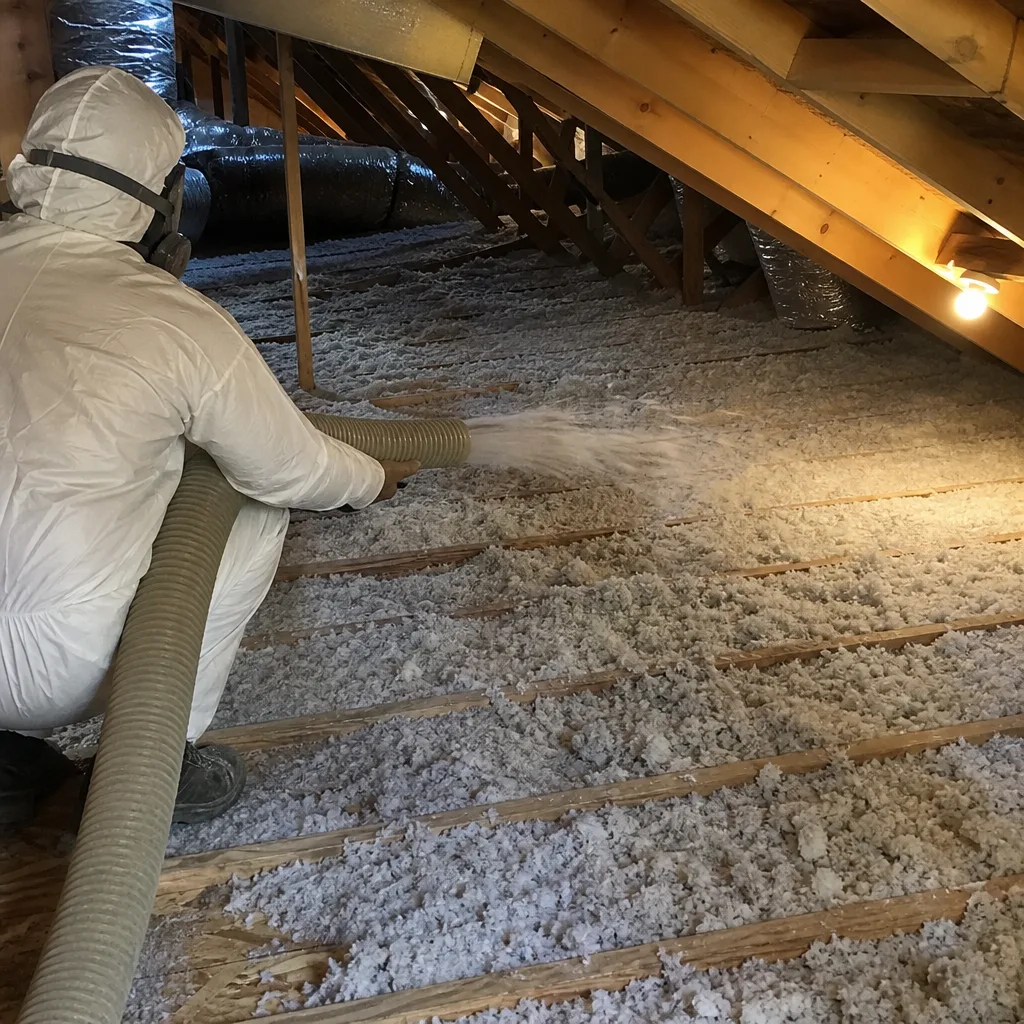
Here’s honest math for a 2,000 square foot Pflugerville attic with average pitch and good access. These are 2024-2025 pricing observations from our market, not quotes. For a detailed breakdown of what drives these numbers, see our Insulation Cost Breakdown: The Pflugerville Homeowner’s Reference for 2026.
DIY Blown-In Fiberglass or Cellulose (Material Only, No Air Sealing)
| Item | Cost |
|---|---|
| Insulation blower rental (24 hours, Home Depot/Lowe’s) | $75-$100 |
| Blown fiberglass, 30 bags at R-38 (Owens Corning AttiCat or similar) | $450-$550 |
| Blown cellulose, 40 bags at R-38 (GreenFiber or similar) | $400-$500 |
| Safety equipment: respirator, goggles, coveralls, gloves | $60-$90 |
| Attic tent or hatch weatherstripping (if doing this right) | $30-$80 |
| DIY Total | $565-$820 |
Professional Installed Cost, Pflugerville Market
| Scope | Cost Range |
|---|---|
| Air sealing + blown fiberglass or cellulose to R-38, 2,000 sq ft | $2,200-$3,800 |
| Air sealing + spray foam (open-cell) at roofline, conditioned attic | $4,500-$7,500 |
| Crawl space encapsulation with vapor barrier (if applicable) | $3,500-$6,000 |
The break-even question isn’t simple. If your attic has never been air-sealed and you DIY only insulation, you’ve spent $700 to bury the real problem. If you then hire a contractor to fix it properly, the total outlay exceeds professional-first pricing because of the removal and reinstallation. In our experience across Pflugerville, about 60% of attics that homeowners think need “more insulation” actually need air sealing first, with modest insulation addition second.
One more cost most DIY guides omit: disposal. If you’re removing old insulation contaminated by rodents or moisture, Pflugerville’s Waste Management facility accepts bagged construction debris at per-pound rates. A typical attic removal generates 500-800 pounds. Budget $100-$150 and a truck, or add it to your professional scope.
The Spray Foam Reality for Homeowners
Spray foam is where DIY insulation goes wrong most dramatically. The retail kits at big-box stores create a product category confusion that costs Pflugerville homeowners thousands.
Contractor-grade spray foam - whether open-cell (half-pound density, R-3.6 per inch, vapor-permeable) or closed-cell (two-pound density, R-6.5+ per inch, vapor barrier) - is applied with plural-component equipment that heats, pressurizes, and precisely meters the A-side (isocyanate) and B-side (polyol resin). The mix hits the gun at 1,000-1,500 psi and 110-140°F. This matters because the chemical reaction is exothermic; proper temperature and pressure ensure complete cure, full rise, and adhesion to substrates ranging from OSB to concrete.
Retail two-component kits operate at far lower pressure, with pre-heating that’s often just ambient temperature. The result is foam that may:
- Shrink away from framing as it cures, creating gaps that defeat the air barrier purpose
- Develop a tacky surface indicating incomplete cure, which off-gasses longer and can smell for weeks
- Fail to achieve stated R-value because density is inconsistent
- Lack the fire-rated thermal barrier required by IRC Section R316 when foam is left exposed in living space
In Pflugerville’s climate, open-cell foam at the roofline (creating a conditioned attic) is increasingly common in new construction and major renovations. But this application requires engineering calculation of the dew point location to prevent condensation on roof sheathing. A homeowner with a retail kit has no access to WUFI modeling or the training to interpret it. We’ve seen mold on roof decks where DIY foam created an imperfect air seal that allowed moisture migration but blocked drying.
Materials from manufacturers like Demilec and Johns Manville are available only through contractor distribution for these reasons. The product chemistry, application training, and quality assurance are inseparable from the material itself.
Permits, Liability, and Pflugerville Code
Pflugerville building permits are required for insulation work that involves structural modification, changes to the building envelope’s thermal boundary, or work in conjunction with other permitted trades (HVAC replacement, roof replacement, additions). The 2021 IECC, adopted by reference in Pflugerville’s municipal code, specifies minimum R-values and requires inspection of attic insulation depth and vapor retarder placement. For a deeper look at requirements, see Insulation Permits, Codes & Inspections in TX: What You Need to Know.
Here’s the liability consideration most homeowners miss: on a permitted project, the “contractor of record” is the party responsible for code compliance and inspection passage. If you DIY insulation on a permitted roof replacement, and the insulation fails inspection, the roofing contractor may not be willing to sign off on the project until a licensed contractor corrects your work. This can delay certificate of occupancy, insurance coverage, or resale disclosure.
Texas does not require a state-level insulation contractor license, but Pflugerville’s building official can require proof of workers’ compensation and general liability insurance for permitted work. Homeowner’s insurance policies vary in coverage for self-performed work; some exclude damage caused by unlicensed trade work. Check your declarations page before climbing into the attic with a foam kit.
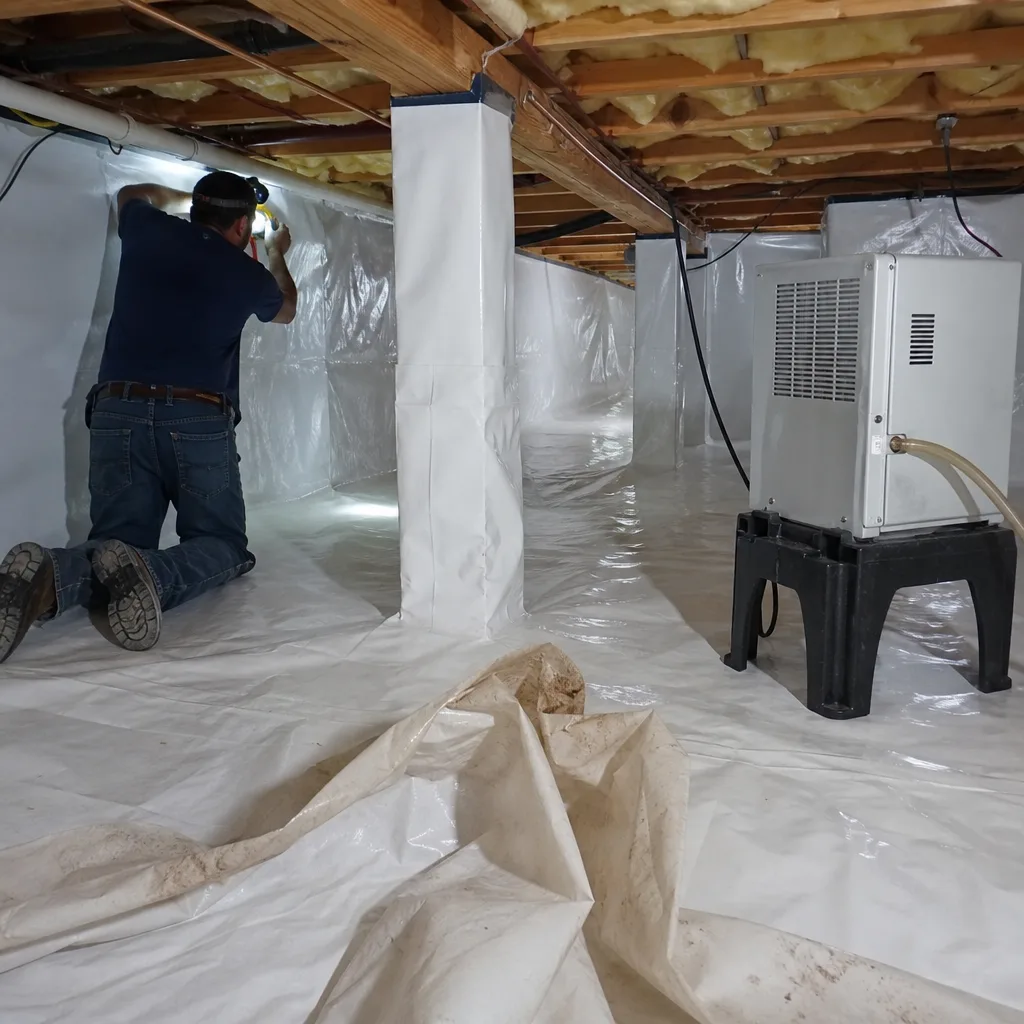
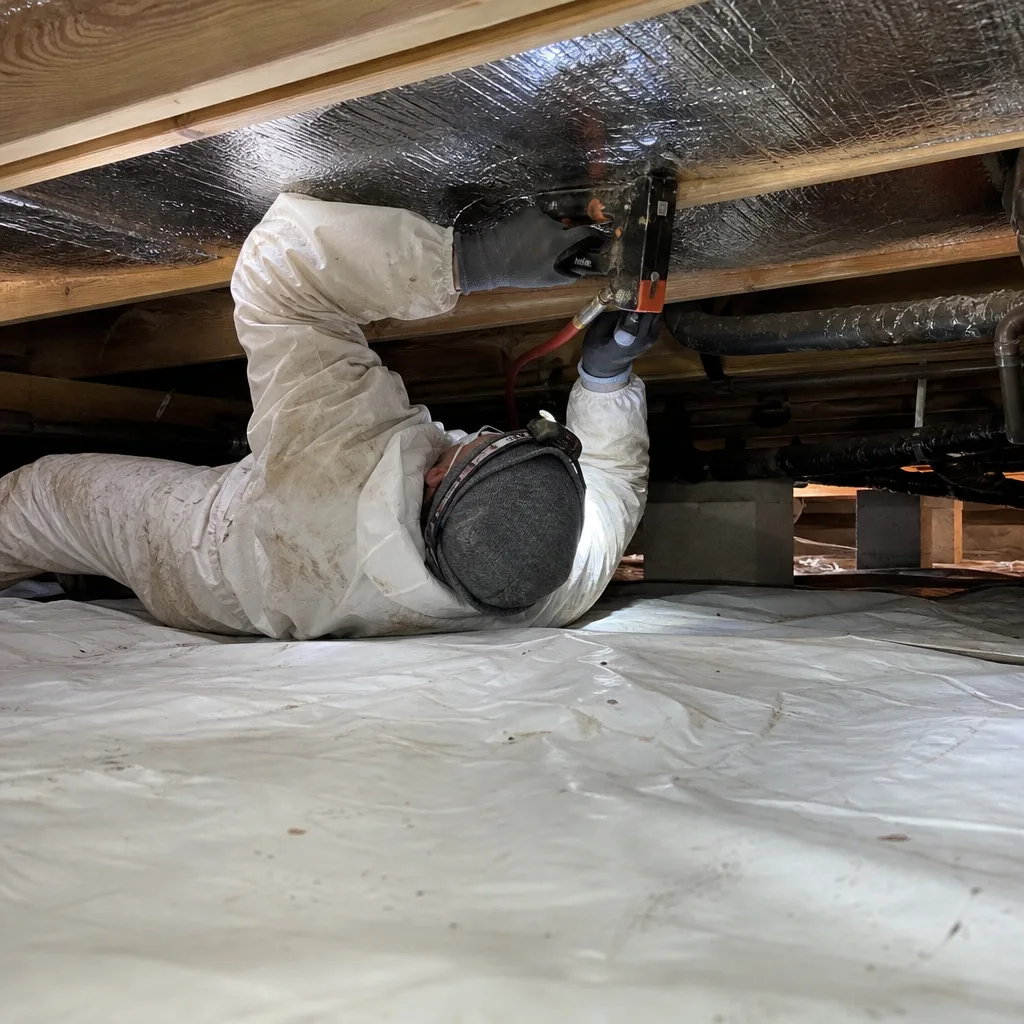
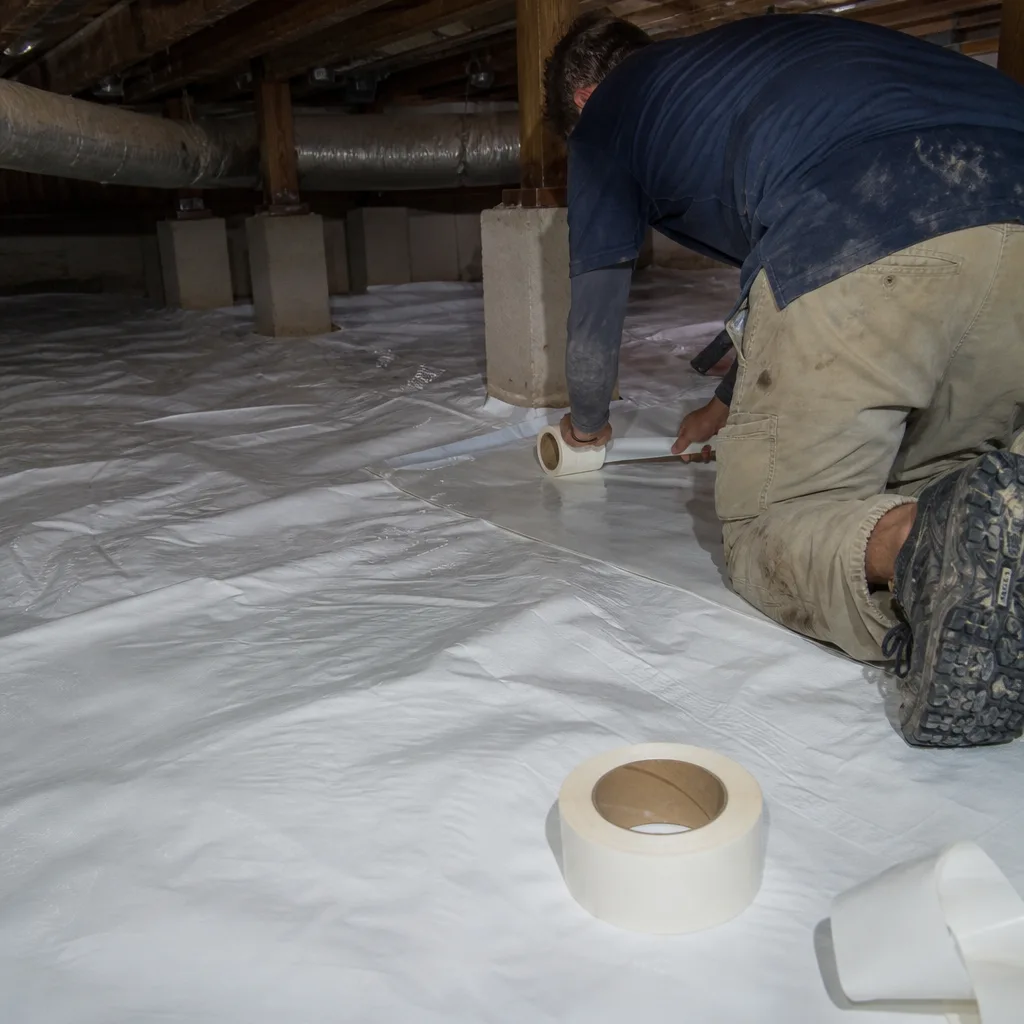
For Crawl Space Encapsulation & Vapor Barrier in Pflugerville, the considerations are sharper. Crawl spaces involve moisture management, structural wood contact, and often electrical or plumbing access. A vapor barrier installed incorrectly can trap moisture against floor joists, accelerating decay. This is not a first-DIY project.
What to Request From Any Professional Job
Whether you hire Topside Attic Insulation Pflugerville or another contractor, documentation is your protection against future uncertainty. Under the Haven Standard, every job closes with these deliverables:
- Marked-up attic diagram: A floor-plan sketch showing where air sealing was applied - top plates, can lights, penetrations, chimney chases - so you or a future contractor know what’s been done without re-exploring.
- Before-and-after blower-door report: The pressurization readings, test date, technician name, and equipment calibration date. This is your baseline for any future energy improvements.
- Documented Photo Record: Time-stamped photos of conditions before, during, and after work. Included on every job, not available on request.
- Written scope and written warranty: Flat price, exact materials specified by manufacturer and product line, installation method, and the 365-Day Done Right Promise. You receive this before anyone lifts a tool.
These documents matter for resale. A Pflugerville home with a 2024 blower-door report showing 2,100 CFM50 and a marked-up attic diagram sells faster than one with a vague “insulation upgraded” note in the seller’s disclosure. Buyers’ inspectors increasingly ask for this level of documentation.
If you’re considering Spray Foam Insulation in Pflugerville, request the specific product name (e.g., Demilec Heatlok HFO High Lift, Icynene Classic Max) and the applied thickness at each location. Spray foam R-value is thickness-dependent, and “2 inches in some spots, 4 in others” is not a specification you can verify.
Common Mistakes to Avoid
- Blowing insulation over recessed can lights without checking type. Pre-2010 non-IC (insulation contact) fixtures overheat and create fire hazards when buried. In Pflugerville’s 1990s subdivisions, these are still common. Look for the IC rating stamped on the fixture housing.
- Blocking soffit vents with insulation. Pflugerville attics need intake ventilation at the eaves and exhaust at the ridge. Baffles - cardboard or foam channels - must be installed before blowing insulation to maintain airflow. Without them, you trap moisture and void most shingle warranties.
- Compressing fiberglass batts. R-value is measured at full loft. A batt labeled R-30 that’s compressed into a 2×8 cavity performs at roughly R-21. If the cavity is shallow, use high-density product or switch to spray foam rather than squeezing standard batts.
- Ignoring the garage attic. In Pflugerville’s attached-garage homes, the garage attic often shares a wall with conditioned space. Uninsulated garage ceilings create thermal bridging that makes adjacent bedrooms uncomfortable. This is frequently missed in DIY assessments.
- Using faced insulation in the wrong direction. Kraft-faced batts have a vapor retarder that belongs toward the warm-in-winter side. In Pflugerville’s cooling-dominant climate, this means the facing goes down, toward the living space. Upside-down facing can trap summer moisture in the attic.
- Skipping the attic hatch. It’s the easiest leak to fix and the most commonly ignored. A $15 weatherstripping job outperforms $500 of additional insulation if the hatch is your primary leak path.
When to Call a Professional
Call a professional when the project involves pressure diagnostics, two-component foam, whole-attic blown-in installation with ventilation management, or any work on a permitted project where inspection passage matters. Not sure how to choose? Read How to Hire a Insulation Contractor in Pflugerville: A Step-by-Step Guide. Call when you’ve measured your insulation depth and it’s adequate, but your energy bills say otherwise - that’s the air-sealing signal. Call when you find rodent contamination, moisture staining, or mold, because insulation replacement without source remediation wastes money.
Topside Attic Insulation Pflugerville offers free estimates in Pflugerville - call (737) 259-8352. Every estimate includes a written scope and written price before any work starts, under Haven Standard Clause 1. We also offer a Free Second Opinion on any written estimate; bring us a competing quote and we’ll read it with you. Calls are answered by a live person, 24/7.
Frequently Asked Questions
Most air sealing plus blown-in insulation jobs for a 2,000 square foot Pflugerville attic run between $2,200 and $3,800, depending on existing conditions and target R-value. Spray foam at the roofline for a conditioned attic typically ranges from $4,500 to $7,500. Call (737) 259-8352 for a written price on your specific home - estimates are free, and we deliver the scope and price before any work starts.
You can buy retail two-component foam kits, but the product is not equivalent to contractor-grade foam in yield, R-value per inch, or air barrier certification. The application requires respiratory protection beyond standard dust masks, full skin coverage, and training in substrate preparation and thickness verification. For attic air sealing in Pflugerville, professional application is the safer and more effective choice.
If your existing insulation is dry, uncontaminated, and not compressed below half its original thickness, adding depth is usually more cost-effective. In Pflugerville, insulation contaminated by roof leaks, rodent activity, or mold should be removed - adding clean material over dirty material traps odors and pathogens. We provide a Documented Photo Record of existing conditions so you can make an informed decision.
Permits are required when insulation work accompanies other permitted trades (roof replacement, HVAC changeout, additions) or involves structural modification. Standalone insulation added to an existing attic typically does not require permit in Pflugerville, but verify with the City of Pflugerville Development Services at (737) 259-8352 if your home is in a historic district or has HOA requirements.
Signs that air sealing is the primary need: high summer cooling bills despite adequate insulation depth, rooms that are significantly hotter or colder than others, visible dust streaks on insulation surfaces, or comfort issues on windy days. The definitive test is a blower-door test. At Topside Attic Insulation Pflugerville, we run this test on every assessment and show you the number.
The 2021 IECC, adopted in Pflugerville, specifies R-38 minimum for attic insulation in Climate Zone 2, with R-49 recommended for optimal performance. In existing homes where full depth is impractical, R-30 with comprehensive air sealing often outperforms R-38 with leaks. The target should be performance-based, not just depth-based.
The Bottom Line
The DIY-vs-professional question in Pflugerville isn’t about whether you’re handy enough to run a blower. It’s about whether you can accurately diagnose what’s wrong before choosing a fix. Three tasks - measuring depth, photographing conditions, weatherstripping the hatch - are genuinely within reach of most homeowners. Two tasks - blower-door diagnostics and two-component foam application - require equipment and judgment that don’t amortize across one project. The most expensive insulation job is the one that adds material without solving the leak. In our 9,000+ homes sealed and insulated since 2016, the pattern is consistent: seal first, insulate second, document everything. That’s the Haven Standard, and it’s how we work in every Pflugerville attic we enter.
Written by Wes Okafor, Owner at Topside Attic Insulation Pflugerville, serving Pflugerville since 2016.