
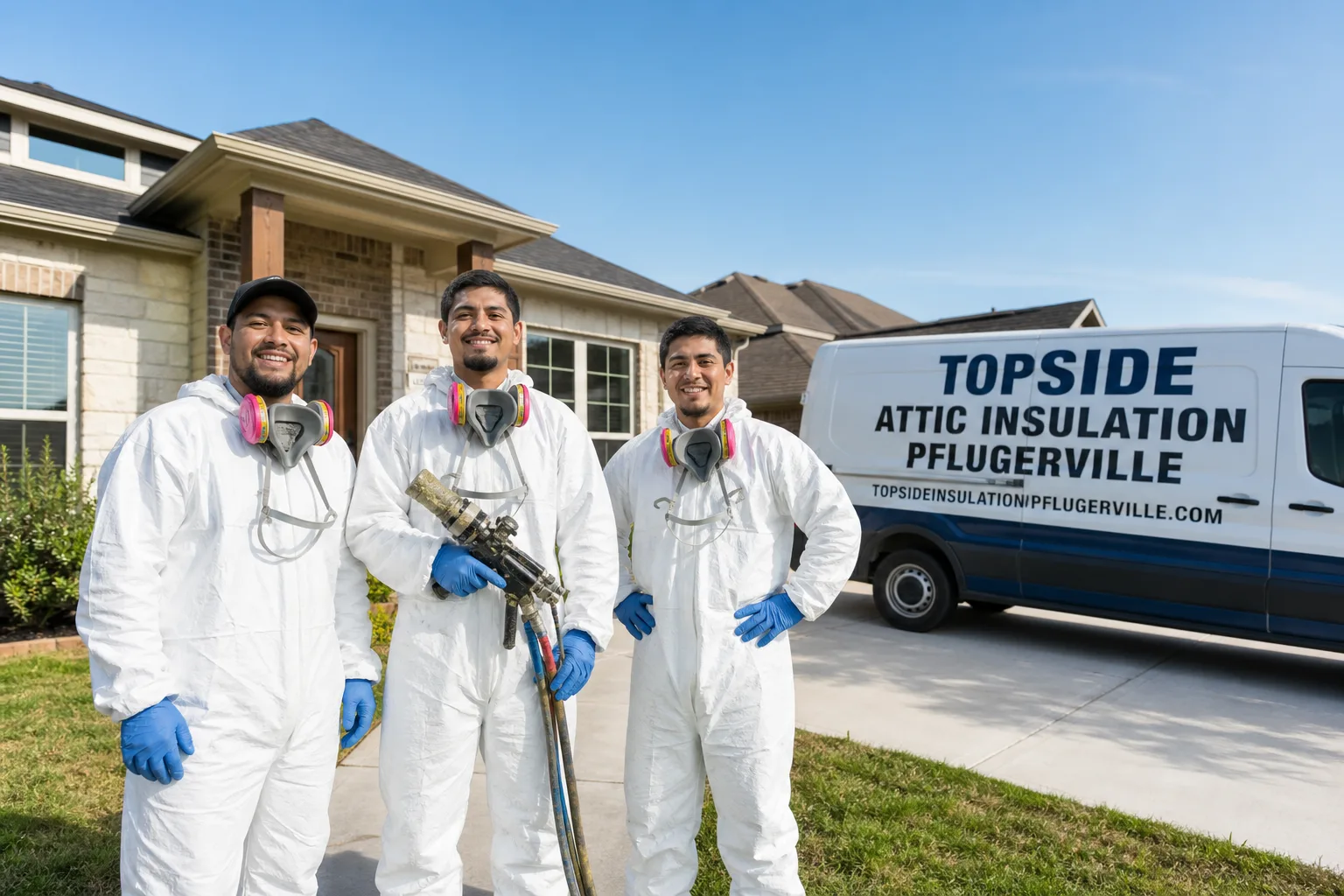
Fast, Reliable Blown-In Insulation Across Lost Creek
Blown-in insulation in Lost Creek, TX typically runs $2.40 to $4.20 per square foot of attic floor, with most full retrofits on these larger custom homes falling between $4,800 and $9,500 depending on how many disconnected attic zones we’re treating. We’re usually on-site in Lost Creek within 24 to 48 hours of your call, and we bring enough material stock to complete most jobs in a single trip. Our crews know the area - from the winding roads off Lost Creek Boulevard to the custom builds near the Barton Creek greenbelt - so we don’t waste time figuring out access or where to stage the blower truck.
Call (737) 259-8352 for a free estimate. A live person answers, 24/7.
Why Topside Attic Insulation Pflugerville Is Lost Creek’s Preferred Blown-In Insulation Company
We’ve sealed and insulated more than 9,000 homes since 2016, and a growing share of them have been in Lost Creek’s unincorporated western Travis County pocket. Homeowners here found us after reading our three-star reviews as carefully as our five-star ones - they wanted to see how we handled the jobs that didn’t go perfectly. The answer is in the documentation: every customer gets a written scope, a written warranty, and a Documented Photo Record before the crew leaves.
Our response time to Lost Creek averages same-day or next-day scheduling, with dispatch coordinated from our Dallas-Fort Worth office. Crews carry stock for the most common retrofit scenarios we see in this area - dense-pack cellulose for garage-ceiling assemblies, blown fiberglass for main attic top-ups, and the air-sealing consumables these 1980s-2000s custom builds always need.
What separates us is the sequence. We seal first, then insulate. Every time. Our Blown-In Insulation team will not blow material over an unsealed attic floor. The top plates, can lights, and penetrations get sealed before the blower starts. Then we run a blower-door test - a pressurization reading that shows, in one number, how much conditioned air your building envelope was losing before and after the work. You get those numbers in writing.
Our Blown-In Insulation Services in Lost Creek
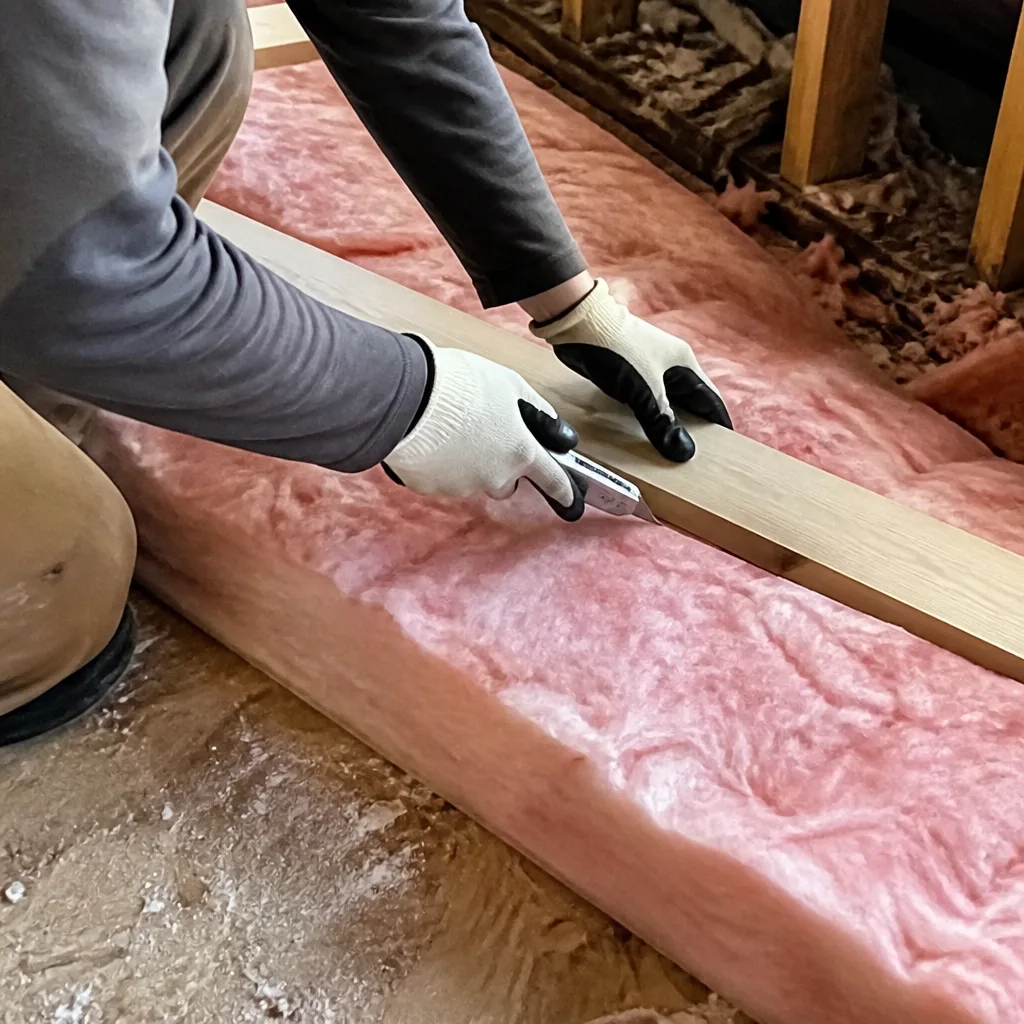
Blown-In Cellulose
Cellulose is our most common recommendation for Lost Creek’s full attic retrofits. It’s treated with borate fire retardant, packs well into irregular cavities, and performs better than fiberglass in the temperature swings these Hill Country-exposed attics experience. Most Lost Creek homes we quote need 12 to 16 inches of cellulose blown across the main attic floor to reach R-38 or R-49, after we’ve sealed the bypasses that the original builder left open. Typical range: $2.60-$4.00 per square foot installed, with air sealing priced separately based on blower-door findings.
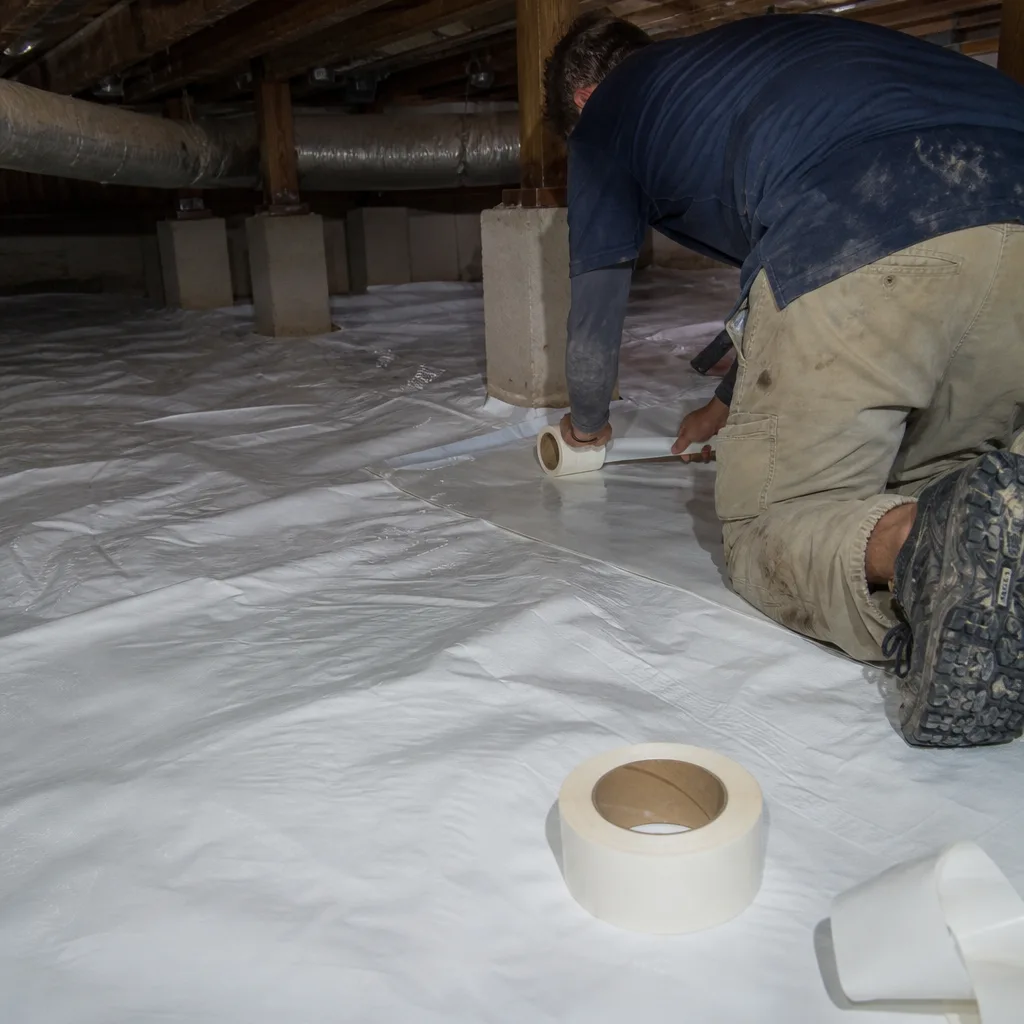
Blown-In Fiberglass
We use blown fiberglass for top-up jobs where the existing insulation is in decent shape and the attic floor is already sealed. It doesn’t settle as much as cellulose, and it works well in Lost Creek’s drier attic environments. A typical top-up to bring an existing R-19 or R-30 installation up to current code runs $1.80-$2.80 per square foot. We stock Owens Corning and Johns Manville fiberglass; no proprietary lock-in means you get the material that fits your specific roof assembly.
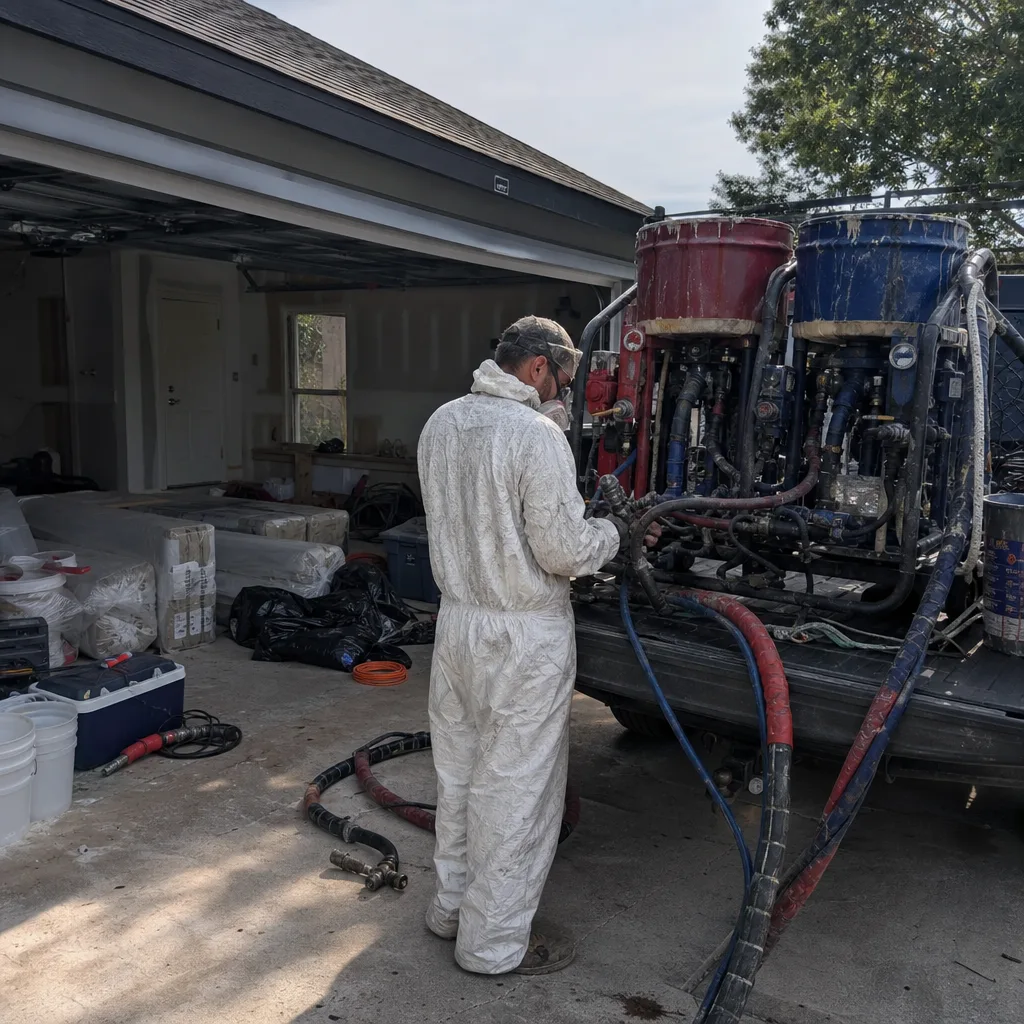
Dense-Pack Wall Insulation
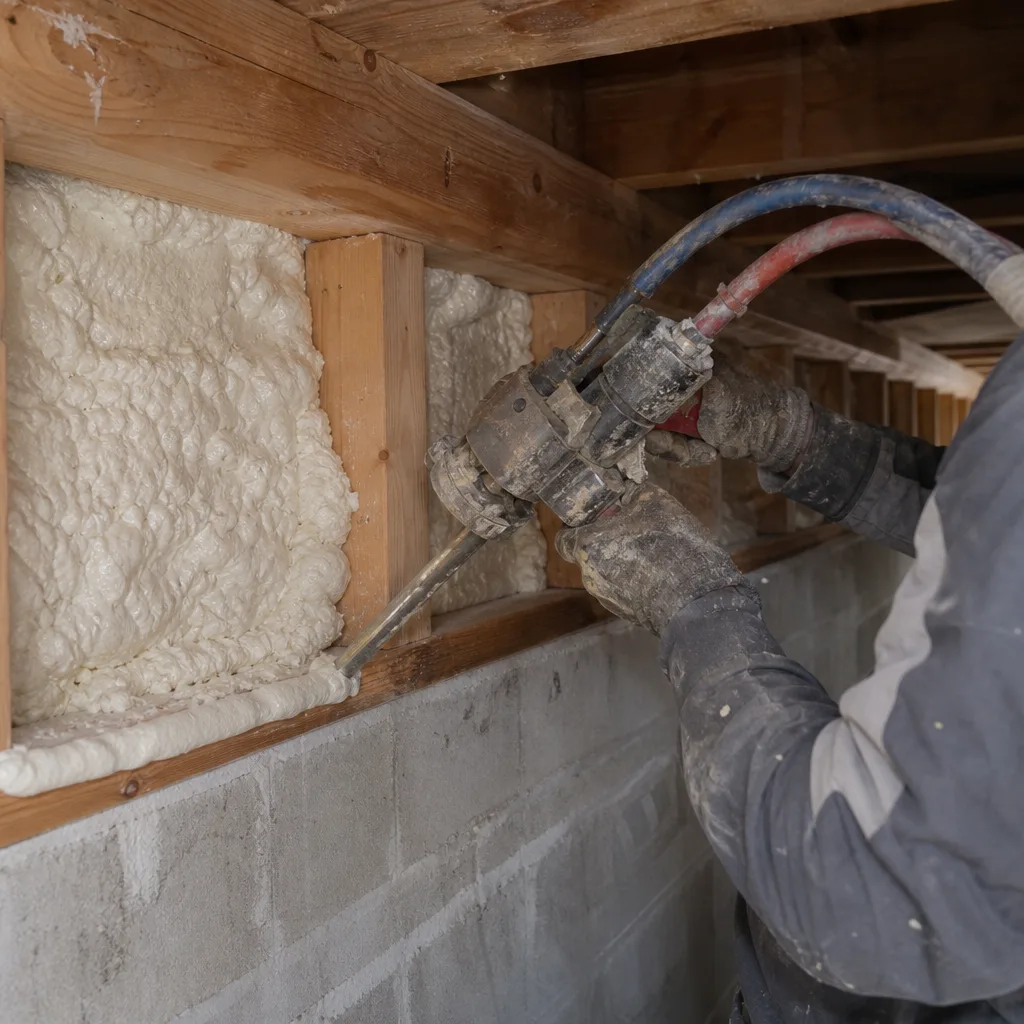
This is the fix for that bonus room over the garage - the one that never tracks with the rest of the house. Dense-pack cellulose gets blown into closed wall cavities at 3.5 pounds per cubic foot, creating an air-impermeable plug that stops both conductive heat loss and air movement. In Lost Creek, we dense-pack the garage-ceiling/floor-assembly cavity, knee walls, and any vaulted-ceiling wings where the original builder skipped insulation entirely or where batts have sagged over thirty years. These jobs run $3.50-$5.50 per square foot of wall or ceiling cavity, and they’re almost always paired with air sealing of the rim joists.
Blown-In Top-Up
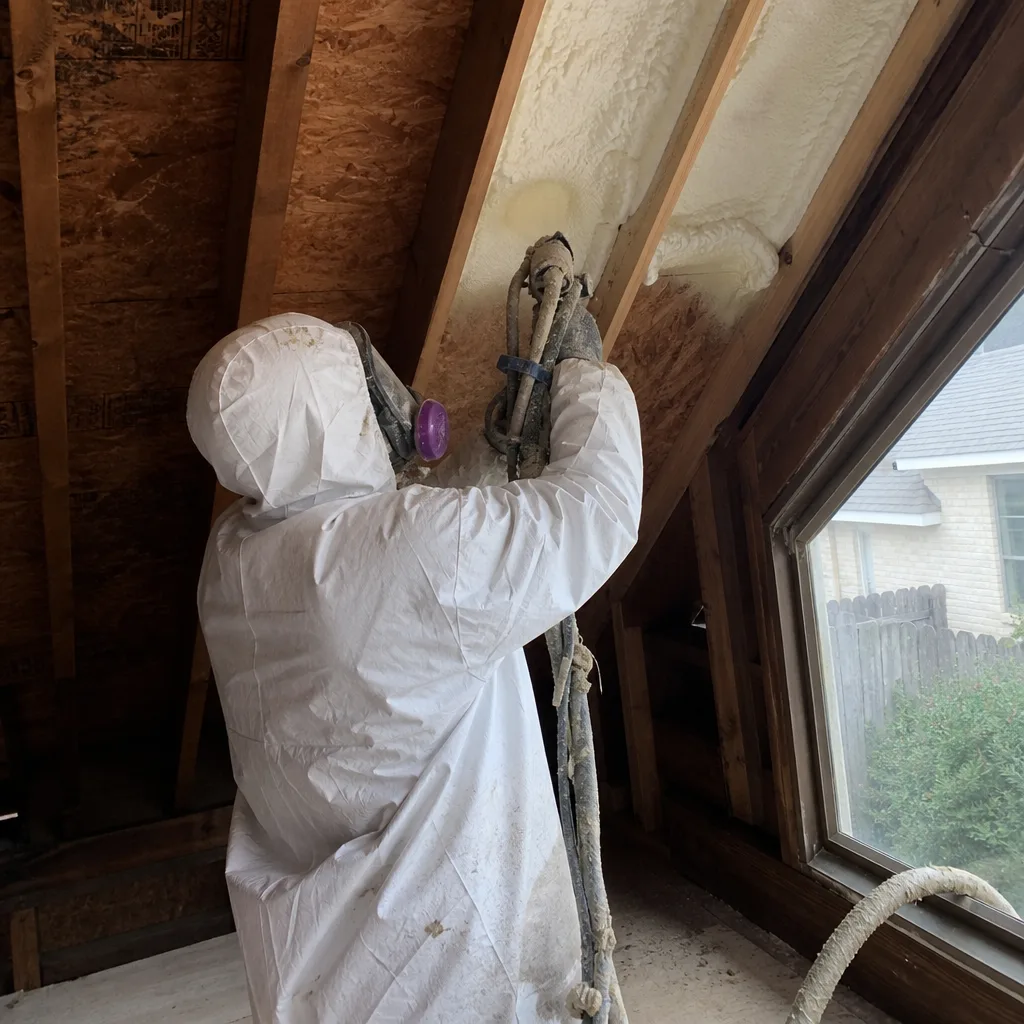
Some Lost Creek homeowners call us after an energy audit or a particularly brutal summer bill, and all they need is additional material over what’s already there. We inspect first - if the attic floor isn’t sealed, we’ll tell you, and we’ll quote the sealing separately. A straight top-up without air sealing is rare in this market, but when it’s appropriate, we price it at $1.60-$2.40 per square foot. We document the before-and-after depth with photos, and we note any deficiencies we find in the existing installation.
What happens when you call
- 1
A real person answersNo phone trees - you reach a local pro.
- 2
You get an upfront price rangeHonest numbers before anyone is dispatched.
- 3
A background-checked tech heads outLicensed & insured, dispatched right away.
- 4
You approve before work beginsNothing starts until you say go.
 Before
 After
AfterTrusted Brands We Service in Lost Creek
We source blown-in materials from established manufacturers - no house-brand substitutions. For cellulose work in Lost Creek, we typically stock GreenFiber recycled-content cellulose and CertainTeed’s blown insulation line. For dense-pack and specialty applications, we carry Icynene open-cell spray foam when a hybrid approach makes sense for complex roof assemblies. Everything arrives on the truck labeled and spec’d; you see the bags before they go in the hopper. Because we don’t lock ourselves into a single supplier, we can match the material to your specific thermal bypass pattern rather than forcing a one-product solution.
Common Blown-In Insulation Problems We See in Lost Creek Homes
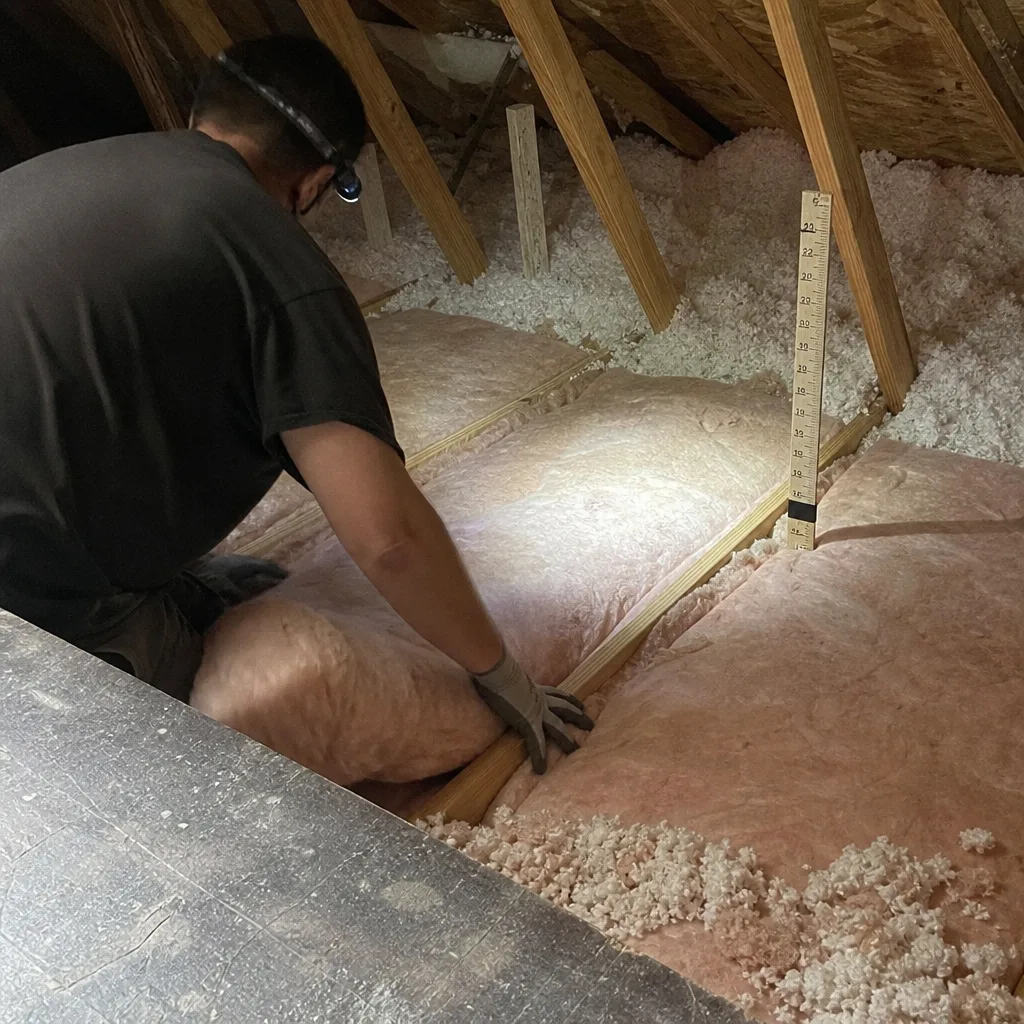
- Disconnected attic zones over bonus rooms and vaulted wings. Lost Creek’s custom homes with multi-pitch rooflines create attic spaces that are hard to reach and easy to skip. The blower hose won’t find its own way there - a tech has to crawl the ridge, cut access if needed, and verify coverage with a probe. We check every zone with a thermal imager before we pack up.
- Builder-era knee walls and rim joists left unsealed. The 1980s through early 2000s builds in Lost Creek were code-minimum jobs, and that meant open bypasses behind kneewalls and at rim joists. Blown-in material dumped on top of these gaps performs at a fraction of its rated R-value because conditioned air is still streaming through the cavity.
- Missing or sagging fiberglass in garage-ceiling assemblies. The three-car garages common in this area often have living space above them, and the floor assembly between garage ceiling and that room is a notorious weak point. Original builders skipped it, or the batts they installed have sagged onto the garage ceiling drywall. We find this on roughly half our Lost Creek initial inspections.
- Post-Uri moisture damage in previously under-insulated cavities. Winter Storm Uri froze pipes in knee walls and rim joists that had no business being that exposed. We’ve pulled wet, compressed insulation from these cavities and found the original air sealing was never done. The insulation replacement is straightforward; documenting the full thermal bypass pattern so it doesn’t happen again is the actual job.
Pricing for Blown-In Insulation in Lost Creek, TX
Here’s what blown-in work costs in this market, based on jobs we’ve completed in Lost Creek over the past three years:
| Service | Typical Range | What Drives the Price |
|---|---|---|
| Blown-in cellulose, full attic (air seal + insulate) | $4,800-$9,500 | Attic square footage, number of disconnected zones, accessibility |
| Blown-in fiberglass top-up | $1,800-$4,200 | Existing depth, target R-value, attic condition |
| Dense-pack wall/ceiling cavity | $3.50-$5.50/sq ft | Cavity depth, access method, material type |
| Attic air sealing (standalone) | $1,200-$2,800 | Blower-door starting CFM50, number of penetrations |
| Blower-door test with written report | $350-$500 | Home size, number of HVAC zones |
Every price is written before any work starts - Haven Standard Clause 1. No exceptions. We also offer a Free Second Opinion on any written estimate from another contractor; bring us their scope and we’ll read it with you. Call (737) 259-8352 to schedule.
We Also Serve Cities Near Lost Creek
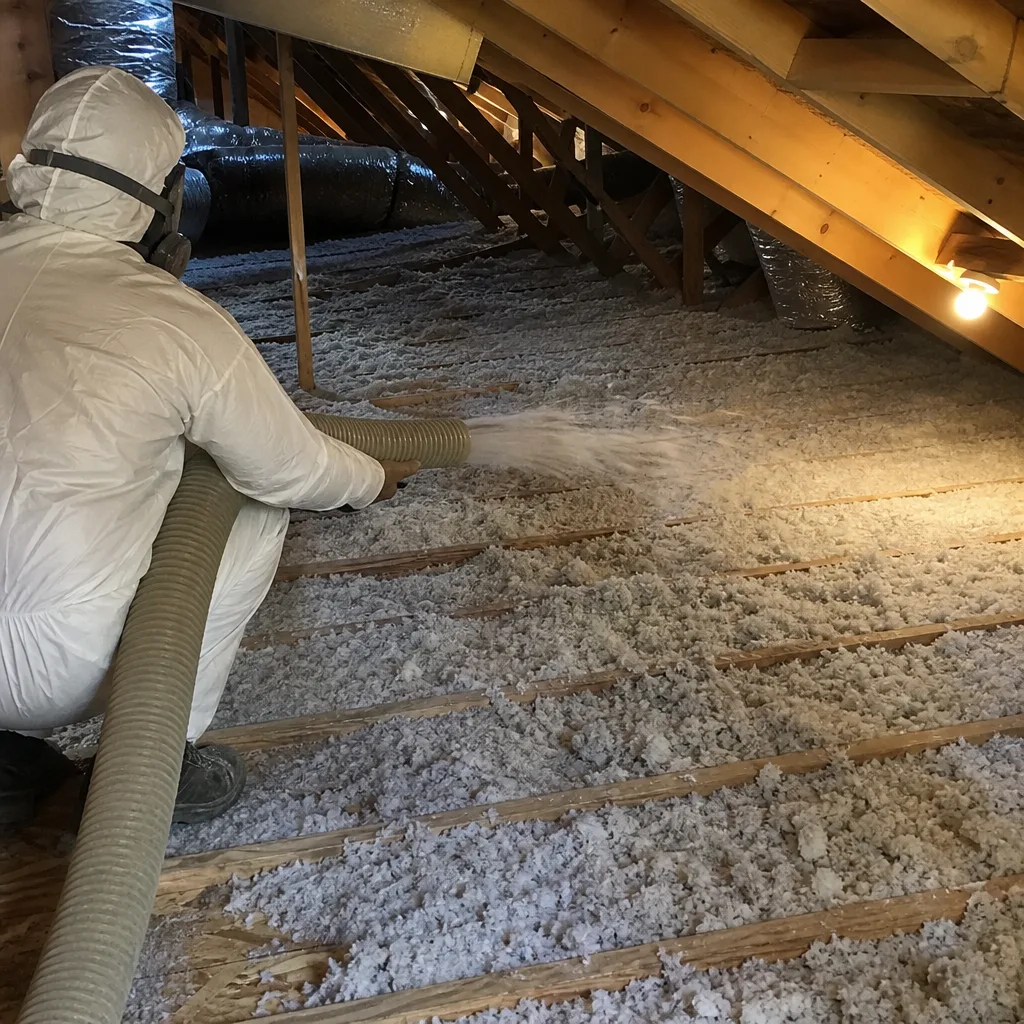
Our crews run regular routes through Lost Creek and the surrounding communities: Pflugerville, Wells Branch, Round Rock, and Hutto. Scheduling is coordinated from our Dallas-Fort Worth office, with local crews carrying stock for the common retrofit patterns we see in each area. If you’re on the border between service zones, call and we’ll confirm availability - we don’t book trips we can’t keep.
Serving Lost Creek, TX - Our Local Coverage Area
We’re based in the Lost Creek area and know this community well. Use the map below to see our service coverage - if you’re nearby, we can almost certainly help.
FAQs - Blown-In Insulation in Lost Creek
Lost Creek sits on the Edwards Plateau transition, so Hill Country cold fronts hit these attics harder than neighborhoods closer to downtown - but the real difference is the housing stock. These 1980s-2000s custom builds were blown to bare code minimums, and Winter Storm Uri exposed how under-insulated their knee walls and rim joists were. That means blown-in work here is almost always a retrofit-plus-air-seal job, not a simple top-off. Call (737) 259-8352 and we’ll walk through your specific bypass pattern - estimates are free.
It will if the problem is missing or inadequate insulation in the floor assembly between garage ceiling and living space above. We find this skipped entirely on roughly half our Lost Creek inspections. We dense-pack the cavity with cellulose at 3.5 pounds per cubic foot, seal the rim joists, and verify with a thermal imager. The room should track with the rest of the house after that. If the issue is ductwork or HVAC sizing, we’ll tell you before we quote - we don’t sell insulation for problems insulation won’t solve.
It helps significantly when paired with air sealing. The pipe failures during Uri happened in unconditioned cavities - knee walls, rim joists, garage-ceiling assemblies - where cold air could move freely around plumbing. Blown-in material alone won’t stop air movement; sealing the bypasses first, then insulating, creates a conditioned buffer that protects pipes. We document the before-and-after blower-door numbers so you can see the reduction in air leakage. For homes with a history of freeze damage, we also flag any remaining plumbing in unconditioned spaces that may need rerouting.
Yes, though these zones require more labor than a standard flat attic. Multi-pitch rooflines create disconnected cavities that the blower hose won’t reach without hand-crawling, cutting access, or using specialized extension equipment. We probe every cavity to verify fill density, and we use a thermal imager to confirm no voids. These sections add to the overall job cost - typically 15 to 25 percent above a standard attic of the same square footage - but they’re often the zones that matter most for comfort in the rooms below.
We typically use GreenFiber recycled-content cellulose for full attic retrofits and dense-pack wall work, CertainTeed blown fiberglass for top-ups where appropriate, and Icynene open-cell spray foam for hybrid applications in complex roof assemblies. The specific material depends on your home’s thermal bypass pattern, moisture history, and access constraints - we don’t default to one product for every job. You see the bags and the spec sheets before installation starts, and the material choice is noted in your written scope.
Ready to get a written price before any work starts? Call (737) 259-8352. A live person answers, 24/7. We’ll schedule a blower-door assessment, document what we find, and give you flat pricing with a written warranty - Haven Standard, every time.
Written by Wes Okafor, Owner at Topside Attic Insulation Pflugerville, serving Lost Creek and the greater Austin metro since 2016.