
Last updated September 24, 2026
The Complete Guide to Insulation in Pflugerville
A standard Pflugerville attic in July reaches 155°F - 55 degrees hotter than the design limit of most fiberglass batt facings - yet the majority of homes in the 78660 zip code still rely on faced batts installed during the original 1990s or 2000s build-out. That temperature gap is not trivia. It’s the reason insulation fails silently here, long before homeowners notice their summer electric bills climbing toward $400. In this guide, we’ll map the actual thermal and air-leakage pathways unique to Pflugerville housing stock, explain why slab-on-grade construction shifts the critical leakage plane to your attic, and show you what to verify before any contractor opens a bag of material. For how to hire a insulation contractor in Pflugerville: a step-by-step guide, see our companion resource.
Quick Answer
Insulation in Pflugerville requires a two-step approach: air sealing first, then insulation rated for Zone 2’s extreme attic temperatures. Most pre-2015 homes in Pflugerville have R-19 to R-30 attic insulation where the 2021 IECC adopted by Travis and Williamson counties now requires R-38 to R-49. The critical failure point is not the insulation material itself but the unsealed attic floor - top plates, can lights, and duct penetrations that allow 155°F air to mix with conditioned space below.
Table of Contents
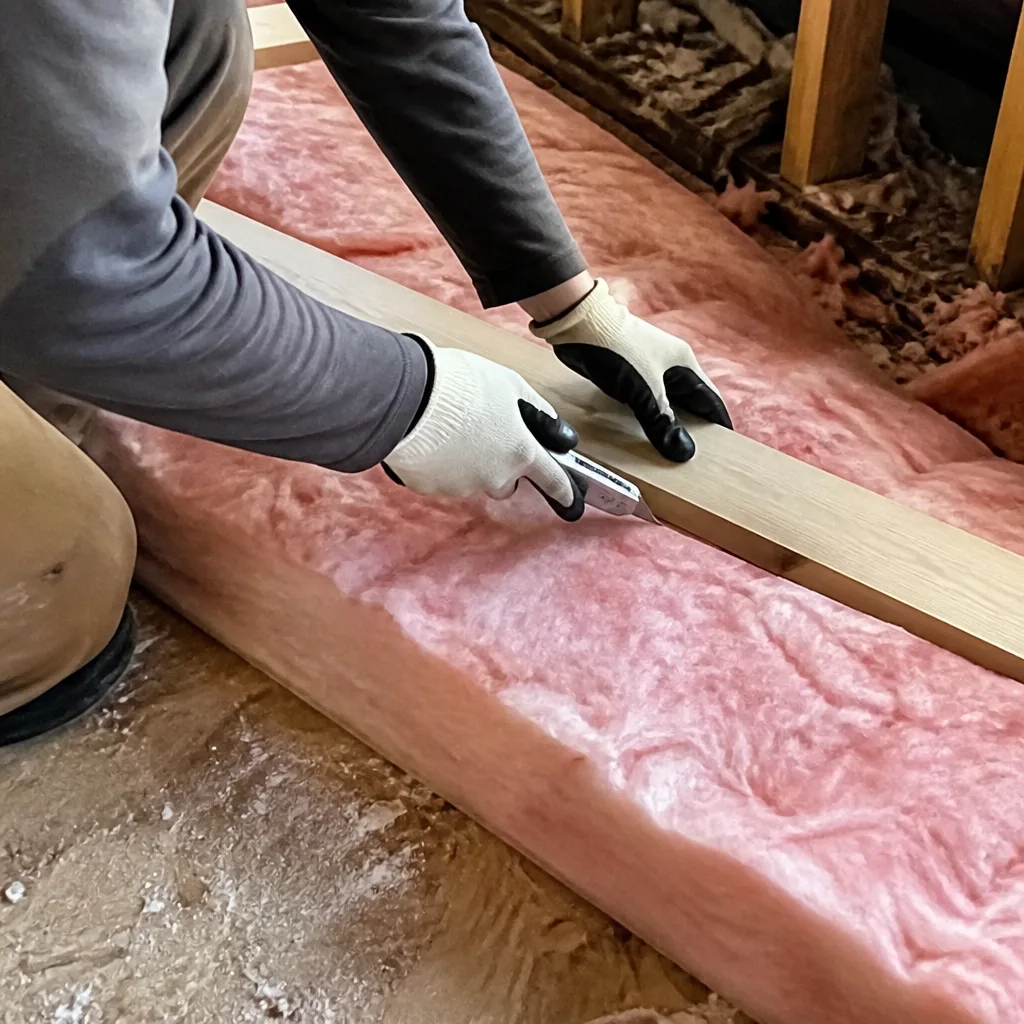
- Why Pflugerville Attics Fail Differently Than the Rest of Texas
- How Slab-on-Grade Construction Shifts Your Air-Leakage Plane
- 2021 IECC R-Value Requirements vs. What Pflugerville Homes Actually Have
- Blower-Door Numbers vs. R-Value: Why You Need Both
- Material-by-Material Comparison for Pflugerville’s Climate Zone 2
- Bastrop County Clay Soils, Duct Condensation, and Insulation Near HVAC
- What to Expect From a Proper Insulation Job in Pflugerville
- Insulation Cost Ranges in Pflugerville
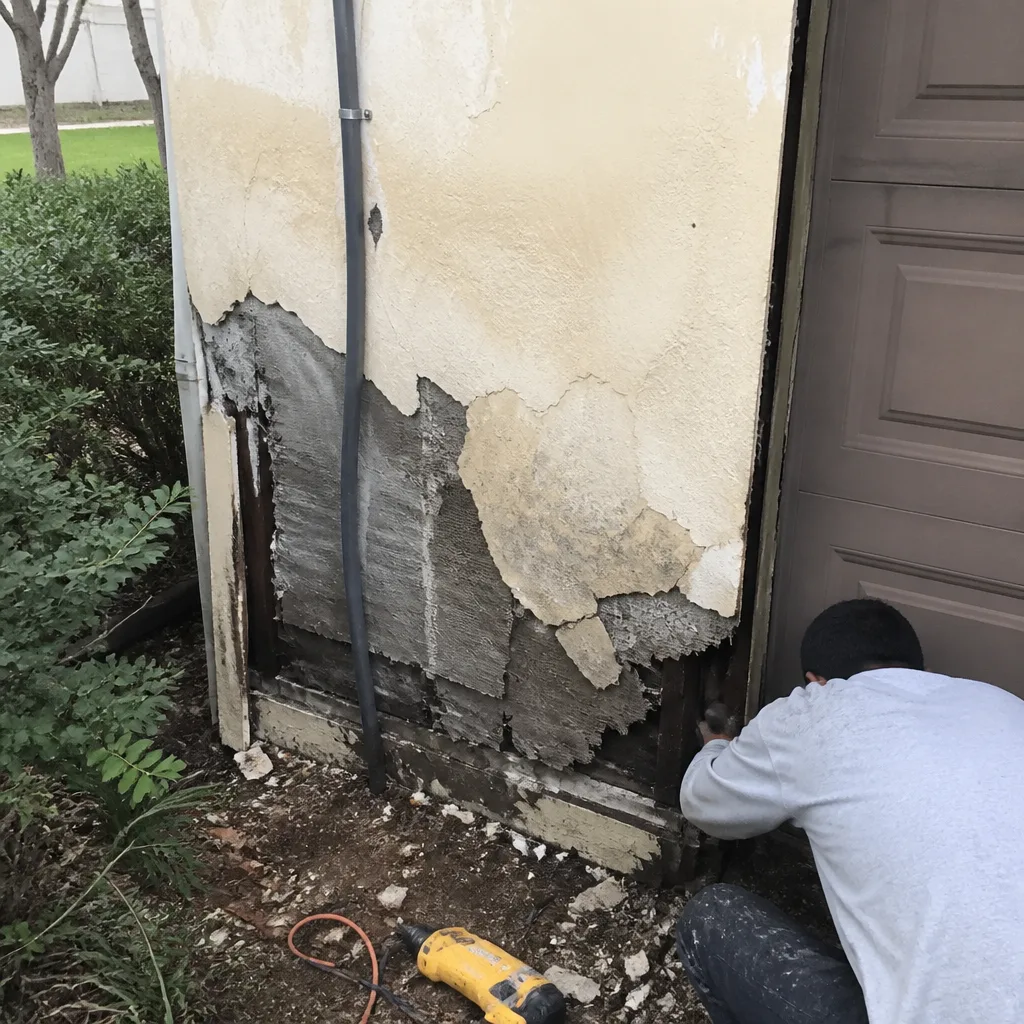 Before
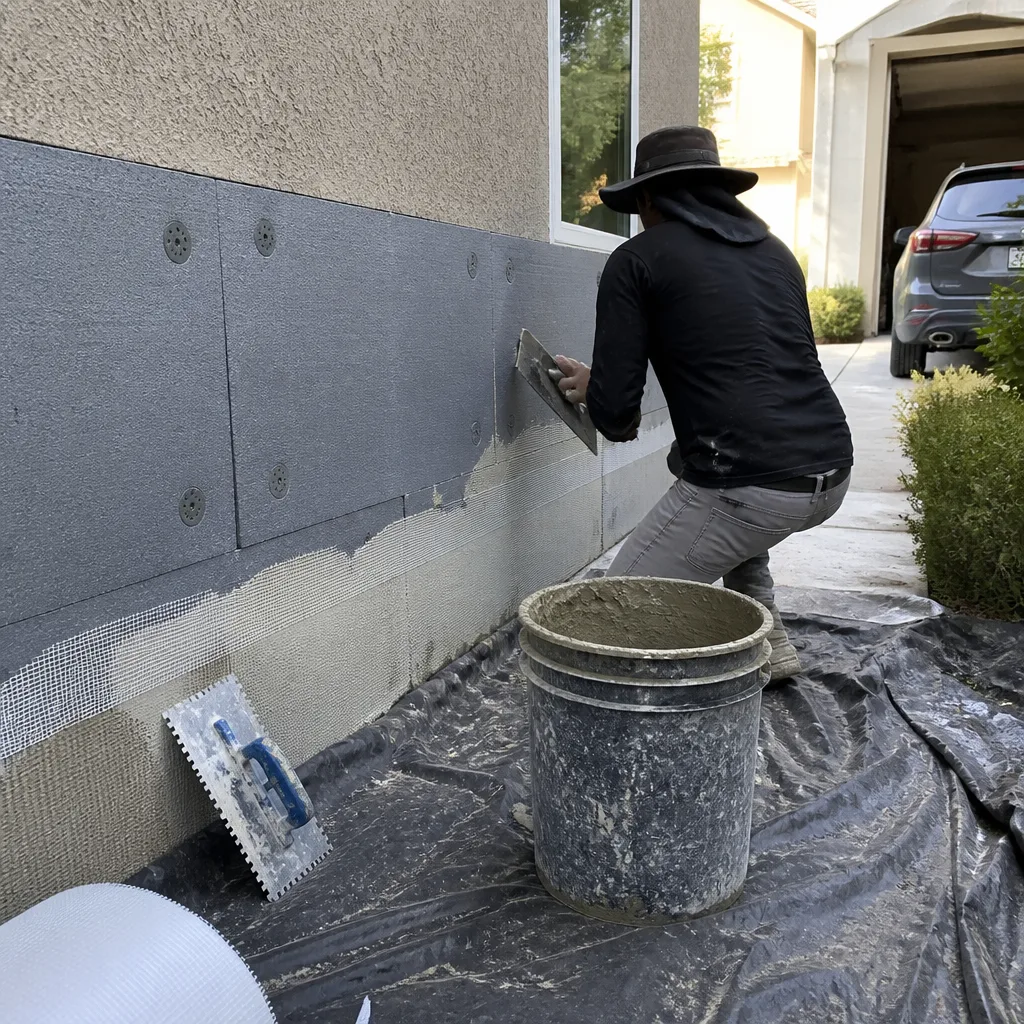 After
AfterWhy Pflugerville Attics Fail Differently Than the Rest of Texas
Pflugerville sits at the intersection of two problems that compound each other: Central Texas solar load and post-1990s construction speed. The 78660 zip code and surrounding areas like Windermere, Heatherwilde, and Falcon Pointe saw rapid build-out during the 1990s and 2000s, when energy codes were weaker and blower-door testing was not required for residential construction.
Here’s what that means in practice. A home built in 2004 in Falcon Pointe likely has:
- Faced fiberglass batts, R-19 to R-30, with the kraft paper facing installed toward the conditioned space
- Unsealed top plates where interior walls meet the attic floor
- Non-IC-rated can lights poking through the ceiling, creating direct air passages
- Flex duct runs resting directly on the insulation, with no burial or protection from radiant heat
The kraft paper facing on those batts is rated for 100°F. At 155°F attic temperature, the adhesive degrades, the facing delaminates, and the batt sags away from the ceiling deck. We’ve pulled batts in Pflugerville attics where the facing had turned to dust and the fiberglass had settled into a thin layer at the bottom of the joist cavity, providing perhaps R-10 where R-30 was intended.
The second compounding factor is Pflugerville’s position in Climate Zone 2. The IECC defines this zone by heating and cooling degree days, but the practical reality is simpler: cooling dominates, and the attic is the hottest surface on the house for six months of the year. Insulation strategies optimized for mixed climates or heating-dominated zones simply don’t apply here. A Minnesota contractor’s recommendation for dense-pack cellulose in walls makes sense in Minneapolis. In Pflugerville, the attic is the battlefield.
Neighborhoods like Blackhawk and Carmel Creek, built in the 2010s with slightly better code compliance, still show the same pattern: better R-value on paper, but the same unsealed penetrations. The insulation performs to spec only in a lab. In the field, conditioned air leaks out faster than the insulation can slow it.
How Slab-on-Grade Construction Shifts Your Air-Leakage Plane
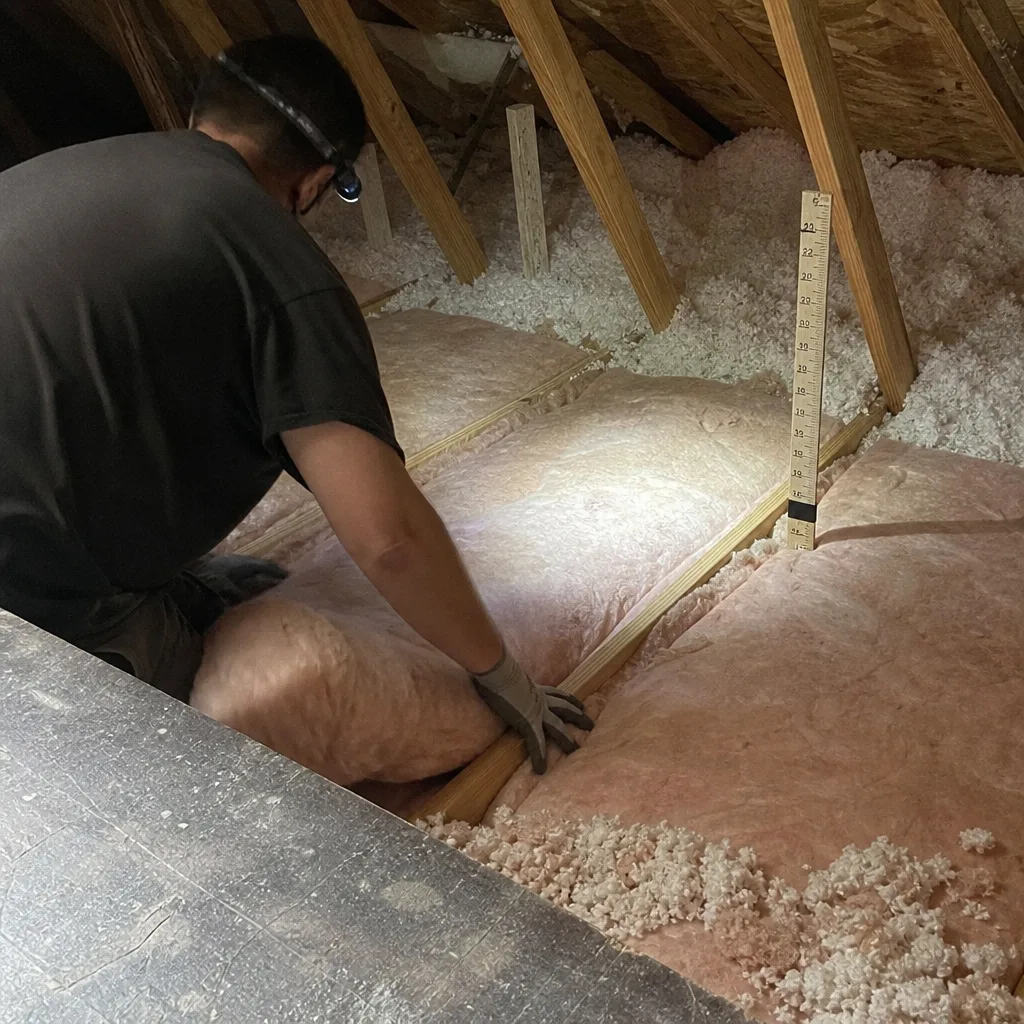
Nearly all Pflugerville homes are built on slab-on-grade foundations. There’s no crawlspace, no basement, no rim joist band where the sill plate meets the foundation wall. In climates with basements or crawlspaces, the rim joist is often the largest single air leak in the house. Contractors there spend hours sealing it with rigid foam and caulk.
In Pflugerville, that leakage plane simply doesn’t exist. The concrete slab is poured directly on compacted Bastrop County clay, and the exterior walls sit on that slab. Air cannot leak downward through a solid concrete floor. This seems like an advantage, and it is - but it concentrates all the pressure on the attic.
Here’s the building science: warm air rises, and in a house under negative pressure (exhaust fans, duct leakage, stack effect), replacement air enters wherever the envelope is weakest. With no basement or crawlspace path, every cubic foot of air that leaves through attic leaks must be replaced by air pulled in through windows, doors, and wall penetrations on the main floor. In summer, that means 95°F outdoor air enters the living space while 155°F attic air pushes down through recessed lights and top plate gaps.
The critical sealing points in a Pflugerville attic are:
- Top plates - the horizontal framing member where every interior wall meets the ceiling. In platform framing, this is a continuous linear gap, often 1/16 to 1/8 inch, running the full perimeter of every room. Multiply by the linear footage of walls in a 2,400 square foot home, and you have the equivalent of a 2-square-foot hole open to the attic.
- Can light penetrations - non-IC-rated housings are open to the attic on all sides. Even IC-rated LEDs often have gaps around the trim ring where air moves freely.
- Duct boots and HVAC penetrations - the sheet metal boot that transitions from flex duct to ceiling grille is rarely sealed to the drywall. In Pflugerville’s heat, the temperature differential across this gap drives constant air movement.
- Plumbing and electrical penetrations - vent stacks, wiring holes, and chimney chases create irregular openings that batt insulation cannot seal.
- Attic access hatch or pull-down stair - often the largest single leak, unsealed and uninsulated in most Pflugerville homes.
We’ve blower-door tested homes in Windermere where the attic access stair alone accounted for 400 CFM50 - roughly 10% of the total building leakage. Sealing that one component before adding insulation is the difference between a job that shows measurable results and one that doesn’t.
Attic Insulation in Pflugerville must address this sealing priority, or the R-value added is partially wasted.
2021 IECC R-Value Requirements vs. What Pflugerville Homes Actually Have
Travis County and Williamson County both adopted the 2021 International Energy Conservation Code with amendments. For Climate Zone 2, the prescriptive requirements for wood-framed attic insulation are R-38 for new construction and R-49 for the total R-value when using continuous insulation or alternative compliance paths. The 2021 IECC also requires blower-door testing for new homes, with a maximum leakage rate of 3.0 ACH50 in the ERI path or 5.0 ACH50 in the prescriptive path.
Most Pflugerville homes built before 2015 were constructed under the 2009 or 2012 IECC, which required R-30 in attics and did not mandate blower-door testing. The practical result: a 2007 home in Heatherwilde likely has R-19 to R-30 batts, poorly installed, with no air-sealing verification.
The gap is not just the R-value number. It’s the combination of insufficient insulation and uncontrolled air leakage. A home at 8.0 ACH50 (common in pre-2015 Pflugerville stock) with R-30 batts will underperform a home at 3.0 ACH50 with R-38, even though the second home has only 27% more insulation. The air leakage overwhelms the thermal resistance.
For homeowners considering upgrades, the relevant comparison is not code minimum to code minimum. It’s existing condition to achievable condition. In our experience across Pflugerville neighborhoods from Old Town to Avalon, a typical upgrade path looks like this. See our insulation cost breakdown: the Pflugerville homeowner’s reference for 2026 for detailed pricing.
| Component | Typical Existing | Achievable After Proper Work |
|---|---|---|
| Attic insulation | R-19 to R-30, settled batts | R-38 to R-49 blown fiberglass or R-20+ spray foam on roof deck |
| Air leakage (ACH50) | 6.0 to 10.0 | 3.0 to 5.0 |
| Duct leakage to outside | 15% to 25% of airflow | Under 10% with sealing and proper burial |
| Attic access | Unsealed, uninsulated | Sealed, insulated, weatherstripped |
The 2021 IECC’s R-49 target is achievable with 14 to 16 inches of blown fiberglass or cellulose over a properly sealed attic floor. For homes with complex attic geometry or significant storage needs, Spray Foam Insulation in Pflugerville applied to the roof deck creates a conditioned attic with different tradeoffs.
Blower-Door Numbers vs. R-Value: Why You Need Both
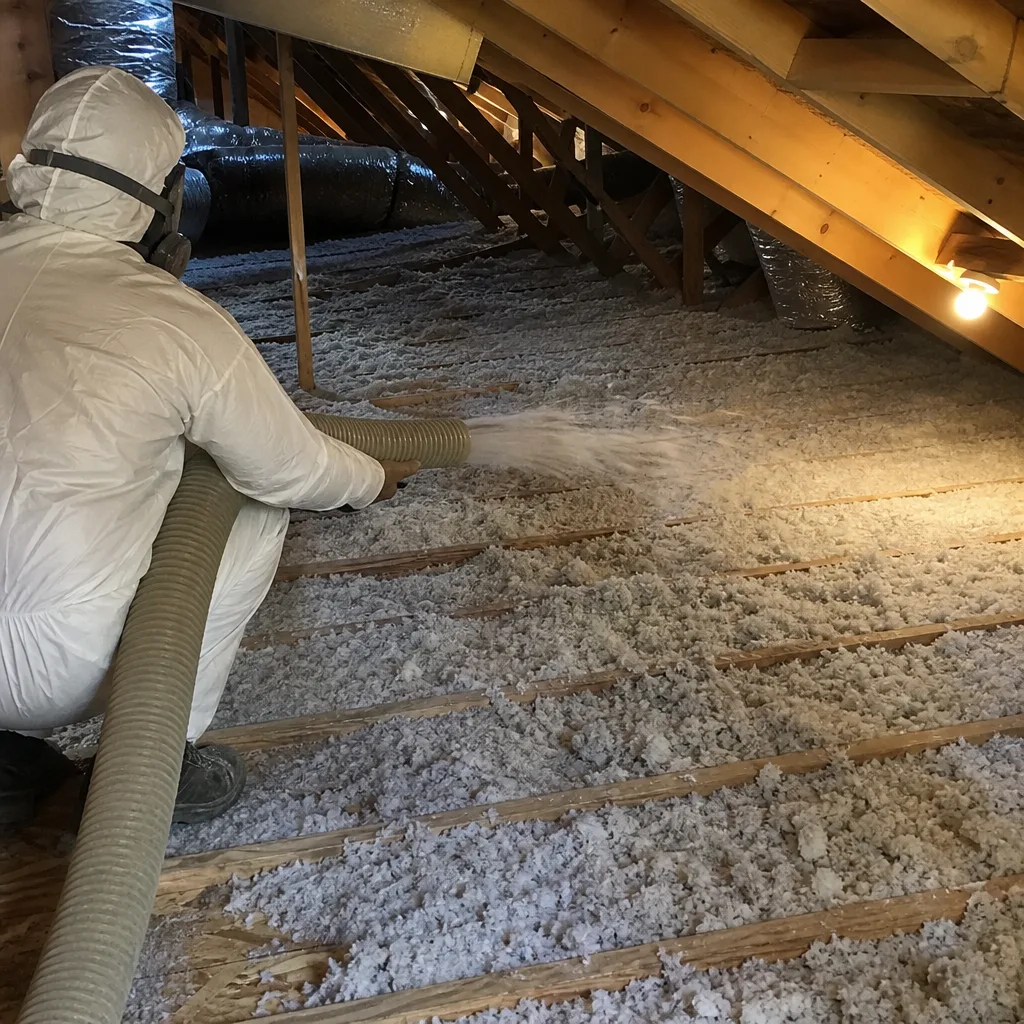
Homeowners researching insulation in Pflugerville encounter two numbers that are often presented as alternatives. They are not alternatives. They measure different things, and both must improve for the job to succeed.
R-value measures thermal resistance - how effectively a material slows heat transfer through conduction. A higher R-value means slower heat movement through the insulation layer. R-38 fiberglass resists heat flow better than R-19 fiberglass. This is straightforward and widely understood.
ACH50, or air changes per hour at 50 pascals of pressure, measures how much air leaks through the entire building envelope under standardized test conditions. A blower-door test - a pressurization reading that shows, in one number, how much air your building envelope is losing - depressurizes the house to 50 pascals and measures the cubic feet per minute of air leakage required to maintain that pressure. That CFM50 number is converted to ACH50 by dividing by the house volume.
The critical distinction: R-value addresses conductive heat gain through the ceiling assembly. ACH50 addresses convective heat gain - hot attic air physically moving into conditioned space through gaps. In Pflugerville’s 155°F attics, convective heat gain often exceeds conductive heat gain in homes with unsealed attics. You can have R-60 insulation and still feel uncomfortable if 140°F air is pouring through your can lights.
We’ve documented this repeatedly in Pflugerville homes. A 2012 home in Blackhawk tested at 7.2 ACH50 with R-30 batts. After air sealing alone - no insulation upgrade - the ACH50 dropped to 4.1. The homeowner reported the house felt cooler at the same thermostat setting. The R-value hadn’t changed, but the convective load had dropped dramatically. When we then added blown fiberglass to reach R-49, the combined effect produced utility bill reductions of 23% compared to the prior summer.
Any contractor who quotes insulation without quoting a target ACH50 improvement is selling you half a solution. Under Haven Standard: Have it in writing, we provide before-and-after blower-door numbers on every applicable job so the homeowner can verify the air-sealing result. The written scope specifies both the R-value target and the ACH50 target before any work starts.
Material-by-Material Comparison for Pflugerville’s Climate Zone 2
Pflugerville’s attic conditions - sustained 140°F to 155°F from May through September - impose real constraints on insulation material selection. Below is a comparison of the three primary options for attic application, with specific notes on performance in this climate.
Blown Fiberglass (Loose-Fill)
Blown fiberglass, typically installed from Owens Corning AttiCat or Johns Manville Climate Pro systems, is the most common upgrade in Pflugerville. It fills irregular joist cavities and covers top plates completely when installed to proper depth.
- R-value per inch: 2.2 to 2.5, depending on density and product
- Depth for R-38: 15 to 17 inches
- Performance in 155°F attics: Good. Glass fibers do not degrade at these temperatures. The primary failure mode is wind washing - air movement through the loose fibers reducing effective R-value. This is why air sealing must precede installation.
- Cost range in Pflugerville: Most attic jobs in a home 1,800 to 2,400 square feet run between $2,800 and $4,500 for air sealing plus blown fiberglass to R-38 or R-49.
- Best for: Homes with accessible attics, straightforward geometry, and no HVAC equipment in the attic that requires access.
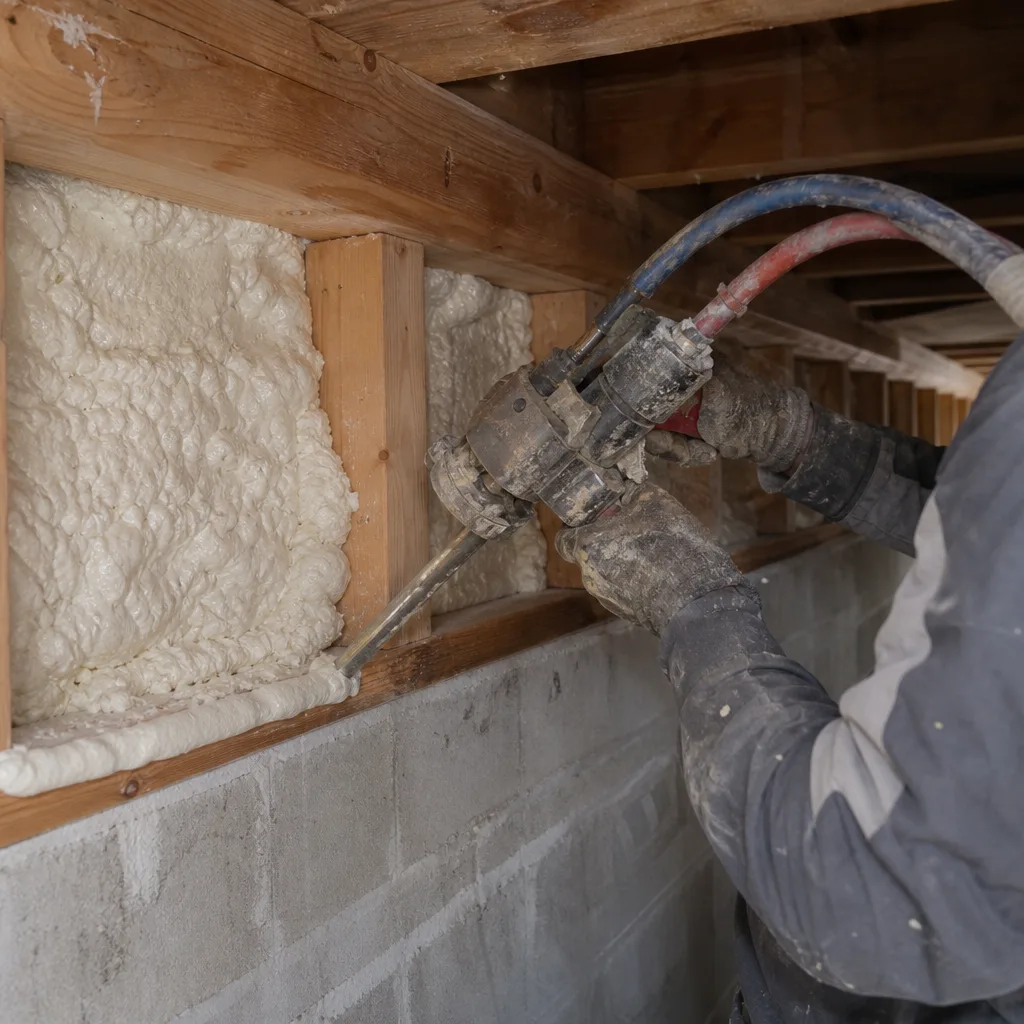
Open-Cell Spray Foam (Icynene, Demilec, half-pound density)
Open-cell spray foam expands to approximately 100 times its liquid volume, creating a soft, flexible insulation that adheres to roof decks and attic floors.
- R-value per inch: 3.6 to 3.8
- Depth for R-38: 10 to 11 inches on a roof deck
- Performance in 155°F attics: Excellent thermal performance, but with a critical caveat. Open-cell is vapor-permeable. In Pflugerville’s cooling-dominated climate, this means attic moisture can reach the roof deck. If the roof deck is not allowed to dry outward (as with some reflective roof systems), moisture accumulation is possible. We specify open-cell only with appropriate hygrothermal analysis.
- Cost range in Pflugerville: Most open-cell roof deck jobs run between $5,500 and $9,000 for a typical home, depending on attic square footage and access difficulty.
- Best for: Conditioned attics with HVAC equipment that needs protection from extreme temperatures; complex geometries where blown fill is impractical.
Closed-Cell Spray Foam (Two-pound density)
Closed-cell foam is denser, harder, and vapor-impermeable. It adds structural rigidity and provides the highest R-value per inch of any common insulation.
- R-value per inch: 6.0 to 7.0
- Depth for R-38: 5.5 to 6.5 inches
- Performance in 155°F attics: Excellent, with the vapor-impermeable characteristic that can be advantageous or problematic depending on assembly design. In Pflugerville, we most often use closed-cell for specific applications: sealing and insulating the attic floor (rather than roof deck) in homes with limited headroom, or as a flash-and-batt system combining 2 inches of closed-cell with fiberglass batts.
- Cost range in Pflugerville: Closed-cell runs roughly 40% to 60% more per board foot than open-cell. A full attic job typically falls between $8,000 and $14,000.
- Best for: Limited clearance applications; flash-and-batt systems; situations where vapor control is specifically required.
Material Selection Summary
For most Pflugerville homeowners with standard vented attics, blown fiberglass to R-38 or R-49 over a comprehensively sealed attic floor provides the best return on investment. The material cost is lower, the installation is faster, and the performance improvement is verifiable with blower-door testing. Spray foam becomes the better choice when the attic contains HVAC equipment that needs temperature protection, or when the homeowner intends to use the attic for storage and wants a conditioned space. Unsure which route fits your situation? Read our DIY vs professional insulation: the Pflugerville homeowner’s decision guide.
We source blown fiberglass from Owens Corning, Johns Manville, and Knauf depending on availability and specific job requirements. No proprietary lock-in means we select the material that fits the application, not a franchise-mandated product.
Bastrop County Clay Soils, Duct Condensation, and Insulation Near HVAC
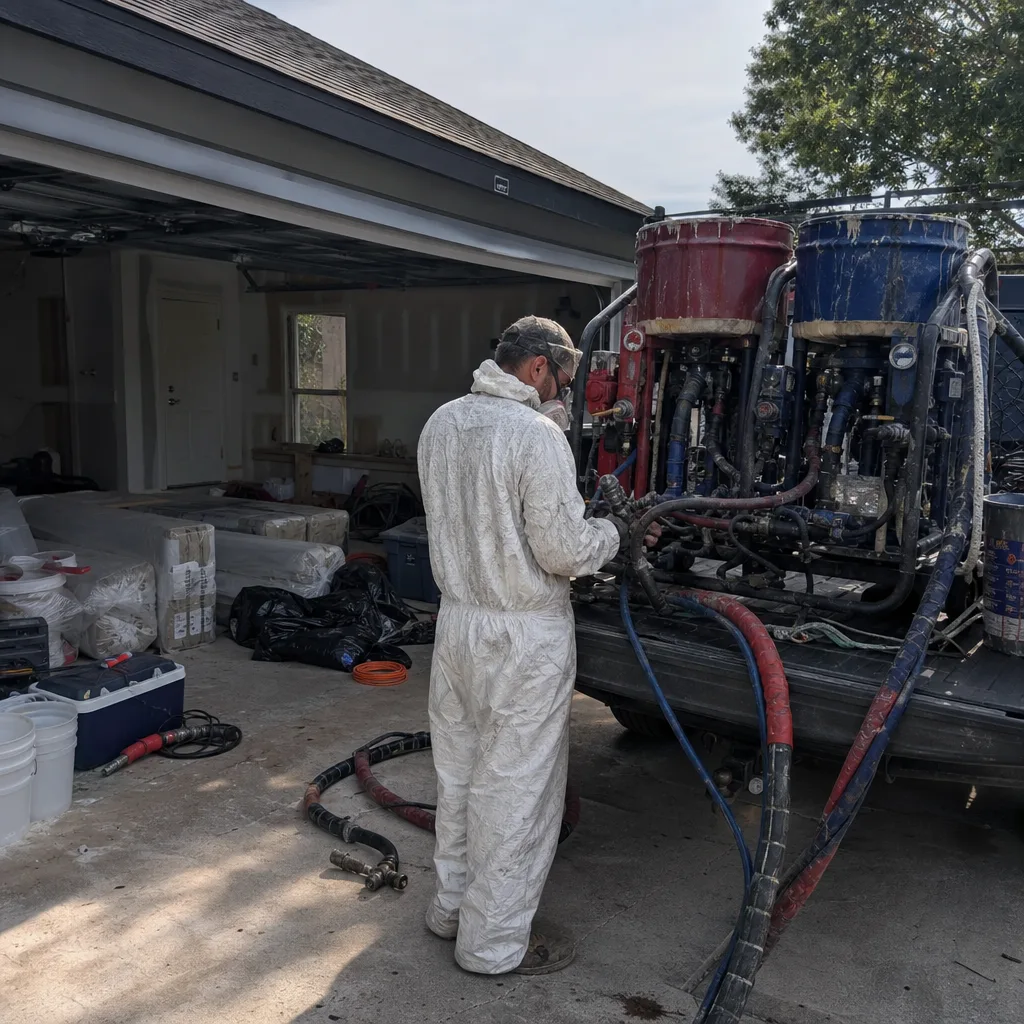
Pflugerville’s soil is predominantly Bastrop County clay - expansive, moisture-retentive, and thermally massive. This matters for insulation strategy because of where the HVAC equipment lives. In slab-on-grade homes, the air handler and ductwork are almost always in the attic, suspended above that clay soil but exposed to its indirect effects.
The clay soil holds moisture. During spring and fall, when outdoor temperatures swing widely, the slab edge remains cooler than the air for longer periods. Condensation forms on duct surfaces that pass near the slab perimeter or through soffits. In summer, the opposite occurs: the slab warms slowly, but the attic reaches 155°F while the ducts carry 55°F air. The temperature differential across thin duct insulation - typically R-4 or R-6 flex duct in Pflugerville homes - drives moisture accumulation on the exterior duct surface.
We’ve opened attics in Heatherwilde and Windermere where flex duct outer jackets had degraded from years of condensation cycling. The fiberglass duct liner was wet, compressed, and mold-stained. The homeowner’s complaint was “the house won’t cool below 78°F.” The actual problem was duct leakage and insulation failure, not the air conditioner capacity.
The insulation implications are specific:
- Duct burial - burying flex ducts in blown attic insulation raises the effective R-value around the duct from R-6 to approximately R-19 to R-25, depending on burial depth. This reduces the surface temperature differential that drives condensation.
- Duct sealing before burial - any leakage into the duct jacket becomes trapped moisture when buried. We seal all duct connections with mastic and test with a duct blaster before burial.
- Air handler platform sealing - the return air platform is often a major leak. We seal the platform to the ceiling drywall and insulate the platform itself, not just the ducts.
- Vapor barrier orientation - in cooling-dominated climates, the vapor barrier (if any) belongs on the exterior of the insulation, toward the attic, not toward the duct. This is counterintuitive for contractors trained in heating-dominated climates and is frequently done wrong in Pflugerville retrofits.
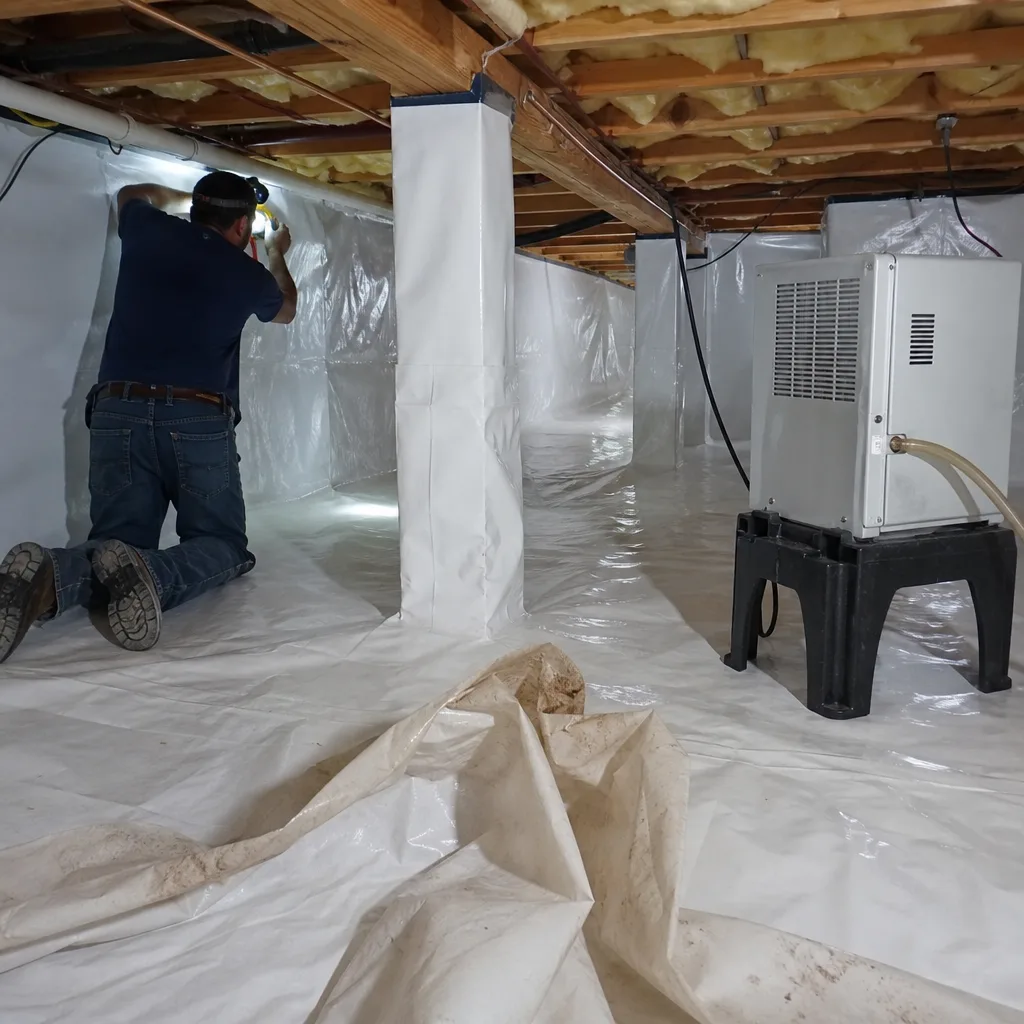
Homes with significant duct moisture issues may also benefit from Crawl Space Encapsulation & Vapor Barrier in Pflugerville if they have any below-grade or split-level construction, though this is less common in standard slab-on-grade Pflugerville stock.
What to Expect From a Proper Insulation Job in Pflugerville
A proper insulation job in Pflugerville follows a sequence that reflects the building science we’ve described. Under Haven Standard: Have it in writing, every job begins with a written price and ends with a documented record. Here is what that looks like in practice.
Step 1: Assessment and Blower-Door Test
We test before we quote. The blower-door test establishes the baseline ACH50 and helps us locate the largest leaks with a smoke pencil or infrared camera. In Pflugerville’s heat, we schedule these tests for morning hours when attic temperatures allow safe access. The homeowner receives the baseline number in writing.
Step 2: Written Scope and Price
Before any work starts, the homeowner receives:
- A written scope specifying every sealing point to be addressed
- The target R-value and material specification
- The target ACH50 improvement
- A flat price with no per-hour variables
- The 365-Day Done Right Promise in writing
This is Haven Standard Clause 1: flat price, written scope, written warranty before anyone lifts a tool.
Step 3: Air Sealing
Sealing comes first, always. We seal top plates with caulk or foam, box out can lights with fire-rated covers, seal duct boots and penetrations, and install a weatherstripped, insulated attic access cover. This phase typically takes one day for a 2,400 square foot home.
Step 4: Insulation Installation
Blown fiberglass is installed to specified depth with depth markers visible for verification. Spray foam is installed to specified thickness with core samples taken for density verification. We photograph the completed installation from multiple angles.
Step 5: Post-Work Blower-Door Test and Documentation
After completion, we run the blower-door test again. The homeowner receives:
- Before-and-after blower-door readings (CFM50 and ACH50)
- A Documented Photo Record of the completed work
- A written warranty and the 365-Day Done Right Promise
Since 2016, we’ve completed this sequence on 9,000+ homes. Every one had a written price before work started and a documented record when the crew left.
Insulation Cost Ranges in Pflugerville
Pricing insulation without seeing the attic is imprecise, but homeowners researching contractors deserve useful numbers. Below are the ranges we most commonly see for Pflugerville homes, based on 1,800 to 2,800 square feet of conditioned floor area. These include air sealing as a prerequisite, not an add-on.
| Service | Typical Range | What Drives the Variation |
|---|---|---|
| Attic air sealing + blown fiberglass to R-38 | $2,800 - $4,500 | Attic accessibility, amount of existing insulation to remove, number of can lights and penetrations |
| Attic air sealing + blown fiberglass to R-49 | $3,500 - $5,500 | Same factors plus additional material depth |
| Insulation removal + replacement with air sealing | $4,500 - $7,500 | Volume of material to remove, presence of rodent contamination, disposal fees |
| Open-cell spray foam on roof deck (conditioned attic) | $5,500 - $9,000 | Attic square footage, roof pitch complexity, need for ventilation modification |
| Closed-cell spray foam, flash-and-batt or limited application | $8,000 - $14,000 | Board footage, access difficulty, need for ignition barrier |
| Duct sealing and burial in attic insulation | $1,200 - $2,800 | Linear footage of duct, accessibility, extent of existing damage |
| Attic cleaning and rodent proofing | $1,500 - $3,500 | Extent of contamination, need for sanitizing, number of entry points to seal |
These ranges reflect Pflugerville’s market conditions in 2024-2025, including material costs from Owens Corning, Johns Manville, Knauf, and other suppliers we use. We do not markup proprietary products because we don’t use them.
We also offer a Free Second Opinion on any written estimate. Bring us a competing quote and we will read it with you, line by line, and explain where the scope differs from what we would specify. Browse more guides & resources on Pflugerville insulation, efficiency, and home performance.
Common Mistakes to Avoid
- Adding insulation without air sealing first. This is the most expensive mistake a homeowner can make. Blown fiberglass over an unsealed attic floor simply hides the leaks while conditioned air continues to escape. The insulation performs below its rated R-value due to wind washing, and the homeowner sees minimal bill reduction.
- Trusting an R-value quote without an ACH50 target. A contractor who promises “R-38” but cannot specify the expected air leakage improvement is not selling a performance upgrade. They’re selling material.
- Ignoring the attic access. An unsealed pull-down stair or scuttle hole can leak as much air as a 12-inch square duct. We’ve tested homes where this single component accounted for 15% of total building leakage.
- Installing faced batts in a hot attic. The kraft paper facing degrades in Pflugerville’s 155°F peak temperatures. Unfaced batts or blown fill are appropriate for attic floors; faced products belong in walls where temperatures stay within design limits.
- Burying unsealed ducts in insulation. Duct leakage into the jacket becomes trapped moisture when buried. Always seal with mastic and verify with a duct blaster before burial.
- Choosing spray foam based on R-value alone. Spray foam’s air-sealing capability is valuable, but the hygrothermal performance must match the climate. Open-cell on a roof deck in Pflugerville requires careful analysis of the roof assembly’s drying potential.
- Accepting a verbal estimate. Under Haven Standard, every job gets a written price before work starts. Verbal estimates create scope disputes and surprise charges.
When to Call a Professional
Call a professional when your summer electric bills exceed $350 for a home under 2,500 square feet, when you feel hot spots or drafts from ceiling fixtures, or when your HVAC runs continuously on afternoons above 100°F without reaching the thermostat setpoint. These symptoms in a Pflugerville home typically indicate attic air leakage, insufficient or degraded insulation, or both.
Also call before any major HVAC replacement. A contractor who sizes a new system without addressing the envelope is solving the wrong problem. We’ve seen homeowners in Falcon Pointe and Blackhawk spend $8,000 on undersized or oversized equipment when $4,000 of air sealing and insulation would have solved the comfort issue with the existing unit.
Topside Attic Insulation Pflugerville home offers free estimates in Pflugerville. A live person answers calls 24/7 - no voicemail loops, no callback windows measured in business days. Call (737) 259-8352 to schedule an assessment that includes a blower-door test and written scope.
Frequently Asked Questions
Most attic insulation jobs in Pflugerville, including air sealing as a prerequisite, run between $2,800 and $5,500 for blown fiberglass to R-38 or R-49 in a typical 1,800 to 2,400 square foot home. Spray foam on a roof deck typically ranges from $5,500 to $9,000 for open-cell and $8,000 to $14,000 for closed-cell. Call (737) 259-8352 for a written estimate specific to your home - estimates are free.
Repair is rarely cost-effective for fiberglass batts that have settled, degraded, or been disturbed by rodents. Removing and replacing with new blown fiberglass, combined with comprehensive air sealing, typically delivers better performance per dollar than spot repairs. The exception is recently installed blown fiberglass that has simply settled slightly; this can be topped off at lower cost than full removal.
No - and any contractor who promises same-day installation without a blower-door test is skipping the diagnostic step that determines what actually needs to be done. We test, then quote a written scope and price, then schedule the work. Most jobs are scheduled within 5 to 10 business days of quote acceptance. Call (737) 259-8352 to start the assessment process.
R-value measures how well insulation resists heat moving through it by conduction. A blower-door number, expressed as ACH50 (air changes per hour at 50 pascals), measures how much air leaks through your entire building envelope. In Pflugerville’s 155°F attics, both matter: R-value slows heat gain through the ceiling, while a low ACH50 prevents hot attic air from pouring directly into your living space through gaps. Improving one without the other leaves measurable money on the table.
In Pflugerville’s slab-on-grade homes, the upstairs is typically closer to the unconditioned attic and farther from the thermally massive concrete slab that moderates first-floor temperatures. If the attic floor is unsealed, hot air leaks down through top plates and can lights into the upstairs rooms. If the attic insulation is insufficient or degraded, radiant heat from the roof deck heats the ceiling assembly. Both problems are fixable with proper air sealing and insulation.
Indirectly, yes. Bastrop County clay holds moisture and creates temperature differentials at the slab perimeter that can cause duct condensation. This makes proper duct sealing and burial in attic insulation particularly important. The clay soil itself does not change wall or attic insulation specifications, but it does mean HVAC ductwork in Pflugerville attics needs more attention than in drier, sandier soils.
The Bottom Line
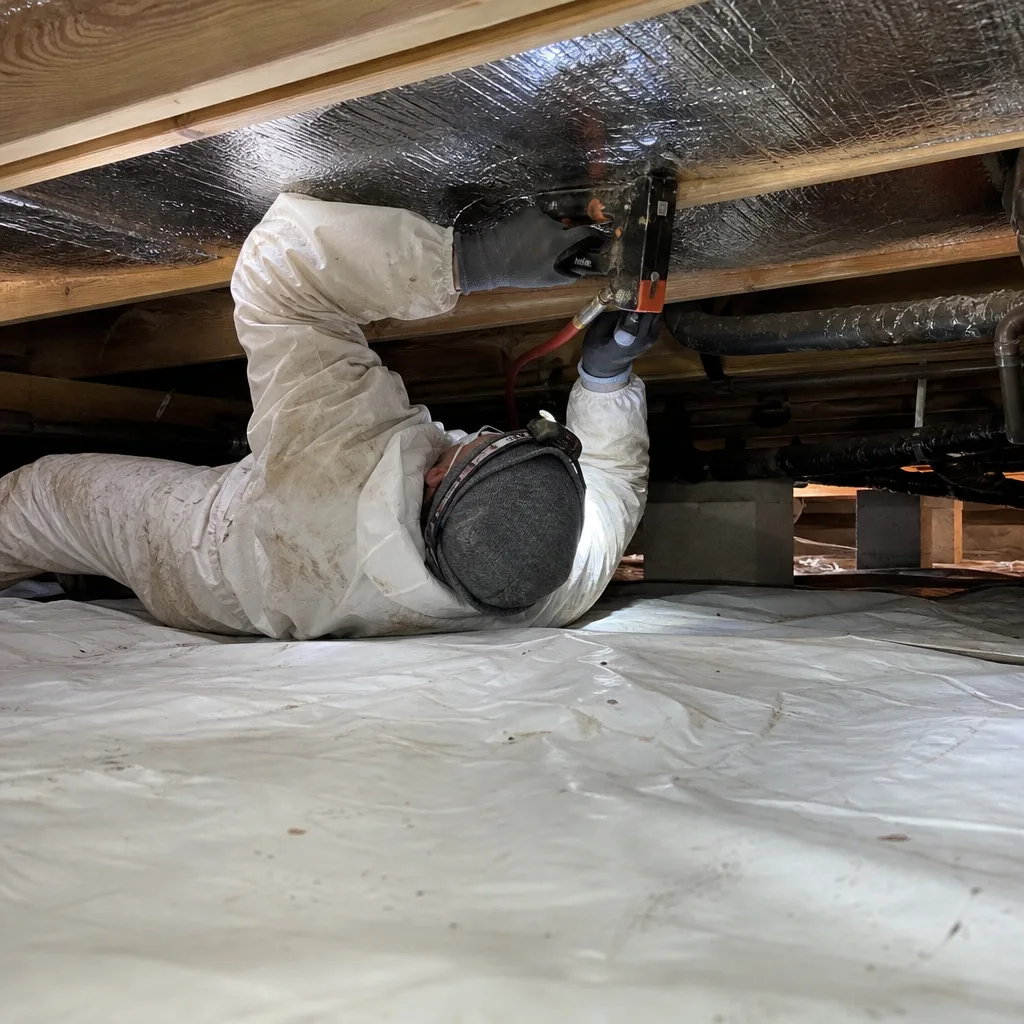
Pflugerville’s combination of slab-on-grade construction, 155°F attic peaks, and rapid 1990s-2000s build-out creates insulation failure modes that generic advice misses. The critical insight: air sealing must precede insulation, and both must be verified with a blower-door test. R-value alone won’t stop hot attic air from leaking through your can lights. ACH50 alone won’t slow conductive heat gain through an underinsulated ceiling. The homes that perform best in Pflugerville’s heat address both, with documented numbers before and after the work.
Since 2016, we’ve treated air sealing as a hard prerequisite, not an upsell. Every job gets a written price before work starts and a Documented Photo Record when the crew leaves. On applicable jobs, the before-and-after blower-door readings show exactly what changed.
Call (737) 259-8352 for a free estimate. A live person answers 24/7.
Written by Wes Okafor, Owner at Topside Attic Insulation Pflugerville, serving Pflugerville since 2016.