
Last updated September 24, 2026
Insulation Warning Signs: A Pflugerville Homeowner’s Reference Guide
A $200 spike in your August electric bill is the most-Googled insulation symptom in Central Texas, but it’s also the least useful one. That same number can come from a degraded attic, a single failed duct connection, a leaking attic hatch, or an HVAC unit running low on refrigerant. In Pflugerville, where summer design temperatures hit 105°F and winter nights occasionally dip below 20°F, the building envelope faces stress that homes in milder climates never see. This guide - alongside our Complete Guide to Insulation in Pflugerville - maps every observable warning sign to its physical cause in the attic or wall cavity, so you know whether you’re looking at a $300 air-seal or a $4,000 full replacement before anyone climbs a ladder.
Quick Answer
The most common insulation warning signs in Pflugerville homes are uneven room temperatures, humidity spikes after the AC cycles off, musty odors from vents, and thermal patterns on ceilings that match the framing layout. Each symptom traces to a specific failure: degraded attic insulation, duct leakage pulling unconditioned air, condensation on cold surfaces, or thermal bridging through under-insulated top plates. A blower-door test - a pressurization reading that shows, in one number, how much air your building envelope is losing - separates insulation problems from HVAC problems in under 90 minutes.
Table of Contents
- Temperature Signs: Hot Rooms, Cold Walls, and What They Mean
- Humidity and Moisture: The Hidden Damage
- Air Quality and Odor Warnings
- Visual Inspection: What Ceilings, Walls, and Attic Hatches Reveal
- HVAC vs. Insulation: Two Measurements Homeowners Can Take
- Pflugerville-Specific Risks: 1995-2008 Construction and Local Climate Stress
- Urgent Signs: When to Act This Week, Not Next Month
- What a Proper Diagnostic Looks Like
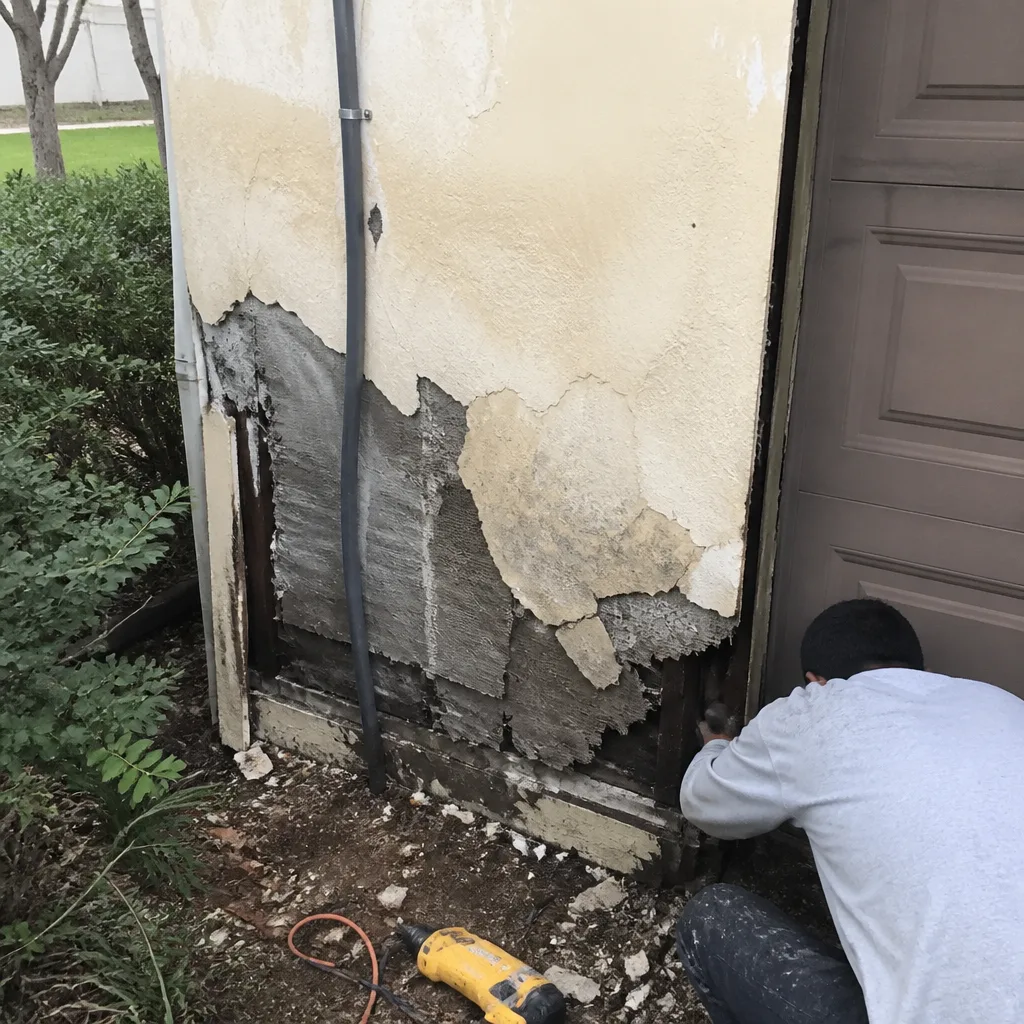 Before
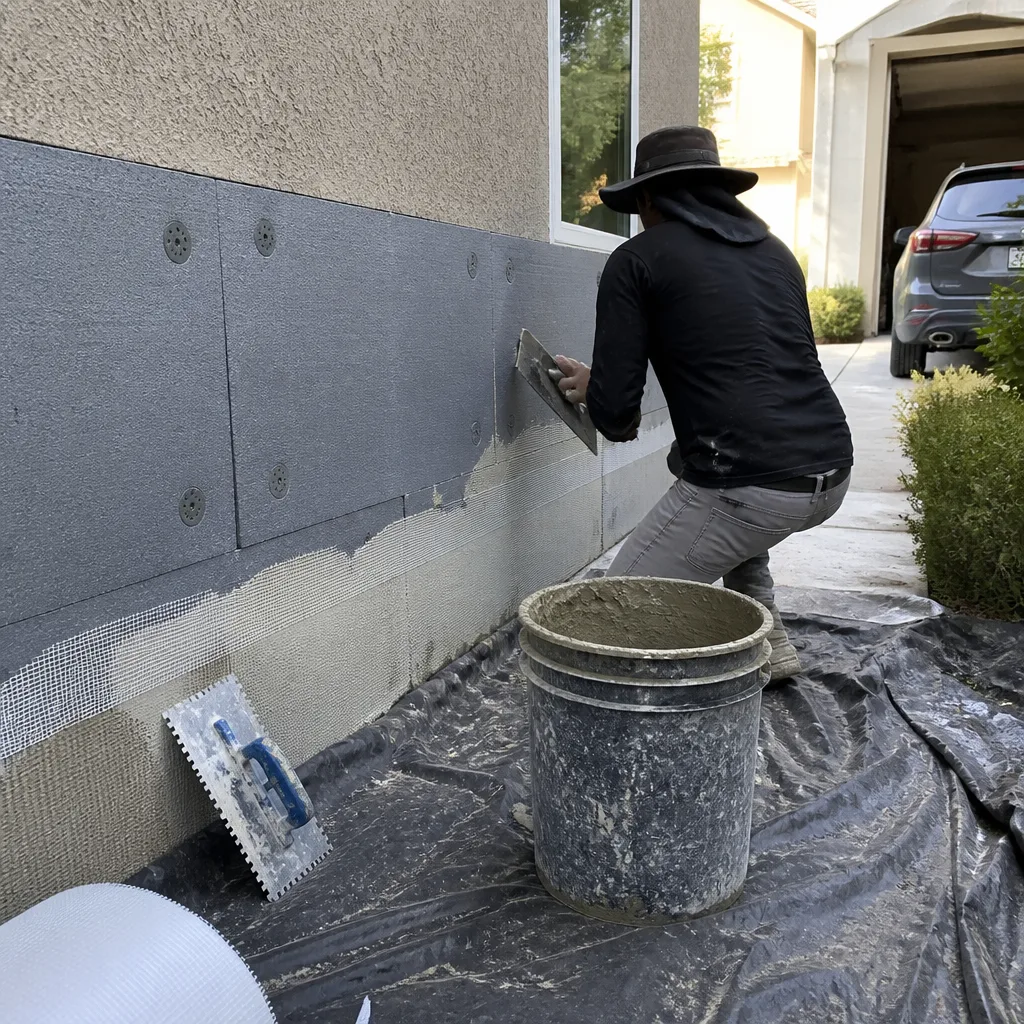 After
AfterTemperature Signs: Hot Rooms, Cold Walls, and What They Mean
Hot second-floor bedrooms in July are the complaint we hear most often from Pflugerville homeowners, and the cause is almost always radiant heat gain through an attic with insufficient or degraded insulation. Here’s how to read the pattern.
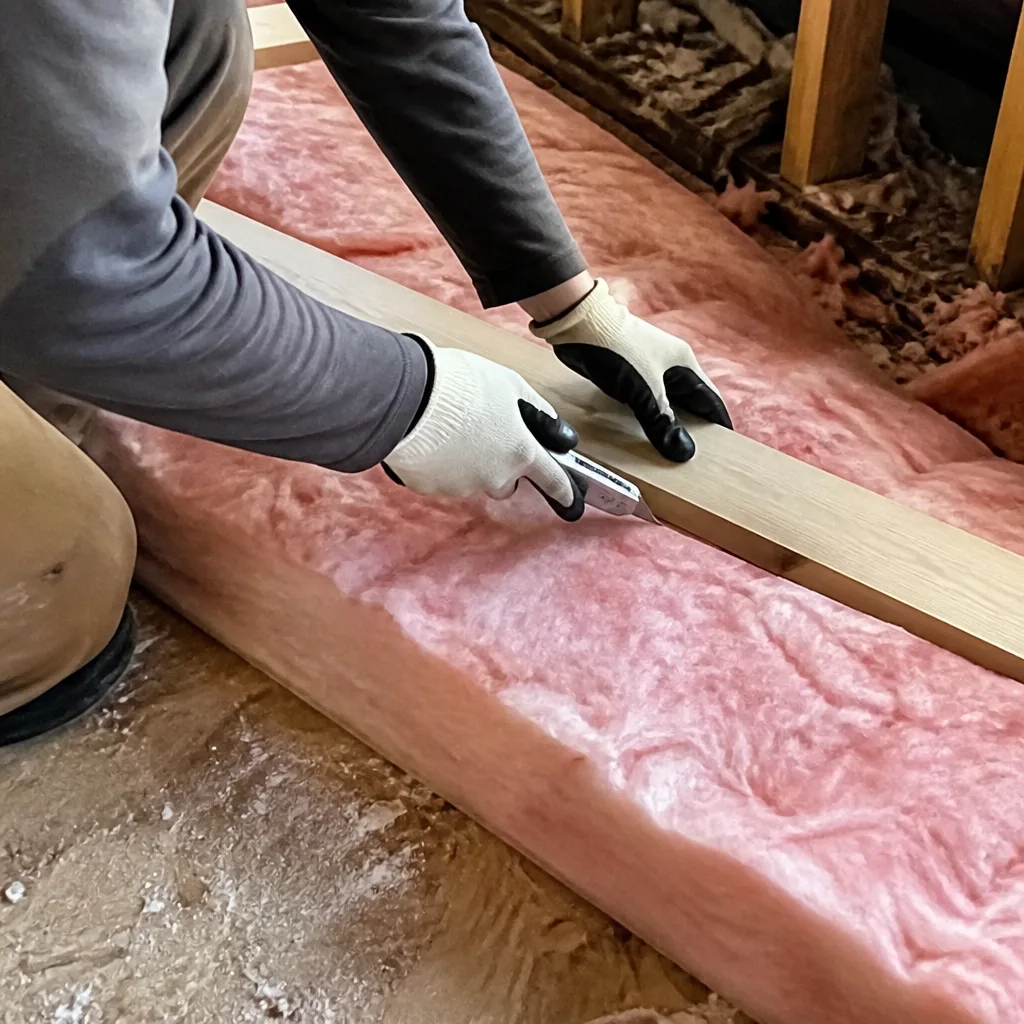
Hot upper floor, cool downstairs: This is the classic low-R attic signature. In Pflugerville’s climate zone 2A, the IRC recommends R-38 to R-60 in vented attics. Homes built before 2012 often have R-19 or less, and fiberglass batts degrade through compression, moisture cycling, and rodent disturbance. The fix is rarely “add more” without first sealing - blowing new insulation over an unsealed attic floor traps air leaks beneath it and can mask the real problem. Attic Insulation in Pflugerville must start with air sealing of top plates, can lights, and penetrations; insulation follows, never precedes.
Cold exterior walls in winter: Wall insulation in Pflugerville homes is typically fiberglass batt in 2×4 studs, giving R-11 to R-13. That’s code-minimum, not performance. Thermal bridging through the studs themselves - wood conducts heat roughly four times faster than insulation - creates cold strips every 16 inches. You feel it as a chill you can’t thermostat away.
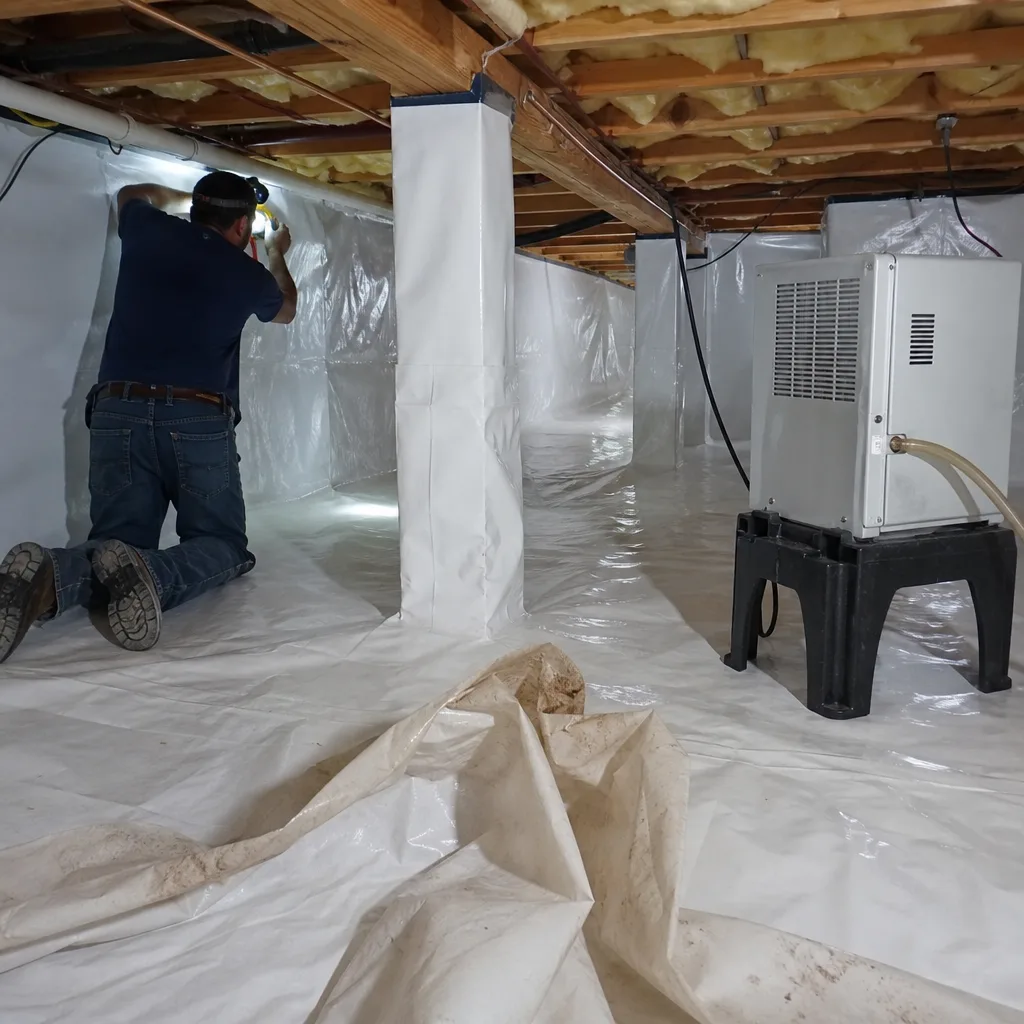
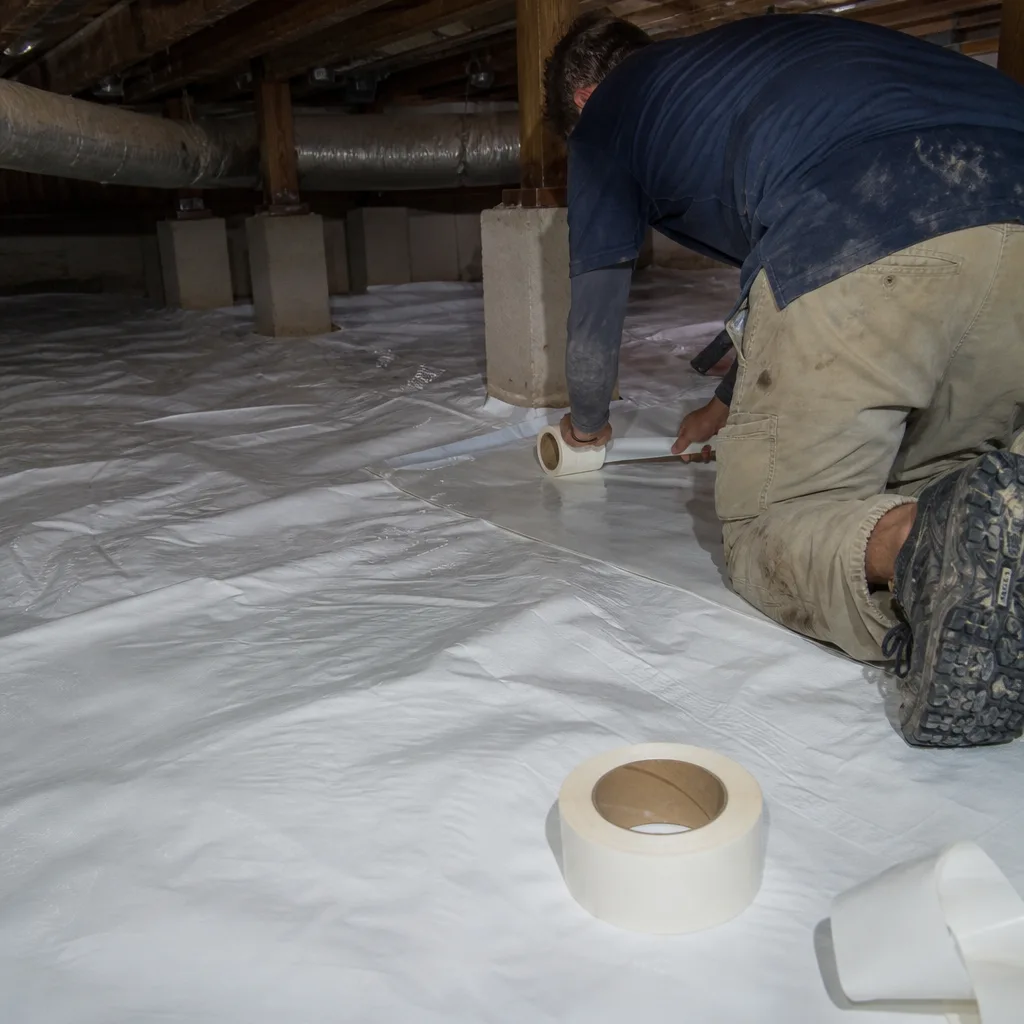
Floor cold spots above crawl spaces: In the older sections of Pflugerville near downtown and along Pecan Street, pier-and-beam construction with unconditioned crawl spaces leaves floors vulnerable. Without a vapor barrier and proper subfloor insulation, winter ground moisture and summer humidity create a year-round comfort problem. Crawl Space Encapsulation & Vapor Barrier in Pflugerville addresses this at the source.
Temperature stratification: If your thermostat reads 74°F but your ankles are cold and your head is hot, you have an air-mixing problem, not just an insulation problem. This often traces to duct leakage in the attic, which depressurizes the house and pulls unconditioned air through every crack.
Humidity and Moisture: The Hidden Damage
Central Texas humidity doesn’t stay outside. When insulation fails, moisture follows predictable paths, and the damage often starts before you smell anything wrong.
Humidity spike 10-20 minutes after AC shuts off: This is the telltale signature of a supply duct leak in the attic. The AC running creates positive pressure in the duct; when it stops, the pressure reverses, and unconditioned, humid attic air gets pulled into the living space through the leak. The relative humidity jumps fast enough that homeowners notice it as a “clammy” feeling. In Pflugerville, where August dew points hover near 70°F, that attic air carries significant moisture load.
Condensation on ductwork: Cold supply ducts running through a hot, humid attic sweat when the insulation wrap is compressed, torn, or missing at seams. The water drips onto ceiling drywall, creating stains that look like roof leaks. We’ve documented this in homes across Windermere, Blackhawk, and Avalon - the pattern is consistent. The fix is two-part: repair or replace duct insulation, and reduce attic temperature and humidity through proper envelope sealing and ventilation.
Frost on nails in attic: In rare Pflugerville cold snaps, homeowners who venture into their attics see frost on nail shanks protruding through the roof deck. This means warm, moist interior air is reaching the cold nail metal and condensing. It’s a clear indicator of significant air leakage through the ceiling plane, bypassing the insulation entirely. The moisture will melt and wet the insulation when temperatures rise, degrading it further.
Musty smell at vents: This traces to condensation on the return plenum or duct trunk, often where it passes through an under-insulated wall cavity or attic space. The moisture supports microbial growth on dust and organic material inside the duct. The smell is your first warning; the health implications come later. This is not an HVAC filter problem - it’s an envelope problem forcing the HVAC to operate outside its design conditions.
Air Quality and Odor Warnings
Insulation failures don’t just waste energy. They change what you breathe.
Dust accumulation near outlets and baseboards: If you wipe a finger along a baseboard and it comes up black, you’re seeing filtered dirt - air moving through the wall cavity, carrying attic or crawl space dust, then depositing it where the drywall meets the floor. The insulation isn’t sealing; it’s acting as a filter. This is common in Pflugerville’s newer subdivisions where construction speed left gaps around electrical boxes and bottom plates.
Chemical or “hot” smells when attic hatch is opened: Degraded spray foam can off-gas if improperly mixed or installed in conditions outside manufacturer specifications. CertainTeed and Icynene products, properly applied, are stable for decades; but DIY or cut-rate jobs done in summer heat without proper substrate temperature can create persistent odors. Demilec closed-cell foam, similarly, requires precise ratio control. If your attic smells sharp or acrid, the foam may be failing chemically, not just thermally.
Rodent odor from walls or attic: Fiberglass and cellulose don’t attract rodents, but they make excellent nesting material once rodents breach the envelope. In Pflugerville’s developing areas near SH 130 and the 45 Toll, construction disturbance has pushed field mice and roof rats into residential neighborhoods. The warning sign is a stale, ammonia-like smell that worsens in summer heat. The insulation itself must be removed, the entry points sealed with rodent-proof materials, and fresh insulation installed. GreenFiber cellulose, treated with borate, provides some pest resistance but won’t stop a determined rodent.
Visual Inspection: What Ceilings, Walls, and Attic Hatches Reveal
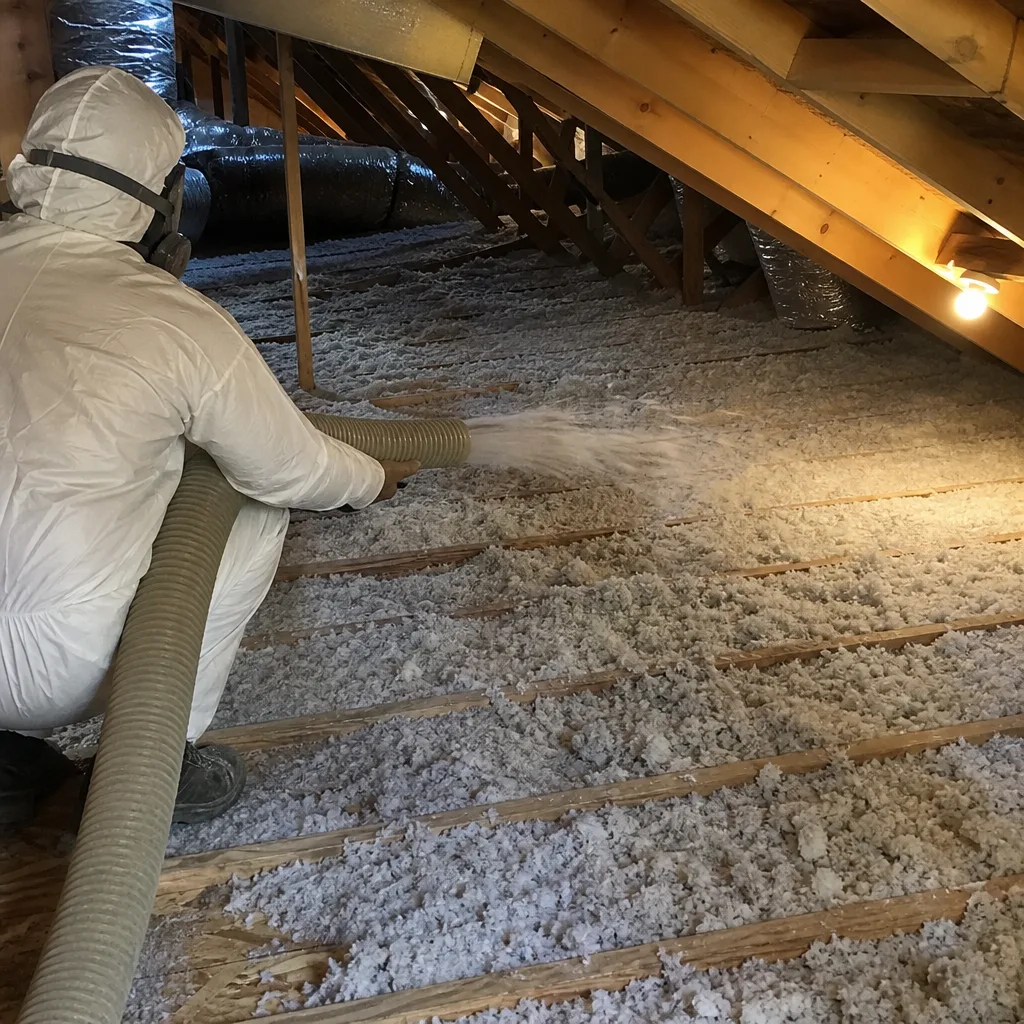
Some warning signs are visible if you know what to look for and when to look.
Thermal bridging patterns on cold mornings: On a morning below 40°F, look at your ceilings with the HVAC off. If you see rectangular or linear condensation patterns that match your ceiling joist or truss layout, you’re seeing thermal bridging. The framing members conduct cold from the attic to the drywall surface, which drops below the dew point of the interior air. Moisture condenses in precise lines. Photograph this - it’s documentation of a specific failure mode. The fix is adding continuous insulation above the framing or dense-packing the cavity to eliminate convective looping.
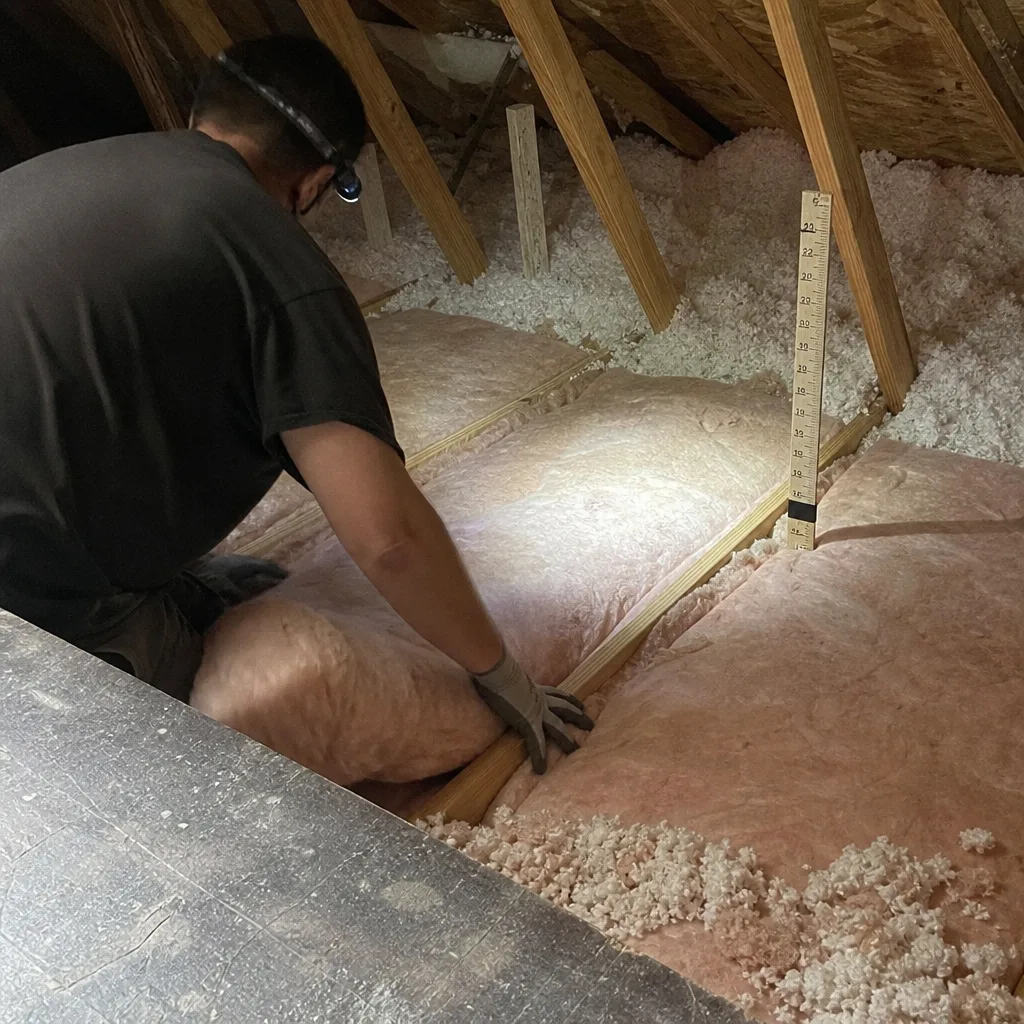
Discolored or compressed attic insulation: Walk your attic (carefully, staying on joists or using a plank). Fiberglass batts that are black at the top surface have been filtering air for years - the discoloration is dust, not mold. Batts compressed to less than their labeled thickness have lost R-value; R-30 compressed to 4 inches performs like R-12. In Pflugerville, where attic temperatures exceed 140°F in summer, fiberglass also suffers from binder degradation over 15-20 years, causing it to slump and separate.
Daylight around attic penetrations: Any visible light around chimneys, vent stacks, electrical penetrations, or the attic hatch itself is an air leak. On a windy day, you may feel the draft. These leaks bypass insulation entirely, creating thermal bypasses that can negate the performance of even high-R insulation. Sealing them with fire-rated caulk, foam, or weatherstripping (matched to the penetration type) is prerequisite work.
Insulation displacement near HVAC equipment: This is the one visual sign that demands immediate action. If you see insulation pushed aside, compressed trails, or droppings near the air handler or duct connections, you have active animal intrusion. The animal is likely using the duct system as a highway, contaminating your air supply. This is not a maintenance-schedule item; it’s a call-today item.
HVAC vs. Insulation: Two Measurements Homeowners Can Take
Not every comfort problem is an insulation problem. Before calling any contractor, take two measurements that cost nothing and tell you which trade to call.
- Supply-to-return temperature differential: With the AC running for 15+ minutes, measure the air temperature at a supply vent and at the return grille using a basic kitchen thermometer or infrared thermometer. The difference should be 16-22°F in a properly charged system. If it’s below 14°F, you likely have an HVAC problem - low refrigerant, dirty coils, or failing compressor - not an insulation problem. If the differential is strong but the house won’t cool, the conditioned air is leaking out or unconditioned air is leaking in. That’s envelope.
- Room-to-room pressure test with a dollar bill: Close all interior doors. Turn the HVAC fan to “on.” Slide a dollar bill under each closed door. If it flutters or blows away from the room, that room is pressurized - supply air exceeds return path, forcing air out through cracks. If the bill gets sucked under or held against the door, the room is depressurized - return exceeds supply, pulling attic or wall cavity air in. Both indicate duct imbalance or leakage, which must be fixed before insulation improvements will show their full value.
These two tests won’t diagnose everything, but they’ll prevent the common and expensive mistake of adding insulation when the problem is a disconnected duct or failing condenser. We’ve seen Pflugerville homeowners spend $3,500 on attic insulation only to discover their real problem was a $400 duct repair.
Pflugerville-Specific Risks: 1995-2008 Construction and Local Climate Stress
Pflugerville’s housing stock has characteristics that create predictable insulation failure modes.
The 1995-2008 recessed-light problem: Homes built in this window, common in neighborhoods like Heatherwilde, Highland Park North, and portions of Windermere, were constructed before insulation-contact (IC) rated recessed can lights were consistently enforced in local code adoption. Non-IC fixtures cannot have insulation touching them; builders typically left a 3-inch clearance, creating a grid of uninsulated holes across the attic floor. Each can light leaks conditioned air upward in winter and admits attic heat downward in summer. In a typical Pflugerville home with 15-20 can lights, this can reduce effective attic R-value by 20-30%. The fix is replacing with IC-rated airtight fixtures or installing sealed LED retrofits, then properly insulating around them.
Tile roof thermal mass: Pflugerville’s higher-end homes in Blackhawk and Avalon often have concrete tile roofs. The thermal mass delays heat transfer by hours, meaning attic peak temperature hits around 6 PM, not noon. Homeowners feel this as a second-floor temperature rise in early evening, when the HVAC has been running all day and “should” have caught up. The solution is higher R-value and radiant barrier, not a larger AC unit.
Expansive soil and foundation movement: Pflugerville sits on the Blackland Prairie’s vertisol soils, which shrink and swell dramatically with moisture. Foundation movement cracks drywall, separates baseboards, and opens gaps at rim joists that bypass wall insulation. Annual inspection of these junctions, with sealing as needed, is Seasonal Insulation Care for Pflugerville: Year-Round Homeowner’s Guide maintenance that most homeowners skip.
Development-pressure tree loss: Newer Pflugerville subdivisions clear-cut mature canopy. Homes that would have had partial shading now take full solar load. We’ve measured attic temperatures 15-20°F higher in homes built after 2015 compared to similar homes with mature trees. The insulation system must be designed for the actual condition, not the original design assumption.
Urgent Signs: When to Act This Week, Not Next Month
Most insulation problems are gradual and can be scheduled. Three exceptions:
- Visible daylight or insulation displacement around attic HVAC equipment: Active animal intrusion. Contamination risk to air supply. Call immediately.
- Water staining that grows between rain events: This is condensation, not roof leakage, and it’s actively degrading insulation and creating mold conditions. The source must be found and stopped before insulation is replaced.
- Sudden humidity spike with visible mold on ceiling or vents: Indicates duct leak or insulation failure that has crossed a threshold. Delay risks health consequences and structural damage.
What a Proper Diagnostic Looks Like
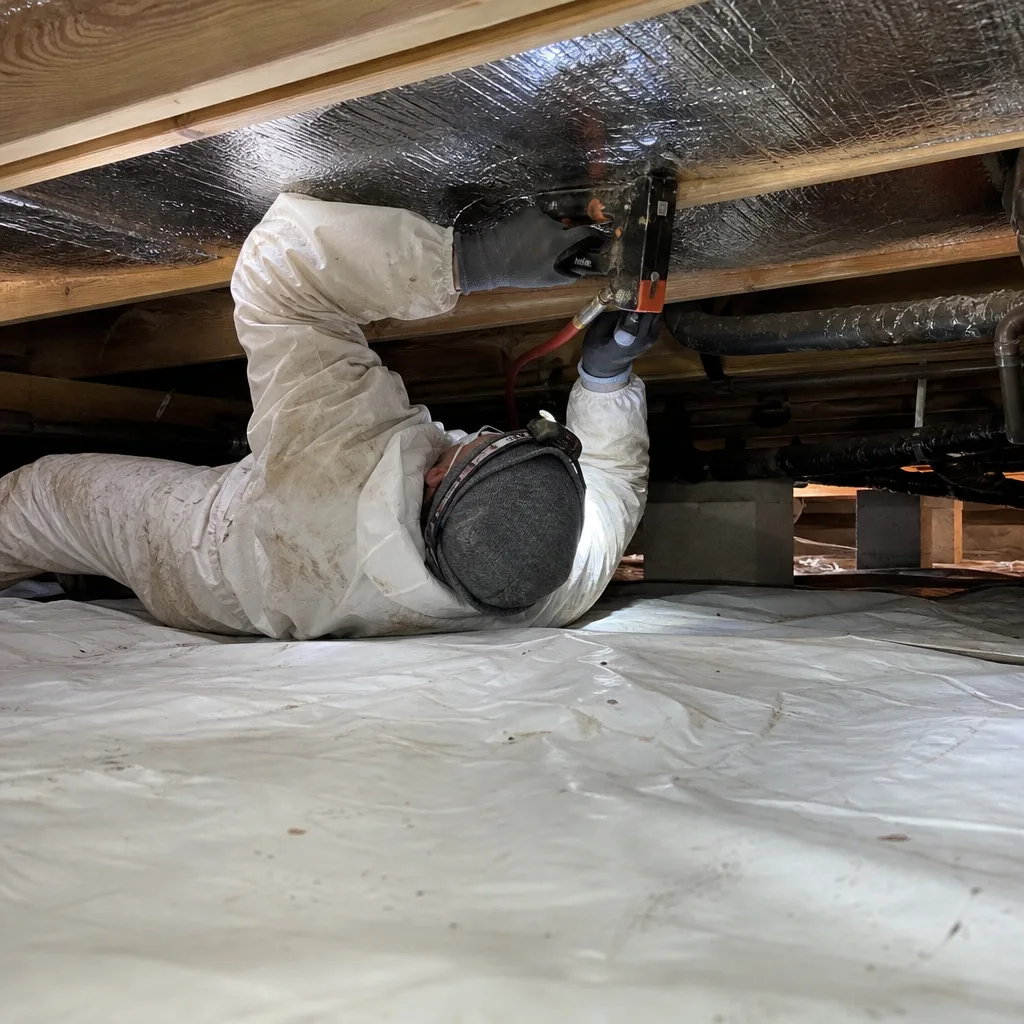
A legitimate insulation diagnostic in Pflugerville should include documented steps, not a visual guess from the attic hatch.
- Written scope review: Before any testing, the technician should explain what will be measured and why. Under Haven Standard: Have it in writing - you get a written scope before any work starts.
- Blower-door test: The house is depressurized to -50 Pascals with a calibrated fan. The resulting CFM50 reading - cubic feet per minute at 50 Pascals - quantifies total envelope leakage. A typical Pflugerville home of 2,400 square feet might read 3,500-5,000 CFM50 before work. After proper air sealing, 2,000-2,500 CFM50 is achievable. We publish these numbers on every applicable job so homeowners verify what they paid for.
- Infrared scan during blower-door: With the house depressurized, an infrared camera reveals air leakage paths as temperature anomalies. This finds the leaks that visual inspection misses - top plate gaps, electrical box bypasses, recessed-light leakage.
- Duct blaster test (if indicated): The duct system is pressurized independently to measure leakage to outside. Code allows up to 12% leakage in new construction; older Pflugerville homes often test at 25-40%.
- Insulation depth and condition documentation: Rulers in the attic, photos of compression, moisture staining, or degradation. You receive a Documented Photo Record on every visit - included, not available on request.
- Written price before any work starts: Flat price, written scope, written warranty. Haven Standard Clause 1. No exceptions in 9,000+ homes since 2016.
Topside Attic Insulation Pflugerville home follows this protocol on every assessment. A Free Second Opinion on any written estimate is also available - bring us a competing quote and we’ll read it with you.
Common Mistakes to Avoid
- Adding insulation over unsealed air leaks: This is the most common error we correct in Pflugerville. Blown fiberglass or cellulose over a leaky attic floor simply hides the problem. The new insulation performs at a fraction of its rated R-value due to wind washing - air moving through the insulation, carrying heat and moisture with it.
- Replacing the HVAC unit first: A 3-ton unit leaking 30% of its air into the attic performs like a 2-ton unit. Replacing it with a 4-ton unit masks the envelope failure and wastes capacity. Fix the envelope, then right-size the HVAC.
- Ignoring the crawl space: In Pflugerville’s older neighborhoods, unconditioned crawl spaces with missing or fallen vapor barriers pump moisture upward year-round. New attic insulation won’t stop floor-level humidity problems.
- DIY spray foam: Two-component foam kits sold at hardware stores require precise substrate temperature, humidity control, and mix ratio. We’ve removed failed DIY foam from attics in Sonterra and Springbrook that off-gassed for months. Spray Foam Insulation in Pflugerville is a trained-technician application.
- Trusting visual inspection alone: Insulation that looks fine from the hatch may be moisture-compromised, wind-washed, or bypassed by air leaks invisible to the eye. Measurement beats assumption.
- Scheduling work without a written price: Verbal estimates change. Haven Standard requires a written price before any work starts, always - flat price, written scope, written warranty before anyone lifts a tool.
When to Call a Professional
Call when you’ve confirmed a symptom you can’t trace to a simple cause - a disconnected duct you can reach, a filter that needs changing, a vent that’s closed. Call when you see thermal bridging patterns, smell must at the vents, or find insulation displacement. Call when your energy bill spikes without explanation, or when rooms that used to be comfortable no longer are.
Topside Attic Insulation Pflugerville offers free estimates in Pflugerville - call (737) 259-8352. Every assessment includes a written scope, and if you have a competing quote, we’ll review it with you at no charge. The 365-Day Done Right Promise applies to all completed work: if it’s not done right, we make it right.
Frequently Asked Questions
Most attic insulation jobs in a Pflugerville home of 2,000-2,800 square feet run between $2,400 and $5,800, depending on existing insulation condition, accessibility, and whether air sealing is included. Air sealing typically adds $800-$1,800 but is prerequisite to proper performance - we won’t blow insulation over an unsealed attic floor. Call (737) 259-8352 for an exact quote; estimates are free and include a written price before any work starts.
Repair is cheaper only when the existing insulation is dry, uncompressed, and uncontaminated - roughly 15% of the attics we assess in Pflugerville. Most require partial or full removal due to moisture damage, rodent activity, or decades of compression. Adding new material over damaged old material traps problems and voids manufacturer warranties. We document the condition with photos so you can see what we found, not what we felt about it.
Small air-sealing jobs - sealing an attic hatch, weatherstripping a pull-down stair, closing a few penetrations - can often be completed same-day if the crew has availability and the scope is limited. Full attic insulation replacement requires scheduling, material delivery, and typically a full day on site. Emergency calls for animal intrusion or active moisture damage get priority scheduling. Call (737) 259-8352 to discuss timing.
Take the two measurements in this guide: supply-to-return temperature differential should be 16-22°F; room-to-room pressure with a dollar bill should show minimal airflow under closed doors. If the HVAC tests normal, the problem is envelope - insulation, air sealing, or duct leakage. If the HVAC tests abnormal, call an HVAC contractor first. We perform these tests during every assessment and will tell you honestly which trade you need.
These homes were built during a code transition period when insulation-contact (IC) ratings for recessed can lights were inconsistently enforced in Central Texas. Non-IC fixtures require clearance gaps that create thermal bypasses. We regularly find 15-25 unsealed can lights in Heatherwilde and Highland Park North homes from this era, each leaking conditioned air. The fix is fixture replacement or sealed LED retrofits, then proper insulation.
Every job closes with a Documented Photo Record showing before, during, and after conditions. On applicable jobs, you receive before-and-after blower-door readings in CFM50 - the pressurization measurement that shows, in one number, how much air your home was losing. You also get the written scope, written warranty, and final invoice with flat pricing. Haven Standard: Have it in writing, always.
The Bottom Line
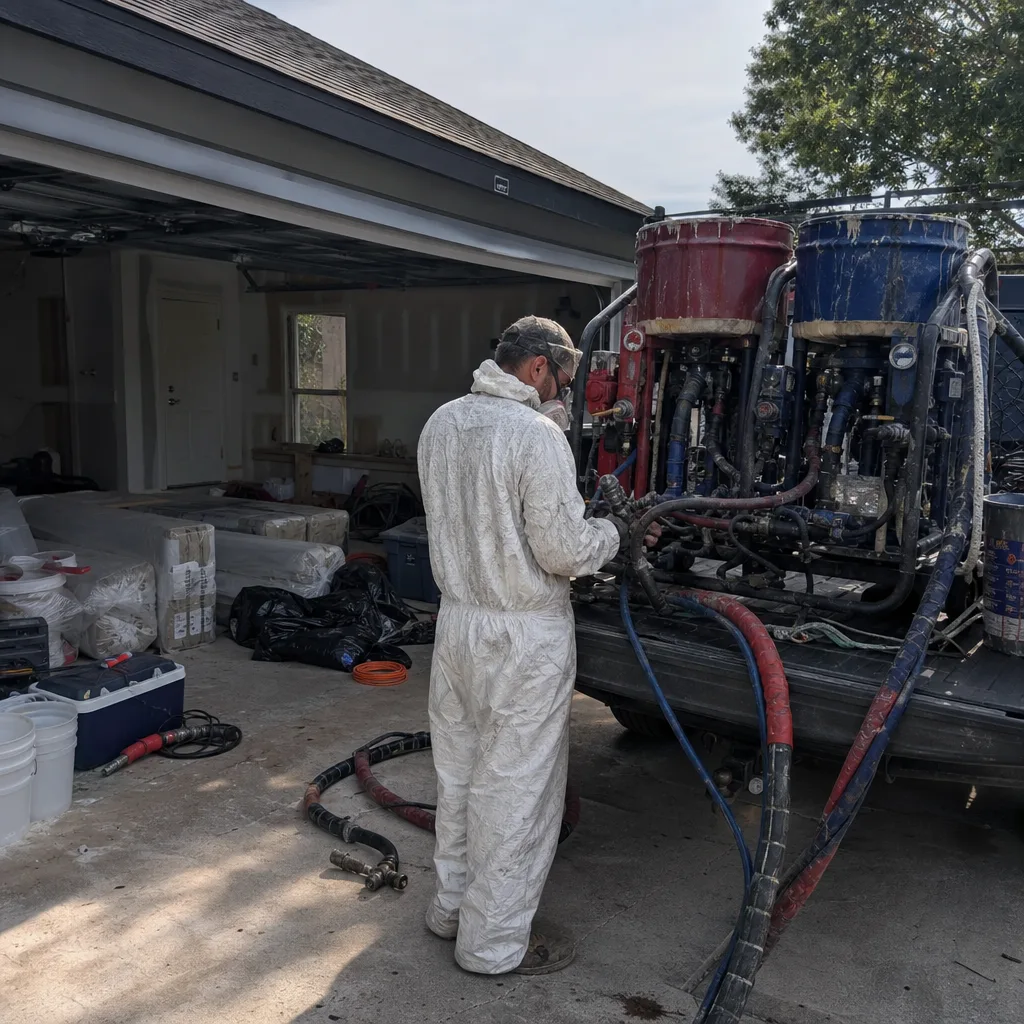
Every insulation warning sign in your Pflugerville home has a physical cause you can name, measure, and fix in the right order. Start with observation - temperature patterns, humidity timing, visual checks on cold mornings. Confirm with simple tests - supply-return differential, dollar-bill pressure check. Then call for a measured diagnostic that produces numbers, not guesses. The fix might be a targeted air-seal for a few hundred dollars, or it might require full attic replacement. The only wrong choice is treating the symptom without finding the cause, or paying for insulation that gets installed over leaks that should have been sealed first. For ongoing help, see our more guides & resources.
Written by Wes Okafor, Owner at Topside Attic Insulation Pflugerville, serving Pflugerville since 2016.