
Last updated September 24, 2026
Seasonal Insulation Care for Pflugerville: Year-Round Homeowner’s Guide
Most Pflugerville homeowners think about their insulation when the utility bill spikes or a room won’t stay comfortable. Here’s what we’ve learned from 9,000+ homes since 2016: the optimal window to inspect and repair attic insulation in Pflugerville is a six-week period between mid-October and late November, when attic temperatures finally drop below 100°F but before the heating season exposes air leaks through condensation on cold surfaces. Most homeowners miss it entirely. This guide maps Pflugerville’s actual climate stress periods, not calendar seasons, and gives you a documented checklist to trend your home’s performance year over year.
Quick Answer
Seasonal insulation care in Pflugerville means maintaining your building envelope through two stress periods: a 120-day cooling load from May through September and a short but severe heating load from December through February, with critical maintenance windows in October-November and March-April. The work involves checking attic insulation depth, sealing air leaks at top plates and penetrations, monitoring HVAC runtime data for degradation signals, and documenting conditions so a contractor can spot trends rather than starting from zero at each visit.
Table of Contents
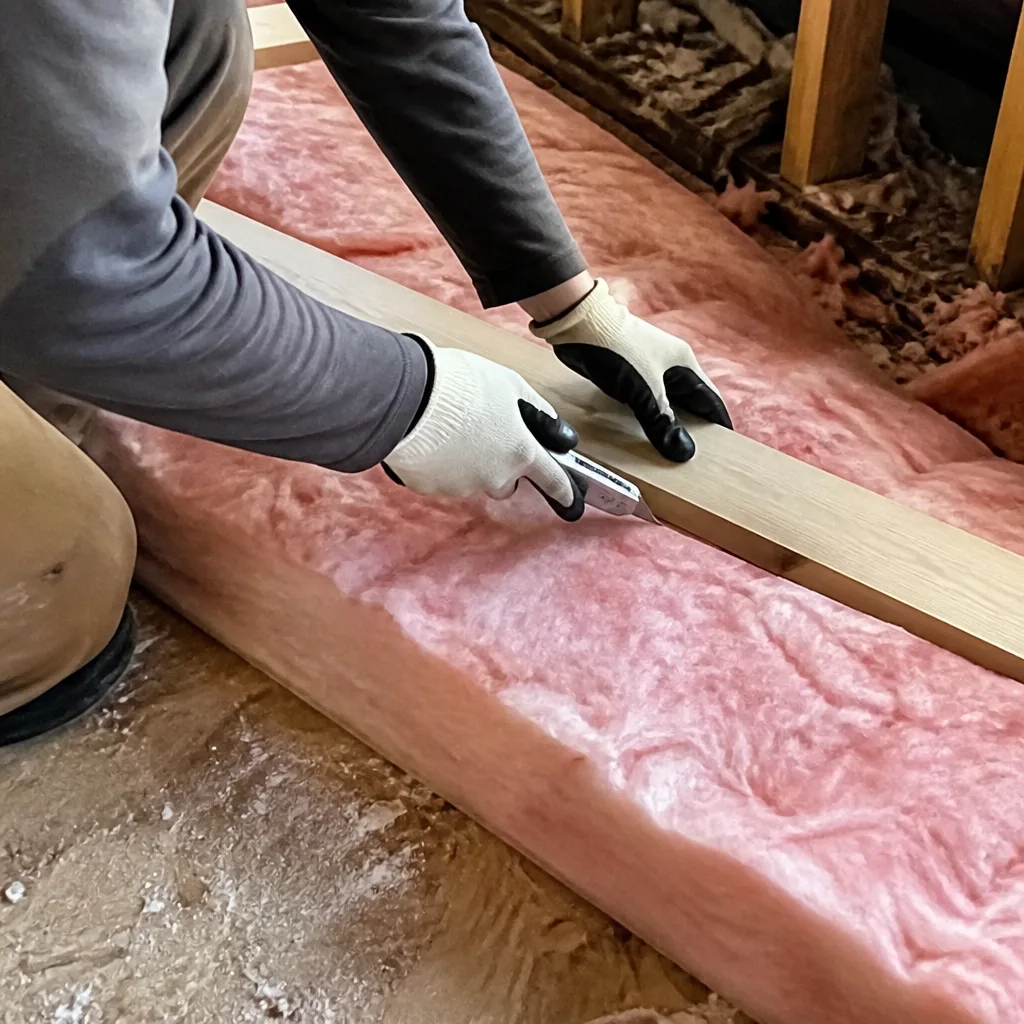
- Pflugerville’s Two Climate Stress Periods (Not Four Seasons)
- The October-November Maintenance Window: Your Only Comfortable Attic Window
- Winter Heating Load: Condensation, Freeze Events, and What 2021 Taught Us
- Spring Diagnostic: What April HVAC Runtime Data Reveals About Winter Leakage
- Summer Cooling Load: 120 Days and the Insulation Degradation Curve
- Pflugerville Pollen Season: The Hidden Duct Pressure Problem
- Building Your Seasonal Documentation System
- Common Mistakes to Avoid
- When to Call a Professional
- Frequently Asked Questions
- The Bottom Line
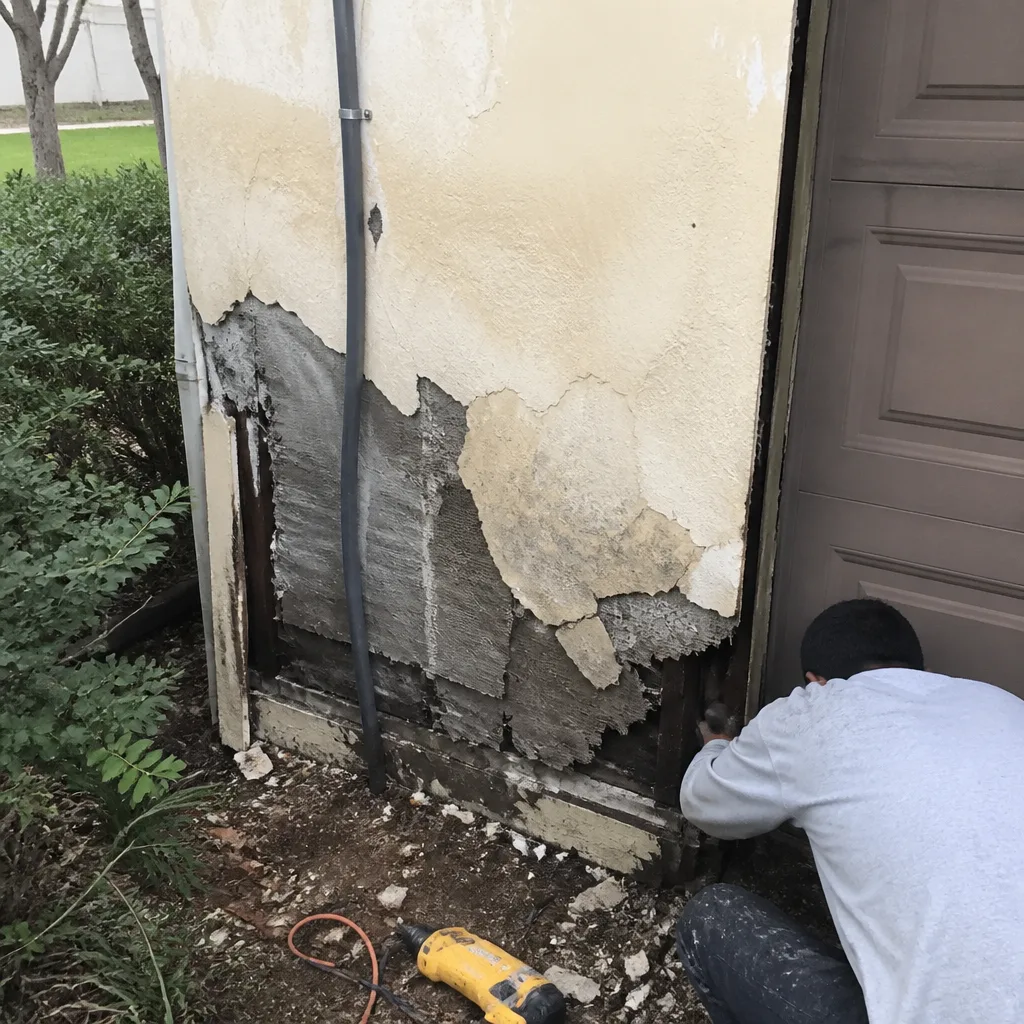 Before
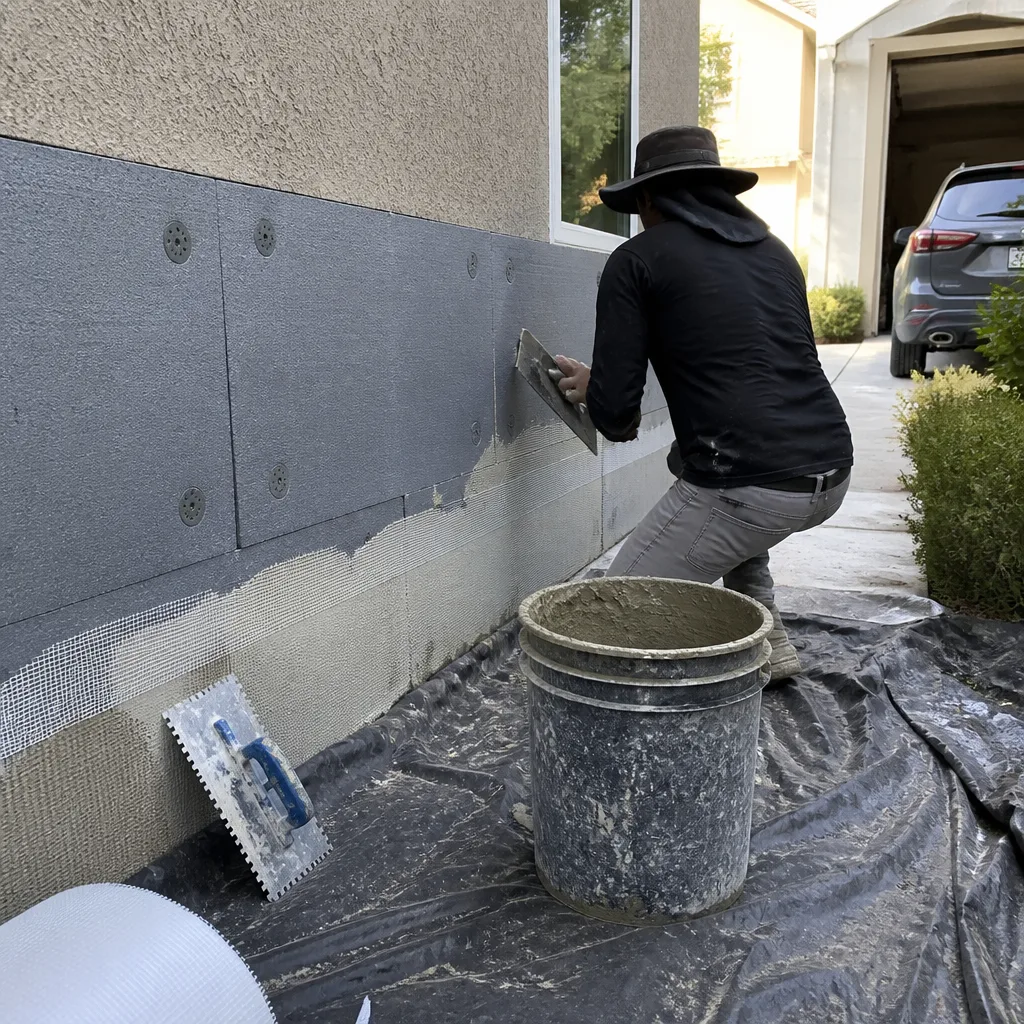 After
AfterPflugerville’s Two Climate Stress Periods (Not Four Seasons)
Pflugerville sits at the edge of the Texas Hill Country with a climate that doesn’t cooperate with quarterly calendar divisions. From a building science perspective, we see two distinct stress periods and two maintenance windows where homeowners can intervene before problems compound.
The first stress period is the cooling load: roughly 120 days from early May through mid-September when attic temperatures in Pflugerville regularly exceed 140°F and your HVAC system runs 10-14 hours daily to maintain setpoint. During this period, insulation isn’t just resisting heat flow; it’s protecting your ductwork, which typically lives in that 140°F environment. Every air leak in your attic floor becomes a heat injector, and every gap in insulation coverage creates a thermal bypass that your system works overtime to overcome.
The second stress period is the heating load: a shorter but more intense window from December through February when outdoor temperatures can drop below 20°F and indoor humidity meets cold surfaces at attic top plates, can lights, and duct boots. Pflugerville’s periodic hard freezes, including the February 2021 Winter Storm Uri event, create conditions that central Texas homes are often not built to withstand. The temperature differential across your envelope spikes, and air leaks that were invisible in summer become condensation paths that can damage framing, degrade insulation, and create mold conditions.
The two maintenance windows fall between these stress periods. Mid-October through late November is the critical attic access window: temperatures drop below 100°F, making inspection physically possible without heat exhaustion risk, but before the heating season begins. March through early April is the diagnostic window: your smart thermostat’s runtime data from the heating season is fresh, and you can correlate winter performance with spring conditions before the cooling load returns.
Homes in neighborhoods like Windermere, Avalon, and Blackhawk tend to have similar construction vintages (mostly 2000-2015) and share common failure patterns: insufficient attic sealing at top plates, compressed or displaced blown-in fiberglass at the attic center where crews walked during duct repairs, and unsealed can lights that act as chimneys year-round. Homes in newer developments such as Sorrento and Rowe Lane often have better initial air sealing but may have settled blown-in insulation that no longer meets depth targets.
The October-November Maintenance Window: Your Only Comfortable Attic Window
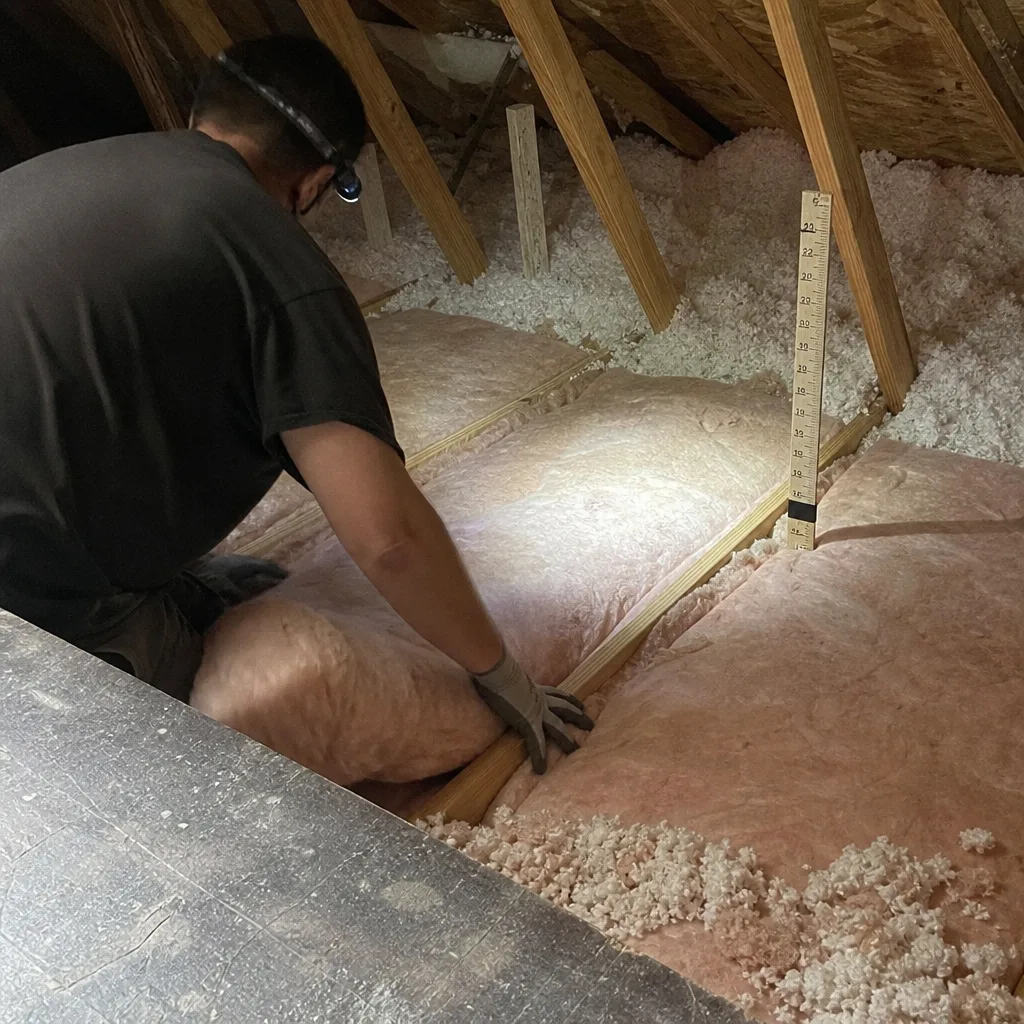
This is the window most Pflugerville homeowners miss, and it’s the one that matters most. By mid-October, attic temperatures have dropped from summer peaks to the 80-95°F range. By late November, heating degree days are accumulating and any air leaks will start showing condensation signatures. You have roughly six weeks to get into the attic, document conditions, and schedule repairs before the heating season exposes problems you can’t easily fix.
October Attic Inspection Checklist
- Measure insulation depth at five points. Check the attic center, two points midway to the eaves, and two points within 24 inches of the eaves. In Pflugerville, R-38 to R-49 is the practical target for attic floors (R-38 equals roughly 12 inches of blown fiberglass or 10 inches of cellulose, though compression and settling reduce real-world performance). Record each measurement with a photo showing the ruler against the insulation surface.
- Inspect the attic hatch or access panel. This is the most commonly missed leak in Pflugerville homes. The hatch should have weatherstripping on the trim frame, insulation fastened to the back of the hatch itself (minimum R-19, preferably matching the attic floor), and latches or bolts that pull the hatch tight against the seal. A loose hatch can leak as much air as a 6-inch diameter hole in your ceiling.
- Trace all duct connections with a flashlight. Look for disconnected flex duct, collapsed sections, and tape that has peeled from heat exposure. In Pflugerville’s 140°F summer attics, standard cloth-backed duct tape fails within 2-3 years. Proper connections use mastic or UL-181 rated foil tape. A disconnected supply duct in a 140°F attic is dumping cooled air into the worst possible environment while starving the room it serves.
- Photograph all can lights, bath fans, and top plates. Can lights that are not IC-rated (insulation contact) create a fire hazard if buried in insulation and an air leak if left unsealed. Top plates, the horizontal framing member where interior walls meet the ceiling, are the primary path for air migration between conditioned space and attic in platform-framed homes. In Pflugerville’s 2021 freeze, we saw significant ice dam formation on north-facing eaves where top plate leaks allowed warm, humid interior air to reach cold roof decking.
- Check for rodent activity and moisture staining. Look for compressed insulation trails, droppings, and dark staining on insulation or framing. Pflugerville’s cedar and oak corridors provide habitat for roof rats and squirrels that exploit construction gaps. Moisture staining, especially near bathroom fans or on north-facing slopes, indicates either a venting problem or an air leak condensing in cold weather.
What you do with this documentation matters. We recommend creating a dated folder on your phone or cloud storage with photos and notes. When you call a contractor, you can share this record rather than starting from zero. Under Haven Standard: Arrive on schedule, you get a named technician and a text when they are on the way. But even before we arrive, your documentation lets us prepare the right materials and scope rather than discovering conditions on arrival.
If you find insulation depth below R-30 (roughly 9 inches of fiberglass), displaced or compressed insulation, or any disconnected ducts, this is the window to schedule remediation. Attic Insulation in Pflugerville work booked in October-November is typically completed before Thanksgiving, with crews working in conditions that allow proper air sealing detail without the rush of emergency winter calls.
Winter Heating Load: Condensation, Freeze Events, and What 2021 Taught Us
Pflugerville’s winter heating load is short but severe. Normal January lows run in the mid-30s°F, but periodic Arctic intrusions drop temperatures below 15°F for 48-72 hours. The February 2021 Winter Storm Uri brought consecutive days below freezing with single-digit lows, and it exposed failure patterns that normal winters hide.
The critical winter mechanism is condensation at cold surfaces where warm, humid interior air leaks into the attic. Every cubic foot of air that escapes through a top plate leak, can light gap, or unsealed penetration carries moisture. When that air hits roof decking below 32°F, the moisture condenses as frost. When temperatures rise, the frost melts. Repeat this cycle, and you get water-stained insulation, degraded R-value, and eventually mold-susceptible conditions.
We documented a specific failure pattern after Uri that homeowners in Pflugerville should understand. Open-cell spray foam, commonly used for attic floor sealing and knee wall applications, is vapor-permeable. When applied near an uninsulated attic hatch or in a knee wall cavity with inadequate thermal separation, the foam surface can drop below dew point during extreme cold. The foam itself doesn’t fail, but condensation forms on its surface and wets adjacent materials. In several Pflugerville homes we inspected in spring 2021, open-cell foam near uninsulated hatches showed surface moisture and, in two cases, mold on adjacent OSB sheathing. The solution isn’t avoiding open-cell foam; it’s ensuring complete thermal enclosure, including the hatch, so no surface in the assembly drops below dew point.
Ice dams, rare in central Texas but documented during Uri, form when heat loss through the roof deck melts snow at the ridge, which refreezes at the colder eave. The melt water backs up under shingles. In Pflugerville’s predominantly hip-roof subdivisions, ice dams formed primarily on north-facing eaves where solar gain was absent and air leakage was present. The homes with intact air sealing and adequate insulation depth saw no ice dam formation; the homes with top plate leaks and compressed insulation at the eaves saw significant gutter and fascia damage.
What to watch for in January:
- Condensation or frost on nail points protruding through roof decking, visible from the attic on cold mornings
- Water staining on insulation directly below can lights, bath fans, or interior wall top plates
- Cold drafts at electrical outlets on exterior walls, indicating missing or failed cavity insulation
- HVAC runtime exceeding 8 hours daily to maintain 68°F, suggesting either envelope failure or duct leakage in the attic
If you observe any of these conditions, document with photos and notes on outdoor temperature. This data becomes valuable when you schedule spring repairs. Topside Attic Insulation Pflugerville home assessments include blower-door testing on applicable jobs, and your winter observations help us target the test to the most likely leak paths rather than running a generic protocol.
Spring Diagnostic: What April HVAC Runtime Data Reveals About Winter Leakage
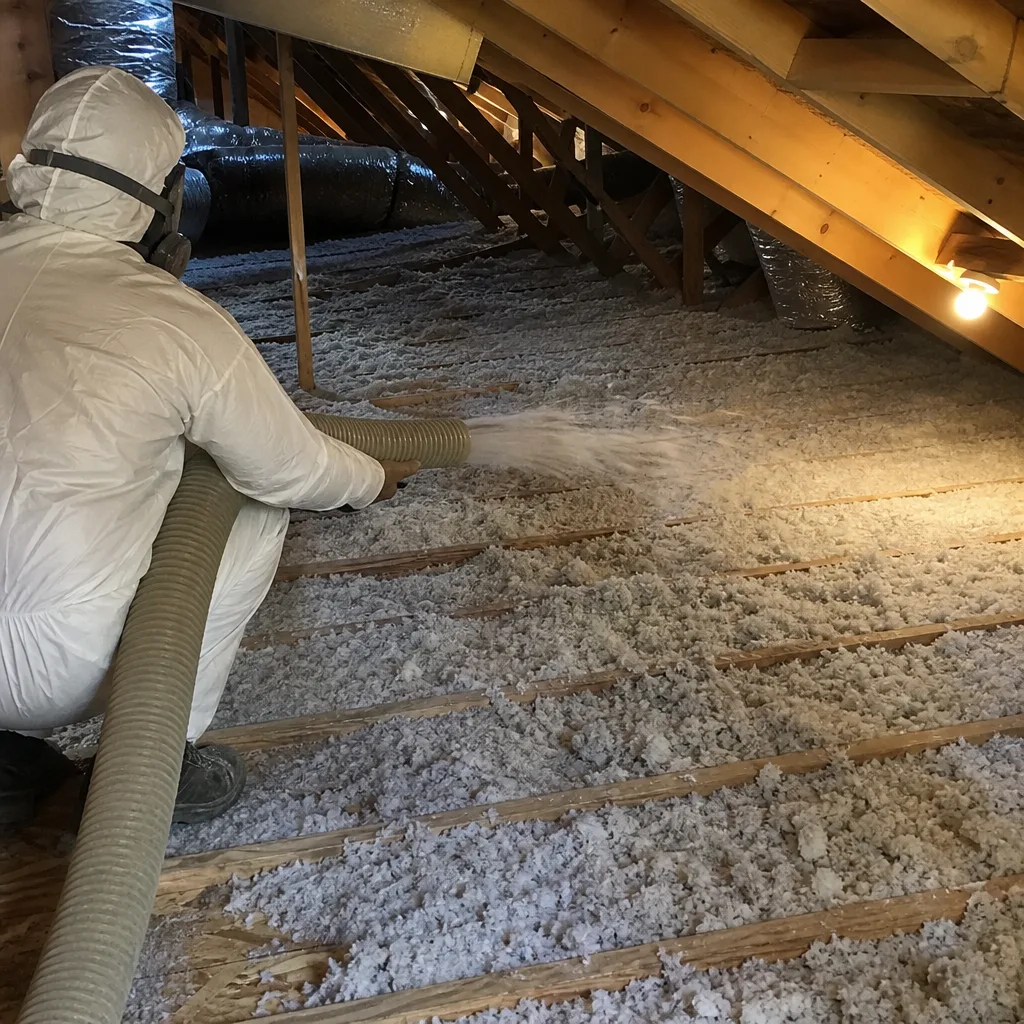
April in Pflugerville is the diagnostic goldmine that most homeowners ignore. Your smart thermostat has recorded every heating call from December through March. That data, properly read, tells you whether your insulation and air sealing held up or degraded over the winter.
Here’s how to extract the signal. Pull your runtime report for the heating season and look at two metrics: total heating hours per month, and the distribution of those hours (steady operation versus short cycling). Compare year-over-year if you have prior data. A 15-20% increase in heating hours with no thermostat setpoint change indicates either envelope degradation or duct leakage. Short cycling, where the system runs for 5-10 minutes then stops repeatedly, suggests the system is losing conditioned air somewhere, often through attic duct leaks that grew over winter.
The specific Pflugerville pattern we see: homes with unsealed can lights and bath fan penetrations show a runtime spike in January-February that doesn’t correlate with outdoor temperature alone. The air leakage path grows in winter as the stack effect intensifies, warm air rising faster through gaps. By April, the leak path is established and will worsen in summer when the pressure differential reverses and hot attic air is drawn downward through the same gaps.
What to do with April data:
- Export or screenshot your runtime report. Nest, Ecobee, Honeywell Home, and most utility smart thermostats provide monthly summaries. Save these with your seasonal documentation.
- Correlate with weather data. Heating degree days for Austin-Bergstrom International, the nearest reliable station to Pflugerville, are published monthly by NOAA. Normalize your runtime against heating degree days to see if your home is becoming less efficient or if the winter was simply colder.
- Walk the house on a mild April morning with the HVAC off. Feel for temperature stratification, rooms that are 3-5°F different from the thermostat location, and drafts at outlets or baseboards. These are the residual signatures of winter air leaks that will become summer heat gain paths.
- Schedule a blower-door test if runtime increased 20% or more. A blower-door test, a pressurization reading that shows, in one number, how much air your building envelope is losing, quantifies the problem and identifies the dominant leak paths. At Topside Attic Insulation Pflugerville, we publish before-and-after blower-door numbers on every applicable job so you can verify the air-sealing result in a single figure.
Materials matter for spring repairs. For attic floor applications, we specify Rockwool or CertainTeed fiberglass batts at top plates where blown-in has settled, and we seal with Demilec or Icynene spray foam at complex penetrations where caulk or tape won’t achieve durable closure. The choice depends on access, existing conditions, and whether the home has active rodent issues that would compromise cellulose. We source from multiple manufacturers, including Owens Corning, Johns Manville, Knauf, and GreenFiber, with no proprietary product lock-in, so the specification follows the condition rather than a predetermined inventory.
Summer Cooling Load: 120 Days and the Insulation Degradation Curve
From early May through mid-September, Pflugerville attics become hostile environments. Peak roof surface temperatures exceed 170°F. Attic air temperatures at the ridge, where ductwork often runs, reach 140-150°F. Your insulation isn’t just resisting conductive heat flow; it’s protecting ductwork from radiant and convective heat gain, and it’s maintaining the temperature differential that makes your HVAC system’s cooling capacity available to the rooms below.
The degradation curve is what homeowners miss. Insulation performance doesn’t fail overnight. It degrades through several mechanisms that compound over multiple summers:
- Settling and compression. Blown-in fiberglass or cellulose settles 10-15% in the first two years, more if disturbed by tradespeople walking to service HVAC equipment. A home that met R-38 at construction may be at R-30 by year five and R-25 by year ten.
- Moisture cycling. Summer humidity in Pflugerville runs 60-80% even when outdoor temperatures are moderate. Attic ventilation that is blocked by insulation at the eaves, or that was never adequate for the roof design, traps moisture that reduces insulation R-value and can degrade paper-faced batts.
- Duct leakage acceleration. Every summer, thermal expansion and contraction stress duct connections. Mastic that was properly applied cracks after 5-7 years of cycling. Flex duct inner liners degrade from heat exposure. A 10% duct leakage rate in year three becomes 20% by year eight, with all that leakage into a 140°F attic.
- Radiant barrier degradation. Pflugerville homes with radiant barrier roof decking or foil stapled to rafters see performance decline as dust accumulates on the reflective surface. A radiant barrier that reduced attic heat gain 20% when clean may deliver 5% after five years of dust accumulation, especially near unpaved roads or active construction.
The leading indicator of summer insulation degradation is HVAC runtime hours, tracked the same way as winter heating data. A cooling system that ran 8 hours daily in June 2022 and runs 11 hours daily in June 2024, with identical setpoints and comparable weather, is telling you that the building envelope has degraded or the duct system has leaked worse. Most homeowners blame the HVAC system and call for service, when the problem is upstream in the attic.
Smart thermostat runtime reports are your proxy diagnostic. Ecobee’s Home IQ and Nest’s Energy History both show daily runtime. Export June and July data for comparison across years. If you don’t have historical data, start collecting now; your 2025 summer data becomes the baseline for 2026 and beyond.
For homes with spray foam insulation, summer brings a different concern. Closed-cell spray foam, properly applied, is dimensionally stable and moisture-resistant. But open-cell foam on the underside of roof decking in a hot-humid climate can accumulate moisture at the foam-deck interface if the foam thickness is insufficient or if the deck was wet during application. We inspect these assemblies with moisture meters and thermal imaging; Spray Foam Insulation in Pflugerville assessments include this verification on existing foam jobs where the homeowner reports performance decline.
Pflugerville Pollen Season: The Hidden Duct Pressure Problem
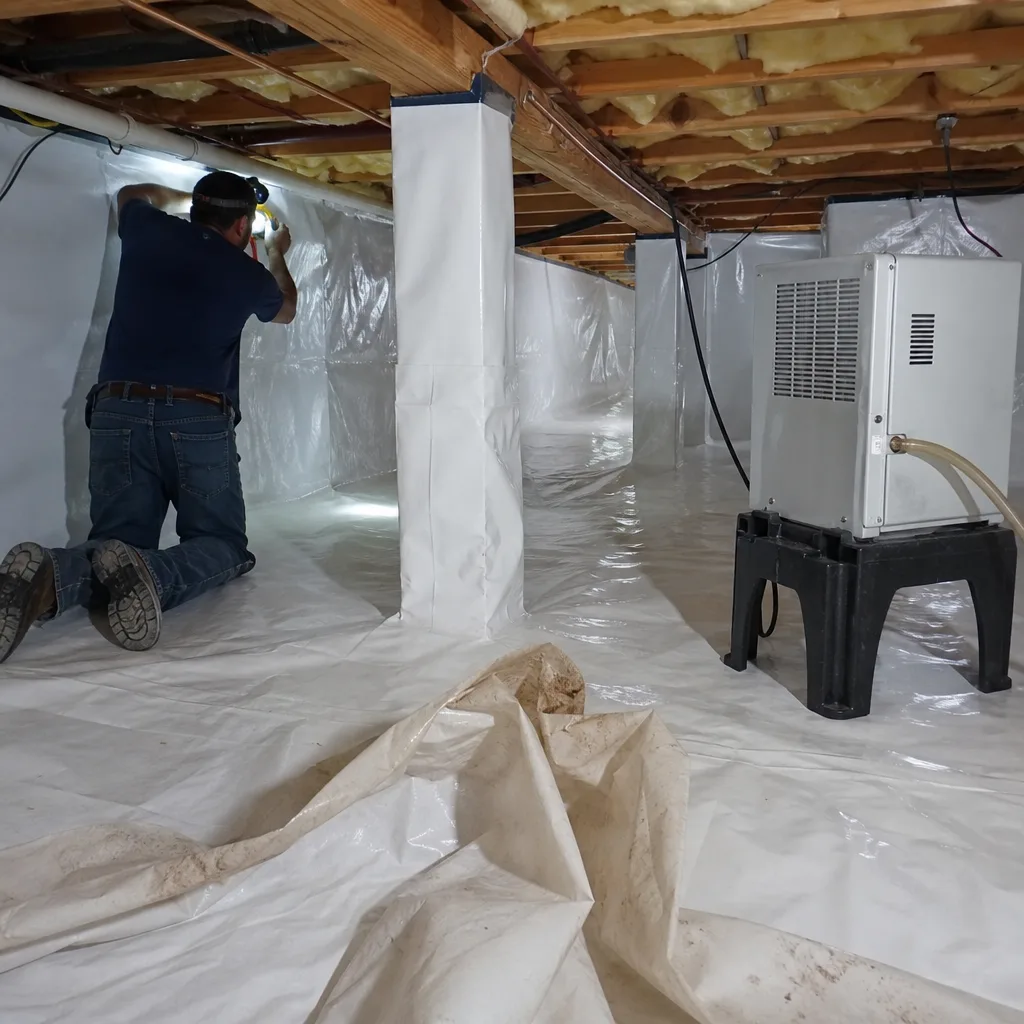
This is the connection no one makes, and it’s specific to Pflugerville’s ecology. From late February through April, cedar pollen peaks in late December through February, oak pollen dominates March and April, with ragweed and grass pollens extending into summer. Pflugerville’s location between the Balcones Escarpment and the Blackland Prairie creates pollen corridors that load HVAC filters faster than inland Austin neighborhoods.
Here’s the building science connection. A clogged filter increases pressure drop across the air handler. The system works harder to move air, and the increased negative pressure in the return plenum pulls harder on any leaks in the return ductwork. In Pflugerville homes with attic-mounted air handlers, those return leaks are in a 140°F attic in summer, drawing superheated air into the system. But the more insidious problem is supply duct pressure: as the filter loads, the supply side pressure rises, stressing duct connections that were already marginal.
We’ve documented this pattern in Pflugerville homes with fiberglass duct board plenums and flex duct distribution. A homeowner who changes filters on a fixed schedule rather than by pressure drop allows filter loading to stress the duct system for weeks. Duct joints that were sealed with mastic in 2018 separate under repeated high-pressure events by 2023. The separation is often at the flex duct-to-plenum connection, hidden in insulation and not visible without deliberate inspection.
The maintenance protocol is simple but specific:
- Monitor filter pressure drop, not calendar date. A clean 1-inch pleated filter has a pressure drop of 0.05-0.10 inches water column. At 0.20 inches, it’s loaded and needs replacement. At 0.30 inches, it’s damaging your system. A simple manometer, or a smart thermostat with pressure monitoring, lets you replace by condition rather than guesswork.
- Inspect duct connections annually, ideally in October-November. Pull back insulation at flex duct connections to the plenum and to supply boots. Look for separated inner liners, failed tape, and mastic cracks. Photograph conditions for year-over-year comparison.
- Never operate without a filter. The temporary fix of running without a filter to restore airflow after a clog destroys your evaporator coil and allows debris into the duct system. If you’ve done this, schedule duct inspection; the debris load has changed your system’s pressure characteristics permanently.
For homes with significant duct leakage or deteriorated duct board, Crawl Space Encapsulation & Vapor Barrier in Pflugerville work sometimes reveals that duct systems in vented crawl spaces have parallel leakage and condensation problems. The same documentation discipline applies: photo records, pressure readings, and runtime data let a contractor address the root cause rather than treating symptoms.
Building Your Seasonal Documentation System
The most valuable thing you can do as a Pflugerville homeowner is build a documentation habit that outlasts any single contractor visit. When we arrive at a home with three years of photos, runtime data, and notes, we can trend performance and target our work precisely. When we start from zero, we discover conditions that may have existed for years, and we can’t distinguish new problems from chronic ones.
Your seasonal documentation system needs four components:
1. Photo record with consistent reference points. Take the same five attic photos every October: insulation depth at center, eave condition, hatch detail, duct connections at plenum, and any problem areas you’ve identified. Use a ruler or tape measure in frame for scale. Date every photo. Store in a dedicated cloud folder labeled by year and address.
2. HVAC runtime data export. Monthly screenshots or exports from your smart thermostat, saved with heating and cooling degree day data from NOAA for normalization. This takes five minutes monthly and becomes invaluable after two years.
3. Filter change log with pressure readings. Date, filter type, initial pressure drop, and replacement pressure drop. This reveals whether your usage patterns are changing (more loading = more runtime or more infiltration) and whether you’re replacing too early or too late.
4. Professional inspection records. Every contractor visit should produce written documentation. At Topside Attic Insulation Pflugerville, every job closes with a Documented Photo Record, and on applicable jobs we provide before-and-after blower-door readings. Keep these with your own records. If a subsequent contractor disputes prior findings, you have evidence.
The Haven Standard requires this documentation for our own work: written price before any work starts, written scope, written warranty, and documented record when the crew leaves. We extend the same expectation to homeowners. A 365-Day Done Right Promise, if it’s not done right, we make it right, is only enforceable with clear documentation of what “right” meant at the start.
Common Mistakes to Avoid
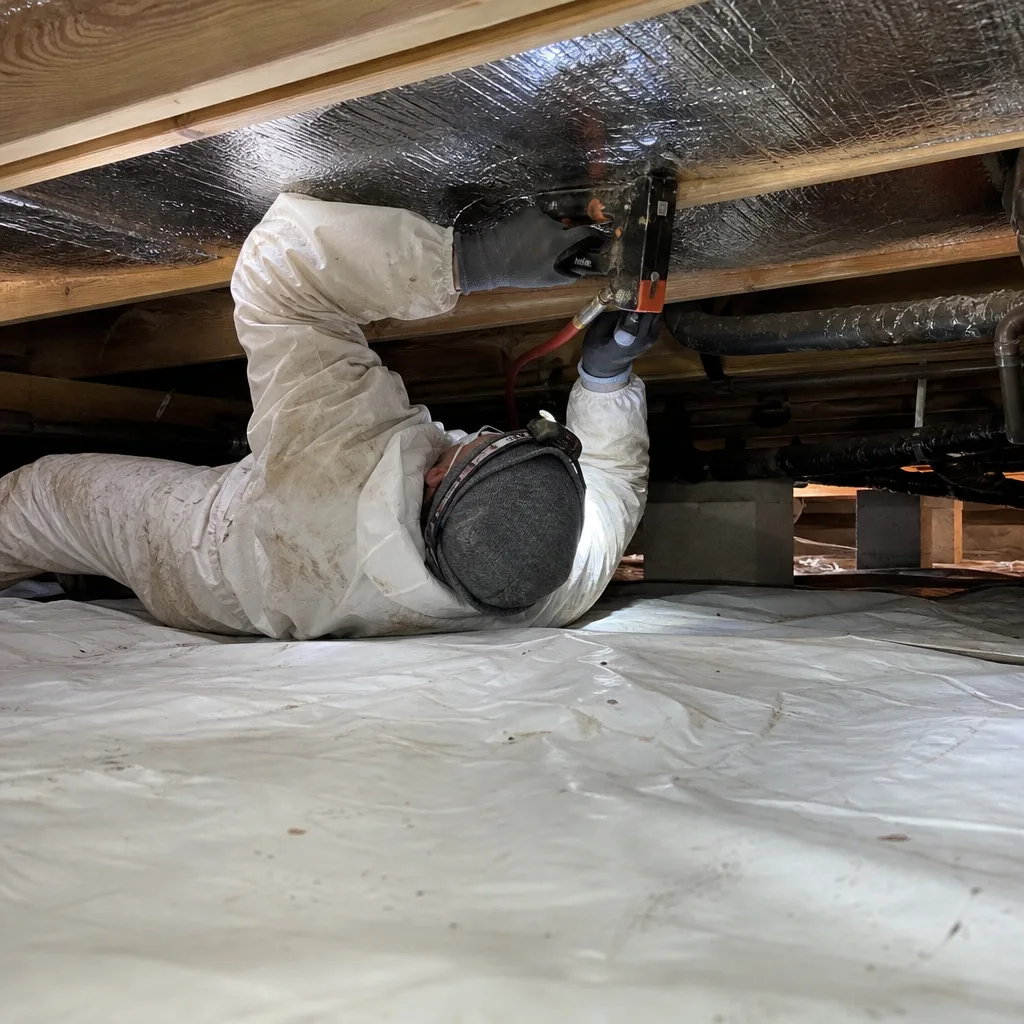
- Blowing new insulation over unsealed air leaks. This is the most common error in Pflugerville, often by homeowners or contractors who treat insulation as a commodity rather than a system. Air sealing of top plates, can lights, and penetrations must be completed before any insulation is added; otherwise you’re filtering attic air through fiberglass and calling it efficiency.
- Ignoring the attic hatch. A $50 hatch seal kit from any hardware store, properly installed, outperforms an extra R-10 of floor insulation when the hatch is leaking. Yet we estimate 60% of Pflugerville homes have unsealed or under-insulated hatches.
- Replacing HVAC before diagnosing envelope. A 3-ton system that can’t maintain setpoint in a leaky, under-insulated attic will be replaced with a 4-ton system that also can’t maintain setpoint, now with higher operating costs. Always verify envelope performance before upsizing equipment.
- Using calendar-based filter changes in pollen season. In Pflugerville’s February-April pollen peak, a filter that lasted 90 days in November may load in 30 days. Replace by pressure drop, not by date.
- Skipping fall inspection because the house “feels fine.” By the time a Pflugerville home feels uncomfortable in summer, insulation degradation is typically 2-3 years advanced. The October-November window lets you catch problems before they become expensive.
- Not documenting prior work. Every homeowner believes they’ll remember what was done and when. In practice, by year three no one recalls whether the R-30 was original or added, or whether the can lights were sealed. Photos and written records eliminate this uncertainty.
- Assuming spray foam is maintenance-free. Even quality spray foam installations need periodic inspection for mechanical damage, moisture interface issues, and degradation of adjacent materials. Open-cell foam on roof decking in Pflugerville’s climate requires particular attention to dew point management.
When to Call a Professional
Call a professional when your documentation shows trended degradation, when you find conditions beyond your skill or safety comfort, or when you need diagnostic equipment you don’t own. For help deciding, see our DIY vs Professional Insulation: The Pflugerville Homeowner’s Decision Guide. Specific triggers: insulation depth below R-30 anywhere in the attic, visible moisture or mold on insulation or framing, disconnected or damaged ductwork, any can light not rated for insulation contact, or HVAC runtime increase exceeding 20% year-over-year with comparable weather.
Topside Attic Insulation Pflugerville offers free estimates in Pflugerville. Call (737) 259-8352 to schedule. Every estimate includes a written price before any work starts, per Haven Standard Clause 1, and we provide a Free Second Opinion on any written estimate from another contractor. We bring background-checked, uniformed technicians, calls are answered by a live person 24/7, and every applicable job includes before-and-after blower-door numbers so you can verify the result we promise.
Frequently Asked Questions
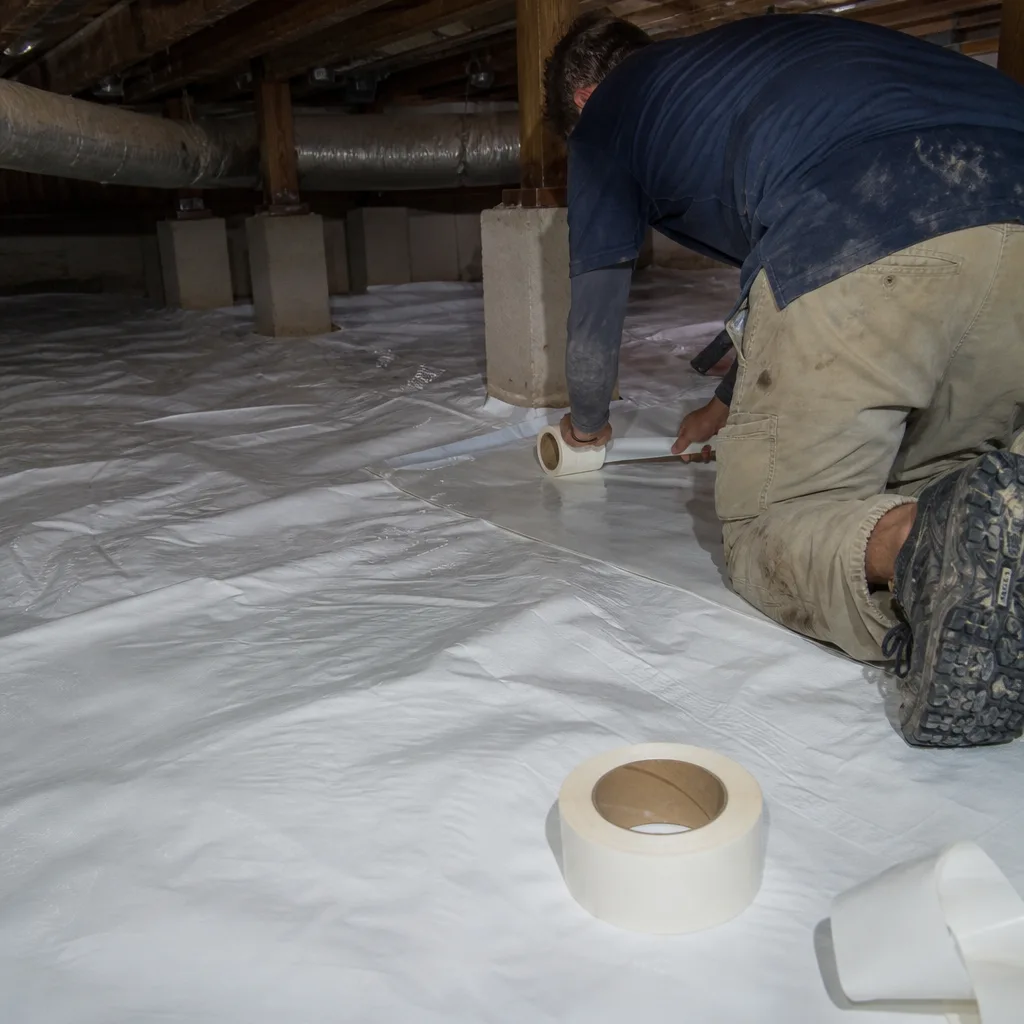
Most attic insulation jobs in a Pflugerville home of 1,800-2,400 square feet run between $2,800 and $5,500 for blown-in fiberglass or cellulose to R-38, including air sealing of top plates, can lights, and penetrations. Spray foam applications range higher depending on thickness and area covered. We provide a written price before any work starts, always, with no variation once the scope is agreed. Call (737) 259-8352 for an exact quote on your home, estimates are free.
Insulation can be added any time of year, but attic work in Pflugerville from May through September is physically demanding and often rushed due to heat. Crews work early hours, and detail work like air sealing suffers when technicians are managing heat exposure. The October-November window allows thorough, unhurried work at lower cost and higher quality. Emergency situations, such as insulation removal after rodent infestation or water damage, proceed year-round with appropriate safety protocols.
The only reliable verification is a blower-door test, a pressurization reading that shows, in one number, how much air your building envelope is losing. For Pflugerville homes built 2000-2015, we typically see initial readings of 3,500-5,500 CFM50; after proper air sealing, 2,000-3,000 CFM50 is achievable and cost-effective. We publish before-and-after blower-door numbers on every applicable job so you can see the performance change you paid for in a single figure.
Document the location, extent, and apparent moisture source with photos, then call a professional. Do not disturb moldy insulation without respiratory protection; disturbed spores distribute through the house via pressure differentials. The root cause is almost always an air leak or ventilation failure, not “too much humidity” in isolation. Remediation without fixing the leak guarantees recurrence. Topside Attic Insulation Pflugerville assesses mold conditions as part of our envelope evaluation and coordinates with remediation specialists when removal is required before sealing and insulating.
Repair is cheaper when the existing insulation is dry, uncontaminated, and simply displaced or compressed in limited areas. Replacement is necessary when insulation is mold-contaminated, saturated with rodent urine, or chemically degraded. In Pflugerville, we find that 30-40% of homes needing insulation work can retain existing material with spot repairs and supplemental blowing, while 60-70% benefit from full removal and replacement due to age, contamination, or inadequate initial depth. We assess this honestly during our free estimate and document the rationale with photos.
Every three years for homes with no known issues, annually for homes over 15 years old, after any major weather event such as Pflugerville’s periodic hard freezes, or after any HVAC or roofing work that required attic access. Your own seasonal documentation, photos, and runtime data, reduce the need for frequent professional visits by letting you trend conditions and call only when data indicates change.
The Bottom Line
Pflugerville’s climate demands a two-stress-period approach to insulation care: protect against 120 days of cooling load and prepare for short, severe heating loads with their condensation and freeze risks. The October-November maintenance window is your practical opportunity to inspect, document, and repair before problems compound. Build a documentation habit with photos, runtime data, and filter logs so any contractor can trend performance rather than starting from zero. Verify air sealing with blower-door numbers, not guesswork. And when you need professional work, demand written prices, written scopes, and documented results before anyone lifts a tool. For more guides & resources, visit our blog.
Written by Wes Okafor, Owner at Topside Attic Insulation Pflugerville, serving Pflugerville since 2016.