
Last updated September 24, 2026
Insulation Permits, Codes & Inspections in TX: What You Need to Know
A homeowner in Pflugerville’s extraterritorial jurisdiction can install any R-value they choose with no permit and no inspection, while a neighbor two streets over inside city limits must meet the 2021 IECC and schedule a framing inspection before the insulation goes in. Texas is one of the few states with no mandatory statewide residential building code, which means your permit requirements depend entirely on which jurisdiction your parcel falls under. In this guide, we’ll show you exactly how to determine your jurisdiction, what codes apply where, which projects trigger permits in Pflugerville, and how permit documentation affects your resale disclosure obligations under Texas law. For more guides & resources, visit our blog.
Quick Answer
Texas has no statewide residential building code, so insulation permit requirements depend entirely on local jurisdiction. In Pflugerville city limits, most insulation work on new construction or major renovations requires a permit and must meet 2021 IECC standards (R-38 attic, R-13 walls). In Pflugerville’s ETJ or unincorporated Williamson County, no permit is required for residential insulation, though energy code compliance may still apply to new builds. Always verify your parcel’s jurisdiction through the county appraisal district before starting work.
Table of Contents
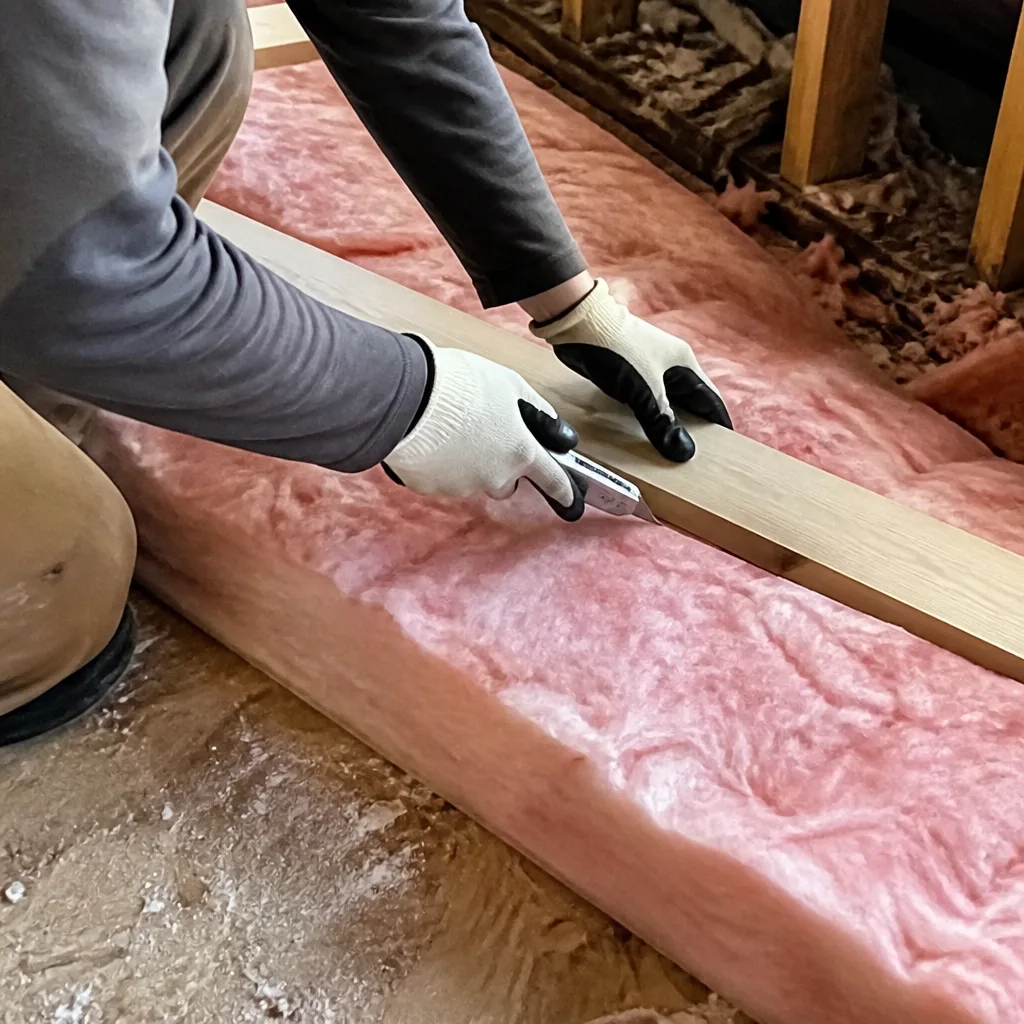
- How to Determine Your Jurisdiction: City, ETJ, or County
- Pflugerville Building Codes: What Actually Applies
- Which Insulation Projects Trigger a Permit in Pflugerville
- 2021 IECC Requirements for Climate Zone 2
- What Inspections Actually Look For
- How Permits Affect Resale Disclosure in Texas
- Common Mistakes to Avoid
- When to Call a Professional
- Frequently Asked Questions
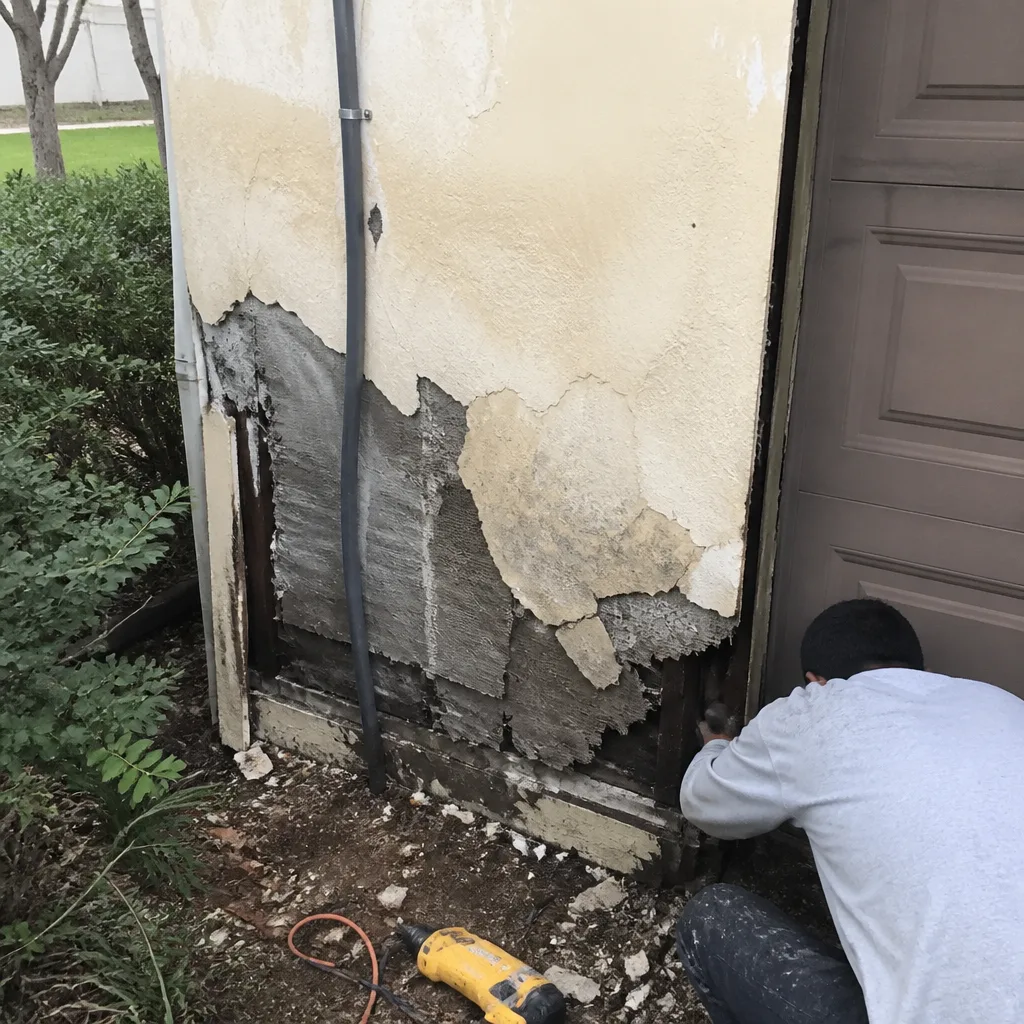 Before
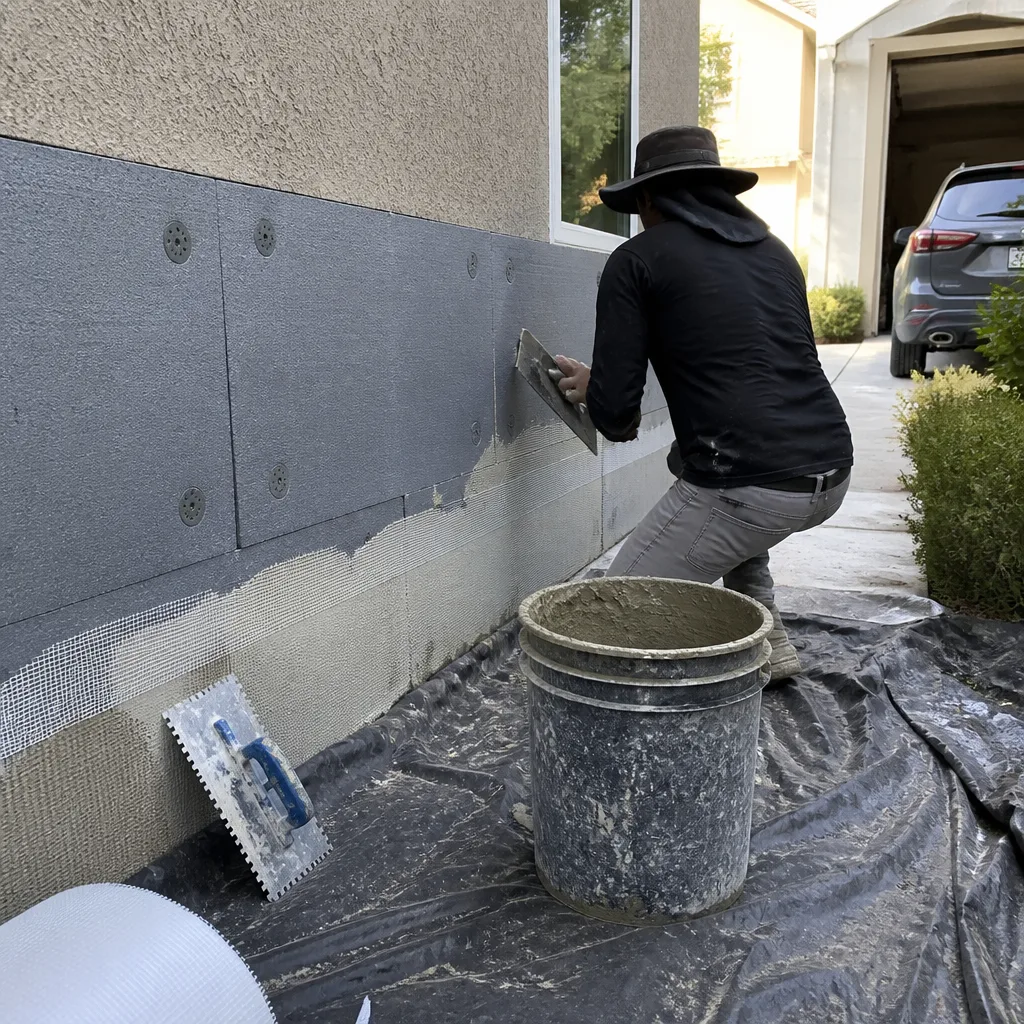 After
AfterHow to Determine Your Jurisdiction: City, ETJ, or County
The first question isn’t whether you need a permit. It’s who has authority to require one. In the Pflugerville area, three entities can enforce building codes on your property: the City of Pflugerville, Williamson County, or Travis County. The difference determines whether you face mandatory inspections, voluntary compliance, or no oversight at all.
Here’s how to find out where you stand in about five minutes.
- Pull your parcel record from the Williamson County Appraisal District (WCAD) or Travis Central Appraisal District (TCAD). Enter your address at wcad.org or traviscad.org. The “Jurisdiction” or “Taxing Entity” field shows whether your property is coded as Pflugerville city, Pflugerville ETJ, or unincorporated county.
- Check the City of Pflugerville’s ETJ map. The city maintains an interactive zoning map at pflugervilletx.gov. Properties in the ETJ appear in a lighter shade than full city limits. ETJ properties are not subject to city building codes, though the city can enforce subdivision regulations and certain public safety ordinances.
- Look at your property tax bill. If you pay City of Pflugerville property taxes, you’re almost certainly inside city limits. If you pay only Williamson County or Travis County taxes with no city line item, you’re unincorporated.
- Call the Pflugerville Development Services Department at (737) 259-8352. Give them your address. They’ll confirm jurisdiction in under a minute. We’ve had homeowners who assumed they were in the city discover they were ETJ, and vice versa.
The practical difference is stark. In 2023, we worked on a home in the Heatherwilde subdivision where the front half of the lot was in Pflugerville city limits and the rear addition was in ETJ due to a boundary line quirk. The original structure needed full permitting; the addition did not. The homeowner only learned this after pulling the WCAD record.
In unincorporated Williamson County, there is no residential building code enforcement for existing homes. You can install R-19 in an attic that should have R-38, use any material you want, and never interact with an inspector. That doesn’t mean you should. It means no one will stop you from making a costly mistake.
Pflugerville Building Codes: What Actually Applies
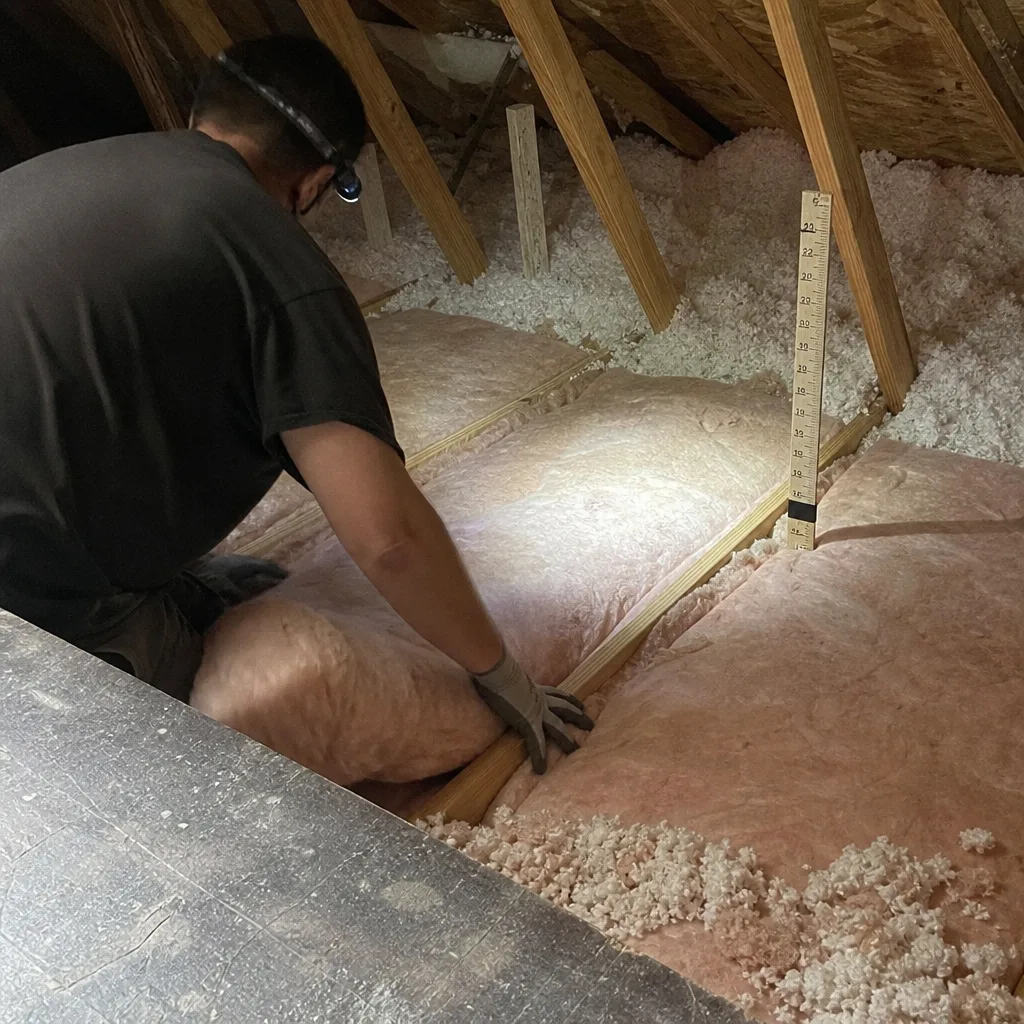
The City of Pflugerville adopted the 2021 International Energy Conservation Code (IECC) with local amendments, effective for permits pulled after October 2022. The city also enforces the 2021 International Residential Code (IRC) for construction standards and the 2020 National Electrical Code (NEC) for associated electrical work.
What this means for insulation specifically:
- The 2021 IECC sets minimum thermal envelope requirements for new construction and substantial renovations.
- The IRC Chapter 11 contains prescriptive insulation installation standards, including clearance requirements around combustion appliances and recessed lighting.
- Pflugerville’s local amendments modify the IECC’s duct leakage testing thresholds and add specific requirements for cool roof ratings on new construction in certain zoning districts.
Importantly, Pflugerville does not enforce the energy code retroactively on existing homes unless the work triggers a permit. If you’re adding insulation to an existing attic without altering the structure or HVAC, and you’re not in a historic district, you typically won’t need to bring the entire envelope up to 2021 standards.
However, if your project involves new construction, a room addition, or a complete HVAC replacement with duct modifications, the permit triggers full current-code compliance. We’ve seen homeowners in the Windermere neighborhood assume their 1980s R-19 attic was “grandfathered” only to learn that their new HVAC permit required full envelope upgrades to pass inspection.
The city offers a pre-application conference for $150, where you can sit down with a plans examiner and confirm exactly which code sections apply to your specific project. For complex jobs, this is worth more than the fee.
Which Insulation Projects Trigger a Permit in Pflugerville
Not every insulation project needs a permit, even inside city limits. The trigger isn’t the insulation itself. It’s the scope of work and what else is happening at the same time.
Projects that typically REQUIRE a permit in Pflugerville city limits:
- New construction or room additions. Any new conditioned space must meet current IECC envelope requirements. The insulation inspection occurs at the framing stage, before drywall covers the work.
- HVAC replacement with duct modifications. When you pull a mechanical permit for a new system, the city requires verification that the existing envelope meets code or is upgraded to compensate. This is where many homeowners get surprised.
- Crawl space encapsulation with vapor barrier installation. Converting a vented crawl space to a conditioned, encapsulated space changes the building’s thermal envelope and moisture management strategy. Pflugerville classifies this as an alteration requiring permit and inspection.
- Structural modifications to accommodate insulation. Raising ceiling joists, adding kneewalls, or reframing attic access hatches triggers building permit requirements.
- Fire-rated assemblies. Any work affecting fire separation between garage and living space, or between dwelling units, requires permit and inspection regardless of insulation scope.
Projects that typically DO NOT require a permit in Pflugerville:
- Like-for-like attic top-off. Adding blown-in fiberglass or cellulose over existing insulation in an accessible attic, without modifying structure or HVAC, generally does not trigger permitting.
- Radiant barrier installation. When applied to existing attic roof decking without structural changes, this is considered a finish material, not an envelope alteration.
- Insulation removal and replacement of the same type and R-value. If you’re pulling out degraded material and reinstalling equivalent performance, no permit is needed.
The gray area is spray foam insulation in existing attics. If the foam is applied to roof decking to convert a vented attic to unvented, Pflugerville treats this as an HVAC envelope modification because it changes how the space is conditioned. You’ll need a mechanical permit and combustion safety inspection. If the foam is applied to the attic floor over existing air sealing, it’s typically treated as a like-for-like upgrade.
We’ve completed jobs in the Falcon Pointe area where the homeowner initially requested open-cell spray foam on the roof deck, then changed to floor application after we explained the permit and code implications. The floor application required no permit, saved three weeks of scheduling, and achieved comparable performance with proper air sealing.
2021 IECC Requirements for Climate Zone 2
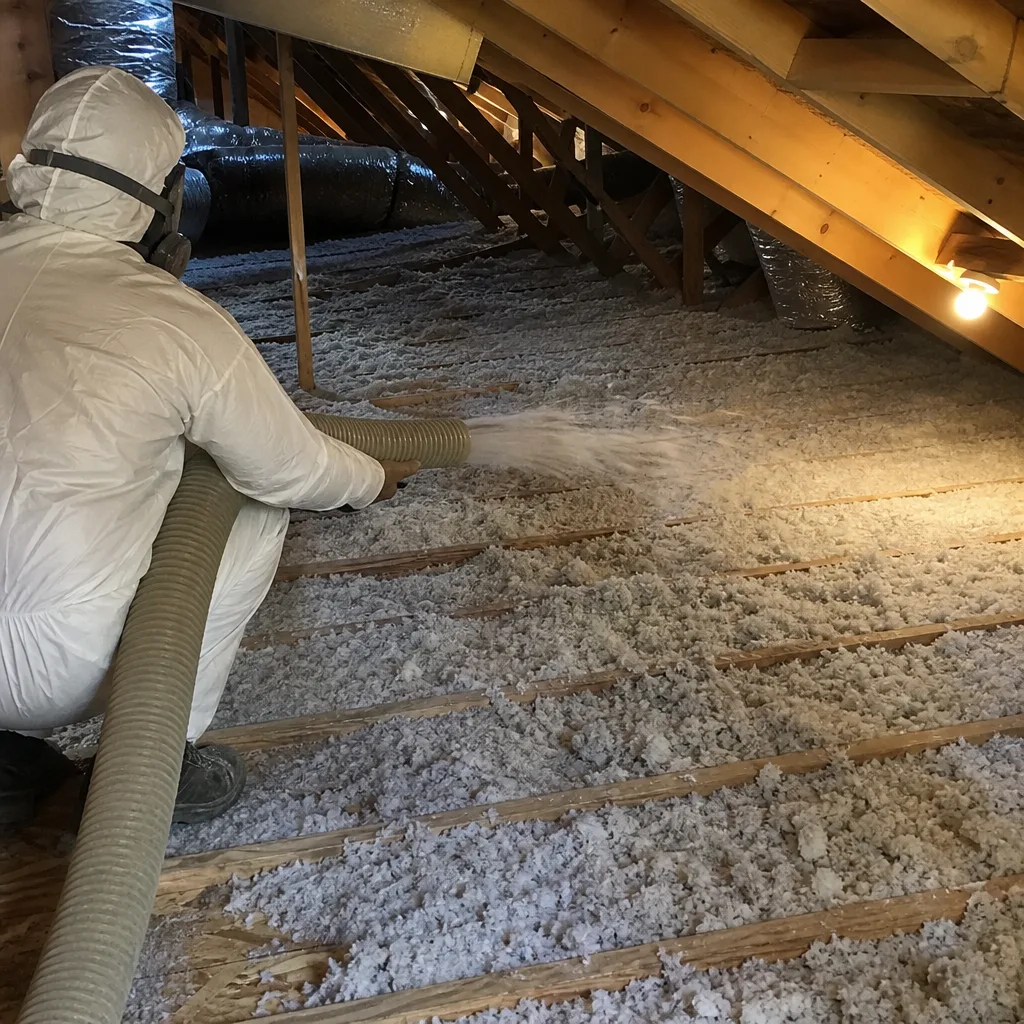
Pflugerville sits in IECC Climate Zone 2, a hot-humid zone with fewer than 3,000 heating degree days and significant cooling load. The 2021 code requirements reflect this climate reality, emphasizing summer heat gain reduction over winter heat retention. See our Seasonal Insulation Care for Pflugerville: Year-Round Homeowner’s Guide for maintenance tips.
Prescriptive insulation requirements for new construction in Pflugerville:
| Component | Minimum R-Value | Notes |
|---|---|---|
| Attic, ceiling | R-38 | Can reduce to R-30 if full-depth coverage is structurally impractical; requires documentation |
| Wood-framed wall | R-13 cavity or R-20 continuous | Cavity insulation must fill the full depth without compression |
| Mass wall | R-5 continuous | Applies to concrete block, ICF, or other mass construction |
| Floor over unconditioned space | R-19 | Includes floors over vented crawl spaces or garages |
| Basement wall | R-10 continuous or R-13 cavity | Applies to conditioned basements; exterior or interior placement permitted |
| Slab-on-grade, heated | R-10 at 24 inches | Vertical or horizontal insulation at slab perimeter |
Fenestration requirements:
- Window U-factor: 0.40 maximum (0.30 for skylights)
- Solar Heat Gain Coefficient (SHGC): 0.25 maximum
- These requirements are zone-specific; the low SHGC target reflects Pflugerville’s intense summer solar gain
The IECC also mandates air leakage control, measured by blower-door test. For new construction, the maximum air leakage rate is 3.0 air changes per hour at 50 Pascals (ACH50) in Climate Zone 2. This is where our Topside Attic Insulation Pflugerville home process intersects directly with code compliance.
We’ve tested homes in the Rowe Lane area that met the R-38 attic requirement visually but failed the blower-door test because top plates, electrical penetrations, and can light housings were unsealed. The insulation was code-compliant. The air barrier was not. The homeowner had to pay for remediation and re-inspection.
Our approach on every applicable job, documented under The Haven Standard since 2016, is to complete air sealing before any insulation goes in. We publish before-and-after blower-door numbers so the homeowner sees the performance change, not just the material depth. On a typical Pflugerville home, we see pre-work readings of 3,500-5,500 CFM50 and post-work readings of 1,800-2,800 CFM50. The R-value is only half the story.
What Inspections Actually Look For
Pflugerville uses third-party inspectors for energy code compliance, contracted through the city’s approved provider list. The inspector who checks your insulation is not the same person who checks your framing or electrical. This creates a specific risk: passing one inspection does not guarantee passing another.
The visual insulation inspection covers:
- Depth and coverage verification. The inspector measures insulation depth at multiple points with a ruled probe, checking for uniform coverage without gaps, voids, or compression. In blown-in applications, they look for settled areas near eaves and around obstructions.
- R-value documentation. You must provide manufacturer certification for the installed product. We use materials from Owens Corning, Johns Manville, Knauf, and others, and we leave the certification paperwork in the attic for inspector access.
- Clearance maintenance. Insulation must maintain required clearances from combustion appliance vents, recessed light housings (unless IC-rated), and masonry chimneys. The inspector carries a camera and documents violations with photos.
- Vapor retarder placement. In Climate Zone 2, the code requires vapor retarders on the warm-in-winter side of the assembly, which means the interior face in Pflugerville’s climate. The inspector checks for proper placement and sealing at penetrations.
- Attic access and ventilation. Insulation must not block soffit vents, and attic access openings must remain operable. We install baffles at every eave to maintain ventilation paths.
The blower-door test (third-party energy inspection) covers something entirely different:
The blower-door test, a pressurization reading that shows in one number how much air your building envelope is losing, measures the whole-house air leakage rate. The inspector sets up a calibrated fan in an exterior door, depressurizes the house to 50 Pascals, and measures the airflow required to maintain that pressure difference. The result is expressed in CFM50 (cubic feet per minute at 50 Pascals) or ACH50 (air changes per hour at 50 Pascals).
Here’s what many homeowners and some contractors miss: you can pass the visual insulation inspection with perfect R-value and coverage, then fail the blower-door test because the air barrier is compromised. Conversely, you can have a tight house with mediocre insulation depth and pass the blower-door while the visual inspector flags insufficient R-value.
We’ve seen this exact scenario in the Sorento subdivision, where a competitor had installed R-38 blown fiberglass to full depth, but the can lights were unsealed, the top plates leaked, and the duct boots pulled attic air continuously. The visual passed. The blower-door read 4,800 CFM50, nearly double the code maximum. The homeowner paid twice: once for the inadequate work, once for us to remove insulation, seal the envelope, and reinstall.
Our Haven Standard process requires that air sealing be completed and blower-door verified before insulation covers the work. We provide the homeowner with the documented photo record, the written scope, and the before-and-after blower-door readings. When the third-party inspector arrives, the house is already proven tight.
How Permits Affect Resale Disclosure in Texas
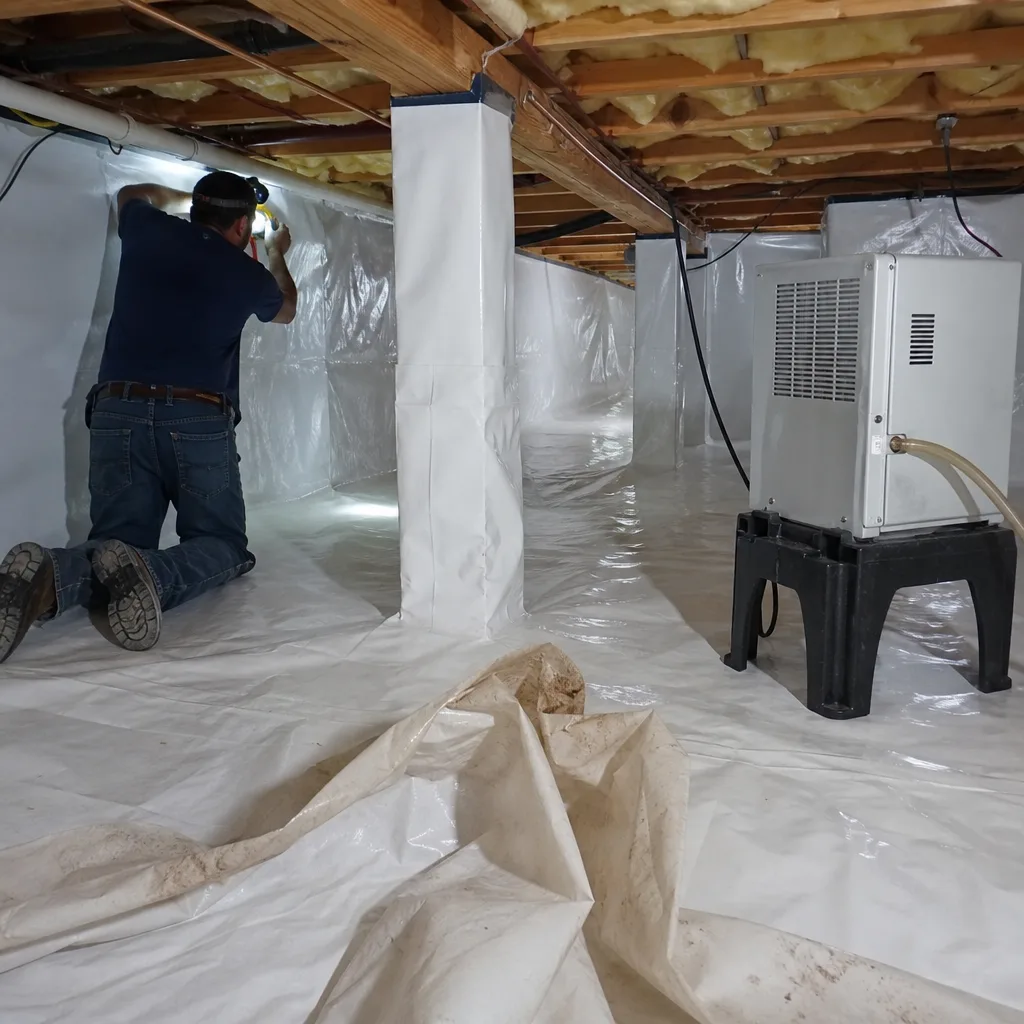
Texas Property Code Section 5.008 requires sellers to disclose known defects and material facts affecting property value. The disclosure form specifically asks about structural modifications, additions, and work performed without required permits. This is where unpermitted insulation work becomes a legal and financial problem, not just a code issue.
What the law actually requires:
- Sellers must disclose “any room additions, structural modifications, or other alterations made without required permits.” This language catches encapsulation conversions, spray foam roof deck applications, and any structural modification for insulation.
- The disclosure is not a warranty. It requires only that the seller report what they know. But “I didn’t know” becomes a weak defense if the work is visible and obviously professional.
- Buyers’ lenders and insurers increasingly require permit verification for energy-related improvements, particularly for homes with spray foam or encapsulated crawl spaces. Unpermitted work can delay closing or trigger reappraisal.
In Pflugerville’s competitive market, we’ve seen transactions fall apart over unpermitted crawl space encapsulation. A home in the Avignon neighborhood sold in 2022 with a professionally encapsulated crawl space, vapor barrier, and dehumidifier. The buyer’s FHA appraiser flagged the work as a structural modification. No permit was on file. The seller had to obtain a retroactive permit, which required opening the vapor barrier for inspection, adding $2,400 in remediation and a three-week closing delay.
The permit documentation we provide under Haven Standard, Clause 1, protects against this. Every job gets a written scope, a written warranty, and when permits are required, we handle the application, schedule inspections, and deliver the final approved permit card to the homeowner. When you sell, you hand over a file, not an explanation.
For work that doesn’t require a permit, like-for-like attic top-offs, we still document the work with photos, material specifications, and dated invoices. This isn’t legally required, but it answers buyer questions before they become objections.
Common Mistakes to Avoid
- Assuming your address determines your jurisdiction. Street addresses in Pflugerville can be misleading. We’ve worked on “Pflugerville” addresses that were actually in Round Rock ETJ, and “Austin” addresses that fell under Pflugerville code enforcement. Always verify with WCAD or TCAD before starting.
- Installing insulation before the framing inspection. In new construction, the insulation inspection is a separate pass that occurs after framing but before drywall. If you insulate early, you’ll need to remove material for the framing inspector to see structural elements, then reinstall. Schedule matters.
- Ignoring the blower-door test until final inspection. Some contractors treat the blower-door as a formality. In Pflugerville, it’s a pass/fail requirement for new construction permits. Fail at final, and you’re not closing out the permit. Test early, seal thoroughly, retest before the inspector arrives.
- Using the wrong vapor retarder for Climate Zone 2. Vapor retarder requirements differ dramatically by climate. In Pflugerville’s hot-humid conditions, interior vapor retarders can trap moisture in wall cavities. Class I vapor retarders (polyethylene sheeting) are prohibited on the interior side in Climate Zone 2 by the 2021 IECC. Class II (kraft-faced batts) or Class III (latex paint) are typically appropriate.
- Encapsulating a crawl space without addressing drainage. In Williamson County’s clay soils, hydrostatic pressure can force water through block walls even without visible leaks. Encapsulation without proper drainage and sump pump installation traps moisture and creates mold conditions. Pflugerville’s third-party inspectors are increasingly flagging this on re-inspections.
- Failing to document permit-exempt work. Even when no permit is required, future buyers will ask about insulation improvements. Without documentation, you’re relying on memory and verbal claims. We provide a Documented Photo Record on every visit, included on every job, not available on request.
When to Call a Professional
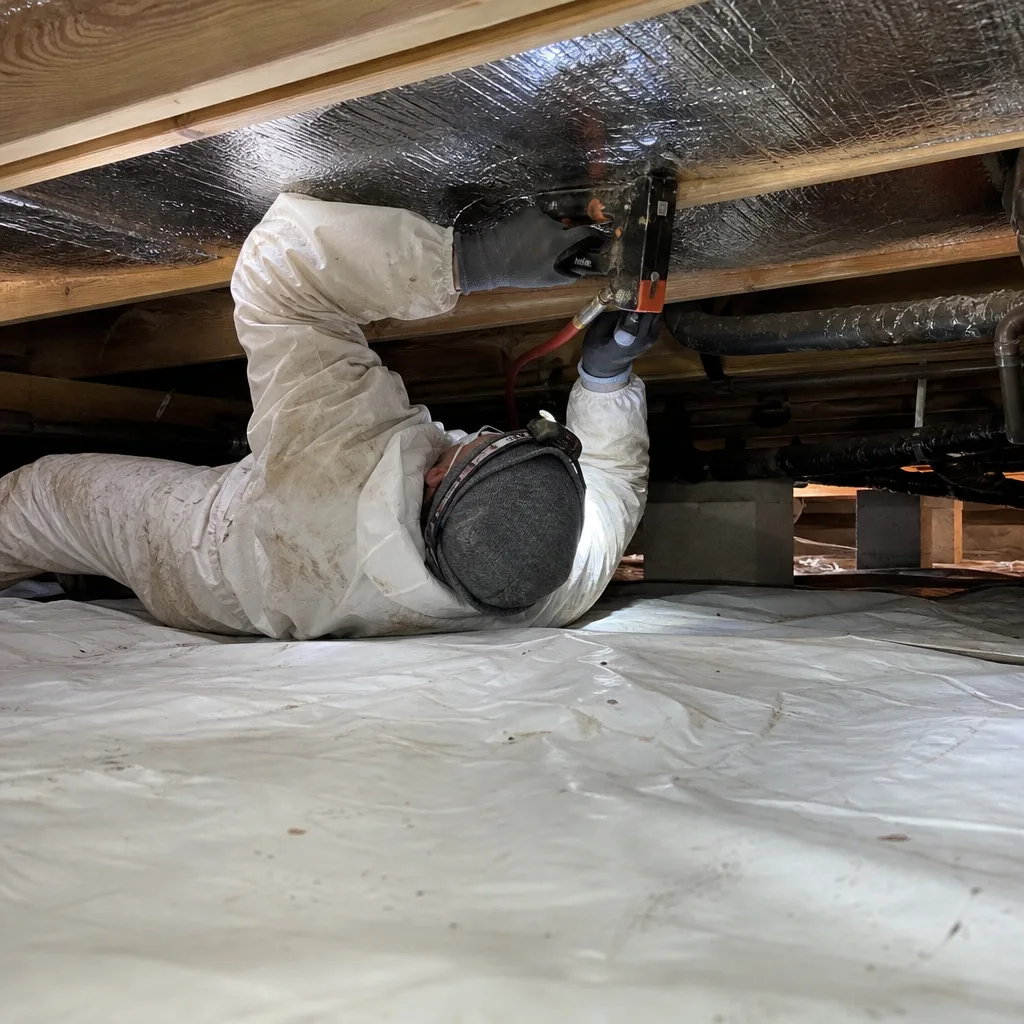
Call a professional when your project involves any of the following: jurisdiction uncertainty, spray foam application, crawl space encapsulation, HVAC co-ordination, or any work that will be covered and inaccessible after completion. These are the points where mistakes become expensive to reverse.
At Attic Insulation in Pflugerville, we begin every job with a written price before any work starts. We verify your jurisdiction, confirm permit requirements, and when permits are needed, we handle the application and inspection scheduling as part of our scope. Our Crawl Space Encapsulation & Vapor Barrier in Pflugerville service includes full drainage assessment and code-compliant vapor barrier installation.
For Spray Foam Insulation in Pflugerville, we evaluate whether roof deck or floor application better serves your goals, considering permit implications, performance targets, and total project cost. We source materials from Icynene, Demilec, and other manufacturers, with no proprietary lock-in.
Topside Attic Insulation Pflugerville offers free estimates in Pflugerville. Call (737) 259-8352 to schedule. We’ll pull your parcel record, confirm your jurisdiction, and give you a written price with no work required until you’re ready.
Frequently Asked Questions
Not if it’s a like-for-like top-off in an existing accessible attic. If you’re inside Pflugerville city limits and simply adding blown-in fiberglass or cellulose over existing material without structural changes or HVAC modifications, no permit is required. If you’re converting a vented attic to unvented with spray foam on the roof deck, or modifying structure, a mechanical or building permit is required. Call (737) 259-8352 and we’ll verify your specific situation at no charge.
Check the Williamson County Appraisal District (wcad.org) or Travis Central Appraisal District (traviscad.org) parcel lookup for your jurisdiction code, or call the Pflugerville Development Services Department at (737) 259-8352 with your address. The ETJ extends several miles beyond city limits in some directions, and boundary lines follow parcel boundaries, not street patterns. We’ve seen adjacent lots with different jurisdiction status.
The City of Pflugerville, having adopted the 2021 IECC, requires R-38 minimum for attic insulation in new construction. For existing homes with like-for-like upgrades, there is no retroactive requirement to increase R-value unless the work triggers a full permit. In practice, most Pflugerville homes built between 1980 and 2010 have R-19 to R-30 original insulation. A top-off to R-38 or R-49 is typically achievable and cost-effective, though not legally mandated for permit-exempt work.
It can, if the work falls under Texas Property Code Section 5.008’s disclosure requirements for structural modifications or alterations made without required permits. Crawl space encapsulation, spray foam roof deck application, and structural modifications for insulation are the most common triggers. Even when no permit was legally required, lack of documentation creates buyer uncertainty. We provide a Documented Photo Record on every job to eliminate this friction.
A visual insulation inspection verifies material type, depth, coverage, and clearance compliance. A blower-door test, a pressurization reading that shows in one number how much air your building envelope is losing, verifies air barrier integrity. You can pass one and fail the other. In Pflugerville new construction, both are required. Our process completes air sealing and verifies with blower-door before insulation covers the work, so both inspections pass on first visit.
Permit fees depend on project valuation. For typical residential insulation-only permits in Pflugerville, plan on $150-$400 for the building permit plus $100-$200 for third-party energy inspection. Combined HVAC and insulation permits run higher. We include permit costs in our written price when permits are required, with no surprise additions. For a free estimate with permit costs itemized, call (737) 259-8352.
The Bottom Line
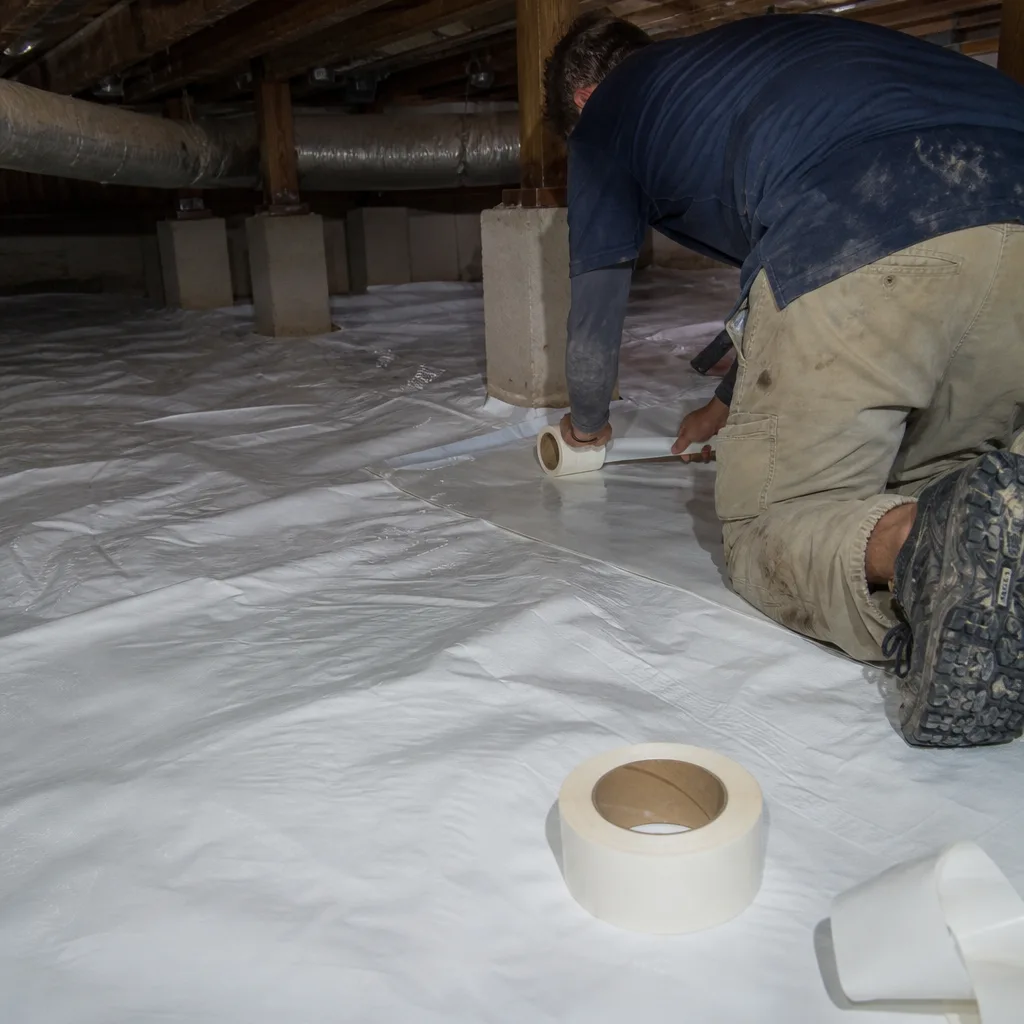
Texas’s lack of a statewide residential code creates a patchwork where your Pflugerville address alone doesn’t determine your requirements. Verify your jurisdiction through WCAD or TCAD before planning any insulation project. Inside city limits, know whether your work triggers the 2021 IECC and plan for the framing inspection before insulation covers the structure. In ETJ or unincorporated county, you have freedom, and the responsibility that comes with it. Document everything, seal before you insulate, and test before you cover. The permit card you file today, or the documentation you keep when no permit is required, protects your investment when you sell tomorrow.
We’ve sealed and insulated over 9,000 homes since 2016, every one with a written price before work started and a documented record when the crew left. Under The Haven Standard, you get flat pricing, written scope, written warranty, and on applicable jobs, before-and-after blower-door numbers you can verify yourself. No voicemail loops. No callback windows measured in business days. A live person answers calls 24/7 at (737) 259-8352.
Written by Wes Okafor, Owner at Topside Attic Insulation Pflugerville, serving Pflugerville since 2016.